REVIEW · HISTORICAL TOURS
Full day Small Group Tour of Historical Lisbon
Book on Viator →Operated by My Lisbon Tours · Bookable on Viator
Lisbon is best seen in uphill stories. This small-group day walks you through the city’s layers, from Baroque churches to earthquake-era ruins, with plenty of miradouros for panoramic views over the Tagus. You’ll also hunt for Fado clues in the neighborhoods where music feels like part of daily life.
What I like most is the way the tour ties sites to real meaning, not just photo stops. I also appreciate the small size (max 8) and the guide’s flexibility—people in the reviews praised guides like Andriy and Rui Fernandes for answering questions and adjusting the pace. The one real drawback: it’s a full day with steps and uneven old-street walking, so a hot summer day can feel long.
In This Review
- Key Points at a Glance
- A Full-Day Lisbon Loop That Actually Makes Sense (and costs $39)
- Start in the City Center: From Church of Saint Roch to Igreja de São Roque
- Bairro Alto: Old Streets, Eccentric Vibes, and a Local-Culture Lens
- The Trindade stop: beer, faith, and secret-society history
- Largo do Carmo and the 1755 Earthquake Reminder
- Santa Justa Elevator: The View, the Drama, and the Tagus in the Frame
- Chiado and Praca Dom Pedro IV: Shopping Streets Meet Theater Squares
- The Neo-Manueline train station exterior: architecture you can spot fast
- Largo de São Domingos, Igreja de São Domingos, and Praça da Figueira
- A pedestrian downtown stroll near Santa Justa Elevator
- Miradouro da Graça and Igreja de Nossa Senhora da Graça: big views, named for a poet
- Flower terraces, union activism, and a shift toward Alfama’s personality
- Igreja de São Vicente de Fora, Feira da Ladra, and the National Pantheon exterior
- Alfama: everyday life, a Fado connection, and the best viewpoint energy
- São Miguel exterior and Lisbon Cathedral interior: a practical contrast
- Santa Luzia, Portas do Sol, and the Spiked House: peak view + peak oddity
- The grand finish at Praça do Comércio (Terreiro do Paço)
- Who This Tour Is For (and Who Might Want Something Else)
- Should You Book This Historical Lisbon Small-Group Tour?
- FAQ
- How long is the Historical Lisbon small-group tour?
- What’s the group size limit?
- What time does the tour start?
- Where does the tour start and end?
- Is food included in the price?
- Are there any admission fees during the tour?
- Is hotel pickup or drop-off included?
- What does the tour include besides the guide?
- Is the tour suitable for kids?
- Is the tour accessible for people with walking disabilities?
Key Points at a Glance
- Small group (max 8): more interaction, easier questions, and a less chaotic feel than big buses.
- Fado + Lisbon street life: you don’t just hear about it; you’re guided through the places where it fits.
- Iconic viewpoints: multiple miradouros give you repeated chances to see Saint George’s Castle and the Tagus.
- Big architectural variety: Baroque churches, convent remnants, and an eye-catching Neo-Manueline train-station exterior.
- One paid entry (cathedral interior): most stops are admission-free, so your costs stay predictable.
A Full-Day Lisbon Loop That Actually Makes Sense (and costs $39)
At about 8 hours for $39, this tour is priced like a value pick for a city-center “greatest hits” day—without feeling like you’re being herded. You’ll cover several core districts: Alfama, Bairro Alto, and Baixa-Chiado, plus famous landmarks and viewpoints.
What makes the price feel fair is the mix of included and free stops. The tour includes a professional guide and local taxes, and most sights listed come with free admission tickets. The big exception is the Lisbon Cathedral interior, which isn’t included, so you should plan for that one extra cost.
Do note the trade-off for a low price and a compact route: you’ll walk a lot, and Lisbon’s old streets bring stairs and hills. The tour isn’t ideal if you have walking limitations, and even if you’re fit, a summer heat day can stretch your comfort.
You can also read our reviews of more historical tours in Lisbon


Start in the City Center: From Church of Saint Roch to Igreja de São Roque
Your meeting point is the Church of Saint Roch in central Lisbon, and the tour begins at 10:00 am. From there, you head into the Baroque side of town quickly—good call, because it helps you set context before you start climbing into viewpoints.
The first major stop is Igreja de São Roque, one of Lisbon’s finest churches. Even if you’re not a church-person, this is worth it because it’s one of the strongest examples of Portugal’s Baroque art. It’s a short visit (about 15 minutes), and that makes it easy to absorb without turning the day into a museum marathon.
Bairro Alto: Old Streets, Eccentric Vibes, and a Local-Culture Lens
Then you shift into Bairro Alto, one of Lisbon’s older and more eccentric neighborhoods. This part of the tour works because your guide doesn’t just point at buildings; you navigate the streets with an eye for how old Lisbon functions.
You’ll spend about 25 minutes here. It’s long enough to feel the neighborhood’s rhythm, but not so long that you feel stuck. If you like wandering with structure, this is a nice balance.
The Trindade stop: beer, faith, and secret-society history
Next is Trindade, described as a peculiar restaurant spot with a connection to Catholic worship, beer, and Freemasonry. It’s only about 5 minutes, but it’s a classic Lisbon storytelling moment: the city’s history shows up in everyday places, not just monuments.
Think of it as a quick “how Lisbon thinks” stop. If you’re into odd historical connections, you’ll love this. If you’re in pure sightseeing mode, you might wish for a longer pause—still, it doesn’t derail the day.
Largo do Carmo and the 1755 Earthquake Reminder
At Largo do Carmo, you see one of the most picturesque squares in historical Lisbon. The main visual here is the Gothic ruins of the Carmelite Convent, tied to the earthquake of 1755.
This is where Lisbon stops being a pretty postcard and becomes a story of survival. The visit is about 10 minutes—enough time to look around the square and understand why these ruins matter before moving on.
You can also read our reviews of more tours and experiences in Lisbon






Santa Justa Elevator: The View, the Drama, and the Tagus in the Frame
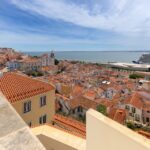
Now you hit one of Lisbon’s icons: Elevador de Santa Justa. You get about 10 minutes to visit and catch a bird’s-eye view over the city and toward the River Tagus.
Even if you’ve seen photos, the payoff is that you’re seeing how the city stacks itself—tiles, rooftops, and steep streets pouring down toward the river. It also helps you visually “read” Lisbon before you head into Alfama, where the streets twist and climb.
Chiado and Praca Dom Pedro IV: Shopping Streets Meet Theater Squares
After the elevator, the tour moves to Chiado, about 30 minutes. The theme here is the largest concentration of traditional stores and businesses. This part is valuable because it shows Lisbon as a living commercial center, not only as a heritage zone.
Then you visit Praca Dom Pedro IV in the Baixa Pombalina district. You spend around 10 minutes here, taking in key attractions and local businesses. This is a good area for “connect-the-dots” with the rest of the route—Baixa gives you the planned, rebuilding side of Lisbon, while later stops shift back to older, more irregular streets.
The Neo-Manueline train station exterior: architecture you can spot fast
There’s also a short stop for a late 19th century train station with Neo-Manueline architecture in the city center. You don’t need to know rail history to appreciate it; it’s the kind of façade that instantly signals Portugal’s design style.
It’s a quick exterior moment (listed after Praca Dom Pedro IV), which is perfect if you want visual variety without losing time.
Largo de São Domingos, Igreja de São Domingos, and Praça da Figueira
Next you head to Largo de São Domingos, about 5 minutes. The key point here is the Jewish massacre of 1506, plus a memorial honoring victims of religious persecution. This stop adds emotional weight to the day, and it’s short enough that it stays respectful without swallowing your schedule.
Right after that is Igreja de São Domingos, also about 5 minutes. The focus is the church’s interior—brief, but it gives you one more example of Lisbon’s devotion expressed in art and space.
Then you reach Praça da Figueira, about 5 minutes. You’ll admire the historical square and check out nearby businesses, which keeps the pace practical and grounded.
A pedestrian downtown stroll near Santa Justa Elevator
You also get a short walk along a major pedestrian street in downtown Lisbon, lined with coffee shops and historical businesses, and framed by sights such as the Santa Justa Elevator. This segment matters because it’s your “breather” between heavier story stops.
It also keeps you oriented: you’re not just moving between distant neighborhoods—you’re learning how the city’s core connects.
Miradouro da Graça and Igreja de Nossa Senhora da Graça: big views, named for a poet
Then comes one of the best-feeling parts of the day: the viewpoint run. At Miradouro da Graça, you spend about 10 minutes and get views of downtown Lisbon, with Saint George’s Castle, Mouraria, and the Tagus in the background.
This is the kind of stop where you stand still for a bit, then suddenly everything you’ve been walking through clicks. The route becomes easier to understand when you can see the bigger picture.
Close by is Church of Our Lady of Grace, with a stop of about 10 minutes. You’ll admire one of Lisbon’s oldest churches and convents, where Augustinian monks lived until 1834. It’s a history cue without needing a long lecture.
Flower terraces, union activism, and a shift toward Alfama’s personality
The itinerary includes a charming street stop where you’ll see little streets lined with houses and terraces decorated with buganvilia and other flowers. Even though it’s brief, it’s the type of visual detail that makes Alfama feel like a real neighborhood, not an attraction.
There’s also time to learn about the history of trade union activism in Lisbon. The key benefit here is perspective: you’re seeing how daily life and labor history lived side-by-side with religion, politics, and architecture.
Igreja de São Vicente de Fora, Feira da Ladra, and the National Pantheon exterior
Now you move deeper into the older, more layered Lisbon feel.
- Igreja de São Vicente de Fora (about 10 minutes): you learn its significance and how it’s dedicated to Lisbon’s patron saint.
- Feira da Ladra (about 10 minutes): you get the atmosphere of one of Lisbon’s oldest flea markets. The market is noted for Tuesdays and Saturdays, so timing can affect what you see.
- National Pantheon exterior (about 5 minutes): you admire the monumentality of Portugal’s National Pantheon, a mausoleum for major Portuguese figures.
The Pantheon exterior is intentionally short. It’s a “look and move” stop that doesn’t stall the day, but still gives you a strong sense of scale.
Alfama: everyday life, a Fado connection, and the best viewpoint energy
Your tour then returns to Alfama’s everyday life, with time to connect how locals live in these steep streets. This part is one of the biggest reasons I’d recommend the tour to anyone who wants more than sightseeing checkboxes.
At Miradouro de Santo Estevão, you get Alfama’s best-viewpoint feeling, plus the chance to look over those tight, picturesque streets. It’s about 10 minutes, and it’s one of the stops that makes you understand why people come to Lisbon and keep coming back.
After that, there’s an exterior stop for a building connected to Fado music. The itinerary also emphasizes searching for local Fado houses. You’re not promised a live performance in every case, but you are given the cultural map—where Fado belongs, and why Alfama is the natural setting for it.
São Miguel exterior and Lisbon Cathedral interior: a practical contrast
Next is Igreja de São Miguel (about 5 minutes), where you see a church that survived the 1755 earthquake. It’s a fast stop, but the survival angle turns the day’s earlier earthquake context into something tangible.
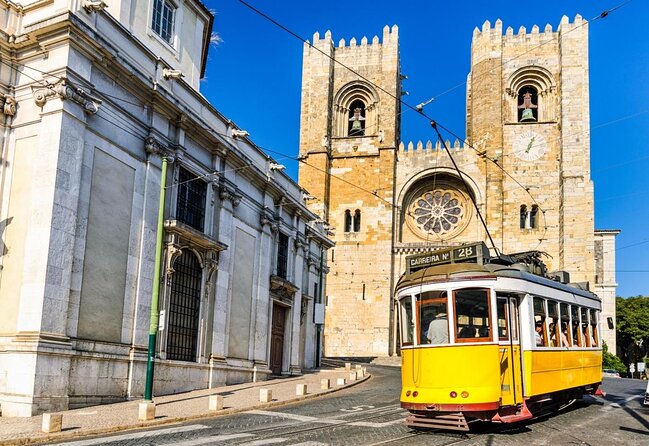
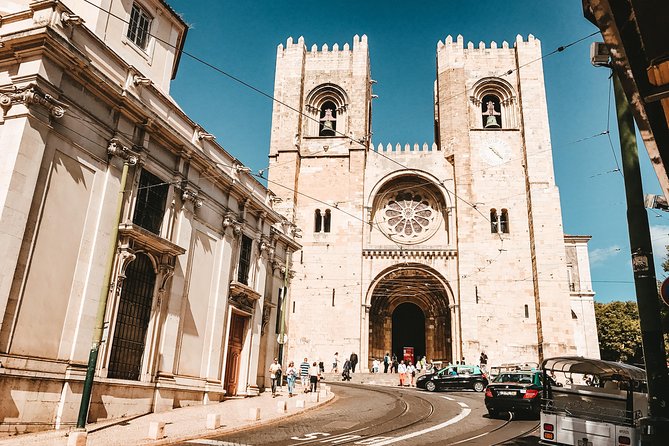
Then you reach Lisbon Cathedral, where the tour includes a detailed interior visit of about 10 minutes. The interior admission is not included, so you should plan for an entry ticket cost. Still, the interior matters: this is one of the best chances during the day to see the space, not just the exterior stones.
Santa Luzia, Portas do Sol, and the Spiked House: peak view + peak oddity
You’ll then visit Igreja de Santa Luzia (about 10 minutes) and get a unique viewpoint of Alfama and the Tagus. The stop also ties Lisbon into a religious battleground story during the Reconquista—again, not just scenic, but interpretive.
After that, it’s Miradouro das Portas do Sol (about 10 minutes). This is a classic “stand there and look” miradouro moment. You’ll get sweeping views that help you place Alfama, the river, and the broader city in one glance.
Then comes the Spiked House exterior, described as a rare example of 16th-century palatial architecture. It’s a short stop, but it’s memorable because the design is unusual—one of those architecture details you’ll remember even when other parts blur together.
The grand finish at Praça do Comércio (Terreiro do Paço)
You end at Praça do Comércio (Terreiro do Paço), with about 10 minutes in the area. This square is one of Lisbon’s most famous city spaces and a fitting wrap-up after hours of stairs and viewpoints.
It’s also where the tour ties history to named figures, including the Marquis of Pombal and the regicide of 1908. After walking steep streets all day, finishing in a big open square gives you a mental reset.
Who This Tour Is For (and Who Might Want Something Else)
This is a great fit if you want a structured way to experience three Lisbon neighborhoods in one day: Alfama for atmosphere and Fado connections, Bairro Alto for old-street energy, and Baixa-Chiado for central Lisbon context.
It’s also ideal if you like guided storytelling. The reviews highlight guides such as Andriy and Rui Fernandes for being flexible, welcoming questions, and offering smart pacing on uneven ground.
Skip it or consider another format if you:
- hate long walks and steps,
- need a fully flat route,
- or want long museum time rather than quick, meaningful stops.
Should You Book This Historical Lisbon Small-Group Tour?
I’d book it if you want a value-packed, small-group day that hits Lisbon’s most character-filled districts and gives you viewpoint payoff without needing a car. The best part is the balance: churches, ruins, squares, and miradouros all come with context, and you’re kept moving so you still feel like Lisbon has surprises left after every stop.
If you’re sensitive to heat or distance, plan smart: wear grippy shoes and take your time at each viewpoint. For many people, that’s the difference between a tiring day and a truly satisfying one.
FAQ
How long is the Historical Lisbon small-group tour?
It’s listed as approximately 8 hours.
What’s the group size limit?
The tour has a maximum of 8 travelers.
What time does the tour start?
The start time is 10:00 am.
Where does the tour start and end?
It starts at the Church of Saint Roch (Largo Trindade Coelho, Lisboa) and ends at Praça do Comércio (Terreiro do Paço).
Is food included in the price?
No. Food and drinks are not included.
Are there any admission fees during the tour?
Most stops list admission tickets as free. The Lisbon Cathedral interior is listed as not included, so you should expect to pay for that entrance.
Is hotel pickup or drop-off included?
No. Hotel pickup and drop-off are not included.
What does the tour include besides the guide?
Local taxes and a professional guide are included. You also receive a mobile ticket.
Is the tour suitable for kids?
Children must be accompanied by an adult.
Is the tour accessible for people with walking disabilities?
It’s not recommended for travelers with walking disabilities, and it requires a moderate physical fitness level.