REVIEW · BELEM TOURS
Full day Small Group Tour of Historical Lisbon and Belém
Book on Viator →Operated by My Lisbon Tours · Bookable on Viator
Lisbon works best when you walk it in layers, not by bus. This full-day small-group tour strings together the city’s classic core—Bairro Alto, Baixa-Chiado, and the grand squares—then pushes west to Belém for Jerónimos Monastery and the Discoveries area. I like how it’s organized around real places, not vague viewpoints, and how the guide keeps the day moving with clear explanations. Two big wins for me are the Baroque stop at Igreja de São Roque and the Belém finish (Pastéis de Belém plus Jerónimos). One thing to consider: this is an active day, and you’ll want moderate fitness for the walking and uneven streets.
The itinerary is also pleasantly “two-part”: you get a Lisbon-center sweep first, then the famous Belém landmarks second. You’ll get Santa Justa Lift for that river-and-rooftops perspective, and you’ll also pass key history markers like the 1755 earthquake ruins and the memorial connected to the 1506 Jewish massacre. The possible downside is simple: some of the major monuments in Belém have admissions not included, so you’ll still need to plan for those ticket costs even though the guide does the heavy lifting.
In This Review
- Key Things That Make This Tour Worth Your Time
- One Day, Two Lisbon Worlds: Center City Then Belém
- Igreja de São Roque: Baroque Beauty on the First Stop
- Bairro Alto and the Quirky Threads of Old Lisbon
- Largo do Carmo: Gothic Ruins and the 1755 Earthquake Memory
- Santa Justa Elevator: A Quick Ride to Tagus Views
- Chiado and Baixa Squares: Shops, Theaters, and Everyday Lisbon
- Jewish Memory at Largo de São Domingos and Church Interiors
- Praca da Figueira and the Downtown Pedestrian Stroll
- Praca do Comercio (Terreiro do Paço): Big River Square and Lisbon Power
- Pastéis de Belém: How to Handle the Line (and the Order)
- Jerónimos Monastery: Church Focus, Then Cloisters With Skip-The-Line
- Belém Tower and Padrão dos Descobrimentos: Exterior Views With Context
- Price and Tickets: What You’re Really Paying For
- Pacing and Physical Fitness: What Moderate Means Here
- Who Should Book This Lisbon and Belém Day
- Should You Book This Historical Lisbon and Belém Tour?
- FAQ
- Where does the tour start?
- What time does the tour begin?
- Where does the tour end?
- How long is the tour?
- What’s the group size?
- Is food included?
- Are any tickets included, or is it mostly free stops?
- Does the guide offer skip-the-line help?
- Is there hotel pickup or drop-off?
- Is the tour suitable for children?
Key Things That Make This Tour Worth Your Time

- Small group (max 8): easier questions and a more paced walk than big-bus crowds.
- Historic Lisbon stops that feel connected: churches, squares, and neighborhoods link into one story.
- Santa Justa Lift included: you don’t just see it; you get a birds-eye look.
- Smart skip-the-line support: the guide helps with Pastéis de Belém and the Jerónimos cloisters.
- Belém sights are “focused exteriors + guided interiors where it counts”: you don’t waste time on the wrong viewing angles.
One Day, Two Lisbon Worlds: Center City Then Belém
This tour is built like a good day in Portugal: start in the older, tighter streets, then trend toward the river as the light changes. You begin at the Church of Saint Roch at Largo Trindade Coelho (10:00am start). Your day ends out at the Monument to the Discoveries (Av. Brasília), which makes sense if you’re staying closer to Belém—or if you’re happy to wrap up and then grab your own transport afterward.
The overall time is about 8 hours. That’s long enough to get beyond “photo-stop sightseeing,” but not so long that it feels like a travel punishment. The group is kept small—up to 8 people—which matters because several parts of Lisbon are narrow, steep, and slow on foot. If you like history with context (not just a list of dates), this tour’s pace works.
You can also read our reviews of more historical tours in Lisbon


Igreja de São Roque: Baroque Beauty on the First Stop
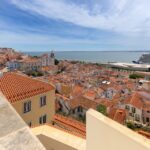
You start with a guided visit inside Igreja de São Roque. This church is highlighted for its Baroque art and for showcasing the skill of Portuguese artists. The timing is short—about 15 minutes—but it’s a strong “opening act.” It also sets the tone for the day: Lisbon isn’t one style or one era. It’s layers, with art and religion tangled together in fascinating ways.
If you’re the type who usually walks past churches, this is a good time to slow down. A guided interior visit means you’ll know what you’re looking at—rather than just appreciating the general wow factor from the doorway.
Bairro Alto and the Quirky Threads of Old Lisbon
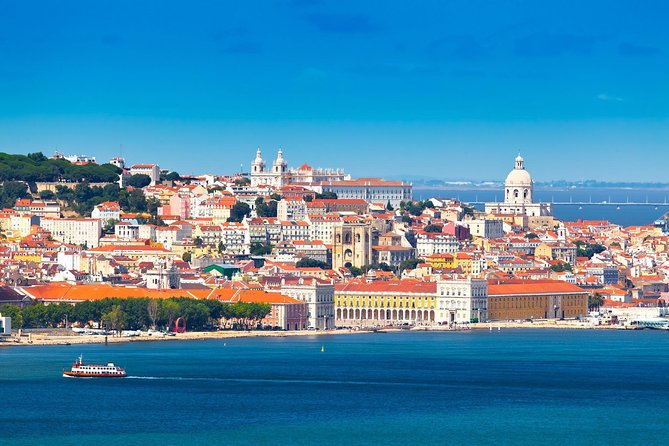
Next comes Bairro Alto, one of the city’s oldest and most eccentric neighborhoods. You get about 25 minutes here, walking with your guide through the streets so you can see how the neighborhood’s character works at street level—not from a distance.
Right after, there’s a quick 5-minute stop at Trindade, described as a peculiar restaurant spot and connected to Catholic worship, beer, and freemasonry. Even if you don’t care about the full story, it’s a reminder that Lisbon’s history doesn’t live only in museums. It also hides in everyday places—food, social life, and local legends.
The value of these “short stops” is that they prevent the day from becoming one long march to the next landmark. You get small story bites that make the walking more enjoyable.
Largo do Carmo: Gothic Ruins and the 1755 Earthquake Memory
Largo do Carmo is one of those places that makes Lisbon feel real. You’ll spend around 10 minutes here, focusing on the Gothic ruins of the Carmelite Convent—left as a reminder of the 1755 earthquake. This stop is quick, but it hits a key theme: Lisbon rebuilt itself, and the scars of that history still shape the city’s look and feel.
If you pay attention here, you’ll understand why later squares and grand buildings feel so purposeful. This is history as a physical presence, not a lecture.
Santa Justa Elevator: A Quick Ride to Tagus Views
At the Elevador de Santa Justa, you get one of the city’s most iconic structures and a view that changes how you see the whole center. The scheduled time is about 10 minutes, but the point isn’t to treat it like an all-day attraction. It’s to use the view to orient you—rooftops, streets, and the River Tagus in the same frame.
This stop is also useful because you’ll be walking through dense downtown afterward. A birds-eye look helps your brain build a map fast. It’s one of those “worth it” photo moments where the value is more than the picture.
You can also read our reviews of more tours and experiences in Lisbon






Chiado and Baixa Squares: Shops, Theaters, and Everyday Lisbon
Chiado gets about 30 minutes. The tour frames it as the largest concentration of traditional stores and businesses. That matters, because Chiado isn’t just scenic—it’s functional and local. You’ll get time to understand why people still shop and linger here, rather than treating it as a purely sightseeing corridor.
From there, you’ll move to Praca Dom Pedro IV (about 10 minutes). The big-name details you’ll be looking at include the Queen Mary National Theater and opera house, plus a local business called Tabacaria Mónaco. Even if you don’t plan to stop inside, these are the kinds of landmarks that make Lisbon feel lived-in.
You’ll also pass a late 19th-century train station with Neo-Manueline architecture. The important part isn’t the architectural label—it’s that Lisbon likes to borrow historical identity and dress it in style. It also gives you a break from street-level steepness, since stations tend to be less claustrophobic than tiny lanes.
Jewish Memory at Largo de São Domingos and Church Interiors
One of the most meaningful parts of the day comes around Largo de São Domingos (about 5 minutes). Here, you learn about the Jewish massacre of 1506 that took place in one of Lisbon’s oldest squares, and you’ll be looking at a memorial for the victims of religious persecution.
Then you get a very short visit (about 5 minutes) at Igreja de S Domingos, described as one of Lisbon’s unique places of worship. This isn’t long, but it’s purposeful. The tour keeps the themes from becoming abstract by connecting them to actual sites you can point at.
If you prefer history that’s connected to real locations and visible memory, this block is a highlight.
Praca da Figueira and the Downtown Pedestrian Stroll
After that, Praca da Figueira gets about 5 minutes, followed by a stroll along a main pedestrian street in the downtown area. The tour notes you’ll see Santa Justa Elevator, coffee shops, and historical businesses along the way.
This is a good moment to pause and just watch. You’ve already seen monuments. Now you’re walking through the everyday Lisbon that grew up around them. It’s also a helpful stretch to reset your legs before the riverfront finale.
Praca do Comercio (Terreiro do Paço): Big River Square and Lisbon Power
You’ll end this city-center circuit at Praca do Comercio, also called Terreiro do Paco (about 15 minutes). This is the kind of square that makes you understand why Lisbon was an economic and political hub. The tour ties it to key historical figures, including the Marquis of Pombal and the regicide of 1908.
I like this stop because it’s not hidden. You don’t feel like you’re squeezing into a small lane to find history. It’s open, wide, and dramatic—perfect for absorbing the scale of the city.
From here, you move toward the presidential-area side with Afonso de Albuquerque Square (about 5 minutes). You’ll see it flanked by the presidential palace and the National Coaches Museum. The palace is mentioned as exterior viewing only, but the National Coaches Museum is tied to the Portuguese royal family connection.
This block is more about framing than deep museum time. You get the “where you are” context so Belém’s royal and maritime feel lands better.
Pastéis de Belém: How to Handle the Line (and the Order)
Then comes one of Portugal’s signature flavors: Pastéis de Belém. You have about 10 minutes for this stop, and the guide helps with skip-the-line service.
Two practical tips for this part of the day:
- Bring water with you or plan to buy one nearby, since the tour notes food and drinks are not included.
- Don’t turn this into a slow snack session. The time is short by design, and Jerónimos is next.
If you care about value, this stop is where the tour earns its keep. Skip-the-line support can save real time at a place where queues can be long.
Jerónimos Monastery: Church Focus, Then Cloisters With Skip-The-Line
Jerónimos Monastery is the center of gravity for Belém. You’ll start with the Church at the monastery (about 15 minutes). Then you’ll get a longer guided tour of the cloisters (about 1 hour). Importantly, the cloisters admission ticket is not included, but the guide can provide skip-the-line service for that attraction.
What to pay attention to:
- For the church: focus on the details your guide points out, since 15 minutes is short.
- For the cloisters: this is where you can slow down visually, since you have a full hour.
This is also where you’ll feel the difference between a walking tour and a history tour. The guide’s role becomes less about moving you along and more about giving you a way to read the architecture.
Belém Tower and Padrão dos Descobrimentos: Exterior Views With Context
After Jerónimos, you’ll shift to the waterfront monuments with exterior visits only:
- Torre de Belem: about 20 minutes, with explanation of UNESCO World Heritage site history and architecture. Admission is not included.
- Padrão dos Descobrimentos: about 30 minutes, again with explanation of history and architecture. Admission is not included.
These are “see it, understand it” stops. Because you’re not paying for full entry (based on what’s included), you’ll want to treat your time like a guided walk-and-look session. Bring a phone/camera for photos, but also listen for the “why this matters” details so you come away with more than just a postcard.
If you’re trying to decide what portion of Belém to prioritize, this tour makes a clear bet: Jerónimos gets guided interior time, while Tower and the monument get expert context and exterior viewing.
Price and Tickets: What You’re Really Paying For
The tour price is $103, and it includes local taxes and a professional guide. Many stops list admission ticket as free, but not all major attractions in Belém are included. Specifically, Jerónimos cloisters, Belém Tower, and Padrão dos Descobrimentos are marked as admission tickets not included.
So is it good value? For me, yes—because you’re paying for two things:
- A guided day through Lisbon’s core neighborhoods and Belém, which can be hard to piece together on your own without losing time.
- Time-saving help at the Pastéis de Belém stop and with skip-the-line service for Jerónimos cloisters.
If you already plan to visit Jerónimos and want structured time at the right moments, the guide plus scheduling can add up quickly. Just don’t assume the $103 covers every ticket you might want to pay for during the day.
Also note: food and drinks aren’t included. Expect to buy your own lunch or snacks.
Pacing and Physical Fitness: What Moderate Means Here
The tour asks for moderate physical fitness. In practical terms, that’s code for: you’ll be walking quite a bit, with uneven streets and some hills. Lisbon can surprise you with elevation changes between neighborhoods, and a historical route tends to follow older street grids that weren’t designed for flat walking.
I’d treat this as a day for good shoes. Wear something you can trust for cobbles. If you have knee issues, I’d think carefully about the Santa Justa area and the downtown climbs/descents.
The upside is that the group is limited to 8, which helps with pacing and makes it easier to pause when needed.
Who Should Book This Lisbon and Belém Day
This tour is a strong fit if you:
- Want a guided history walk through central Lisbon and Belém in one day.
- Appreciate meaningful stops like earthquake ruins and memorials, not just big landmarks.
- Like small-group experiences where you can ask questions and keep moving.
- Plan to visit Jerónimos and would rather have guided time than wander alone for the day.
It may be less ideal if you:
- Prefer a relaxed, minimal-walking itinerary.
- Want long, independent museum time at multiple interiors in Belém (this tour focuses more on guided sections and exterior viewing for some monuments).
Should You Book This Historical Lisbon and Belém Tour?
If your goal is a well-structured day that covers Lisbon’s center and Belém’s big icons without turning into a chaotic checklist, I think this tour is a smart choice. The best argument for booking is the combination of small-group guidance plus targeted experiences: Baroque church start, Santa Justa Lift orientation, earthquake and memorial stops, and then Jerónimos with guided cloisters and skip-the-line help.
Just go in with realistic expectations: it’s active, some Belém entries cost extra, and food isn’t included. If you’re ready for a day on foot with a guide explaining what you’re seeing, you’ll come away with a Lisbon that feels connected—not just seen.
FAQ
Where does the tour start?
The tour starts at the Church of Saint Roch, Largo Trindade Coelho, 1200-470 Lisboa, Portugal.
What time does the tour begin?
The start time is 10:00am.
Where does the tour end?
The tour ends at the Monument to the Discoveries, Av. Brasília, 1400-038 Lisboa, Portugal.
How long is the tour?
The duration is about 8 hours.
What’s the group size?
This tour has a maximum of 8 travelers.
Is food included?
No. Food and drinks are not included in the price.
Are any tickets included, or is it mostly free stops?
Some stops list admission ticket as free, but key attractions in Belém have admissions not included (including the Jerónimos cloisters, Belém Tower, and Padrão dos Descobrimentos).
Does the guide offer skip-the-line help?
Yes. The guide provides skip-the-line service for Pastéis de Belém, and skip-the-line service is also available for the Jerónimos Monastery cloisters.
Is there hotel pickup or drop-off?
No. Hotel pick up and drop-off are not included.
Is the tour suitable for children?
Children must be accompanied by an adult.