REVIEW · 2-HOUR EXPERIENCES
2-hour city tour of Lisbon’s highlights
Book on Viator →Operated by Walk 'N' Roll Stadtrundgänge & Ausflüge · Bookable on Viator
Lisbon in two hours, minus the guesswork. This tight highlights walk links Baixa, Chiado, and Bica with quick stories about Portuguese life today, not just old monuments.
I like two things a lot. First, you get major viewpoints fast: the Elevador de Santa Justa platform, then the wide Tejo River scene from Miradouro de Santa Catarina. Second, the guide doesn’t stop at facts; you also finish with practical restaurant and sightseeing recommendations in written form.
One thing to consider: the tour is German-speaking, so you’ll want at least basic German to fully catch the details and humor.
In This Review
- Key highlights to know before you go
- A 2-hour route that actually helps you orient
- Rossio Square to Elevador de Santa Justa: Baixa’s best shortcut
- Convento do Carmo ruins: where the city remembers its shocks
- Chiado and Fernando Pessoa’s quarter: art, literature, and everyday streets
- Praça Luís de Camões and tram culture: why this square matters
- Bica Funicular: the steep Lisbon photo you’ll actually understand
- Miradouro de Santa Catarina: the Tejo, Christ statue, and the bridge in one glance
- Time Out Market Lisboa: a smart finish for food and next steps
- Price and value: what $32.10 buys you in real terms
- Group size and the guide factor that makes or breaks a walking tour
- Practical tips so you get the most out of each stop
- Who this tour suits best
- Should you book this Lisbon highlights walk?
- FAQ
- Is the Lisbon city tour conducted in German?
- How long is the tour?
- What is the group size limit?
- Where does the tour start and end?
- Do I need paid admission tickets for the stops?
- Are snacks included?
- What happens if the weather is bad?
Key highlights to know before you go
- Elevador de Santa Justa viewpoint: a top angle that makes Lisbon Castle easier to understand.
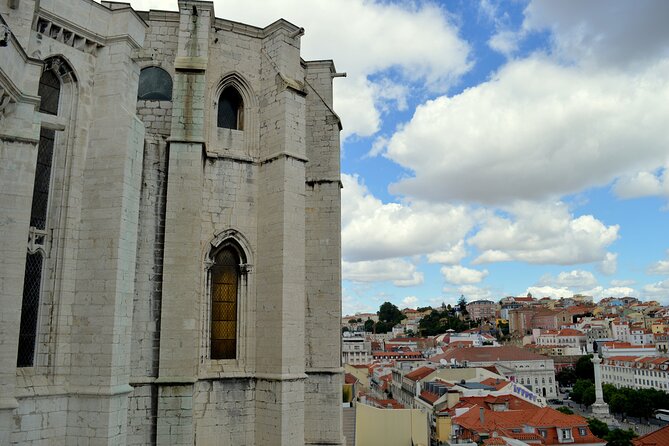
- Carmo Monastery ruins: a strong stop tied to the Lisbon earthquake and Portugal’s dictatorship period.
- Chiado poet walk: a shortcut into the Fernando Pessoa area and the artistic streetscape.
- Trams and Praça Luís de Camões: classic Lisbon vibes with guide tips for what to notice nearby.
- Bica Funicular photo moment: one of those steep, scenic Lisbon shots you’ll instantly recognize.
- Time Out Market Lisboa ending: a natural place to keep your momentum for food after the tour.
A 2-hour route that actually helps you orient
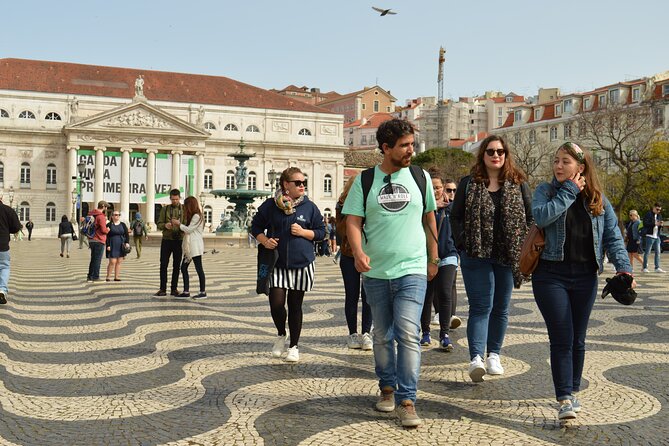
If Lisbon feels like a staircase to you, this tour gives structure. In about 2 hours, you move through the lower town and the neighboring districts where most first-timers get their bearings: Baixa, Chiado, and Bica.
The pacing is brisk but not frantic. The stops are timed to give you enough time to look, take photos, and listen, then move on before the group stretches too far. With a maximum of 12 travelers, it stays intimate enough that a good guide can tailor a little without turning it into a lecture.
The tour is on foot, and the route includes moderate slopes and steps. If you have a limited walking day, plan for breaks and wear shoes you trust on uneven old-street surfaces.
You can also read our reviews of more city tours in Lisbon



Rossio Square to Elevador de Santa Justa: Baixa’s best shortcut
You start at Praca Dom Pedro IV, also called Rossio, right in the heart of Baixa. This is the smart opening because it’s a central square where you can later trace what you learned. Even if your day is chaotic afterward, this start point anchors your mental map.
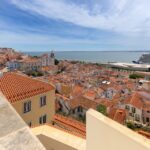
From Rossio, you head to the Elevador de Santa Justa. You see it from below first, which helps you understand how this famous piece of Lisbon engineering fits into the hills. Then you go to the observation deck for the big payoff: a view that highlights the area around Lisbon Castle.
Why this stop is valuable: Lisbon is full of viewpoints, but it’s harder to connect them until you know where the city’s “upper layers” sit. This elevator moment gives you a vertical reference point, so later, when you look out from a miradouro, you can place what you’re seeing.
The tour lists admission for this stop as free, so you’re not paying extra just to stand in the right spot and get oriented.
Convento do Carmo ruins: where the city remembers its shocks
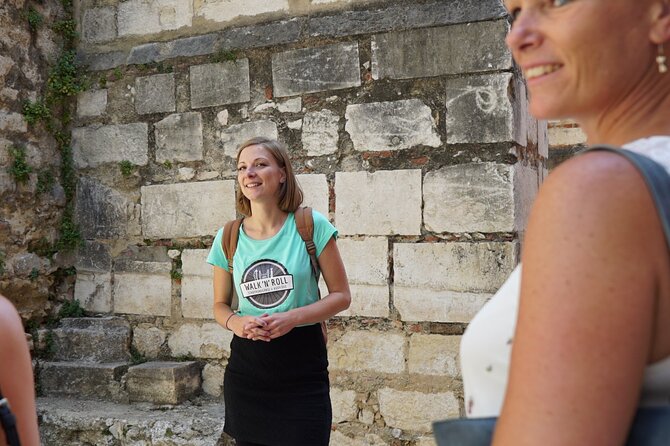
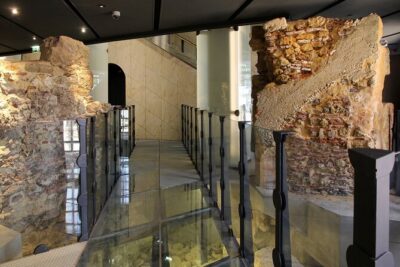
Next comes Convento do Carmo, the monastery ruins that Lisbon uses like a living lesson. You’re not just looking at old stone; you’re standing at a reminder of the Lisbon earthquake and the later era of Portuguese dictatorship.
This is the kind of stop that turns photos into context. The ruins show you how the city adapted and rebuilt after major disruption, which is a theme that comes up again and again in modern Lisbon life. A good guide also connects it to what you can still see in the streets: how plans changed, how neighborhoods evolved, and why the city feels both historic and stubbornly present.
The stop is timed for about 20 minutes, so you’ll get the story without losing too much time to standing and reading. If you like history but hate slow museums, this is a good middle lane.
Chiado and Fernando Pessoa’s quarter: art, literature, and everyday streets
After Carmo, the tour moves into Chiado, with a stop around the poet quarter tied to Fernando Pessoa. You follow the area on foot, and the guide uses it as a lens for Portuguese culture—how writers shaped public identity, and how the neighborhood became a home for art and ideas.
Chiado also gives you visual Lisbon comfort. You’ll pass streets with beautiful tiles, and you’ll see the kind of layered architecture that makes Lisbon feel intimate even when it’s crowded. The guide’s job here is to help you see the pattern, not just point at buildings.
This part of the walk is timed around 15 minutes. That’s short, but it works because it’s not trying to replace a full literary walking tour. Instead, it plants names and themes in your head so you recognize them later when you’re wandering on your own.
Praça Luís de Camões and tram culture: why this square matters
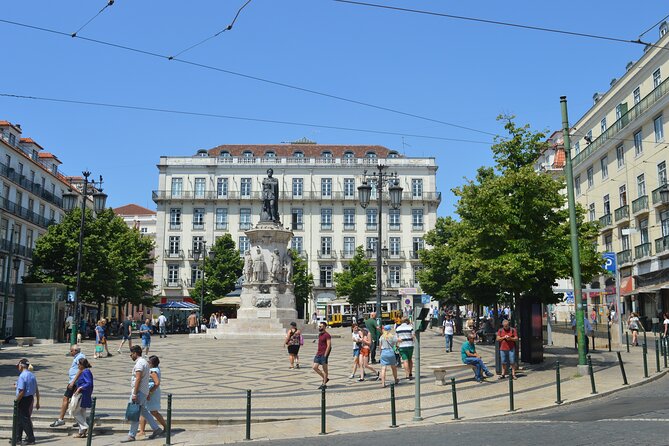
You then reach Praca Luis de Camoes, a major square with tram energy. This is one of those places where Lisbon’s transport isn’t just practical—it’s part of the city’s identity.
The tour includes time for you to look at the square and its tram connection, and your guide shares tips on what to notice around you. That matters because Lisbon trams can look like a single postcard scene, but different lines and stops create different neighborhood rhythms.
You spend about 15 minutes here. It’s enough to get the vibe, spot where to go next if you want to ride later, and learn how locals think about these routes as part of daily movement.
If you plan to ride trams anyway, this stop is a helpful preview. You’ll know what matters when you’re choosing which line to use and when.
You can also read our reviews of more tours and experiences in Lisbon






Bica Funicular: the steep Lisbon photo you’ll actually understand
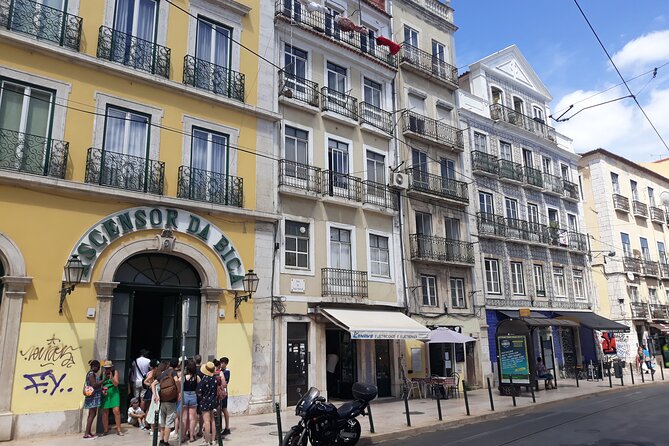
Next is Bica Funicular, famous for its view and for being one of the most popular photo angles over the Tejo River. You don’t just stop for a picture—you get a quick sense of how funiculars work in Lisbon’s hill geography.
This is a short stop, around 10 minutes, but it hits a sweet spot. It gives you that iconic Lisbon moment without turning the tour into a long waiting game.
Practical note: if it’s busy around this funicular, keep your expectations flexible. The best photos come when you’re patient with people-shuffling and angles. The guide’s job is partly to help your group find a workable spot.
Miradouro de Santa Catarina: the Tejo, Christ statue, and the bridge in one glance
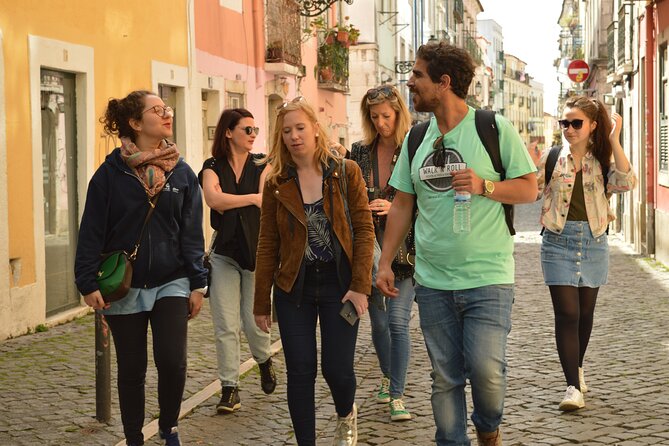
This is one of the tour’s centerpieces: Miradouro de Santa Catarina. It’s popular in the evening, but it’s still a strong daytime viewpoint because the city’s layers read clearly.
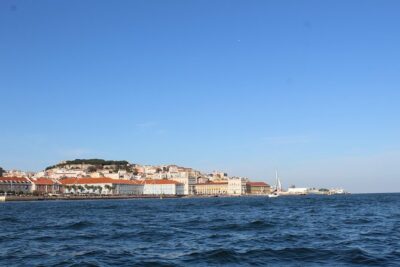
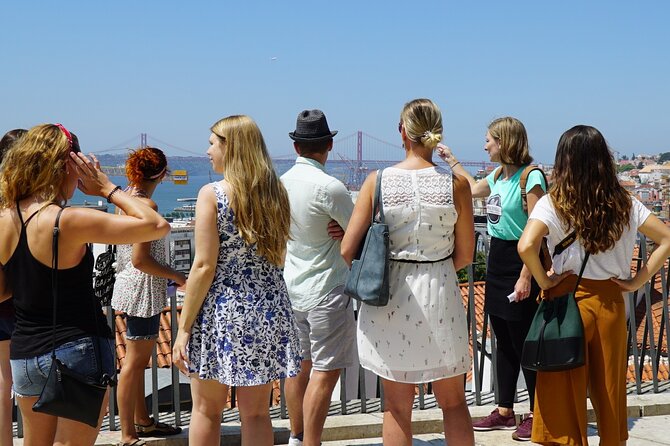
You get a wide view over southern Lisbon and the Tejo River, plus landmarks in sight including Christ the Redeemer and the 25th of April Bridge. Standing here makes those symbols click into the real geography of Lisbon, not just their reputation.
The stop is about 20 minutes, which is the right amount of time. Enough to let your eyes adjust, grab photos, and listen while you’re still physically in the scene. If you’re like me and want to understand what a bridge or statue means in context, this viewpoint delivers.
This is also where the guide’s talk about current developments fits well. Views change how you interpret a city’s future—where growth is happening, what’s changing, and what locals are dealing with now.
Time Out Market Lisboa: a smart finish for food and next steps
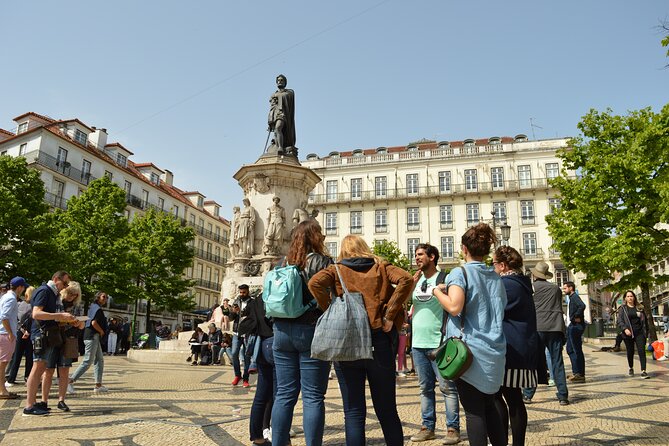
The tour ends at Time Out Market Lisboa in the big market hall at Mercado da Ribeira, not far from the river. Ending at a food hub is a real advantage because you’re not forced to sprint off into an empty street afterward.
You get about 10 minutes here. During that time, the guide shares recommendations to help you choose quickly, and you also receive more suggestions in written form. That written list is especially helpful if you’re planning your next meals while you still have energy.
Why this ending works: you leave with both direction and a fallback. If your first choice restaurant is booked or too long a wait, you’re right at a place designed for quick decisions.
No snacks are included, so if you expect to nibble during the tour, you’ll want to handle it separately. The market finish makes it easy to plan a proper meal afterward.
Price and value: what $32.10 buys you in real terms
At $32.10 per person for roughly 2 hours, this tour isn’t about ticking off every museum. It’s about getting an efficient orientation through the neighborhoods that define first-time Lisbon.
Here’s what you’re paying for, in practical terms:
- Time-saving route planning through Baixa, Chiado, and Bica
- German-speaking guiding that adds stories to what you’d otherwise only see as street scenes
- Viewpoint highlights that help you place Lisbon’s hills and landmarks
- Restaurant and sightseeing recommendations in written form after the walk
The value rises if it’s one of your first days. With that early context, your self-guided walking later becomes easier and less aimless. A common move is to do this on day one or day two, then build the rest of your trip around what the guide mapped out for you.
For context, the tour is mobile-ticketed and starts near public transportation, so you’re not wasting time figuring out last-minute logistics.
Group size and the guide factor that makes or breaks a walking tour
This tour caps at 12 travelers, and that size is a sweet spot for a walking route with viewpoints. It means the guide can keep track of who’s listening, who needs a slower pace, and when to regroup after stair or street crossings.
The guide experience seems to matter a lot here. In German, the difference between a stiff script and a lively storyteller is huge, and names like Pedro, Sara, and Melina come up as examples of guides who are engaging and tailored.
You can also feel the intent in the route itself: it blends iconic spots with “how Lisbon works” explanations—trams, funiculars, hills, and the city’s memory of past events.
Practical tips so you get the most out of each stop
A few small habits will improve your experience, especially with viewpoints and short time windows.
- Wear good walking shoes. You’ll be on uneven surfaces and moving between elevations.
- Bring a light layer. Viewpoints and weather can shift quickly, and you’ll stand still for photos.
- Plan your first big Lisbon meal after the tour at Time Out Market Lisboa. The timing lines up well.
Also, remember that this is a German-speaking tour. If German isn’t your strength, focus on the scenes and landmarks, and use the written recommendations afterward to keep your momentum.
Who this tour suits best
This is ideal for first-timers who want a fast, logical route without planning every stop. It’s also a strong choice if you like a guide who connects the past to present-day Lisbon topics.
You’ll enjoy it most if you:
- Want major highlights in a short time
- Prefer walking tours with a small group feel
- Can follow German well enough to catch the stories
- Like ending with a practical place to eat and plan next moves
If you’re traveling with someone who doesn’t speak German, you may need to decide whether the person can tolerate partial understanding. The sights are good, but the details depend on language.
Should you book this Lisbon highlights walk?
Book it if you want a guided on-ramp into Lisbon. The route is efficient, the viewpoints are timed well, and ending at Time Out Market Lisboa keeps your day from feeling like a transfer station.
Pass on it if you’re looking for museums, long indoor stops, or a language you can’t follow. This isn’t that kind of experience. It’s a tight, outdoor highlights walk built for people who want stories and orientation more than deep independent research.
One last note: the tour requires good weather. If conditions are poor, it will be offered on a different date or you can get a full refund, so it’s worth keeping your schedule flexible.
FAQ
Is the Lisbon city tour conducted in German?
Yes. The tour is a German-speaking city tour.
How long is the tour?
It lasts about 2 hours.
What is the group size limit?
The tour has a maximum of 12 travelers.
Where does the tour start and end?
It starts at Rossio1100-202 Lisbon, Portugal and ends at Time Out Market / Mercado da Ribeira, Av. 24 de Julho, 1200-479 Lisboa.
Do I need paid admission tickets for the stops?
The itinerary lists admission ticket free for the stops (Rossio, Elevador de Santa Justa viewing, Convento do Carmo, and the other scheduled highlights).
Are snacks included?
No. Snacks are not included.
What happens if the weather is bad?
The experience requires good weather. If it’s canceled due to poor weather, you’ll be offered a different date or a full refund.
If you tell me what language level you’re comfortable with in German, I can suggest whether this format will feel great for you or whether you’d be better with a different tour style.