REVIEW · GUIDED
Lisbon on foot: From the hills to the river – Dutch guide
Book on GetYourGuide →Operated by Gino Lisboa · Bookable on GetYourGuide
Lisbon’s hills make the best classroom. I really liked the Dutch-speaking guide approach, because the stories stay clear and easy to follow. I also enjoyed the guided stop at Café A Brasileira with the Fernando Pessoa statue, which adds instant personality to the walk. One consideration: the route is not suitable for people with mobility impairments, and you’ll be on slopes and stairs.
For $36, you get a tight, 2-hour loop that strings together big sights without paying extra entrance fees. You’ll finish at Time Out Market, which is handy if you want something to eat or drink right after the walk and still keep your day moving.
In This Review
- Key highlights to look forward to
- A short walk that covers big Lisbon energy
- Meeting in the São Pedro de Alcântara viewpoints
- Bairro Alto and Chiado: maritime stories while the streets tighten
- Getting your way down with Carmo Convent and St. Dominic’s Square
- Commerce Square and Baixa: what the 1755 earthquake changed
- Café A Brasileira: Pessoa, coffee vibes, and a local-style pause
- Santa Justa Lift and the art of moving through Lisbon’s grades
- The pastel de nata stop: a quick snack with a point of view
- Along the Tagus: Ribeira das Naus and the approach to Cais do Sodré
- The 25 de Abril Bridge: scenic views without the effort tax
- Finishing at Time Out Market: snack and reset right away
- Who this tour suits best (and who should skip it)
- Value check: is $36 worth it?
- Should you book this Lisbon on foot experience?
- FAQ
- FAQ
- How long is the Lisbon on foot tour?
- What language is the tour in?
- Where does the tour start?
- Where does the tour end?
- How much does the tour cost?
- Is food included?
- Are entrance fees included for attractions?
- Is the tour private or in a small group?
- Is this tour suitable for people with mobility impairments?
- Is free cancellation available?
Key highlights to look forward to
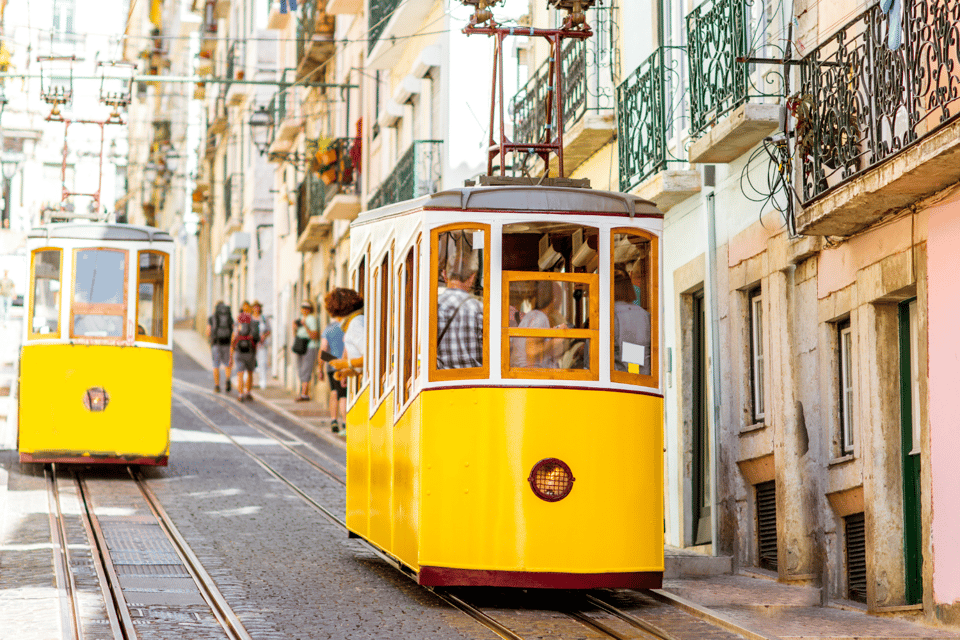
- A 100% Dutch walk with Gino Lisboa so you can actually follow every story
- São Pedro de Alcântara viewpoints that frame Lisbon and São Jorge Castle for quick orientation
- Bairro Alto and Chiado walking storytelling tied to Portugal’s maritime era and famous names like Vasco da Gama and Luís de Camões
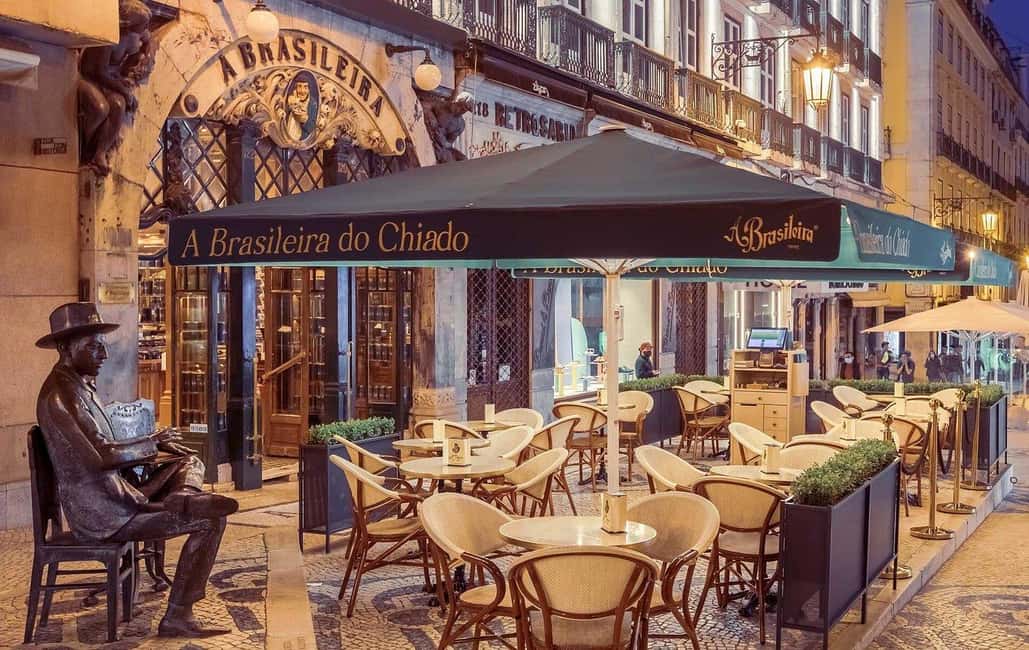
- Café A Brasileira with a Fernando Pessoa statue stop, plus a true local-feeling pause
- Santa Justa Lift descent and the 1755 earthquake rebuild explained as you move through Baixa
- Final stretch toward the Tagus and the 25 de Abril Bridge, ending at Time Out Market
A short walk that covers big Lisbon energy
This is the kind of tour that helps you understand Lisbon fast. In two hours, you go from hilltop views down into the river area, which is exactly how the city wants to be experienced: up, down, and full of viewpoint moments.
I like that it’s guided in Dutch end to end. No translation fog. You get names, dates, and context as you walk, not after the fact. And because it ends at Time Out Market, the tour naturally hands you a place to grab a snack without hunting for plans when you’re already tired.
The price also feels reasonable for what you get: you’re paying for a live guide and a structured route, not for entry tickets. If you’re trying to spend your money on food and getting around on your own, this format fits well.
You can also read our reviews of more guided tours in Lisbon


Meeting in the São Pedro de Alcântara viewpoints
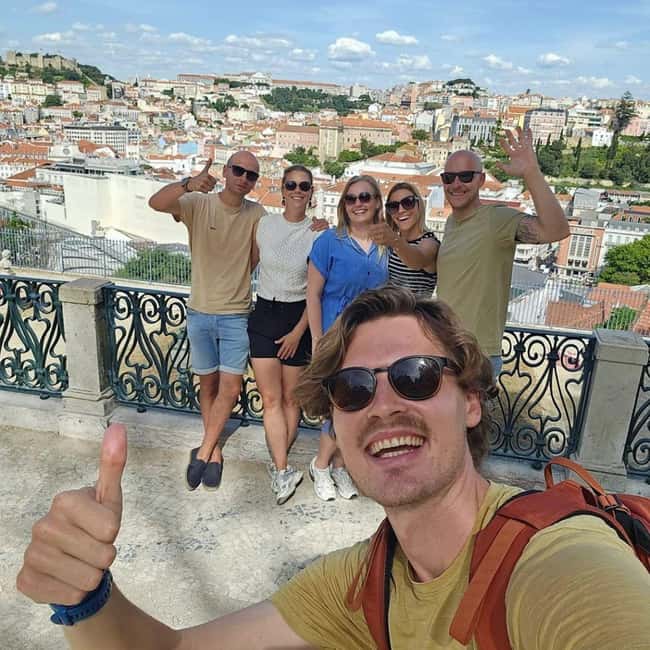
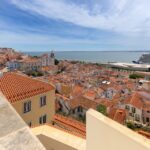
The walk starts at São Pedro de Alcântara (also listed as Miradouro de São Pedro de Alcântara). This is a smart opener. You get a “map in your head” moment: Lisbon spreads out below you, and São Jorge Castle is part of the view.
Why this works: once you’ve seen where the hilltop sits relative to the older quarters and the river, the rest of the walk clicks into place. You’re not just moving streets—you’re tracing how the city’s layout makes sense.
Practical tip: wear comfortable shoes right from the start. Even if the walk feels relaxed, viewpoint-to-street routes in Lisbon naturally involve steps and uneven ground.
Bairro Alto and Chiado: maritime stories while the streets tighten
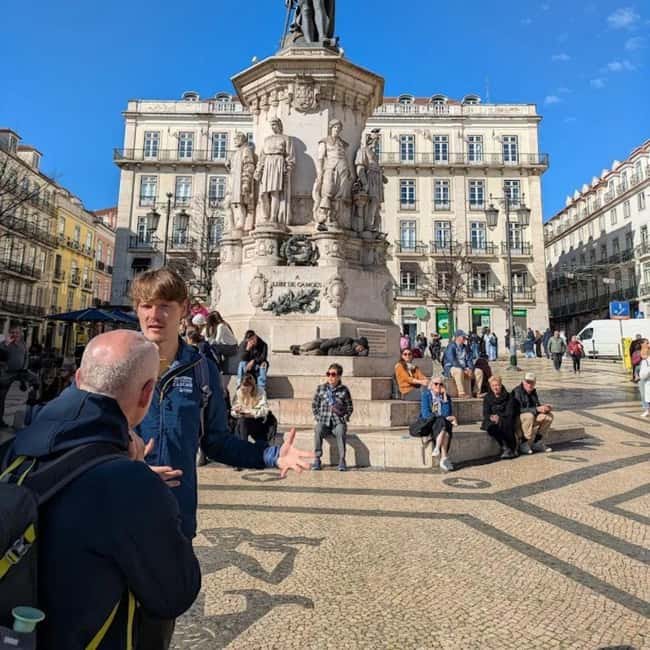
Next you head through the Bairro Alto and Chiado area. This is where the tour turns from scenery into story. Your guide ties the streets to Portugal’s Age of Exploration and gives context around major historical figures—Vasco da Gama and Luís de Camões are specifically part of the route’s explanations.
You’ll also get a sense of daily life here. These neighborhoods can feel layered: tourist-friendly streets on one corner, older residential vibe around the next bend. The guide helps you notice what you might otherwise rush past, like how Lisbon’s identity is tied to seafaring rather than just to beaches.
If you like walking tours where the guide gives you mental “hooks” you can remember later, this section is built for you. The route keeps moving, but the stories give you something to hold onto as the streets change.
Getting your way down with Carmo Convent and St. Dominic’s Square
As you continue, the route passes by Carmo Convent and St. Dominic’s Square. These stops matter less as museum moments and more as part of the city’s visual rhythm. In a tour like this, you’re not going inside attractions—so you’re learning how these landmark spots fit into Lisbon’s street network and what to look for outside.
This is also where the walking starts to feel like Lisbon’s “real” geography: squares, narrow streets, and the subtle shift toward the Baixa area. Your guide’s job here is to keep you oriented so you don’t feel like you’re just collecting stops.
A small heads-up: because there are no attraction entrances included, don’t expect long time inside buildings. The payoff is the street-level context, not timed ticket access.
Commerce Square and Baixa: what the 1755 earthquake changed
By the time you reach Baixa de Lisboa and then Commerce Square, you’re in the part of Lisbon that shows recovery and rebuilding. Your guide explains how the city was rebuilt after the great earthquake of 1755 as you move through this area.
That detail is more than trivia. Lisbon’s central districts were reshaped in ways you can still read in the layout. When someone points it out while you’re standing in the space, the city becomes easier to interpret on your own later.
Commerce Square is especially useful in this format because it helps you understand where Lisbon’s “open space” meets its grand avenues. Even if you’re not focused on architecture, these wide squares help your legs and your brain reset after hill streets and tighter lanes.




Café A Brasileira: Pessoa, coffee vibes, and a local-style pause
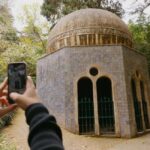
One of the most memorable stops on this walk is Café A Brasileira. You’ll be greeted by a statue of Fernando Pessoa, which is a very Lisbon kind of touch—literature and daily life in the same frame.
This is also where the tour breaks the walking rhythm in a pleasant way. The stop is traditional and feels built for conversation and people-watching. Even if you’re only having a quick break, it makes the tour feel less like a checklist and more like a guided stroll through living neighborhoods.
If you’re the type who likes tasting your way through cities, this stop works because it connects culture to something you can experience immediately.
Santa Justa Lift and the art of moving through Lisbon’s grades
On the way down toward Baixa, you descend via the Santa Justa Lift. You don’t need to be a transport nerd to appreciate why this is a key moment on the tour.
The city’s hills can be exhausting, so Lisbon’s vertical movement systems become part of the story. The guide uses this segment to show how people historically dealt with changing elevations and how the walk is planned so you see more with less wasted effort.
You’ll also feel the change in your own walking energy. Going from viewpoint streets down toward the river is one of those things that makes Lisbon feel real: you physically experience the slope and the shift from older, higher quarters to the more central, rebuilt areas.
The pastel de nata stop: a quick snack with a point of view
This tour includes a tasty break for pastel de nata. Your guide even describes it as their favorite in the city, and you’ll likely try it around the middle of the walk—after you’ve already seen enough sights to understand why this stop is timed well.
No long meal break here. You’re told it’s a stop for the pastry, and then you’re back on your feet. The tradeoff is speed: you get a flavor moment without losing the flow of the walk.
My advice: if you don’t usually snack during tours, still make room for this one. A warm pastry in the middle of a walk can be the difference between “nice tour” and “I remember this day.”
Along the Tagus: Ribeira das Naus and the approach to Cais do Sodré
Then you follow the Tagus River along Ribeira das Naus. This is where the city opens up again—water, long views, and the shift from narrow neighborhood lanes to a river edge that feels like a different Lisbon chapter.
Walking along a river does something practical: it slows your pace just enough to let the scenery land. It’s also a natural transition into your finish area near Cais do Sodré.
If you’re taking photos, bring your camera readiness here. Even without “perfect” weather, water and bridges create strong visual anchors.
The 25 de Abril Bridge: scenic views without the effort tax
As you near the end, you learn about the 25 de Abril Bridge and you’ll get scenic views on the way. Even if you never stop for a full photo session, the guide keeps the story connected to why the bridge is important and how it fits into Lisbon’s modern identity.
This matters because the bridge isn’t just a background in the distance. In Lisbon, it’s one of those landmark structures that helps you see the city as both old and new at the same time.
The walking approach keeps you from having to plan a separate bridge outing. You’re seeing it because the route naturally leads there.
Finishing at Time Out Market: snack and reset right away
The tour ends at Time Out Market. That finish is practical. You’ve walked a lot, you’ve had a pastry break already, and now you have options: grab a drink, try another bite, and keep the momentum without committing to a full sit-down meal.
It also helps you plan the rest of the day. You’re dropping at a central food area, so you can head out afterward with energy instead of trying to find something immediately after a long walk.
If you’re traveling with limited time, this finishing point is one of the biggest “value multipliers” on the route.
Who this tour suits best (and who should skip it)
This is a great pick if you want:
- A 2-hour way to understand Lisbon’s layout, from hills down to the river
- A Dutch guide story style that stays easy to follow
- A route with viewpoint moments, cultural stops like Café A Brasileira, and a pastry break
- A structured day that doesn’t require paying entry fees to attractions
You might want to choose something else if:
- You have mobility challenges. The tour is not suitable for people with mobility impairments.
- You dislike walking downhill and uphill in quick segments. Lisbon is Lisbon here.
Value check: is $36 worth it?
For $36, you’re paying for one thing that’s hard to DIY: a guide who can connect neighborhoods to history while you’re physically in the right places. The tour also includes a pastry stop, which adds a small but satisfying “in-the-moment” benefit.
What you’re not paying for is almost as important. There are no entrance fees included because the tour doesn’t go inside attractions. That keeps the cost down and reduces the chance your experience gets hijacked by lines or ticket timing.
If your priority is to spend your day seeing a lot without turning it into a complicated logistics puzzle, this price feels fair.
Should you book this Lisbon on foot experience?
I’d book it if you want a fast, guided orientation to Lisbon that doesn’t require museum time. Starting at São Pedro de Alcântara, moving through Bairro Alto/Chiado, then down toward Baixa, and finishing near the Tagus gives you a clean overview of how the city “works.”
Book it especially if you’ll benefit from a Dutch-speaking guide—clear storytelling is the whole point here. Just make sure you’re comfortable with hills and steps, since this is a walking-focused route. If that fits your day and your body, it’s a smart way to get meaningful Lisbon context quickly and still end with food at Time Out Market.
FAQ
FAQ
How long is the Lisbon on foot tour?
The tour lasts 2 hours.
What language is the tour in?
It is 100% in Dutch with a live Dutch-speaking guide.
Where does the tour start?
The starting point can vary based on the option booked, either at São Pedro de Alcântara or Miradouro de São Pedro de Alcântara.
Where does the tour end?
The tour finishes at Time Out Market.
How much does the tour cost?
The price is listed as $36 per person.
Is food included?
A pastel de nata tasting stop is included, but there is no long break during the walk.
Are entrance fees included for attractions?
No. Entrance fees are not included, and the tour does not include going inside attractions.
Is the tour private or in a small group?
It’s available as a private or small group tour.
Is this tour suitable for people with mobility impairments?
No, it is listed as not suitable for people with mobility impairments.
Is free cancellation available?
Yes. Free cancellation is offered up to 24 hours in advance for a full refund.