REVIEW · ALFAMA & OLD TOWN TOURS
Walk Lisbon Like a Local: Bairro Alto & Downtown Experience
Book on Viator →Operated by Discover Lisbon · Bookable on Viator
Lisbon turns dramatic on a hillwalk. This 2.5-hour guided walk pulls you through Rossio and into Bairro Alto with stories that make the streets feel personal, not like a checklist. I particularly like the way the guide connects landmarks to human events, from royal rail design to plague-era neighborhood change. I also like how the pacing stays short and friendly, yet still delivers a real sense of the city’s layers.
One thing to plan for: it’s a walking tour with a moderate fitness level, so expect hills and uneven pavement. Also, it ends at Miradouro de Santa Catarina, so you’ll want an easy plan to get back after the viewpoint moment.
You’ll go in English with a small group size (max 30), and you’ll use a mobile ticket. Most stops don’t require paid admission, which keeps the experience good value for the time you spend outside.
In This Review
- Key things you’ll notice on this Bairro Alto and downtown walk
- Lisbon in 2.5 hours: why this route works
- Starting at Praça Dom Pedro IV: Rossio’s square energy
- Estação do Rossio: José Luís Monteiro and a station that looks like a temple
- Praça Luís de Camões: poetry, a lost eye, and the Vasco da Gama link
- Bairro Alto’s hill story: walls, plague neighborhoods, and Saint Roque
- Largo do Carmo: Nuno Álvares Pereira’s vow made stone and convent life
- Walking tips and the Miradouro de Santa Catarina finish
- Price and value: about $3.60 for a guided cultural route
- Who this tour suits best (and who should choose something else)
- Should you book this Bairro Alto and downtown walk?
- FAQ
- How much does this tour cost per person?
- About how long is the walk?
- Where do I meet, and where does it end?
- Is the tour offered in English, and do I get a mobile ticket?
- What’s included, and what’s not included?
- Do any of the stops require admission?
- How strenuous is the walk, and are service animals allowed?
- How big is the group?
- What’s the cancellation policy for a full refund?
Key things you’ll notice on this Bairro Alto and downtown walk
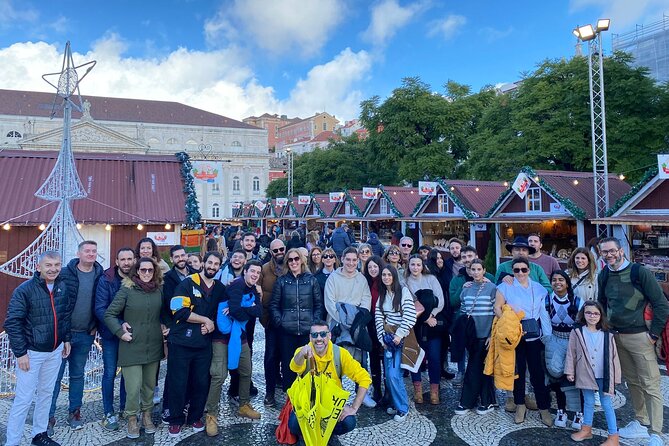
- Rossio Station’s Neo-Manueline façade and its Romantic, temple-like entrance
- Camões Square and how one poet ties to Portuguese language and Vasco da Gama’s voyage
- Bairro Alto’s urban story: walls, lost doorways, plague cemeteries, and King Manuel I’s relic
- Largo do Carmo’s vow: Nuno Álvares Pereira’s Aljubarrota pledge and the Carmelite outcome
- Hilltop finish at Miradouro de Santa Catarina for those classic Lisbon “look out” moments
Lisbon in 2.5 hours: why this route works
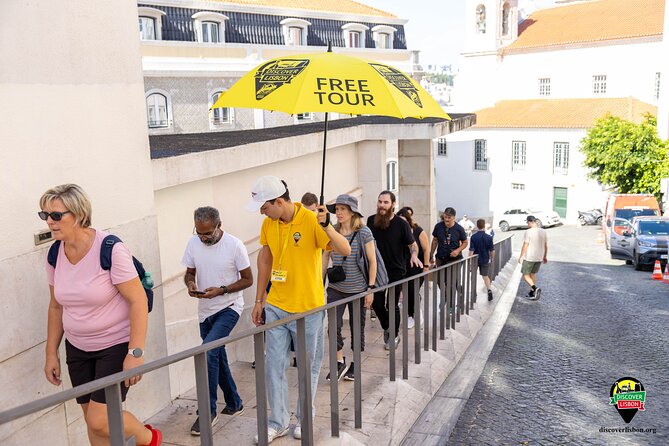
This walk is built for people who want Lisbon’s personality without spending an entire day in “museum mode.” You start near Rossio, move through downtown landmarks, then work your way up into Bairro Alto, where the city’s history shows up in the street pattern and building choices.
What makes it feel local is the mix of practical orientation and storytelling. You’re not just shown where to stand; you’re taught what changed, what disappeared, and why the neighborhoods grew the way they did.
You also get a helpful time window. Two and a half hours is long enough to feel like you learned something real, but short enough that you can still do dinner plans without rushing across town.
You can also read our reviews of more walking tours in Lisbon


Starting at Praça Dom Pedro IV: Rossio’s square energy
You begin at Praça Dom Pedro IV, a central point that makes it easy to orient yourself quickly. From there, the route threads toward the heart of Bairro Alto, so you feel the shift from downtown rhythm to hilltop views.
This first stretch matters because Rossio is one of those places where Lisbon’s layout becomes obvious once you walk it. You’ll pass through key areas rather than going in a straight line, which helps you understand how neighborhoods connect.
One practical tip: wear shoes that handle uneven surfaces. Even though this is billed as a moderate walk, Lisbon’s streets can be a little tricky underfoot, especially when you’re heading uphill.
Estação do Rossio: José Luís Monteiro and a station that looks like a temple
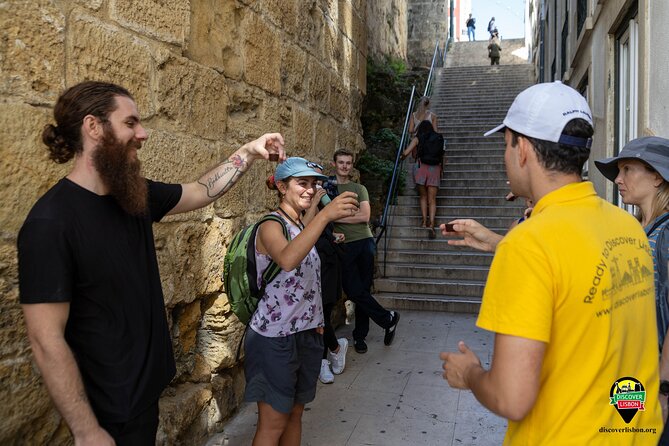
The second stop is Estação do Rossio, one of Lisbon’s most photogenic gateways into the city’s past. The station was commissioned by the Portuguese Royal Railway Company and designed between 1886 and 1887 by Portuguese architect José Luís Monteiro, then completed in 1890.
Here’s the part I love because it changes how you look at the building: the station’s Neo-Manueline style is not subtle. It’s described as a Romantic recreation of the Manueline style typical of early 16th-century Portugal. In other words, it’s style-as-story—Portuguese heritage turned into stone decoration.
At the entrance, you’ll notice two intertwined horseshoe portals, and the façade includes the words Central Station. The outside look is said to resemble a temple more than a typical train station, and that’s exactly what makes a guided walk worthwhile. You’re learning what you’re seeing, not just moving past it.
Also, this is a great pause point. You get about 25 minutes to take it in, so you can stop for a photo without feeling like you’re in a sprint.
Praça Luís de Camões: poetry, a lost eye, and the Vasco da Gama link
Next comes Praça Luís de Camoes, tied to Portugal’s best-known national poet and author of Os Lusíadas. The epic poem describes Vasco da Gama’s sea route discovery to India, which is a direct thread from literature to global exploration.
You’ll also hear the story that Camões lost one eye in a battle in Ceuta. That detail is small, but it helps the figure feel human instead of like a name on a street sign.
One more connection I find useful for readers: it’s said the influence of Os Lusíadas is so profound that Portuguese language is sometimes referred to as the language of Camões. That turns a square stop into a cultural shortcut. Instead of memorizing facts, you understand how the poet’s work shaped identity.
You’re there for about 30 minutes, which is enough time to absorb the context and still keep moving with the group.
Bairro Alto’s hill story: walls, plague neighborhoods, and Saint Roque
Now you really start feeling why the tour is called a Bairro Alto and downtown experience. In Bairro Alto, the history isn’t locked behind glass. It shows up in the logic of where people lived, where entrances used to be, and what the city chose to preserve after disaster.
The walk explains that in the late 15th century Lisbon was packed with people from all over the world because of the discovery era. That pressure led to a need to enlarge the center. The place you know as Camões Square today was once one of the city entrances.
You’ll also hear about older structures: the Fernandine wall and the door of Santa Catarina were at the area where, after the earthquake, you have two churches—Encarnação and Loreto. That’s a big deal because it teaches you how Lisbon rebuilds. The modern city can be layered over older routes and boundaries.
The tour adds a darker turn that makes the neighborhood’s growth make sense. On the other side of the wall were areas tied to rich noble families, while at the top of the hill there was a cemetery for victims of the black plague.
Then comes the key twist: in 1506, King Manuel I requested a relic of Saint Roque from Venice and placed it in a hermitage near the cemetery. With demographic growth and the plague, less fortunate and sick people ended up moving closer to the church. An urban plan then developed to receive them.
This is where the guided storytelling pays off most. Without context, Bairro Alto can feel like a bar-and-view kind of neighborhood. With context, you see how faith, health crises, and city planning all tangled together on this slope.
You’ll spend about 30 minutes here, which is enough time to take in the street character while still not losing the group.




Largo do Carmo: Nuno Álvares Pereira’s vow made stone and convent life
The final historical anchor is Largo do Carmo, centered on a church and convent built in 1389. The backstory starts with Nuno Álvares Pereira, a general who helped King John repel Castilian troops. In 1385, at the Battle of Aljubarrota, he vowed to build the world’s most beautiful church if he defeated the Castilians.
Portugal came out victorious, and he kept his promise. He funded the construction of the Carmelite church and convent. After the completion in 1423, he joined the Carmelite order and spent the rest of his life in the convent.
I like this stop because it’s not just “what happened.” It’s how a personal vow became a place that kept functioning for centuries. It also helps you connect Lisbon’s medieval power stories to the streets you’re standing on now.
You’ll have about 15 minutes here. It’s shorter than Bairro Alto or Camões, but with the context you get, you can still understand why this spot matters.
Walking tips and the Miradouro de Santa Catarina finish
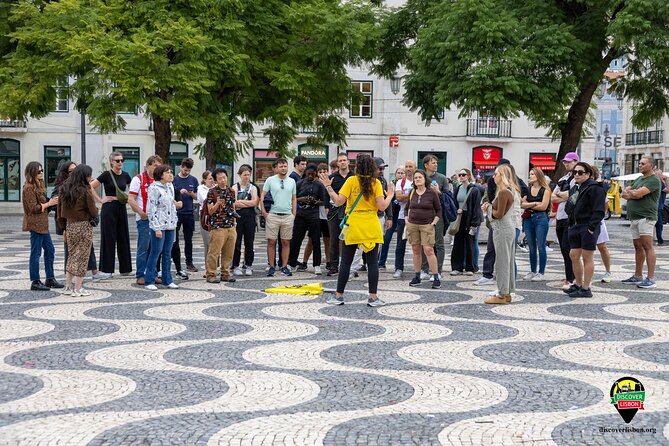
The tour ends at Miradouro de Santa Catarina, which is a smart way to close. After learning the city’s movement—how people entered, where walls ran, and how neighborhoods shifted—you get the payoff: a viewpoint where you can make sense of the hills and rooftops.
Because the walk includes uphill segments and uneven streets, I’d treat it as a shoes-and-sanity kind of day. Bring water if you run hot, and don’t plan anything delicate right at the end, like rushing across town for a tight timed activity.
Also, the route is near public transportation, so if you want to extend the evening, you can usually hop to another neighborhood without too much stress. The big win is that you won’t feel stuck far from the rest of the city once the walking ends.
Price and value: about $3.60 for a guided cultural route
At $3.60 per person, this is one of those deals that’s hard to find in a city like Lisbon. What makes the price feel fair isn’t just the walking—it’s the amount of context built into the route.
You’re paying for an expert local guide, about 2.5 hours of time, and the stories and legends that turn architectural details into something you can actually remember. Most stops have free admission, so you’re not getting nickel-and-dimed for entry tickets.
There is one trade-off you should be aware of: it does not include private transportation, and it specifically does not include entry to the Santa Justa elevator. If Santa Justa is a must for you, you’ll want to plan it separately.
Still, for the price, this tour is a strong “get your bearings fast” option—especially if you like Lisbon’s layers and want a route you might not naturally choose on your own.
Who this tour suits best (and who should choose something else)
This is a great fit if you want a guided walk that touches major landmarks in a short time, with story-driven context rather than lecture-style history.
It’s also ideal for people who don’t want to hop between far-flung spots all day. Rossio to Bairro Alto is a manageable arc, and the tour ends at a place designed for views, so you get a clean payoff.
You might choose a different experience if you want mostly indoor stops or if you have limited ability for uphill walking. The tour calls for moderate physical fitness, and the route is built on a hill neighborhood.
If you’re traveling with kids, consider whether they’ll handle a steady walk and listening. It’s not a long marathon, but it does rely on attention for the stories.
Should you book this Bairro Alto and downtown walk?
If you like Lisbon when it feels real—street corners, old façades, and the kind of history that explains why a neighborhood looks the way it does—then yes, book it. The route is short, the guide-led storytelling adds meaning to what you see, and the finish at Miradouro de Santa Catarina gives you the kind of views that make the hills feel worth it.
I’d especially recommend it for first-time visitors who want to understand Lisbon’s geography quickly and for people who want a budget-friendly guided option that still feels substantial.
Only skip it if you want lots of paid attractions or you’re counting on included elevator time. This walk is about orientation and legends, not about checking off ticketed sights.
FAQ
How much does this tour cost per person?
The price is $3.60 per person.
About how long is the walk?
The tour lasts about 2 hours 30 minutes.
Where do I meet, and where does it end?
You start at Praça Dom Pedro IV, 1100-200 Lisboa, Portugal and end at Miradouro de Santa Catarina, 1200-262 Lisboa, Portugal.
Is the tour offered in English, and do I get a mobile ticket?
Yes, it’s offered in English, and you receive a mobile ticket.
What’s included, and what’s not included?
Included are an expert local guide, the 2.5-hour walking tour, and intriguing stories and legends. Not included are private transportation and entry to the Santa Justa elevator.
Do any of the stops require admission?
The stops on the route are listed as free admission. Santa Justa elevator entry is not included.
How strenuous is the walk, and are service animals allowed?
The tour notes a moderate physical fitness level. Service animals are allowed.
How big is the group?
The maximum group size is 30 travelers.
What’s the cancellation policy for a full refund?
You can cancel for a full refund up to 24 hours before the experience starts.
If you want, tell me what month you’re going and where you’re staying (neighborhood or nearby landmark). I can suggest the easiest way to start at Praça Dom Pedro IV and how to time your last stop at Miradouro de Santa Catarina.