REVIEW · TUK TUK TOURS
Tuk-Tuk Lisbon Tour 1 – 3hours
Book on Viator →Operated by My tuk life tours · Bookable on Viator
Ready for a Lisbon speed tour? This 3-hour Tuk-Tuk Lisbon Tour strings together riverfront grandeur, Alfama lookouts, and Belém monuments, with guides like Pedro, Beatrice, and Vanessa handling tight turns. I like the way it gets you oriented fast, and I like the quick-history stops that keep you moving. One heads-up: time at each spot is short, so you’ll mostly get photo moments and light context, not long church or museum time.
The best part is the value math. At $54.07 per person, you’re paying for a guided route with pickup, WiFi on board, and a bunch of major sights listed as admission free for the brief stops. You also get Lisbon flavors along the way, including a Pastel de Belém courtesy stop and a ginjinha liqueur moment during Alfama.
The tuk-tuk ride itself is part of the charm, but it’s not a smooth bus. Narrow streets and uneven pavement can mean a bumpy feel, especially if you have back issues. If weather or traffic changes the day, some guides have shown flexibility, including swapping to a car when rain hits hard.
In This Review
- Key highlights I’d plan around
- Why a Lisbon Tuk-Tuk Works: tight streets, fast orientation, big views
- Praça do Comércio: Lisbon’s riverfront welcome in the first minutes
- Lisbon Cathedral (Sé) and the “old Alfama” mood shift
- Miradouro de Santa Luzia: garden tiles and a view that frames Lisbon
- Miradouro da Senhora do Monte: the higher-hill panorama
- São Vicente de Fora: an impressive 16th-century church stop
- Chiado and the National Pantheon: Lisbon’s intellectual streets and monumental tombs
- Alfama on the move: ginjinha, tiles, and balcony-to-street charm
- Miradouro São Pedro de Alcântara: a view with Castelo in the frame
- Santa Justa Elevator: a quick look at neo-Gothic engineering
- Rua Cor de Rosa and Time Out Market: street color and food choices on your terms
- LX Factory: art, shops, and a former industrial vibe
- Belém in a hurry: Jerónimos Monastery, Pastel de Belém, and the Tower
- Belém Tower and Padrão dos Descobrimentos: maritime symbols and photo angles
- Price and Logistics: is $54.07 worth it for your time?
- Who should choose this tuk-tuk day (and who should skip it)
- Should you book the Tuk-Tuk Lisbon Tour?
- FAQ
- How long is the Tuk-Tuk Lisbon Tour?
- Is pickup offered?
- What language is the tour offered in?
- What’s included in the price?
- Is lunch included?
- Are entrance tickets included?
- Can I cancel for a full refund?
Key highlights I’d plan around
- A tuk-tuk that fits Lisbon’s narrow streets so you don’t lose half your day stuck outside the best angles
- Major landmarks in 3 hours, with frequent quick stops for photos and facts
- Viewpoints stacked for maximum payoff in Alfama and around Graça
- Food stops that aren’t random: ginjinha and a Pastel de Belém courtesy moment
- Guide-led pacing that can flex when traffic runs long or weather turns
Why a Lisbon Tuk-Tuk Works: tight streets, fast orientation, big views
Lisbon is built on hills, bends, and back streets. That’s great for atmosphere, and not great for buses. A tuk-tuk route solves a big problem: you get close to viewpoints and monuments without fighting for parking or trekking uphill from the far side of town.
In this tour, the guide handles the “how do we get there” part for you, which is the whole point when you only have a half-day. You’ll ride between stops, then hop off briefly to take in a view, a facade, or a key square. I like this format because it builds a mental map quickly, which makes the rest of your stay more fun. You start recognizing neighborhoods and streets instead of just collecting postcard photos.
The trade-off is obvious but important. When you have 10 minutes here and 15 there, you can’t expect deep time inside churches or long guided explanations. If you’re the type who wants to sit and read every plaque, you’ll feel the clock. If you want smart orientation plus standout scenes, this tour hits the sweet spot.
You can also read our reviews of more tours and experiences in Lisbon.


Praça do Comércio: Lisbon’s riverfront welcome in the first minutes

You start at Praça do Comércio, one of the city’s grandest squares right by the Tagus. Think size, symmetry, and that open feeling you only get near water. Even if you’ve seen pictures, being there in person helps. The arcade and wide expanse make Lisbon feel official and historic at the same time.
This stop is short, but it sets the tone. From here, you understand why Lisbon’s waterfront mattered for centuries. It’s also an easy place to start because you can take photos without climbing stairs or negotiating tight lanes right away.
What to do in those minutes: stand near the water-facing side if you can, look down the arcades, then snap a few frames showing the scale. After that, you’re ready to move up and into the older parts of the city.
Lisbon Cathedral (Sé) and the “old Alfama” mood shift
Next comes Lisbon Cathedral, also known as Catedral da Sé, in the historic neighborhood of Alfama. This is one of the oldest major religious buildings in the city, dating back to the 12th century, and the style leans strongly Romanesque. You’ll spot the heavy, older-feeling architecture right away.
This is a quick photo-and-facts stop, and that’s fine. The main value is context. Once you’ve seen Sé, Alfama’s streets start to make more sense. You’re no longer just walking past old buildings; you’re moving through a living timeline.
Practical tip: wear shoes you trust. Alfama’s streets and steps can be uneven, and you’ll likely be walking a bit more than you’d expect for a “tuk-tuk tour.”
Miradouro de Santa Luzia: garden tiles and a view that frames Lisbon

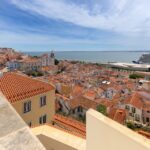
Then you reach Miradouro de Santa Luzia, one of the nicest viewpoints in Alfama. The key detail here is the setting: a lush garden, colorful flowers, and traditional Portuguese tilework. It’s not just a lookout platform; it feels like a small outdoor room.
The view is the payoff, but the garden is what makes it memorable. You can take photos with tiles in the foreground and city buildings behind, which makes your pictures look more “Lisbon” and less like a generic skyline shot.
Since the stop is brief, pick your photo angle early. After that, take one slow moment to just look. Lisbon’s charm is in the layering: rooftops, towers, and hills stacked in depth.
Miradouro da Senhora do Monte: the higher-hill panorama

Next is Miradouro da Senhora do Monte, up on one of the highest hills in Lisbon. If Santa Luzia is a sweet garden viewpoint, Senhora do Monte is more about the big panorama feeling. You can look toward Castelo de São Jorge and across the Mouraria area.
This is the kind of stop that makes you say: okay, now I get why people write travel guides about Lisbon hills. It’s also a good place to orient yourself for what comes next, since Castelo de São Jorge becomes a visual anchor.
If you’re sensitive to steps, note that viewpoints can involve walking on uneven ground. The tour keeps it to a short window, but you still may need a little stamina.

São Vicente de Fora: an impressive 16th-century church stop

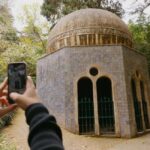
The tour then heads to Igreja de São Vicente de Fora, built in the 16th century. The church is known for ornate details and a mix of Renaissance and Baroque elements. Even in 10 minutes, you can appreciate the scale and the facade.
If you like architecture, this is a satisfying pause because it’s not just a viewpoint or a square. It’s a monument with a strong presence. For a short tour, that balance matters.
What to expect: brief entry or close viewing, then quick photo time. If you want to linger for interiors only, this probably won’t be your longest stop—but it gives you a worthwhile sample.
Chiado and the National Pantheon: Lisbon’s intellectual streets and monumental tombs

After Alfama viewpoints, you shift gears toward the National Pantheon and Chiado.
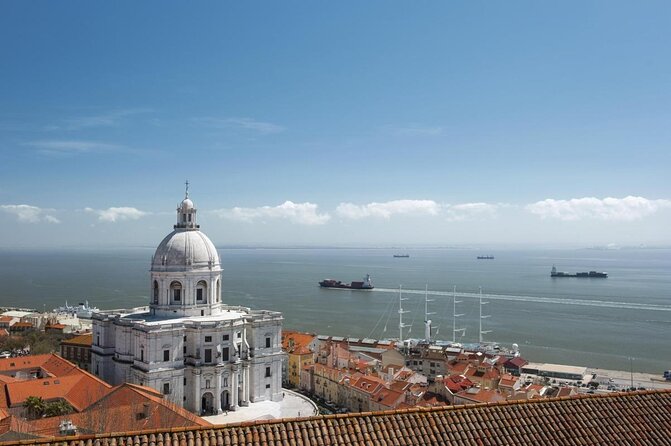
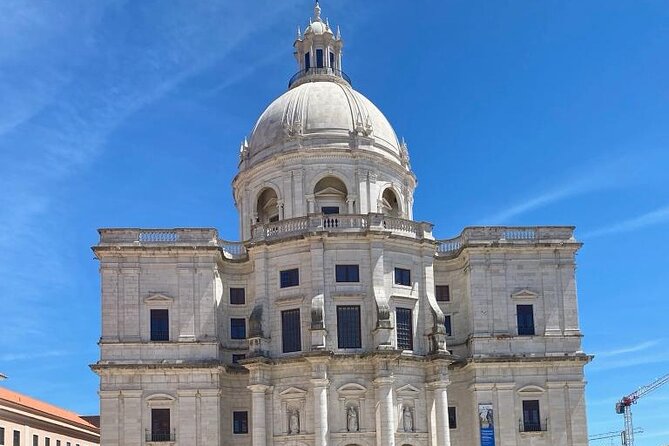
The National Pantheon is an imposing monument in Alfama that houses the tombs of important figures in Portuguese history. It’s the kind of place that makes you look up and around, not just at a doorway. This stop is part of the tour’s “big picture” approach: the city isn’t only streets and views; it’s also where national stories are physically marked.
Then you reach Chiado, known as Lisbon’s literary neighborhood. You’ll get the feel of a place once linked to major Portuguese writers like Fernando Pessoa and Eça de Queirós. Walking the cobblestones here shifts the mood from medieval hills to something more cultured and centered. It’s also a practical stop if you want to browse shops or pop into a cafe area between neighborhoods.
Alfama on the move: ginjinha, tiles, and balcony-to-street charm
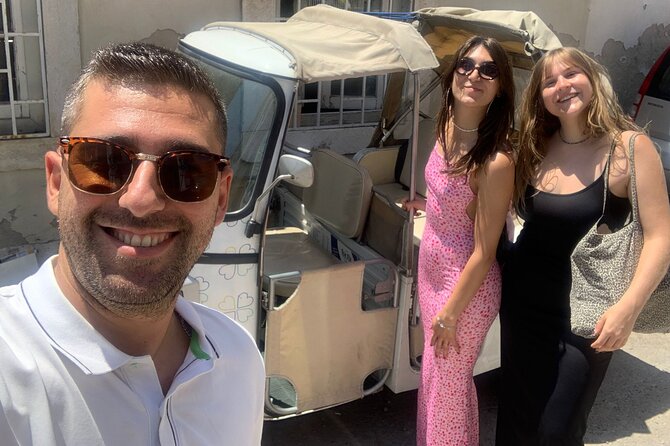
Alfama is the heart of the “wander without getting lost” strategy. This tour includes a guided walk through some charming lanes and historic corners, with stories tied to the neighborhood’s culture and traditions.
Expect familiar Lisbon images that feel real here: winding streets, small family-run shops, balconies with colorful flowers, and those signature Portuguese tiles on the facades. It’s also where you get the taste moment: ginjinha liqueur is included during the Alfama segment.
This is one of the more enjoyable parts of the day because it slows down enough for you to see details. In a short tour, you usually miss these. Here, you don’t.
Miradouro São Pedro de Alcântara: a view with Castelo in the frame
Next is Miradouro São Pedro de Alcântara, another standout viewpoint. Here, the key idea is the perspective: typical Lisbon houses with colorful tiles and red roofs below, and Castelo de São Jorge opposite on another hill.
This stop works well after the other lookouts because it gives you a new angle on the same big feature. You start seeing the city as a set of connected vantage points rather than random scenic spots.
If you’re photographing, look for a spot where the rooftops lead your eye toward Castelo. Those angles make pictures feel like “composition” instead of “snapshot.”
Santa Justa Elevator: a quick look at neo-Gothic engineering
Then you roll toward Elevador de Santa Justa, the iconic elevator in central Lisbon. It’s built in the 19th century with a cast iron structure and a neo-Gothic style, so it looks like both machinery and architecture.
Even if you don’t plan to ride the elevator during this stop, the exterior is worth seeing. You get the form in your mind, and it helps you recognize the area when you come back later on your own.
Because it’s a short stop, your best move is to take a few photos from the most open angles you find nearby, then move on. Don’t waste time trying to perfect one shot when you know you’ll have better viewpoints later.
Rua Cor de Rosa and Time Out Market: street color and food choices on your terms
Next comes Rua Cor de Rosa (also called Rua Cor de Rosa in the tour description), in the Cais do Sodré area. This is a colorful street where facades and lighting turn ordinary walking into a photo walk. It’s also described as a place where people meet, chat, and enjoy the nightlife side of Lisbon.
It’s short and sweet. You’ll get enough time to grab colorful shots and feel the neighborhood energy, but not enough to linger all night.
Then the tour lands at Time Out Market Lisboa, which is one of Lisbon’s go-to food and culture hubs. Here, you can browse stalls and pick something that fits your taste. The tour’s time at the market is brief, but it’s a helpful way to end a tour day with a decision instead of a forced meal.
If you’re hungry, plan to use your time wisely. Scan first, then order fast.
LX Factory: art, shops, and a former industrial vibe
After that, you visit LX Factory, set in a former industrial space that now holds shops, galleries, and places to eat and drink. This stop adds variety because it’s not strictly monuments and viewpoints. It’s more about modern Lisbon creative energy.
Even with limited time, you can spot murals and art installations, which makes it a good photo stop and a good “buy a small souvenir” area if you want something other than magnets.
If you’re the type who loves walking through design spaces, you might want to come back later, because the time here is just a sample.
Belém in a hurry: Jerónimos Monastery, Pastel de Belém, and the Tower
Then you switch to Belém, and the tour really leans into Lisbon’s Age of Discoveries symbols.
At Jerónimos Monastery, you’re looking at a 16th-century masterpiece in the Manueline style, a mix of Gothic and Renaissance elements. The church interior is known for tall columns and an impressive vault. The transept holds tombs of important historical figures, including Vasco da Gama.
This is one of the most significant stops on the whole route, even if it’s short. You’ll see enough to understand why people come to Belém specifically. And in at least one case, the guide’s focus on food culture has helped make the day feel even more memorable.
Right there, you also taste a Pastel de Belém courtesy of the company. That’s a big deal for many visitors because it’s not just a snack; it’s a Lisbon ritual tied to the neighborhood.
Belém Tower and Padrão dos Descobrimentos: maritime symbols and photo angles
After Jerónimos, you head to the Belém Tower on the Tagus. The tower dates to the 16th century and was built as a defense and protection for the entrance to the port. The key detail is the Manueline architecture and the maritime-themed decorations that connect it to Portugal’s exploration era.
This stop is brief, but it’s iconic. You’ll take photos and enjoy the monument’s details, especially the elaborate façade and maritime reliefs.
Then there’s the Padrão dos Descobrimentos, a monument that ties directly into Portuguese navigator stories. The tour format here is “quick understanding,” with short time to take photos and absorb the maritime theme around the area.
Price and Logistics: is $54.07 worth it for your time?
At $54.07 per person, this tour can be good value if your priority is to see the highlights without planning transport between neighborhoods. You’re paying for:
- pickup availability (the vehicle meets you at your meeting point)
- a guided route that fits narrow Lisbon streets
- WiFi on board
- and a tour structure where major stops are listed as admission free for the brief visits
You also get food moments included, specifically ginjinha and Pastel de Belém courtesy. Those extras don’t sound huge until you compare them to the cost of buying snacks while you’re rushing around on your own.
What’s not included is lunch, so you’ll want to plan food either before the tour or after at places like Time Out Market. Also, this is time-efficient by design. If you want long stops inside major sites, this isn’t built for that.
One more practical note: the ride can feel bumpy on uneven roads. If you have back problems, you might need to plan for that or consider a calmer alternative.
Who should choose this tuk-tuk day (and who should skip it)
I think this tour fits best when:
- it’s your first visit to Lisbon and you want an instant city map
- you’re short on time and want the “top sights” hit in one pass
- you like viewpoints and quick architectural stops more than long museum time
- you enjoy street-level Lisbon details like tiles, balconies, and neighborhood flavor
I’d steer you toward something else if:
- you want long, slow time inside major attractions
- you’re sensitive to uneven rides or rough surfaces
- you’re planning a deep dive into one neighborhood for hours (this is a pass-through style)
Should you book the Tuk-Tuk Lisbon Tour?
If you’re trying to make the most of limited time, I’d say yes. This is built for fast orientation: Alfama viewpoints, central landmarks, then Belém’s famous monuments, with food moments that keep the day from feeling like a checklist.
Book it if you want a guided route, a bit of tasting, and lots of photo angles without dealing with route planning. Pass if you know you’ll be unhappy with short stops and want more inside-time.
Bottom line: if you want Lisbon in a few hours, this tuk-tuk tour is a strong use of your day.
FAQ
How long is the Tuk-Tuk Lisbon Tour?
It’s about 3 hours.
Is pickup offered?
Yes. The transport vehicle will be at the meeting point combined with the customer.
What language is the tour offered in?
The tour is offered in English.
What’s included in the price?
The tour includes all fees and taxes and WiFi on board. The tour description also includes food moments like ginjinha liqueur and a Pastel de Belém courtesy stop.
Is lunch included?
No, lunch is not included.
Are entrance tickets included?
The tour stop information lists admission ticket free for the stops included during the tour.
Can I cancel for a full refund?
Yes. You can cancel up to 24 hours in advance for a full refund. If you cancel less than 24 hours before the start time, the amount paid is not refunded.