REVIEW · TUK TUK TOURS
Lisbon Complete Tour! Eco TukTuk Private Guided
Book on Viator →Operated by Tuks da Paty · Bookable on Viator
Lisbon feels like a city you learn by walking. This tour gets you moving with an eco tuk-tuk and still lets you hit the viewpoints and landmarks that matter. I especially like the private setup and the fast, first-day-friendly route. One thing to plan for: Lisbon’s hills mean you’ll spend some time at lookouts, so comfy shoes and a bit of patience help.
You’ll ride efficiently, stop often, and get clear context for what you’re seeing—whether it’s Gothic stone at the Sé, Roman leftovers, or tile-covered monasteries. Guides such as Mariana and Marco are specifically praised for energy and local knowledge, so you’re not just being chauffeured; you’re getting a guided storyline. If you want a slow, in-depth museum day, this isn’t that kind of tour—but it is great at getting your bearings fast.
In This Review
- Key Points at a Glance
- How an Eco TukTuk Gets You the Lisbon You Actually Need
- The 4-Hour Route: What Each Stop Really Does for Your Trip
- Lisbon Cathedral (Sé) and Roman-Period Clues Nearby
- Miradouro de Santa Luzia: Tiles Meet the Tagus
- Miradouro da Senhora Do Monte: The 180-Degree View
- São Vicente de Fora Monastery: Baroque Tiles and a Monumental Tone
- Alfama: Narrow Lanes, Laundry Lines, and Fado Energy
- A Royal-Palace Square Moment and Lisbon’s Everyday Culture
- Miradouro São Pedro de Alcântara and the Glória Funicular Connection
- Convento do Carmo: Gothic Ruins After the 1755 Earthquake
- Elevador de Santa Justa: A Lift That Helps You Cross City Levels
- The Pink Street Stop: A Quick Color Hit You’ll Remember
- Belém in One Sweep: Pastéis, Jerónimos, Tower, and Discovery
- Pastéis de Belém: The Custard Tart Moment
- Mosteiro dos Jeronimos: Age of Discoveries Architecture
- Torre de Belém: Departure and Arrival Ceremonies
- Padrão dos Descobrimentos: The Map on the Ground
- MAAT on the Tagus: Modern Architecture to Close the Day
- Price and Value: Is $182.99 Worth It?
- Who This TukTuk Tour Fits Best
- Should You Book the Lisbon Complete Tour (Eco TukTuk Private Guided)?
- FAQ
- How long is the Lisbon Complete Tour with Eco TukTuk?
- What is the price per person?
- What language is the tour offered in?
- Is this a private tour or a group tour?
- Are there pickup options?
- Is admission included for the stops?
- What is the cancellation policy?
Key Points at a Glance

- Eco tuk-tuk transport for an efficient Lisbon overview without fighting traffic on foot
- Private for your group, so you can ask questions and move at your pace
- Miradouro focus with major viewpoints like Santa Luzia, Senhora do Monte, and São Pedro de Alcântara
- Lisbon-to-Belém route that stacks major monuments into one 4-hour window
- Mostly free-listed admissions at the stops shown, which helps keep value tight
- Belém finale with Pastéis de Belém included as a stop where you can take away a fresh tart
How an Eco TukTuk Gets You the Lisbon You Actually Need
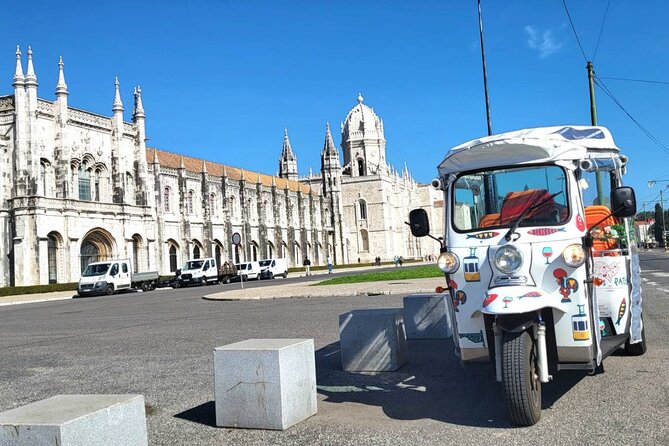
If you land in Lisbon and feel overwhelmed by hills, neighborhoods, and the “where do we even start?” problem, this style of tour is smart. The eco tuk-tuk format keeps things light on your legs while still putting you at the city’s most useful touchpoints: major viewpoints, landmark squares, and iconic Belém sights.
The private part matters more than it sounds. A tour like this moves quickly. When it’s only your group, you don’t have to negotiate with other people’s interests or photo speeds. You can spend extra minutes where you care most—then shift on when the next stop is the one with the view.
Value-wise, the price ($182.99 per person) makes most sense when you’re traveling as a group (since it’s private) or when you’re short on time. Also note the tour is booked about 42 days in advance on average—often a sign that it works for arrival-day planning.
You can also read our reviews of more guided tours in Lisbon



The 4-Hour Route: What Each Stop Really Does for Your Trip
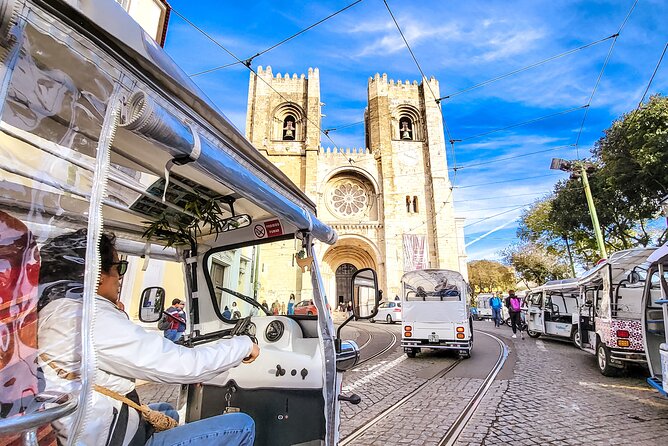
This tour runs about 4 hours and is designed as an overview. You’ll make a series of short, high-impact stops—typically 5 to 20 minutes each—so every moment has a job: orientation, context, a photo angle, or a first taste of a neighborhood.
Here’s how the route reads from a traveler’s point of view, with what’s special and what to watch for.
Lisbon Cathedral (Sé) and Roman-Period Clues Nearby
You start at Lisbon Cathedral (Sé), a 12th-century landmark with unmistak Gothic presence. Even if you’re not a “church person,” it’s a good first stop because it anchors you in Lisbon’s deep timeline. The cathedral’s mix of styles and age gives you a sense that Lisbon wasn’t built in one big modern burst—it grew, rebuilt, and endured.
Just a short hop away is Museu de Lisboa – Teatro Romano, where you’ll see remnants of a Roman theater dating to the 1st century BC. That contrast—medieval cathedral, then Roman archaeology—helps you understand why Lisbon keeps layering eras on top of each other.
What you’ll like: brief stops that still feel meaningful.
Possible drawback: if you want long interior time (screens, chapels, detailed galleries), this is short by design.
Miradouro de Santa Luzia: Tiles Meet the Tagus
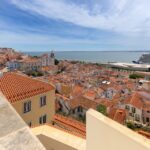
Next comes Miradouro de Santa Luzia, built for exactly one thing: the view. From here you look over Alfama’s terracotta rooftops, the Tagus River, and landmarks along the water.
What makes this lookout more than a standard scenic stop is the presence of azulejos—Portuguese tile panels—that show historical scenes. It’s a good reminder that Lisbon’s art isn’t only inside museums. It’s on walls, corners, and stair-level viewpoints.
Practical tip: spend your minutes looking first, then take photos. From this height, the city can look “busy” until your eyes learn where the waterline and major buildings sit.
Miradouro da Senhora Do Monte: The 180-Degree View
At Miradouro Da Senhora Do Monte, you get Lisbon from the top. This is the higher central viewpoint and it’s famous for a wide 180-degree panorama.
You’ll see landmarks such as São Jorge Castle, the hills toward Chiado, the 25th of April Bridge, and the Christ the King statue, plus the downtown spread. This stop is one of the best “mental map builders” on the route.
If Santa Luzia gives you a beautiful close-to-the-hills snapshot, Senhora do Monte helps you understand the city’s shape. Once you get that bird’s-eye framework, later walking days feel less confusing.
Consideration: it’s a viewpoint. If you’re sensitive to crowds or sun, bring water and be ready to stand around for your turn.
You can also read our reviews of more private tours in Lisbon





São Vicente de Fora Monastery: Baroque Tiles and a Monumental Tone
Mosteiro de Sao Vicente de Fora is a 17th-century monastery with Mannerist structure—more austere and sobering than what you might expect after the lookouts. The highlight here is the tile work: it’s described as housing the largest collection of baroque tiles.
There’s also a second layer to this stop: part of the site is described as having been an important church later converted into a pantheon with tombs of notable figures, including leaders, writers, and public personalities.
This combination is useful. You’re not just seeing “pretty tiles.” You’re seeing how religion, art, and public memory overlap in Lisbon’s architecture.
Alfama: Narrow Lanes, Laundry Lines, and Fado Energy
After monasteries and architecture, the tour turns to Alfama, Lisbon’s oldest district. Think narrow alleys, colorful buildings, and cobblestones. You’ll also connect Alfama to fado music, which is more than a genre here—it’s part of how the district breathes.
Alfama is one of those neighborhoods where your “getting it” happens fast: in the short time you spend here, you’ll understand why people return for walking nights and why the audio of street corners feels different.
What I love about this stop style: you get the feeling of Alfama without spending a whole day navigating it on day one.
Possible drawback: Alfama’s streets can be tight and uneven. A tuk-tuk can only get you so close, so your shoes matter.
A Royal-Palace Square Moment and Lisbon’s Everyday Culture
The route includes a central square that, in the description, was once the site of a royal palace. Today it’s defined by arcaded buildings and a statue of King José I. The stop is framed as a symbol connected to Portugal’s maritime past and a hub for cultural activity.
Even without a deep explanation, this type of stop does something important: it shifts you from hillside Lisbon into a more open, monumental city center. It’s easier to picture how sea trade and power shaped the architecture you see all over town.
From there, the tour also includes a “charismatic” district described as a daytime zone for cafés and boutiques and a nighttime area that turns into a livelier scene with bars, restaurants, and fado houses. That’s a smart way to tell you Lisbon has two tempos.
Miradouro São Pedro de Alcântara and the Glória Funicular Connection
Next is Miradouro Sao Pedro de Alcantara, one of Lisbon’s most recognizable viewpoints. Here you’ll see the historic center and São Jorge Castle again, but from a different angle—useful because a city becomes understandable through repeated sightlines.
The route also mentions the Glória Funicular, which connects the viewpoint to the city. That matters for you even if you don’t ride it during this exact stop: it tells you this viewpoint isn’t random. Lisbon is built around systems that link hills.
Practical advice: if you plan to return for photos later, note where the funicular connection is. It makes timing easier on a future walk.
Convento do Carmo: Gothic Ruins After the 1755 Earthquake
At Convento do Carmo, you’ll see a Gothic monument connected to the 1755 earthquake—partially ruined, yet described as remarkably preserved. This is one of those stops where the emotional impact does most of the work.
Ruins can feel like a buzzkill if you go in cold. But in the context of the day—cathedral, Roman theater, monasteries, rooftops, then this—you get a real sense of Lisbon’s endurance. The city doesn’t just decorate history. It remembers it in stone.
What to watch for: keep this stop quieter in your head. Take a moment before you move on to the next viewpoint-heavy location.
Elevador de Santa Justa: A Lift That Helps You Cross City Levels
Now you hit Elevador de Santa Justa (also called the Carmo Lift). It’s an iron elevator with neo-Gothic details, designed by a disciple of Gustave Eiffel: Raoul Mesnier du Ponsard.
The tour’s description points out a practical benefit: you can enjoy the viewpoint experience without the typically long waiting lines. That’s exactly why it’s in a tight 4-hour route. It’s a major city connection point, and it also gives you another angle over the central areas.
The Pink Street Stop: A Quick Color Hit You’ll Remember
A short stop includes the Pink Street in Lisbon, known for its distinctive pink-hued pavement and hanging umbrellas.
This sounds like a small detail, but it’s often the kind of moment that makes a trip feel personal. Lisbon’s identity isn’t only grand monuments. It’s also in the little choices—painted surfaces, street mood, and street-level character.
If you’re photographing, this is one of the quickest “stand still and smile” stops on the day.
Belém in One Sweep: Pastéis, Jerónimos, Tower, and Discovery
The tour ends with the Belém side of Lisbon—where the city’s maritime story gets loud and visible.
Pastéis de Belém: The Custard Tart Moment
You finish with Pastéis de Belém, the famous custard tart tied to 1837. The route includes a look at the traditional process of preparing the pastry, and then you can enjoy a freshly made take-away.
Even if you’ve had pastries before, Belém is its own category. This is one of the best “I’m in Lisbon” food moments because it’s tied to a place and a tradition, not just a dessert.
Value note: the tour lists admission as free for the stop, but the pastry take-away may still be something you’ll want to budget for. Plan for that as part of your Belém day costs.
Mosteiro dos Jeronimos: Age of Discoveries Architecture
Next up is Mosteiro dos Jeronimos, a monument from the 16th century built during the Age of Discoveries. It’s described as a mix of Gothic and Renaissance architecture and directly connected to the wealth and power of Portugal’s empire at the time.
There’s also a practical detail: you can explore the monastery’s church for free. For a time-pressed overview tour, that’s exactly what you want—access to a major interior element without turning your day into a ticket line.
Torre de Belém: Departure and Arrival Ceremonies
Then comes Torre de Belem, the iconic tower tied to ceremonies for Portuguese explorers—departures and arrivals during the era of maritime exploration.
In this kind of stop, context matters. If you understand the tower wasn’t just “a cool structure,” but a ceremonial stage for a huge era of travel and trade, it hits differently.
Padrão dos Descobrimentos: The Map on the Ground
You also stop at Padrão dos Descobrimentos, a commemorative monument with a world map on the ground showing dates when Portuguese explorers reached significant locations.
This is a good pause for anyone who likes learning in a visual way. It turns abstract “Age of Discovery” stories into something spatial: dates and routes you can scan without reading a whole book.
MAAT on the Tagus: Modern Architecture to Close the Day

At the end, you’ll visit MAAT – Museu de Arte, Arquitetura e Tecnologia. The highlight here isn’t a long gallery tour; it’s the innovative building with a design that invites you to walk atop it along the riverfront.
You get a modern Lisbon finish line after the older monuments. And since MAAT sits along the Tagus River, it creates an emotional echo: earlier viewpoints looked over the water, and now you’re ending near it with contemporary design.
Why this ending works: it helps your brain connect the city’s past and present instead of treating them as separate trips.
Price and Value: Is $182.99 Worth It?

At $182.99 per person for about 4 hours, this isn’t the cheapest way to see Lisbon—but it can be strong value if you care about (1) efficiency, (2) less walking stress, and (3) a guided explanation.
Here’s how I’d judge the price:
- If you’re arriving with jet lag or you’re traveling with older family members, a tuk-tuk overview saves energy for later walks.
- If you’re short on time (first day, limited schedule), this tour stacks high-demand sights and viewpoints into one run.
- Many stops are listed with admission ticket free, which helps your budget stay predictable.
- The private format matters because you’re not paying for a “big bus experience.” You’re paying for a smaller, more flexible ride.
Where it’s not the best match: if you’re a slow traveler who wants museum time, deep interiors, and long wandering breaks, you’ll likely feel rushed.
Who This TukTuk Tour Fits Best

I’d point this tour at you if:
- you want a first-day overview that helps you plan the rest of your trip
- you want viewpoints and landmark context without spending hours figuring out routes
- you’re traveling with a group and want a private guide experience
- you like quick stops with real explanations, not just photo ops
I’d choose something else if:
- you plan to do a lot of slow museum visiting in one day
- you dislike viewpoints or standing around for photos
- you want long stays at each major monument
Should You Book the Lisbon Complete Tour (Eco TukTuk Private Guided)?
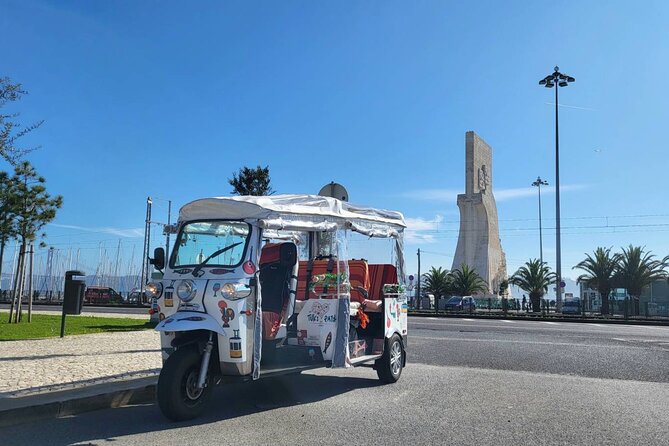
Book it if you want a Lisbon shortcut that still feels guided and human. The tour’s structure—cathedral and Roman remains, miradouros that build your map, Alfama’s texture, and a Belém finale with Jerónimos and the Tower—fits the way most first-time trips actually work.
Also, the tour’s guide style seems to be a strong point: guides like Mariana and Marco are highlighted for energy and local knowledge, and that makes a big difference on a short, moving route. If you’re time-pressed, this is the kind of plan that helps you avoid “we saw a few things but didn’t understand the city” regret.
FAQ

How long is the Lisbon Complete Tour with Eco TukTuk?
The tour is about 4 hours.
What is the price per person?
The price is $182.99 per person.
What language is the tour offered in?
The tour is offered in English.
Is this a private tour or a group tour?
This is a private tour/activity, and only your group will participate.
Are there pickup options?
Yes. Pickup is offered, and you can hop on the tuktuk in any place convenient to you and your friends or family within the city.
Is admission included for the stops?
The tour information lists admission tickets as free for the stops included in the itinerary.
What is the cancellation policy?
You can cancel for a full refund up to 24 hours in advance of the experience start time.