REVIEW · BELEM TOURS
Tour Tuk Tuk Lisbon-Belem 4 H Free Pick-up
Book on Viator →Operated by Chaparru's Tours · Bookable on Viator
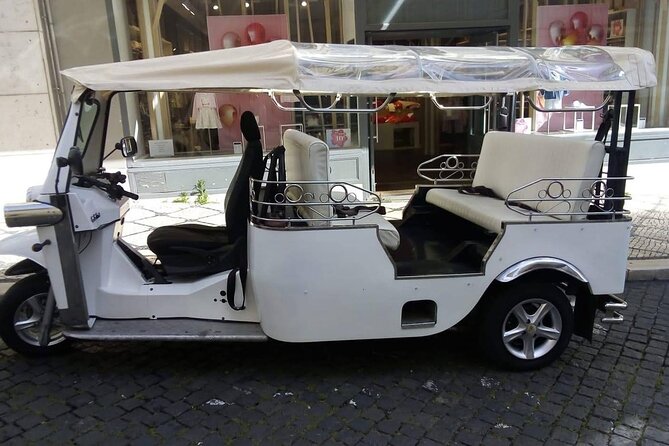
A ride in a tuk tuk turns Lisbon into a moving photo story. In just 4 hours, you sweep from old-cathedral streets to Miradouros and then all the way toward Belém and the Tagus. I love how the route mixes big landmarks with quick stops where you can actually look around.
Two standouts for me: the viewpoints (Portas do Sol and Senhora do Monte are the easy wins), and the Belém add-ons that make the time feel complete, like Jerónimos and the famous Pastéis de Belém. One thing to keep in mind: you’ll cover a lot of ground, so if you want long sits in museums and churches, you might feel a little rushed by the short stop times.
In This Review
- Key highlights you’ll care about
- Lisbon–Belém By Tuk Tuk: What This 4 Hours Really Does for You
- Price and Value: Is $150.85 Worth It?
- Your Best Bets Before You Go: How to Think About the Route
- Lisbon Cathedral: Starting With the Oldest Core
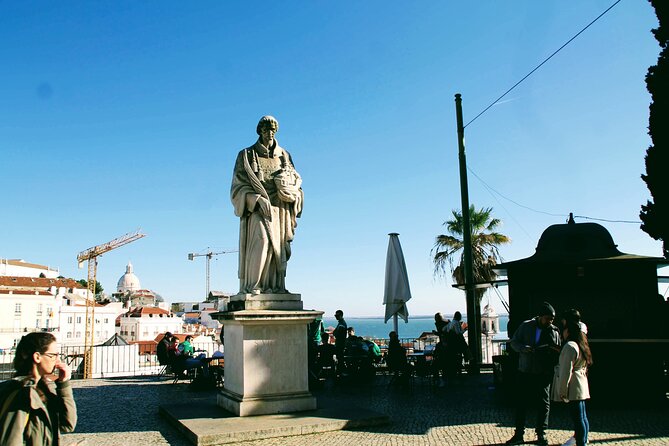
- Miradouro Das Portas Do Sol: Lisbon’s Postcard View
- Amália Rodrigues Mural by Vhils: Art on Portuguese Pavement
- Miradouro da Senhora do Monte + Nossa Senhora do Monte: The View With a Story Chair
- Igreja de São Vicente de Fora: Church Styles and the Bragança Connection
- Panteão Nacional (Santa Engrácia): Graves of Culture Icons and a Long-Built Church
- Alfama: The Old Neighborhood You’ll Want to Walk Later
- Praça do Comércio + Rua Augusta Area: Big Square Energy
- Rua Cor-de-Rosa and Chiado: Lisbon’s Nightlife + Bohemian Core
- Igreja de São Roque + the Saint John the Baptist Chapel
- Miradouro São Pedro de Alcântara + Bairro Alto: The City in Layers
- Belém National Palace + São Bento Palace: Power, Earthquake, and Parliament
- Basilica da Estrela: Marble Interior and a Royal Vow That Changed Plans
- Pastéis de Belém: What Makes This Stop Feel Like a Reward
- Jerónimos Monastery: The Big Historic Anchor of Belém
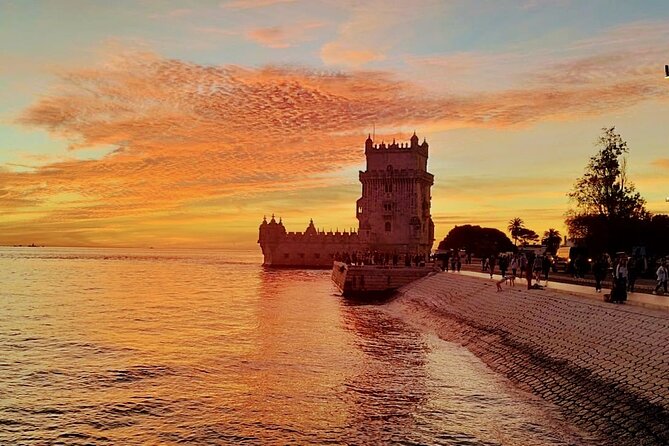
- Torre de Belém + Padrão dos Descobrimentos: Defense and Discovery in Two Monuments
- Getting Around by Tuk Tuk: Comfort, Cobblestones, and Rain Gear
- Guides Matter: Who You Might Be Paired With
- Who This Tour Fits Best (and Who Should Skip It)
- Should You Book the Lisbon–Belém Tuk Tuk Tour?
- FAQ
- What is the duration of the Tour Tuk Tuk Lisbon–Belém?
- How much does the tour cost?
- Is the tour in English?
- Is food and drink included?
- Which attractions have admission not included?
- Does the tour include private transportation?
- Is there a mobile ticket?
- Do I need good weather?
- Can I cancel for a full refund?
Key highlights you’ll care about
- Tuk tuk = fast, fun, and great for hillier neighborhoods without getting worn out on public transit
- Viewpoints included (Portas do Sol, Senhora do Monte, São Pedro de Alcântara)
- Belém payoff with Jerónimos plus Torre de Belém and the Monument to the Discoveries
- Short, focused stops designed for photos and quick context, not slow wandering
- Some entries not included (plan for Cathedral, National Pantheon, and a couple others)
- Rain-friendly setup on the vehicle is mentioned in feedback, but it can also affect views at times
Lisbon–Belém By Tuk Tuk: What This 4 Hours Really Does for You
This is the kind of tour that helps you get bearings fast. You don’t just “see Lisbon.” You move between neighborhoods that feel different in texture, light, and pace. One moment you’re near Lisbon Cathedral’s old stones. The next you’re at Miradouro viewpoints looking over the Tagus and tiled rooftops. Then the tour keeps going—Belém is not treated like an afterthought.
Because it’s private transportation in a tuk tuk, the day feels efficient. Cobblestones and steep streets are part of Lisbon, and tuk tuk is a practical way to experience them without stacking up a full day of walking. You also get a more narrative-style route than you’d manage solo—your guide ties places together so the city doesn’t read like a random list.
You can also read our reviews of more tours and experiences in Lisbon.



Price and Value: Is $150.85 Worth It?
At $150.85 per person for about 4 hours, the real question is what you’re buying besides transport. You’re paying for:
- Private guided time (your group only)
- A multi-neighborhood route that would take planning to recreate
- Stops timed for quick viewing (viewpoints, key churches, and Belém icons)
A big reason this can be good value is that several stops are free to enter, while the ones with paid admission aren’t baked into the tour price. For example, Lisbon Cathedral and the National Pantheon are explicitly not included, while viewpoints like Portas do Sol and Senhora do Monte are free. So you’re likely to spend less on the day than you would on an all-entry package.
Still, don’t ignore the “short stop” reality. If you want to linger for an hour at each major site, this tour is built for momentum, not slow museum days. Think: get oriented, take in the highlights, then come back later with a plan.
Your Best Bets Before You Go: How to Think About the Route
This tour is structured around a core idea: Lisbon is best understood from its elevations and its old districts. That’s why you get viewpoints and hilltop church areas mixed in with classic downtown squares.
You’ll also notice a rhythm:
- Cathedral/church context stops (brief but meaningful)
- Miradouro breaks for wide views and photos
- Neighborhood passes where you can get a feel for streets and squares
- Belém as the grand finale with major historic sites
That pacing is great if it’s your first time in Lisbon. It’s also useful if you’ve been in town a couple days but still feel like you missed the “big picture.”
Lisbon Cathedral: Starting With the Oldest Core
You begin at Lisbon Cathedral, tied to the early years after Lisbon’s reconquest. The key detail here is that construction started in 1147, so this is treated as the oldest church in the current Portuguese capital.
What I like about this stop: it gives you historical grounding immediately. You’re not just touring buildings—you’re stepping into the long timeline of Lisbon’s Christian and city identity.
The practical note: the visit time is short (about 15 minutes) and admission is not included. If you’re hoping to see inside in a deep way, I’d plan for a longer visit another day. For this tour, it works as a “place marker” that anchors everything else.
Miradouro Das Portas Do Sol: Lisbon’s Postcard View
Portas do Sol is quick (about 10 minutes), but it’s exactly the kind of stop you want from a tuk tuk tour: a viewpoint that makes the city instantly readable. The name connects to an older Porta do Sol tied to Moorish-era Lisbon, with the 1755 earthquake also part of the story.
This is where Lisbon starts looking like Lisbon—Tagus River lines, terracotta roofs, and that gentle chaos of hill neighborhoods.
Consideration: since it’s short, show up ready to look and photograph fast. If you spend your whole time reading every sign, you’ll miss the “wide view” moment.

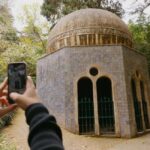
Amália Rodrigues Mural by Vhils: Art on Portuguese Pavement
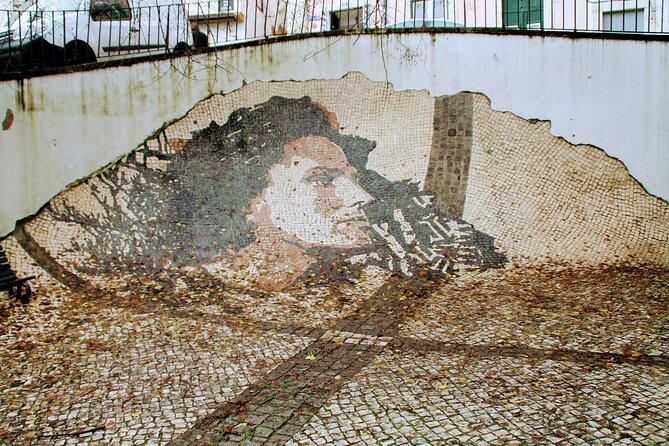
One stop isn’t a church or square—it’s street art. There’s a work featuring Amália Rodrigues made by urban artist Vhils, connected with the Escola de Calceteiros de Lisboa.
Why it works on this tour: it’s a reminder that Lisbon isn’t only monuments. It’s also music, identity, and public art that sits right on everyday streets.
Practical tip: if you’re photographing, take a second to back up and get the pavement texture in frame. This kind of work can look flat up close.
Miradouro da Senhora do Monte + Nossa Senhora do Monte: The View With a Story Chair
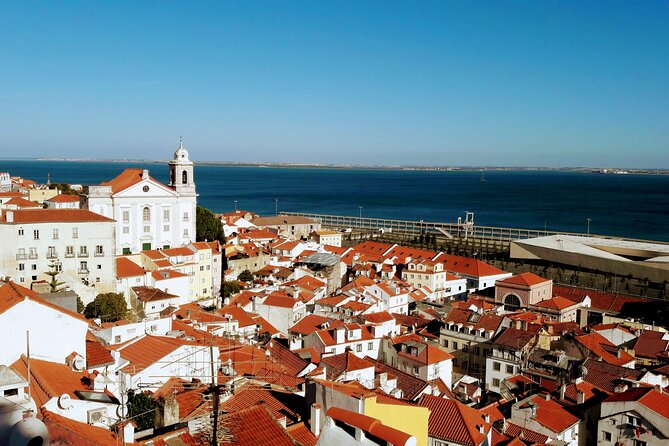
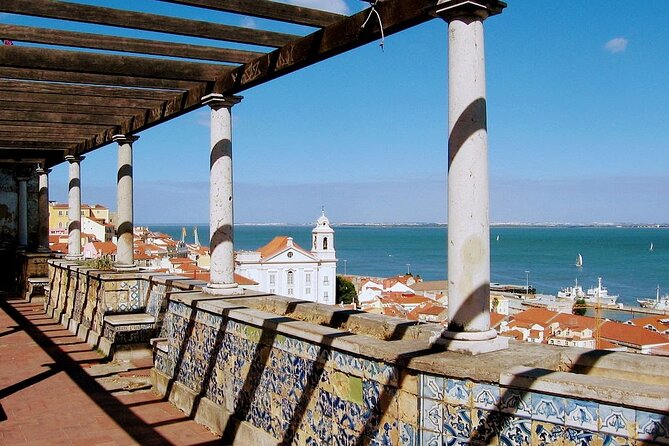
Senhora do Monte gives one of the tour’s best “wow” moments. From here you can see across multiple directions—toward São Jorge Castle and the Tagus estuary, plus broad views toward Baixa and other districts. The site also has the small, ancient Hermitage of Nossa Senhora do Monte, with roots traced to 1147.
What makes this stop memorable is that it’s not just scenery. There’s a legend about a stone chair connected to easier births. D. Maria Ana de Austria is mentioned as someone who sat there while pregnant, which adds a human, story-driven angle to the viewpoint.
Watch the timing: it’s around 10 minutes and the admission is free, which helps. But you’ll still want to move quickly—this stop is for grabbing the view, not a slow pilgrimage.
Igreja de São Vicente de Fora: Church Styles and the Bragança Connection
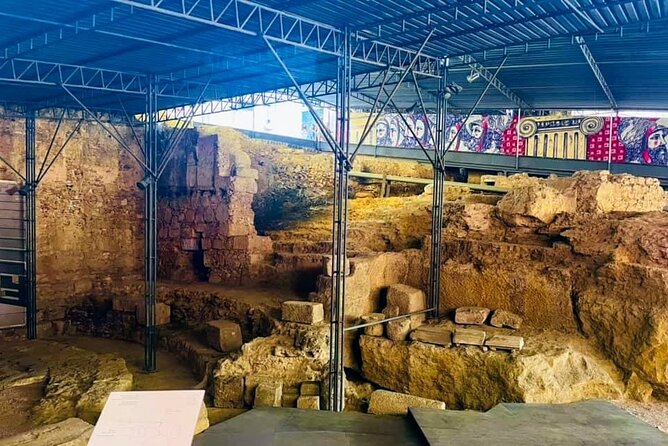
This church is a mix of eras. Construction started in 1582, built where earlier plans tied to Afonso Henriques had been made. The guide framing here is that you can spot traces of Mannerism, plus Gothic and Baroque influences.
The big reason to care: the church area includes the Pantheon of the Dukes of Bragança, with royal burials tied to the Bragança dynasty.
Value for you: if you’re the type who likes architecture more than just photos, this is a stronger church stop than it might sound. You get style cues and a real institutional purpose (burials) in a short time.
Panteão Nacional (Santa Engrácia): Graves of Culture Icons and a Long-Built Church
The National Pantheon is in the Church of Santa Engrácia. Construction began in 1682, and the work ended in 1966, a huge span that explains why stories and variations are part of the site’s reputation.
You’re specifically told it honors people for services to Portugal. Notable burials listed here include Amália (fado diva) and Eusébio (football player).
Practical note: the tour time is around 20 minutes, and admission is not included. If your heart is set on seeing the inside in detail, you may want to budget time for a separate visit.
Alfama: The Old Neighborhood You’ll Want to Walk Later
After the church-and-pantheon stops, the tour shifts into neighborhood texture with Alfama, Lisbon’s oldest area in the route’s framing. The name is linked to Arabic roots connected to fountains or hot baths. That thermal-bath backstory fits the feel of Alfama—old stones, narrow lanes, and a lived-in sense of place.
This stop is about 10 minutes and free to enter, so it’s more about atmosphere than deep exploring.
My advice: use this as a sampler. Take note of where you’d like to wander later (especially streets that lead uphill toward viewpoints).
Praça do Comércio + Rua Augusta Area: Big Square Energy
You pass through Praça do Comércio, framed as a palace site for Portugal’s kings for around two centuries. It’s one of Europe’s largest squares, and it’s also positioned as the kind of place that instantly makes Lisbon feel like a capital.
You also get a specific local flavor: Martinho da Arcada café is highlighted as the oldest in Lisbon and tied to Fernando Pessoa. Rua Augusta Triumphal Arch is named too, since it anchors the north side of the square.
This portion works well in a tuk tuk because you can get the scale quickly, then decide if you want to slow down later.
Consideration: since the tour is moving, you may not linger for long photos. Grab wide shots from a safe angle and keep moving.
Rua Cor-de-Rosa and Chiado: Lisbon’s Nightlife + Bohemian Core
From Praça do Comércio, the route touches Rua Cor-de-Rosa, now a nightlife center. The New York Times connection is mentioned as well, pointing to why this street is famous across audiences.
Then comes Chiado, described as one of Lisbon’s emblematic bohemian areas with intellectual connections historically linked to writers and artists. There’s also a practical café reference: Brasileira, plus a statue of Fernando Pessoa.
Why I like this pairing: it balances “Lisbon looks great” with “Lisbon sounds like itself.” Nightlife streets and literary-chic streets help you understand why Lisbon keeps pulling people back.
Igreja de São Roque + the Saint John the Baptist Chapel
São Roque is a standout church stop because it’s tied to the Jesuits and described as the first Jesuit church in Portugal and one of the early Jesuit churches in the world. It’s also noted as one of the churches that survived the 1755 earthquake unscathed.
The tour also points you toward chapels, especially the Chapel of Saint John the Baptist, described as a 17th-century masterpiece of Italian art and unique in the world.
Practical note: this is a short stop (about 10 minutes) and admission is free on this tour.
If you want the full impact, don’t try to see everything in 10 minutes. Pick your focus—either the overall Baroque feel or the Saint John the Baptist chapel.
Miradouro São Pedro de Alcântara + Bairro Alto: The City in Layers
You then reach Miradouro São Pedro de Alcântara, framed as one of the city’s most beautiful viewpoints for looking over the east of Lisbon and part of Baixa.
From there, the tour goes into Bairro Alto, known for narrow cobbled streets and for nightlife since the 1980s, including fado clubs.
What you’ll appreciate: even without going out at night, you get the neighborhood map of where the action lives. Then you can choose to return later for dinner or fado—on your schedule, not the tour’s.
Belém National Palace + São Bento Palace: Power, Earthquake, and Parliament
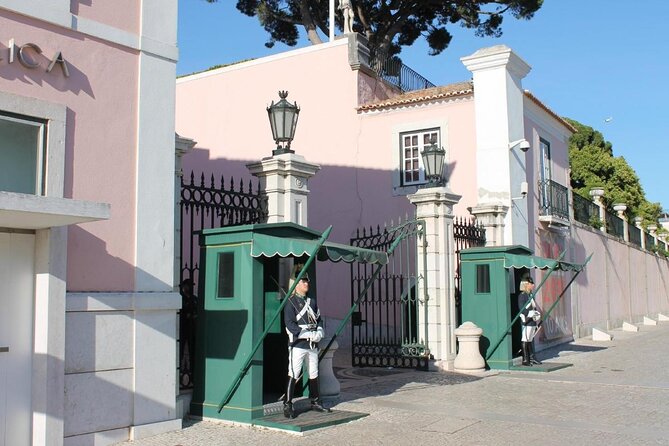
The route heads toward Belém. The Belém National Palace is highlighted as the official residence of the President of the Republic. It was built in 1559, and during the 1755 earthquake timeframe, the royal family is described as using tents on palace grounds due to fear of another quake, with the interior used as a hospital.
Then the tour continues toward São Bento Palace, tied to the national legislature. You’re told it began as the Benedito Monastery in the late 16th century with Mannerist and Baroque design. After the liberal regime, it became Royal Courts, then later transformed through different names and roles, ending as the Palace of the National Assembly.
Why these stops matter: they connect Lisbon’s historic monuments to how the country functions today. This isn’t just sightseeing—it’s governance with a view.
Basilica da Estrela: Marble Interior and a Royal Vow That Changed Plans
Basilica da Estrela is described as a Carmelite nuns convent and Catholic temple. The background here is a vow by D. Pedro III and D. Maria I to build a church if they had a son to inherit the throne. Construction began later, in 1799, but the boy died of smallpox two years before completion.
Style-wise, you’re told it mixes Baroque (final phase) and Neoclassical elements. The interior is described as marble in grey, pink, and yellow.
Practical note: the stop is about 10 minutes and admission is free on this tour.
Pastéis de Belém: What Makes This Stop Feel Like a Reward
This tour doesn’t just mention the pastry. It explains why it became the pastry symbol of Belém.
You’re told that in 1837, clerics from the Jerónimos Monastery sold pasteis de nata to survive. Lisbon and Belém were connected by steamboats at the time, so visitors arrived and spread the word. The story also includes the recipe being sold in 1834 after the Monastery closed following the Liberal revolution of 1820, ending with Domingos Rafael Alves (from Brazil) and descendants holding it.
How to handle it: pastries are traditionally eaten warm with powdered sugar and/or cinnamon. One strong piece of advice comes straight from feedback: when you’re going specifically to get them (not dine in), the line situation in Belém can be very different. The tour time keeps this part efficient.
Jerónimos Monastery: The Big Historic Anchor of Belém
The Mosteiro dos Jerónimos (Monastery of Santa Maria de Belém) is the historic centerpiece. It’s said to have been built by King D. Manuel I at the end of the 15th century, tied to the Order of São Jerónimo. The narrative includes Infante D. Henrique ordering a hermitage earlier, and then the request to build a large monastery in 1496, which expanded over construction phases.
The tour highlights major burials in the complex, including Camões and Vasco da Gama, and notes that the monastery also serves as a Pantheon.
Practical note: the tour lists a short stop, plus a “Cultural Center” slot afterward. So expect orientation time more than full-depth museum time.
Torre de Belém + Padrão dos Descobrimentos: Defense and Discovery in Two Monuments
The Torre de Belém is framed as a defense structure for the Tagus riverbank. It’s described as part of a broader defense formation, with related towers named in the route description.
Then you have the Padrão dos Descobrimentos, a Monument to the Discoveries built in 1940 for the Portuguese World Exhibition. The current replica is later, inaugurated in 1960.
Why this works near the end: you’re finishing with symbols of Lisbon’s maritime identity, and you can connect it back to earlier Lisbon history and the views over the Tagus.
Getting Around by Tuk Tuk: Comfort, Cobblestones, and Rain Gear
Tuk tuk is the right tool for this city, but it has tradeoffs.
From feedback, the main recurring point is that cobblestone streets can be bumpy. A few guides are praised for safe driving and for pacing, but the street surface doesn’t change.
Rain is another real factor. One tour experience mentions rain gear with clear walls that can help you stay dry. At the same time, there’s also feedback that the rain setup can block sightlines when you’re trying to watch for photos. So bring a flexible mindset: you’ll likely be adjusting your photo angles more than on a clear day.
Guides Matter: Who You Might Be Paired With
This is where your day can swing from good to great. In the feedback, multiple guides earn top marks:
- Filip is praised for humor, clear English, and knowledge that made the route feel like a guided story.
- Miguel stands out for city-depth and for pointing out small details like the importance of tiles on building facades.
- Rodrigo gets credit for friendly, personal answers and a strong connection to Lisbon history and culture.
- Alexandria / Alexandra / Alex are mentioned for strong communication and making the route feel efficient.
- Fernanda, Victor, Isabel, and Sidney also receive praise for personality and safe, smooth driving.
If you have choices when booking, that’s a good sign to check guide names or recent availability.
Who This Tour Fits Best (and Who Should Skip It)
This tour makes the most sense if:
- It’s your first time in Lisbon and you want a smart overview
- You like churches, viewpoints, and neighborhood feel over long museum time
- You want to see Belém without planning the full day
You might want to skip or supplement it if:
- You want deep interior time at churches or the Pantheon
- You’re set on slow, long wandering in each area
- Rough rides on cobblestones would be a major issue for you
For most people, it lands as a strong “orientation plus highlights” day. Then you can return on foot later to the exact neighborhoods or sights that pull you in.
Should You Book the Lisbon–Belém Tuk Tuk Tour?
I’d book this if you want a high-value first pass through Lisbon and Belém in a short window. The pairing of Miradouro viewpoints with major Lisbon and Belém landmarks is exactly how you get the city’s shape in one day. And if you land with one of the well-reviewed guides like Filip, Miguel, Rodrigo, or Isabel, you’re likely to leave with more context than you expected.
Don’t book it if your ideal day is quiet, long, and unhurried inside major sites. This route is built for motion, quick stops, and views you can’t easily recreate without logistics.
If you’re flexible, bring good walking shoes for later follow-ups, and go in expecting short-and-sweet stops—this is a tour that can genuinely make Lisbon click.
FAQ
What is the duration of the Tour Tuk Tuk Lisbon–Belém?
It’s listed as approximately 4 hours.
How much does the tour cost?
The price is $150.85 per person.
Is the tour in English?
Yes, it’s offered in English.
Is food and drink included?
No, food and drink are not included.
Which attractions have admission not included?
Admission is listed as not included for Lisbon Cathedral, Panteão Nacional, and Torre de Belém.
Does the tour include private transportation?
Yes, private transportation is included, and it’s described as a private tour for your group.
Is there a mobile ticket?
Yes, the tour includes a mobile ticket.
Do I need good weather?
Yes. The experience requires good weather. If it’s canceled due to poor weather, you’ll be offered a different date or a full refund.
Can I cancel for a full refund?
Yes. You can cancel up to 24 hours in advance for a full refund.