REVIEW · FATIMA, NAZARE & OBIDOS DAY TRIPS
Private Tour to History of Porto & Porto Calem Cellars & Wine Tasting
Book on Viator →Operated by Knight Riders Tourism · Bookable on Viator
One long drive, and suddenly Porto feels close. This private day trip from Lisbon strings together major sights like Sé do Porto Cathedral and Clerigos Tower, then finishes with a Calem cellar port tasting. I especially like the way the route balances big-photo stops with the kinds of details you’d miss on your own, like São Bento’s tile hall and the baroque angles of Porto’s churches; the possible drawback is that it’s a long day, so time for anything extra can get tight.
You’ll ride in an air-conditioned minivan with hotel pickup and drop-off included, and you won’t have to manage tickets and directions across a full day of walking and viewpoints. This is a good fit if you want Porto’s “greatest hits” plus wine culture without stress—but you’ll want to think ahead about how long you’re willing to spend inside ticketed places, especially if you’re visiting in peak season or on a busy day.
In This Review
- The Big Picture: What This Private Porto Day Trip Really Gives You
- Key Things to Know Before You Go
- Starting in Sé do Porto: A Romanesque Cathedral That Feels Fortified
- Clerigos Tower: Baroque Drama on Uneven Streets
- Ponte Dom Luís I and the Bridge-Level View of Porto
- Ribeira River Time in Gaia: Where Porto Starts to Feel Like a Place
- São Bento Railway Station: The Tile Hall That Steals the Show
- Cais da Ribeira and Praça da Ribeira: The Riverfront Scene, Explained
- Livraria Lello: Worth Seeing, Even If You Don’t Care About the Pop Culture
- Calem Cellars Wine Tasting: A Real Port Stop, Not Just a Pour
- Price and Logistics: Is $474.63 Good Value?
- Should You Book This Private Porto Tour?
- FAQ
- How long is the Porto private tour from Lisbon?
- What does the tour cost per person?
- Is hotel pickup and drop-off included?
- Is this a private tour?
- What language is the tour offered in?
- Is wine tasting included?
- What’s the meeting/pickup area?
- When is pickup usually scheduled?
- Does the tour include transportation?
- What safety measures are included?
- What cancellation options are available?
The Big Picture: What This Private Porto Day Trip Really Gives You
This is a full-schedule Porto visit built around a simple idea: you see the city’s landmarks in a logical flow, then you taste the region’s signature drink in a proper cellar setting. The pace is designed for one thing—seeing Porto in one day—which means you get plenty of visual rewards (cathedral, tower, riverfront, tiles, bookstore), but not the slow, wandering rhythm of a multi-day stay.
The drive matters, too. You’re leaving Lisbon (or the Lisbon-area pickup zone) early and spending about 9 to 11 hours total on the outing. That long transit is the real trade. If you’re the type who hates rushing, consider adding a night in Porto instead. But if you’re working with limited time, this tour can be a smart way to make Porto count.
Also, it’s private. That changes everything from waiting lines to question time. You can ask your guide to slow down at a viewpoint, spend a few extra minutes at a church façade, or prioritize what you care about most—within the tour’s planned timing.
Key Things to Know Before You Go
- Private guide time means you’re not stuck with a rigid group rhythm.
- Hotel pickup and drop-off removes the easiest part of the headache: getting to Porto and back.
- Calem cellar port tasting gives you more than a sip—you’re visiting the wine story behind the drink.
- Porto’s walking stops are varied: Romanesque cathedral, baroque tower, tile station, riverfront viewpoints.
- Time is the constraint—some popular spots can swallow minutes fast if you linger.
You can also read our reviews of more food & drink experiences in Lisbon



Starting in Sé do Porto: A Romanesque Cathedral That Feels Fortified
Your day begins at Catedral do Porto (Sé do Porto), one of Porto’s oldest and most important monuments in the Romanesque style. The cathedral looks serious and even defensive at first glance: two square towers, buttresses, and a façade that’s not trying to be one uniform style. That mix is part of the point. You’ll see a church that grew over centuries, shaped by different eras of rebuilding and adding.
What I like about this stop is how quickly it gives you context for Porto itself. Before you hit the river views and the postcard bridges, you’re grounded in the city’s core. The narrow Romanesque nave and the barrel vaulting make the inside feel different from the grander cathedrals you might be used to. And the flying buttresses—still a standout architectural feature in Portugal—show you the building wasn’t just decoration. It was engineering.
Practical note: the schedule gives this stop about 15 minutes. That’s enough to appreciate the key exterior details and a quick look inside, but not enough for a slow, study-like visit. If you’re the type who reads every plaque, plan to take notes as you go and circle back later on your own.
Clerigos Tower: Baroque Drama on Uneven Streets
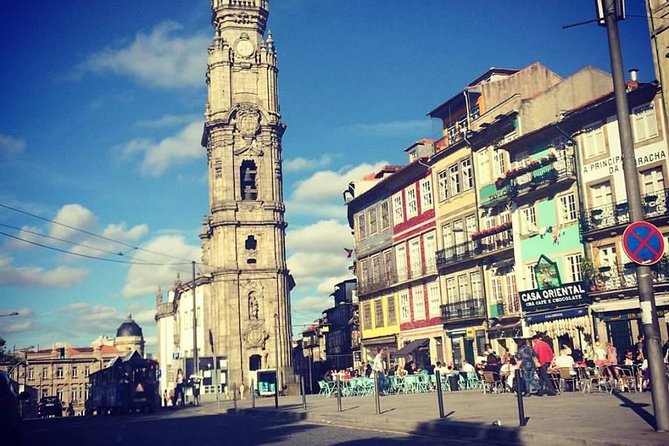
Next up is Torre dos Clerigos, part of a larger baroque-inspired complex that includes the church and museum areas. This is the kind of landmark that makes you understand how Porto grew outward and upward—especially because the complex sits on an uneven street, where Nicolau Nasoni used the space brilliantly to create a city signature.
Even if you only have limited time, you’ll notice the tower’s ambition. The fact that the church and tower were designed as a landmark (and later recognized as a National Monument) helps you read the skyline when you’re moving around later. It’s one of those places where you can look up and immediately understand why artists and photographers keep coming back.
The stop is listed at about 10 minutes with free admission ticket status noted. In real life, the tower area can be quick or slow depending on crowds and whether the museum access is open when you arrive. If you care more about views than interior rooms, you can use the short stop as a strategic photo-and-orientation moment rather than a full museum visit.
Ponte Dom Luís I and the Bridge-Level View of Porto
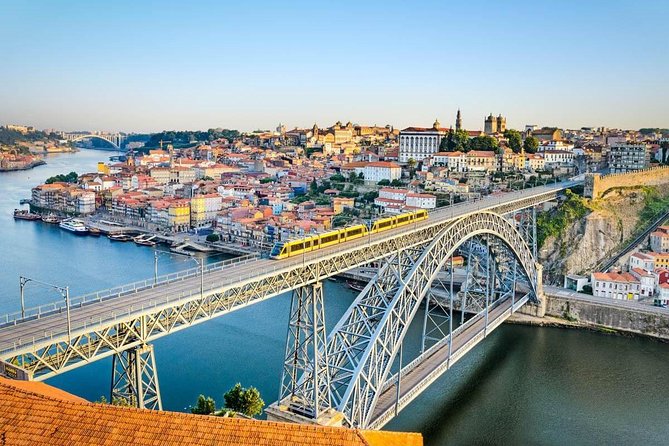
Between the tower and the river time, you’ll see Porto’s most emblematic bridge: Ponte de Dom Luís I. Porto has several bridges over the Douro, but this one is the classic. It connects both levels of the city, linking downtown Porto with Gaia, and it’s tied to a specific historical moment—opened on October 31, 1886.
What makes the bridge stop valuable is how it sets your bearings. Once you’ve watched the river from the bridge area or seen the bridge in context, everything you later view in Ribeira makes more sense. You understand what’s across the water and why the riverfront is so central to daily life and wine storage history.
If you’re visiting on a windy day, you’ll feel it here. Bring your jacket. This isn’t a fancy, sheltered photo spot—it’s the real river experience.
Ribeira River Time in Gaia: Where Porto Starts to Feel Like a Place
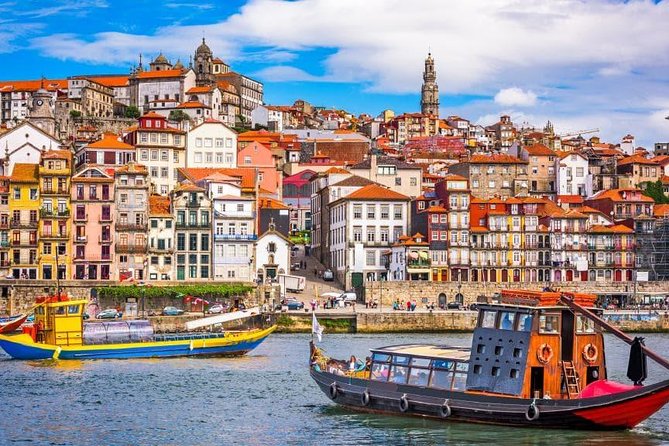
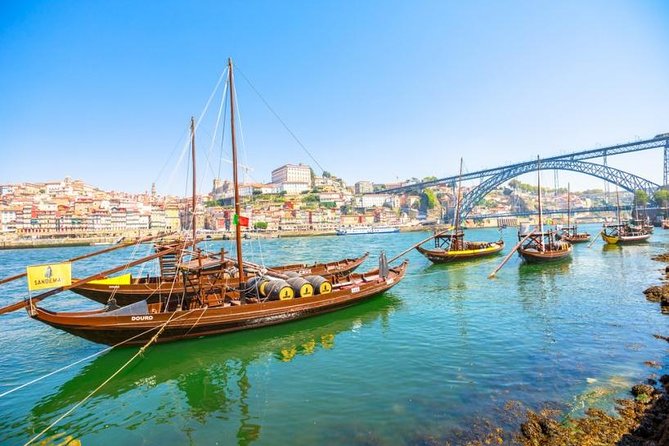
Then it’s down to the Douro River and the Gaia / Ribeira side. This is where Porto stops being “landmarks on a map” and starts becoming a living waterfront. The schedule includes a focus on the historical center and Ribeira area monuments, with São Francisco Church called out as a national monument.
Even if you don’t go deep into every church, you’ll get a sense of the visual richness. The São Francisco Church is known for its detailed interiors—think gilded woodcarvings and murals—so it’s a great stop to at least see that you’re not in a city made only of stone façades. It’s also about craft and ornament.
After the church context, the plan nudges you to slow down at the river. You’ll have about 50 minutes on the waterfront, with time to sit in a street café area like Cais da Ribeira. This is perfect for a simple but effective Porto experience: watch boats go by, listen to street music, and orient yourself between the Porto and Gaia riverfronts.
One smart move: use your guide to point out what you’re seeing, even if you don’t know it yet. You’ll learn the names and you’ll enjoy the views more afterward.
You can also read our reviews of more private tours in Lisbon






São Bento Railway Station: The Tile Hall That Steals the Show
Porto’s São Bento Railway Station is one of those places where the outside gets you curious, but the inside makes you stop walking. Opened to the public in 1916 on the site of a former Benedictine monastery, the station still carries that “quietly emotional” feel people associate with old Portuguese public spaces.
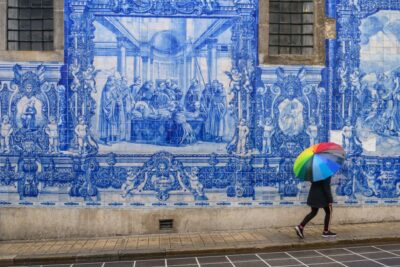
The main hall is the star. You’ll see over 20,000 tiles depicting Portugal’s history. It’s not just decoration—it’s a narrative wall, and it changes how you experience the station. Instead of thinking, trains arrive here, you start thinking, Porto remembers here.
The time allocation is about 30 minutes, and that’s enough for a careful walk through the main hall without feeling rushed. If the station is crowded, focus on the tile scenes and don’t worry about reading every panel. The goal is to grasp the scale and variety.
Cais da Ribeira and Praça da Ribeira: The Riverfront Scene, Explained
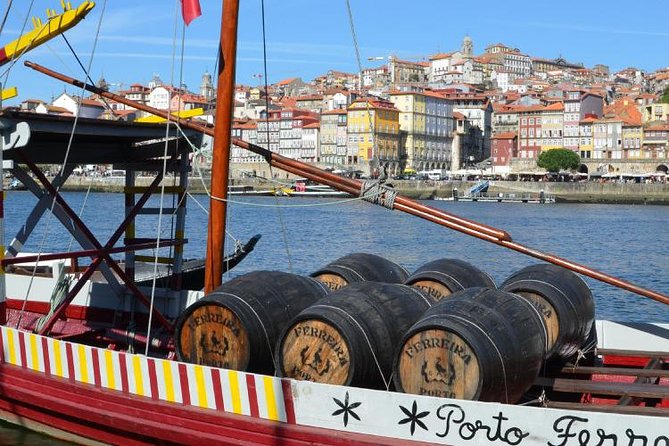
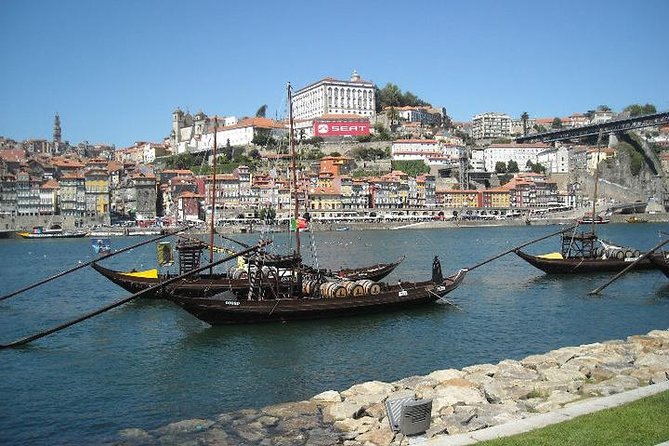
From São Bento you head to Cais da Ribeira, which is part market square, part promenade, part living room for Porto. Yes, it can feel a little chaotic. That’s also why it’s fun. You’ll pass bars and restaurants along the riverside walk, and this is where the Luís I Bridge view lands as a clear photo moment.
The tour also gives you time to explore the area’s texture: the arcades, the steep streets, and the stairways threading between pastel-painted houses. Porto’s charm here isn’t in one perfect street—it’s in the way the city climbs and collapses into small lanes.
Then the itinerary lifts your eyes again at Praça da Ribeira (also tied to Rua de São João). If you’re into small cultural details, the plaza has a sculpture and a local nickname linked to the cube-like feature. It’s also near plenty of dining options, so you can treat this as either a quick break or a strategic lunch window depending on your energy.
You get about 1 hour around the Ribeira riverside and about 15 minutes at the square. That timing works best if you set a plan for yourself before you get there: walk the waterfront first for the views, then decide how far you want to go into the maze streets.
Livraria Lello: Worth Seeing, Even If You Don’t Care About the Pop Culture
Next is Livraria Lello, often described as one of the most beautiful bookstores in the world, and it’s easy to see why. The neo-gothic façade has painted figures representing science and art, and the interior is what people remember: a famous stairway, wooden walls, and a stained-glass ceiling.
The building opened on January 13, 1906, and it’s tied to major social attention from both Portuguese and Brazilian circles. You don’t need to know the full background to enjoy it, but knowing the date helps you read the place as a cultural building, not just a photo stop.
There’s also a strong literary association with author J.K. Rowling and inspiration for a famous fantasy series. The tour materials mention Rowling lived in Porto for about 10 years and drank coffee at the bookstore’s second floor, and there are obvious visual similarities people point to, like the grand stair design.
The practical caution: this stop is listed at 30 minutes. That’s short enough that the visit can turn into a checklist if you’re not intentional. I’d treat it like this: do one slow pass for the interior view, then take your photos, and then move on. You’ll enjoy Porto more if Lello stays a highlight instead of eating the day.
Calem Cellars Wine Tasting: A Real Port Stop, Not Just a Pour
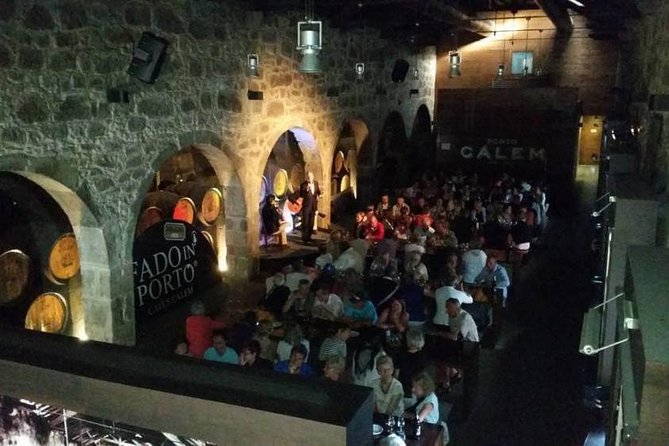
The heart of the tour for many people is the port wine tasting at Porto Calem Cellars. This is where a Porto day gets its real cultural punch. Port wine isn’t just a drink here—it’s a whole system of storage, aging, and tradition that shaped the riverfront warehouses and the economy.
The tour includes the wine tasting as part of the package, and the idea is simple: you get a guided introduction and a chance to taste styles associated with the region. Even if you’re not a wine expert, tasting in the cellar setting helps you understand why some ports taste the way they do and why they’re enjoyed differently.
What to watch for: the schedule calls for tasting, but wine experiences can be time-slot dependent. If timing matters to you, ask your guide early what portion of the day is reserved for Calem and what you should expect in terms of how long you’ll be inside.
This is also a good moment to take notes. Port styles can blur together fast if you’re sampling multiple types. A quick mental comparison—sweetness, intensity, and finish—makes the later memory stick.
Price and Logistics: Is $474.63 Good Value?
At $474.63 per person for a private day, you’re paying for three big things: privacy, door-to-door logistics, and the drive from Lisbon to Porto plus back. That means you’re not just buying entrances—you’re buying the time you’d otherwise spend figuring out trains, transfers, and pacing.
Here’s the honest value math: if you’ll enjoy a guide-led plan and you want the Calem tasting included, then the price can feel fair for a one-day Porto push. But if you don’t like structured time, or if you end up spending money at multiple attractions because certain entries aren’t covered, the total cost can creep up.
The long drive also affects value. The itinerary is packed with stops, and a few minutes here and there add up when you’re moving between neighborhoods. The best-case day feels smooth and intentional; the worst-case day feels like you’re trying to catch up. That’s not about Porto—it’s about time.
If you’re price-sensitive but still want Calem and a private vibe, you might consider whether you’ll truly use the private guide time. If you’ll ask questions, enjoy architecture, and like the comfort of pickup and drop-off, it’s easier to justify.
Should You Book This Private Porto Tour?
Book it if you:
- Want a guided, organized Porto day from Lisbon with hotel pickup.
- Care about seeing major landmarks like Sé do Porto, Clerigos, São Bento tiles, and Ribeira without planning transport.
- Enjoy port wine culture and want Calem cellar tasting rather than a rushed sip.
Skip it or adjust your plans if you:
- Prefer a slower pace and hate feeling time-pressured.
- Want full, detailed museum-style visits at every stop. The schedule is designed for highlights, not deep study.
- Plan to spend lots of extra time inside the most popular ticketed places. The tour timing is fixed, and you’ll feel it.
If you do book: set expectations early with your guide. Ask how much time you’ll have for the places that matter most to you, and be ready to move smoothly between stops.
FAQ
How long is the Porto private tour from Lisbon?
The tour duration is listed as 9 to 11 hours (approximately).
What does the tour cost per person?
The price shown is $474.63 per person.
Is hotel pickup and drop-off included?
Yes. Hotel pickup and drop-off are included as part of the tour.
Is this a private tour?
Yes. It’s a private tour, and only your group participates.
What language is the tour offered in?
The tour is offered in English.
Is wine tasting included?
Yes. Wine tasting is included.
What’s the meeting/pickup area?
Pickup is available for the Lisbon region / Cascais / Sintra / Almada. You’ll need to provide your hotel/port/apartment address for pickup and drop-off.
When is pickup usually scheduled?
Pickup times are flexible from 7:30 am to 8:30 am, with 7:30 am listed as the norm.
Does the tour include transportation?
Yes. You’ll travel by an air-conditioned minivan.
What safety measures are included?
The operator states it is certified by Turismo de Portugal with a Clean & Safe hygiene stamp, and that vehicles are cleaned and disinfected, with hand sanitizer and masks provided.
What cancellation options are available?
Free cancellation is available, and you can cancel up to 24 hours in advance for a full refund.