REVIEW · LISBON WALKING TOURS
Private Tour: Best of Lisbon Walking Tour
Book on Viator →Operated by Inside Lisbon · Bookable on Viator
Lisbon clicks into place fast on foot. This private walking tour is a smart way to learn how the city’s history shaped the streets you’ll see later, not just memorize names. I like the way the route hits major landmarks in a short time, and I also like that you get pastel de nata, tapas, and wine as you go. One thing to plan for: Lisbon’s hills can feel punchy, even though the pace is designed to stay comfortable.
What makes this especially appealing is the flexibility of a one-on-one guide. You’re not stuck in a rigid script. If you want a slower moment, or a less steep route, the guide can often work with the group. It’s built for first-timers who want context fast, while still leaving you free to wander on your own afterward.
With an average rating of 4.9 from 167 reviews, the big pattern is consistent: clear orientation, great storytelling, and food that doesn’t feel like an afterthought. It’s also offered in English and runs about 3 hours, so it fits well on day one or day two.
In This Review
- Key Points You’ll Actually Care About
- A Three-Hour Lisbon Primer That Starts in Rossio
- What $96.79 Buys: A Local Guide Plus Food, Not Just Sightseeing
- Praça D. Pedro IV and Largo de São Domingos: Symbols and Battle Scars
- Restauradores and Rossio Station: Independence and Wartime Lisbon
- Largo do Carmo to Santa Justa: Convents, Revolutions, and a View That Hits
- Chiado and Baixa: From Artistic Streets to a Rebuilt City Core
- Chão do Loureiro to Alfama: Panoramas and the Old Neighborhood Time Warp
- D. José I and Praça do Comércio: Closing With a Square That Connects to the World
- Pace, Fitness, and How to Save Your Legs in Lisbon
- Practical Tips for First-Day Success (Including Tram Reality)
- Should You Book This Best of Lisbon Walking Tour?
- FAQ
- How long is the Best of Lisbon Walking Tour?
- Is this tour private?
- Does the tour run in English?
- What’s included in the price?
- Where does the tour start and end?
- Is hotel pickup available for everyone?
- Do you need tickets or admission for the listed stops?
- What’s the cancellation policy?
- What kind of walking fitness level is needed?
Key Points You’ll Actually Care About
- Private guide and maximum flexibility for pace and route choices
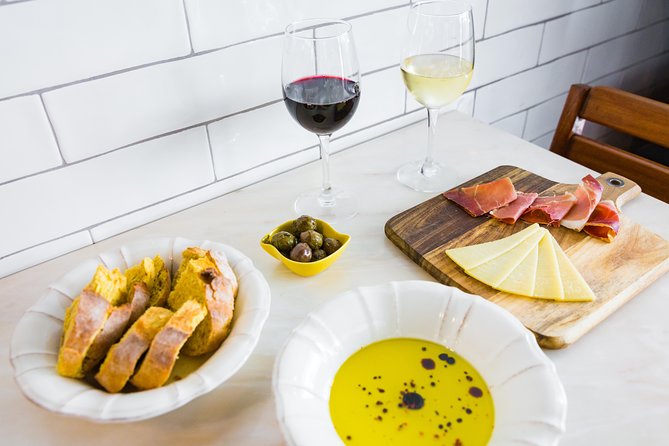
- Included tastings: pastel de nata, tapas, and 1 glass of wine
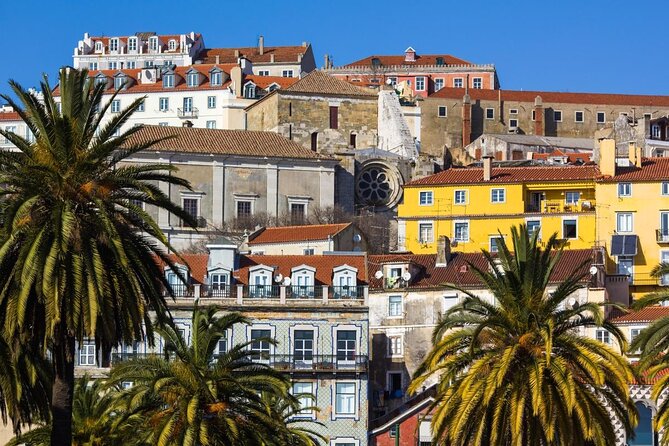
- A first-time Lisbon route that connects downtown landmarks to Alfama
- Historic stops without extra entry fees at the listed points
- Hill-aware planning (important in Lisbon)
A Three-Hour Lisbon Primer That Starts in Rossio
Most first-time visits to Lisbon feel chaotic for the first day. You’ll see viewpoints, take photos, and still wonder how it all connects. This tour is designed to fix that. It begins at Praça Dom Pedro IV, also known as Rossio. From there, you walk through downtown and into the older quarters, with a guide explaining what you’re looking at and why it matters.
Hotel pickup is offered, but only if you’re in a short walk of the original meeting point. If your hotel isn’t within that pickup area, you’ll meet at Praça Dom Pedro IV instead. Either way, the meeting setup is straightforward: start near the center, then work your way through the historic heart of the city.
Because it’s private, you also get something rare: you can ask questions without feeling like the guide is juggling a bus full of people. That’s one of the reasons the tour is so popular for families and mixed-age groups. The pace is described as easygoing in many accounts, and the guide often offers route options if stairs and steep segments are a concern.
You can also read our reviews of more walking tours in Lisbon


What $96.79 Buys: A Local Guide Plus Food, Not Just Sightseeing

At $96.79 per person for about 3 hours, this is priced like a true small-experience tour. You’re not just paying for walking and photos. You’re paying for a guide who strings the city together in a way that helps you move around later.
The included food is a big part of the value:
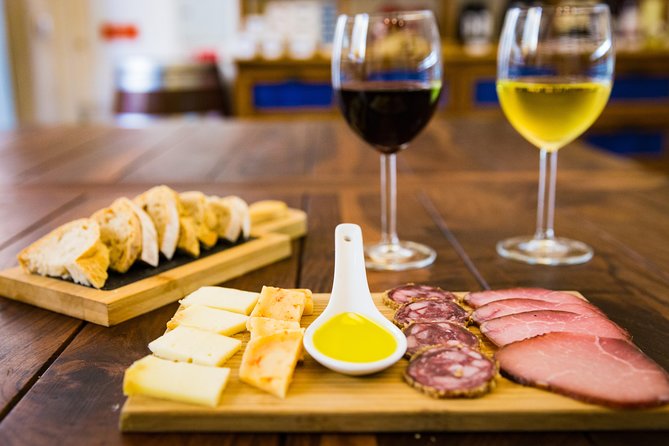
- Pastel de nata
- Tapas
- 1 glass of wine
That matters because it turns the tour into a mini “eat your way through Lisbon” moment rather than a long sequence of standing around. You’ll also appreciate not having to negotiate meal plans on the first day.
One practical note: only the food and drinks listed above are included. Everything else you might want—extra drinks, coffee, additional snacks—will be on you. Still, having at least one proper tasting break built in makes the whole experience feel easier to manage.
Praça D. Pedro IV and Largo de São Domingos: Symbols and Battle Scars
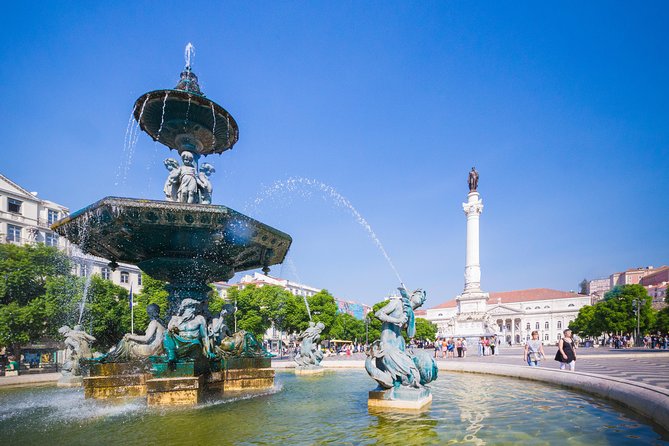
Stop 1 is Praça Dom Pedro IV. This square is a king-centered anchor for the area, and the guide connects the plaza to Portuguese identity—especially the homage to King Peter IV (Praça D. Pedro IV). It’s the kind of starting point that helps you orient immediately, because squares are where Lisbon’s stories often begin.
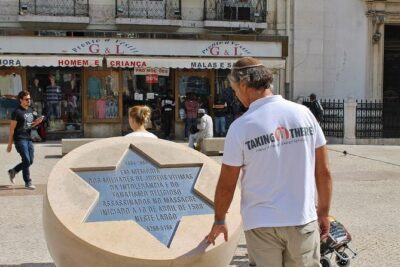
Stop 2 is Largo de São Domingos, centered on a church that’s been injured many times through history. The guide also covers Lisbon’s darker moments, including details tied to the city’s massacre history. This is a good reminder that Lisbon’s beauty didn’t come from peaceful centuries. The guide’s job here is to keep the story clear without turning it into a history lecture you can’t use.
Why these stops work: you get a quick mix of “what you see” and “what happened here.” That gives your eyes a filter. When you later see similar facades and scars in other neighborhoods, you’ll understand what you’re noticing.
Possible drawback: two first stops can feel like a fast start if you’re tired from travel. If that’s you, ask your guide early to slow down for the first 10–15 minutes.
Restauradores and Rossio Station: Independence and Wartime Lisbon
Stop 3 is Praça dos Restauradores. In the center you’ll see an obelisk, and the guide explains its meaning and how it ties to independence. It’s not just “a monument.” It’s a shorthand for Lisbon’s political story—what the city chose to celebrate and why.
Stop 4 is Estação do Rossio, linked with a WWII-era marker for the city. Even if you don’t ride trains much, station buildings in Lisbon often act like stages for history. The guide uses it to show how the city’s big events seep into everyday locations.
Why you should pay attention here: Lisbon has a habit of hiding important meaning in plain sight. A square can be more than a square, and a station can be more than a commute hub.
Small consideration: these stops are short (around 10–15 minutes each). That’s great for first-day efficiency, but it also means you won’t have time to wander far inside buildings unless your guide offers extra time.
Largo do Carmo to Santa Justa: Convents, Revolutions, and a View That Hits

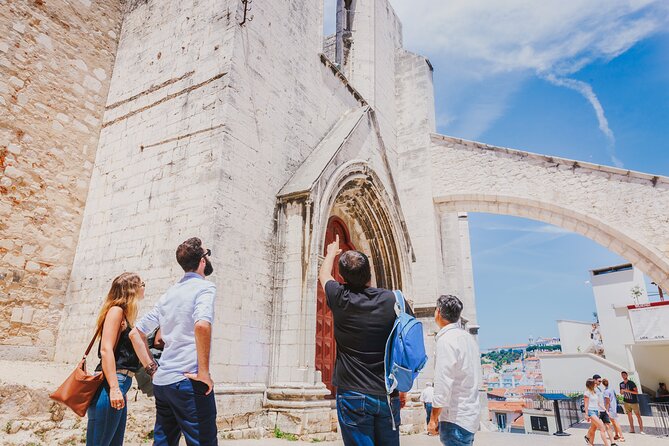
Stop 5 is Largo do Carmo, tied to either the 14th-century convent story or the Carnation Revolution—another reminder that Lisbon’s layers overlap. The guide helps you understand why this corner matters in different eras, and how those events echo in the architecture you see around you.
Stop 6 is the star for many people: Elevador de Santa Justa. This is one of Lisbon’s most interesting monuments in the historic center, and it comes with the promise of a breathtaking view. Even if you don’t ride the elevator, the guide’s framing helps you see it as more than a photo stop. It’s a local solution to a local problem: hills.
In a city like Lisbon, views are everything. You’ll feel the difference between places that look good and places that explain the city’s layout. This is the point where you start to “get” Lisbon’s geography.
Consideration: if you’re hoping to ride the elevator, know that this is a popular attraction. Plan your energy so you’re not rushing through it.
You can also read our reviews of more private tours in Lisbon





Chiado and Baixa: From Artistic Streets to a Rebuilt City Core
Stop 7 is Chiado, described as bohemian and artistic. This is where the tour slows just a bit in mood. The guide connects the neighborhood’s creative vibe to Lisbon’s modern cultural identity, so it doesn’t feel like you only learned about old power and old trauma.
Stop 8 is Baixa de Lisboa, which is the rebuilt heart of the city after the 18th-century earthquake. Here, the guide explains the idea of new urban rules and anti-systemic architecture concepts (and why that mattered at the time). You also learn how the rebuilt grid became the city’s central engine.
Why Baixa is a big deal on a first visit: Lisbon’s charm isn’t only in narrow alleys. It’s also in how the city can plan, correct, and rebuild. Seeing Baixa after you’ve heard the earthquake story makes the streets feel intentional rather than random.
Practical note: this stop is brief, around 5 minutes. It’s enough for orientation and context. If you fall in love with Baixa (and you probably will), you’ll want to come back and linger on your own after the tour.
Chão do Loureiro to Alfama: Panoramas and the Old Neighborhood Time Warp
Stop 9 is Miradouro Chão do Loureiro, a panoramic viewpoint. Viewpoints in Lisbon aren’t just “pretty.” They’re where the city finally looks readable. From here, the hills become a map, and the winding streets make sense instead of feeling like chaos.
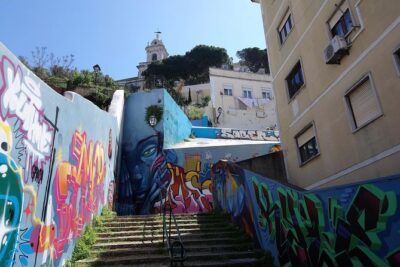
Stop 10 is Alfama, Lisbon’s oldest neighborhood. This is where the experience shifts gears. You get the slow-motion feeling of narrow streets and alleys, and the guide sets you up for the kind of walking that feels like stepping back in time. If you’re a photo person, this is where your camera stays busy.
Why Alfama is a perfect mid-tour landing: it gives you both history and sensory street texture—small passages, changing angles, and sudden views.
Possible drawback: Alfama is fun, but it’s not always easy. It can mean more uneven footing and more climbing. If your group has someone who finds hills hard, ask your guide about alternative routes early.
D. José I and Praça do Comércio: Closing With a Square That Connects to the World
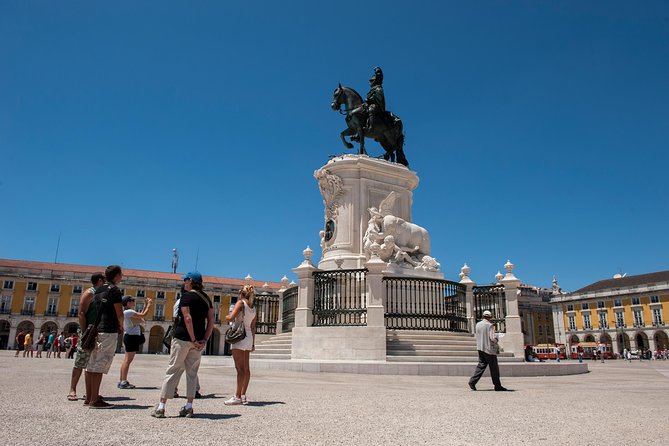
Stop 11 is the Statue of D. José I. The guide ties José I to the earthquake era and explains what comes next in Lisbon’s story. This stop is short, but it helps glue the earlier earthquake/built-city theme to what you’ll see in the final square.
Stop 12 is Praca do Comércio (Terreiro do Paço), the big finish. The guide highlights it as the residence of King José I, and as a square that connects Lisbon outward—between the city and the world beyond it. It’s a satisfying end point because it’s open and spacious after the older, tighter streets.
Finishing at Praça do Comércio also makes your next move easier. You’ll be closer to the kind of areas where you can keep exploring by foot or use transit without backtracking.
My take on the pacing: ending here means you leave with a sense of scale. Lisbon can feel like it’s hiding in staircases and corners. Praça do Comércio brings you back to the broader picture.
Pace, Fitness, and How to Save Your Legs in Lisbon
The tour is set for moderate physical fitness. That’s realistic in Lisbon, where “walking” often means “walking uphill.” The good news is that this experience is private, so the guide can often adjust: slower pace, more breaks, and potentially easier routes around steep stretches.
You may see requests in the group like:
- options for hills and stairs
- hidden easier routes
- space to pause if someone needs to sit
So if your group includes kids, older adults, or anyone recovering from knee or ankle issues, it’s smart to be honest at the start. A good guide will adapt the day so it stays enjoyable rather than exhausting.
Simple strategy for you: wear comfortable shoes with grip. Lisbon sidewalks can be slick or uneven. Also plan to take water. The tour includes tastings, but your body still needs fluids on hill-heavy days.
Practical Tips for First-Day Success (Including Tram Reality)
This kind of orientation walk is best done early. You’ll understand where things are, and you’ll know which areas feel worth your time later. Guides often include practical “what to do next” advice as you move through the city—like how to plan a short stay without wasting time on inefficient routes.
A quick heads-up: if you’re also planning tram rides, Lisbon trams can come with long queues. The tour won’t revolve around a tram ride, so it helps to think of transit as “might be fast, might be slow.” Build in patience.
Also, use the tour food strategically. The included pastel de nata and tapas make it easier to skip a full meal later. If you’re the type who snacks constantly while exploring, just watch your timing so you don’t feel stuffed right when you’re walking into Alfama.
Finally, ask your guide how to get back to your next destination after Praça do Comércio. That last stretch can be a great time to reset your plans.
Should You Book This Best of Lisbon Walking Tour?
I think this tour is a strong choice if you want:
- an efficient first-time introduction to Lisbon
- a private guide who can answer questions and adapt
- built-in tastings so your day doesn’t turn into meal math
- a route that links downtown, viewpoints, and Alfama
I’d skip it or adjust expectations if you:
- need a mostly flat walking day (this is hill-heavy by nature)
- want long stops inside buildings (most points are brief)
- expect optional rides on specific attractions as part of the program
If you’re trying to pick one “get your bearings fast” experience, this is one of the most logical ways to start. You’ll finish the walk with a clearer mental map of Lisbon—and more importantly, you’ll know where to go next without guessing.
FAQ
How long is the Best of Lisbon Walking Tour?
It lasts about 3 hours.
Is this tour private?
Yes. It’s a private tour/activity, so only your group participates.
Does the tour run in English?
Yes, the tour is offered in English.
What’s included in the price?
A private guide, hotel pickup (if you’re within the pickup area), and tastings: pastel de nata, tapas, and 1 glass of wine.
Where does the tour start and end?
It starts at Praça Dom Pedro IV (Rossio) and ends at Praça do Comércio (Terreiro do Paço).
Is hotel pickup available for everyone?
Pickup is only offered if your hotel is a short walk from the original meeting point. If not, you’ll meet at Praça Dom Pedro IV.
Do you need tickets or admission for the listed stops?
The stops listed are marked as free admission tickets.
What’s the cancellation policy?
You can cancel for a full refund up to 24 hours before the experience’s start time. If you cancel less than 24 hours before, the amount paid is not refunded.
What kind of walking fitness level is needed?
The tour asks for a moderate physical fitness level.