REVIEW · FATIMA, NAZARE & OBIDOS DAY TRIPS
Porto Full Day Private Tour from Lisbon
Book on Viator →Operated by TOPTOUR PORTUGAL® · Bookable on Viator
Porto in one long day works better than you’d think. This private tour lines up the city’s biggest art and architecture moments, with comfortable air-conditioned transport and a schedule you can flex, plus a Douro day highlight if you want it. Two things I especially like: you start with iconic viewpoints at Clérigos Tower, and you end up seeing the city’s most distinctive interiors at São Francisco, the Stock Exchange, and Porto Cathedral. One thing to consider up front is timing: it’s about a 12-hour day and tickets for several stops are not included.
You’ll also see the kind of service people rave about—professional drivers, clear planning, and guides who can explain what matters without turning it into a lecture. In the feedback, names like Tom, Pedro M., José, and Zeca come up, along with notes about modern vehicles and safe, on-time driving. My only caution: you need to plan for meals and any entry fees yourself, and the Douro cruise only happens if you tell the operator in time.
In This Review
- Key takeaways (quick read)
- A long Porto day from Lisbon, planned for comfort
- Starting at Torre dos Clérigos: the best “first wow”
- Jardins do Palácio de Cristal: views with breathing room
- Cais da Ribeira: medieval bones under the modern postcard
- Igreja de São Francisco: Gothic planning with baroque gold inside
- Palácio da Bolsa: the Stock Exchange and its Arabian Hall
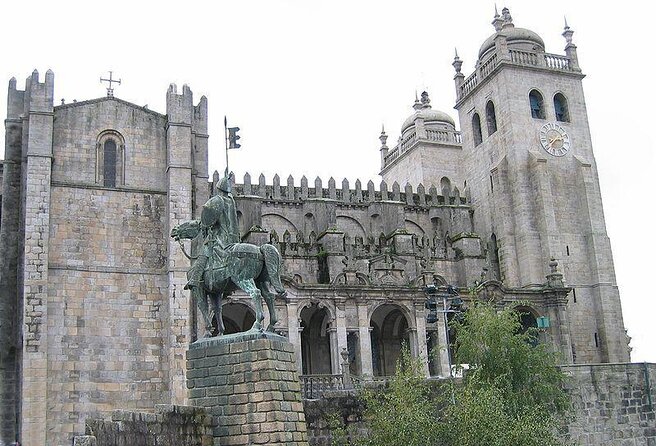
- Porto Cathedral: Marian devotion and medieval-to-baroque layers
- Port wine cellars and the Douro cruise option
- Tickets, meals, and what to bring for a smooth day
- Who this private Porto tour is best for
- Should you book this full-day Porto private tour?
- FAQ
- How long is the Porto full day private tour from Lisbon?
- What time is pickup in Lisbon?
- Is the tour price per person?
- Is admission included for the stops?
- Is a private guide included?
- Are port wine cellars part of the experience?
- Is the Douro river cruise included?
- What’s included in the tour besides the sights?
- Is the tour only for my group?
- Can you cancel for free?
- Is the tour suitable for service animals?
Key takeaways (quick read)
- Clérigos Tower at 75 meters: dramatic views, with an internal 240-degree staircase option if you want to skip the acrobat history.
- São Francisco’s baroque inside: gilt-wood richness and the Tree of Jessé altarpiece details you can’t really get from photos.
- Palácio da Bolsa’s Salão Árabe: neo-Moorish interior design made for official ceremonies in the 1800s.
- Ribeira isn’t just pretty: it connects medieval Porto to the Douro and includes a square with a discovered 17th-century fountain.
- Optional Douro cruise needs a heads-up: the boat part is not included in the tour price.
- Private, not cramped: it’s only your group, with bottled water and WiFi on board.
A long Porto day from Lisbon, planned for comfort
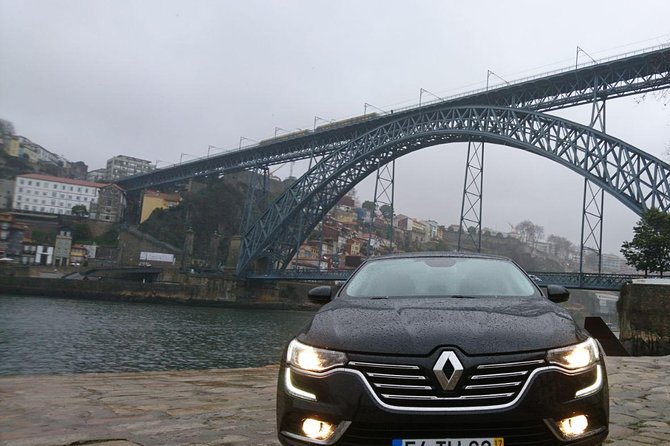
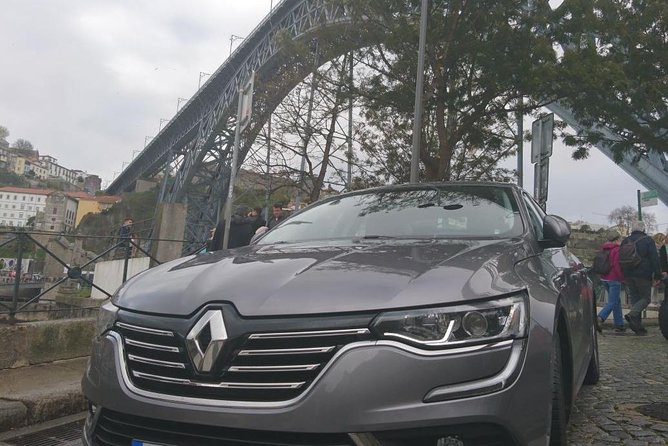
This is a private full-day Porto tour built around one simple idea: you want to see a lot without feeling like you’re fighting logistics. You’ll get pickup at 07:00 or 07:30 in the morning, ride in an air-conditioned vehicle with bottled water and WiFi, and return the same day after roughly 12 hours.
For value, the big question is how many people you’re traveling with. The price is $402.19 per person, which sounds steep until you remember it’s private transport for your group (and the tour is designed as a full itinerary rather than a few quick stops). There are also group discounts, so it can get more reasonable if you’re splitting the ride with friends or family.
One practical note: tickets and meals aren’t included. That matters because Porto’s best interiors often require an entry fee, and you’ll want to budget time to pass through entrances when you arrive. Also, you’re not getting a pre-paid private guide in the booking itself—your driver handles the transportation, while museum/church access is something you manage on site.
You can also read our reviews of more private tours in Lisbon


Starting at Torre dos Clérigos: the best “first wow”
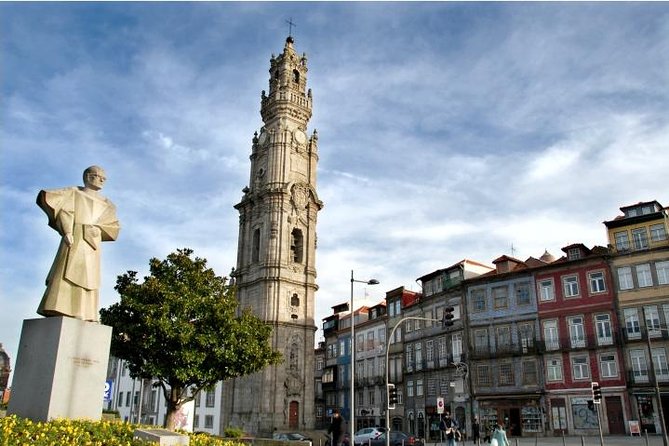
Clérigos is the Porto stop that gives you instant orientation. The Church of Clérigos is a baroque masterpiece designed by Nicolau Nasoni, an Italian-born architect who left his mark across Porto. But what most people remember is the tower: granite, rhythmic stages, and a spherical clock house on top, reaching 75 meters.
Here’s what makes this stop feel special rather than just scenic. The tower’s style is light and delicate even though it’s massive—baroque decoration that stays elegant as it climbs. If you look closer, you’ll notice how the design creates that “step-by-step” feeling on the way up.
If you want the climb, you can use the inner staircase with a 240-degree turn to reach the top. The tour also includes a nod to a real, almost-unbelievable moment in history: in 1917, Spanish acrobats named the Puertullanos (father and son) climbed the tower in front of a huge crowd. You don’t have to try to match that feat to get the point; the viewpoint is the payoff.
Consideration: the tower entry is not included. If you’re sensitive to waiting or spending extra money at the start of the day, check your budget before you commit to climbing.
Jardins do Palácio de Cristal: views with breathing room
After the tower, you’ll shift from vertical drama to open-air calm at Jardins do Palácio de Cristal. These romantic gardens cover about 8 hectares in central Porto, created in the 19th century by the German landscape architect Émille David. They were designed alongside the building of Palácio de Cristal, and the original plan has left some features preserved.
This stop works because it gives your feet a rest without wasting the time. You’ll walk viewpoints placed strategically for looking over the river Douro and the city. There’s also an Environmental Education Centre on-site, so the gardens aren’t only for looks—they’re part of how the area teaches and connects people with the setting.
You’ll get the most from this hour if you treat it like a reset: slow down, pick one or two viewpoints, and take photos that include the river line, not just buildings. The gardens are free, so you can also linger a bit without worrying you’re burning another entry fee.
Consideration: it’s still a full-day itinerary, so don’t expect the flexibility of a half-day in the park. If you really want to relax, bring sun protection and water, since this is a long day outdoors.
Cais da Ribeira: medieval bones under the modern postcard
Next comes Cais da Ribeira, the riverside area that has always been Porto’s key commercial connection to the Douro. Even though the waterfront has changed over time, medieval structures still remain, so you’re not just seeing a promenade—you’re walking through a layered city.
One reason this stop feels anchored in real place is how the history is visible. In the 15th century, the area suffered a devastating fire, but it recovered quickly. Later, archaeological work in the 1980s found a fountain from 1601–1700, and that fountain sits at the center of the square.
This is one of those moments where the tour’s schedule pays off. Without a plan, you’d spend time later wondering where to stand for the best views and what you’re actually looking at. Here, the explanation helps you read Ribeira: medieval trade connection to the river, plus survival and rebuilding.
Practical tip: since this portion is free, you can use it as your “photo + snack” window. If you need to buy water or a quick bite, do it here so you don’t scramble later when your day is more packed.
Igreja de São Francisco: Gothic planning with baroque gold inside
São Francisco is the kind of church stop that turns into a lesson you don’t mind. Built in the 14th century under King D. Fernando, it follows mendicant Gothic rules—three naves, a prominent transept, and a tripartite top section, including a main chapel.
But the big visual memory is inside. The church looks as if it’s covered in gold due to the abundance of gilt-edged woodcarvings, created over later works that culminated in baroque richness. You’ll also notice small design innovations along the way, like the decoration of balls in the window slits of the main chapel—details that reward a slower look.
If you’re curious about art history without getting lost in it, this church gives you two clear anchors:
- The chapel of São João Baptista was connected to design by João de Castilho in the 16th century.
- The main altarpiece is dedicated to the Tree of Jessé, reformulated between 1718 and 1721 by Filipe da Silva and António Gomes.
Consideration: admission is not included, so you’ll want to factor that into your day. Also, churches often have rules about photos or movement, so keep your pace flexible once you get inside.
You can also read our reviews of more tours and experiences in Lisbon





Palácio da Bolsa: the Stock Exchange and its Arabian Hall
The Palácio da Bolsa (Stock Exchange) is one of Porto’s architectural “must-do” interiors. Built in the second half of the 19th century in neoclassical style, it was intended for the Porto Commercial Association, reflecting how central commerce was to city life. It began operating as the stock exchange in 1841, and the building shifted back to the association in 1911.
Externally, you get neoclassical structure with references to English Palladianism and connections to other Porto buildings. Internally, the experience becomes far more theatrical, which is exactly what you want for a day that already includes big churches and towers.
Two parts are the standouts:
- The Pátio das Nações, the main courtyard.
- The Salão Árabe, a neo-Moorish Arabian Hall created in 1862 by Gonçalves e Sousa.
This hall is famous for its decorative wealth and its role in official city ceremonies for receptions of leading statesmen. Today it’s used for cultural events, so you’re walking into a space that still has purpose, not just museum-display value.
Consideration: the Palace entry is not included. If you hate adding extra tickets mid-day, decide ahead of time which interiors you feel most strongly about—this is the one most likely to win you over, even if you don’t think you’re a “building person.”
Porto Cathedral: Marian devotion and medieval-to-baroque layers
Porto Cathedral is another stop where the order of things matters. The original church goes back to the 12th century, initiated by the first bishop, D. Hugo. The building expanded to its current dimensions by the 13th century, and the 14th century brought a Gothic cloister plus important tomb work, including the tomb of João Gordo in the chapel of St. John the Evangelist.
If you like when history connects to real life, this is where it does. The cathedral hosted the marriage of kings D. João I and D. Filipa de Lencastre on February 14, 1387, with the city dressed up for the celebration.
Then you get the later changes. In the 17th and 18th centuries, the cathedral’s look shifted with baroque taste. That includes changes to the portal (that still preserves a medieval rose window), the north façade, and key interiors. Altarpieces and chapels reflect Marian devotion under different titles, with the city’s patron title Nossa Senhora da Vandoma tied into the municipal coat of arms since the 1500s.
And don’t miss the Episcopal Palace aspect, also tied to early construction dates to the 12th century.
Consideration: admission is not included. Also, cathedral pacing can be slower because it’s both a monument and an active religious space, so give yourself a little mental slack for lingering.
Port wine cellars and the Douro cruise option
The itinerary highlights include a port wine cellar visit and a river cruise on the Douro. The big detail is that the boat cruise fee is not included, and you must request it at least 24 hours in advance. If you don’t signal interest, the operator assumes you don’t want it.
This matters more than you might think. The Douro cruise is the most relaxing contrast to a day packed with walking and stone interiors. It turns the river from a background setting into the main event. And the port cellar stop gives you a taste of why Porto built its fortune around this waterway and its product.
Practical tip: if you’re the type who hates making choices late, decide early whether you want the cruise. It changes the mood of the afternoon and can also affect how you plan meals around the schedule.
Tickets, meals, and what to bring for a smooth day
Because tickets aren’t included, you’ll want to plan your spending and your time. The tower at Clérigos, São Francisco, Palácio da Bolsa, and Porto Cathedral each have their own entry considerations. If you’re climbing the Clérigos Tower, that’s your biggest “choose your effort level” decision.
Meals aren’t included either, so treat Ribeira and the in-between blocks as your chance for food stops. This kind of day works best when you keep energy up and don’t wait until you’re hungry to solve the problem.
What you’ll do well with:
- Comfortable shoes for walking and stairs (tower access is a staircase option).
- A light layer if the weather shifts.
- Sunscreen and water, since you’ll have at least a couple of outdoor moments.
One more small win: the tour includes WiFi on board and bottled water, so you’re not starting the day scrambling for basics.
Who this private Porto tour is best for
This works best if you want Porto’s top hits in one shot, but you still care about learning what you’re seeing. The structure—tower views, gardens, riverside context, church interiors, and landmark halls—keeps the day varied rather than repeating the same kind of stop.
It’s also a strong choice for people who value private pacing. The format is private, meaning only your group participates, so you’re not squeezed into a mass tour rhythm. That kind of control is why flexibility comes up in the feedback: the experience can bend around your preferences while keeping the main sights on track.
If you’re traveling as a couple or a small family, the private transport can feel like good value. If you’re traveling with limited mobility, you should mention it at booking so the itinerary can be adjusted.
Should you book this full-day Porto private tour?
I’d book it if you have only one day from Lisbon and you want Porto’s signature sights with minimal stress. The Clérigos Tower viewpoint, the baroque interiors at São Francisco, and the Salão Árabe inside Palácio da Bolsa are the kind of stops that feel worth the long ride.
I’d hesitate if you hate paying extra for entries or if you want a slower, no-rush day. This is a full slate, and tickets for key monuments are on you. Also, decide about the Douro cruise early, since it’s not automatic and the fee isn’t included.
If you do book, give yourself permission to savor the interiors. Porto’s charm isn’t only in the skyline—it’s in the details you only notice when you’re not rushing to the next big photo.
FAQ
How long is the Porto full day private tour from Lisbon?
It runs for about 12 hours (approx.).
What time is pickup in Lisbon?
Pickup is offered at 07:00 am or 07:30 am.
Is the tour price per person?
Yes, the price listed is $402.19 per person.
Is admission included for the stops?
No. Tickets for monuments are not included, and meals are also not included.
Is a private guide included?
No. A private guide is not included.
Are port wine cellars part of the experience?
Yes. The tour includes a visit to port wine cellars.
Is the Douro river cruise included?
A river cruise is offered as part of the experience, but the boat cruise fee is not included. You need to request it at least 24 hours in advance.
What’s included in the tour besides the sights?
Private transportation, an air-conditioned vehicle, bottled water, and WiFi on board are included.
Is the tour only for my group?
Yes. It’s a private tour/activity, so only your group participates.
Can you cancel for free?
Yes. You can cancel up to 24 hours in advance for a full refund.
Is the tour suitable for service animals?
Yes. Service animals are allowed.