REVIEW · ALFAMA & OLD TOWN TOURS
Mouraria: The Multicultural District – Private Walking tour
Book on Viator →Operated by Lisbon Art & Soul · Bookable on Viator
Lisbon’s story hides in plain street corners. This private Mouraria walking tour connects street art, Moorish-era clues, and Fado origins across about three hours, with a guide who makes the neighborhood feel readable.
I love how you look at street art and immediately understand it as part of the real built environment, not decoration on top of old walls.
I also like the way the route blends viewpoints and landmark churches so you get both atmosphere and context. Your guide can point out why Mouraria was once seen as a slum, and why the history matters for how Lisbon became what it is today, including the idea that Fado may have roots here.
One thing to consider: Mouraria streets can be tight and uneven, so comfy shoes help, even though the walk is described as possible for most travelers.
In This Review
- Key highlights at a glance
- Mouraria’s street corners: where Lisbon’s past still shows
- Private tour format plus a photo-minded guide
- Price and value: $32.51 for a 3-hour neighborhood story
- Getting oriented at Miradouro Chao do Loureiro
- Iglesia Paroquial de São Cristóvão e São Lourenço: one church, many eras
- Casa da Achada and Mario Dionísio: medieval walls, new art energy
- Largo dos Trigueiros: Camila Watson’s street-art projects
- Rua Marquês de Ponte de Lima: the first modern street and an old remnant
- Igreja de Nossa Senhora do Socorro and the hub of Moorish-era Mouraria
- Largo da Severa: the cradle of Fado music
- Praca Martim Moniz: Lisbon’s multicultural square
- Largo do Intendente Pina Manique: urban renewal in action
- What I think makes this tour work best
- Practical tips so you enjoy the walk more
- Should you book this private Mouraria walking tour?
- FAQ
- How long is the Mouraria private walking tour?
- What is the price per person?
- Is the tour private?
- Where does the tour start and end?
- What language is the tour offered in?
- Are tickets or admissions included?
- What’s included in the tour?
- What isn’t included?
- What’s the cancellation policy?
Key highlights at a glance

- A private group-only walk means you set the pace and can ask questions as you go
- Street art on historic facades, including work linked to Camila Watson
- Moorish and Fado connections, including stops tied to the cradle of Fado Music
- Architecture variety from a mannerist church to baroque elements and a Gothic door
- Photo support with a professional photographer guide for better angles in alleyways
- All major stops are free, so your money goes to guidance, not entrances
Mouraria’s street corners: where Lisbon’s past still shows
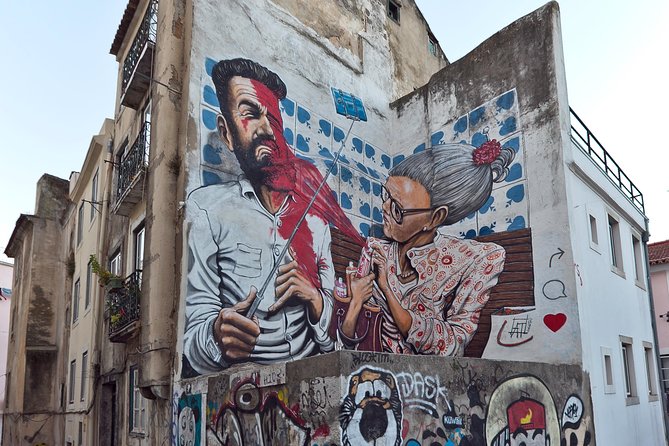
Mouraria is the part of Lisbon that feels like it has layers you can actually touch. This area has been shaped by different cultures over time, and it still shows in the street layout, the architecture mix, and the way locals use public squares. You’re walking through a neighborhood that was once regarded as a slum, then grew into a cultural crossroads. That shift is the backbone of the tour.
What makes this experience work is that it refuses to treat Mouraria like a theme park. Instead, you’re learning to read the neighborhood: what a church tells you about time periods, what a viewpoint tells you about geography, and how street art connects today to older walls.
Because it’s a private tour, the guide can tailor the pace. If your group likes photos, they can slow down at the best walls and angles. If you prefer history, they’ll spend more time explaining what you’re seeing and why it matters.
You can also read our reviews of more walking tours in Lisbon


Private tour format plus a photo-minded guide
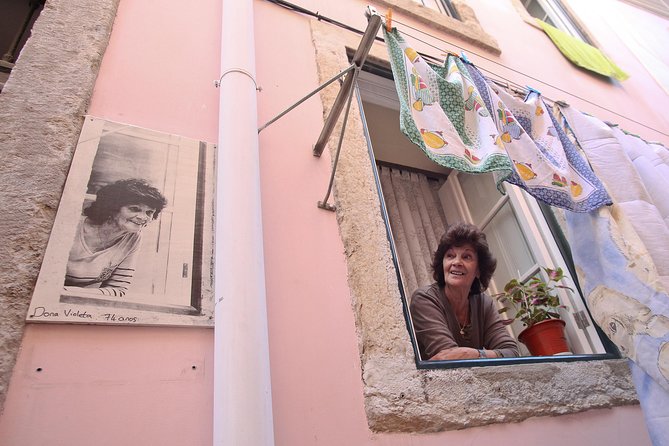
This is not a big-group shuffle. It’s designed for your group only, and that changes everything in a walking tour. You’re not trying to hear over twenty other people in narrow streets. You can ask for clarification when you notice something specific, like a church doorway style or a sudden view point over downtown.
Another practical perk: the tour includes a professional photographer guide. You don’t have to be a photography person to benefit. In a neighborhood like Mouraria, the challenge is angles. Buildings block wide views. Alleys force you into close compositions. A photographer guide can help you frame street art and architecture without making it feel like a chore.
If you travel with someone who likes getting the story behind images, this format is especially good. It’s also a solid option if you want to learn without spending your entire trip glued to your phone.
Price and value: $32.51 for a 3-hour neighborhood story
At $32.51 per person for about three hours, this tour feels like strong value for a private format. The price is low enough that you can justify it even if you’re keeping a close eye on budget, and the inclusions do a lot.
Here’s why the value makes sense:
- You get multiple guide roles, including a local guide and a professional guide, plus a photographer guide.
- The stops themselves are not charging admission. The route includes sights where tickets are listed as free.
- You’re paying for time and direction in one of Lisbon’s more intricate neighborhoods. Without help, it’s easy to walk past details and miss the connections.
There’s a small catch that’s more about planning than money: the booking requires a minimum of 2 people. So if you’re traveling solo, you’ll need to confirm whether a pair can be arranged through the organizer. Also, adult pricing applies to all travelers.
Getting oriented at Miradouro Chao do Loureiro

You start at a point near the Intendente metro area, then work your way through Mouraria and down toward the neighborhood’s most meaningful streets and squares. Right away, you’ll get that early win of a walking tour in Lisbon: a viewpoint stop.
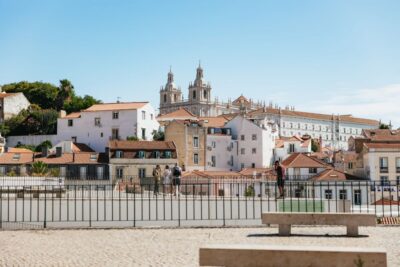
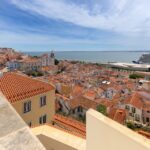
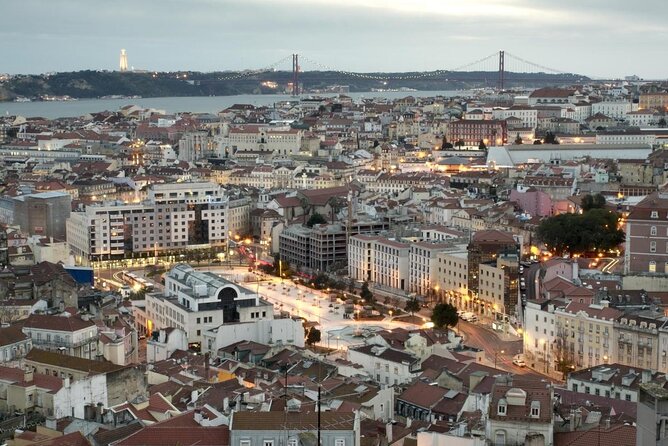
The first major stop is Miradouro Chao do Loureiro, described as hanging over downtown somewhere between Alfama and Mouraria. This viewpoint is the kind of place where you quickly understand why this area developed the way it did. Hills and sightlines shape where people walked, where communities formed, and where buildings rose.
The schedule gives you around 20 minutes here, which is enough to:
- Find a comfortable spot to look out without feeling rushed
- Take a few photos
- Get your bearings so the next streets feel connected instead of random
If you’re the type who gets lost in gridless old cities, this stop is worth it. It acts like a visual map.
Iglesia Paroquial de São Cristóvão e São Lourenço: one church, many eras
After the view, the tour shifts into architecture. Igreja Paroquial de São Cristóvão e São Lourenço is described as a mannerist church with baroque palace elements and a Gothic door. That mix matters because it teaches you something: Lisbon’s religious buildings often became layered over time, not replaced cleanly.
You also land in one of the popular squares in the Mouraria quarter. That’s important. You’re not just looking at a building from outside. You’re in the public space that keeps the neighborhood alive. Squares are where streets slow down and people feel like they’re part of the place.
The time you get is about 20 minutes. That’s long enough to notice the styles and short enough to keep momentum for the street-art stops later.
You can also read our reviews of more private tours in Lisbon





Casa da Achada and Mario Dionísio: medieval walls, new art energy
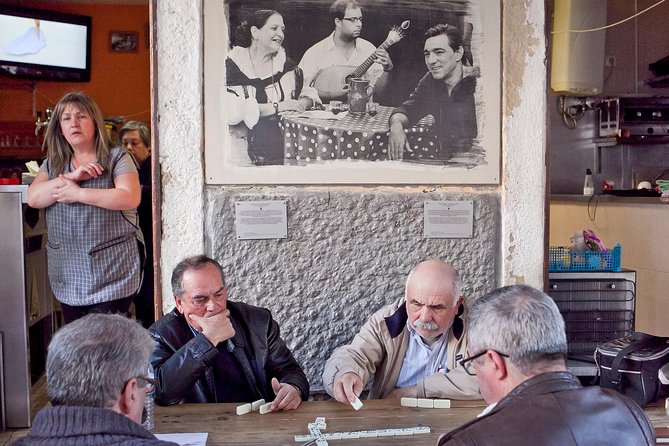
Next you head to Casa da Achada – Centro Mario Dionísio. This is a social and cultural center rooted in the legacy of Mario Dionísio, and it’s set in medieval buildings with 21st century street art.
This stop is a good example of why Mouraria can be hard to understand if you only chase one theme. If you come expecting only Moorish history, you’ll miss the neighborhood’s modern cultural identity. If you come expecting only street art, you might not grasp how older structures set the stage for new voices.
You get around 15 minutes here. In that window, you should focus on contrast:
- Old building surfaces and shapes
- New graphic work that turns those surfaces into message boards
If your group likes thinking about how a place evolves, this stop delivers.
Largo dos Trigueiros: Camila Watson’s street-art projects
From Casa da Achada you move to Largo dos Trigueiros, which is tied to street-art projects of Camila Watson. The tour doesn’t just point at walls; it helps you connect the artwork to the neighborhood streets around it.
This is one of the stops where a guide makes the difference. Street art can look random if you’re viewing it like a scavenger hunt. But when you understand the setting and the neighborhood context, the art becomes part of the place’s conversation.
Time here is about 15 minutes. Use it to slow down and look at how the artwork sits against the building edges, windows, and street curves. That’s where the composition feels intentional.
Rua Marquês de Ponte de Lima: the first modern street and an old remnant

Then you walk Rua Marquês de Ponte de Lima. It’s described as the first modern street in Mouraria, contrasted with older palaces, churches, and convents around it. Even better, the tour highlights the only genuine tower of the Old Remparts.
This stop is less about one single photo and more about learning how time works in cities. A street can be modern while the surrounding buildings preserve older layers. You can feel that contrast just by walking a short distance.
You’ll have about 15 minutes for this segment. I’d treat it like a visual comparison walk: notice what feels new versus what feels inherited, then connect it back to the neighborhood history your guide has been building.
Igreja de Nossa Senhora do Socorro and the hub of Moorish-era Mouraria
Now you reach Igreja de Nossa Senhora do Socorro, described as the hub of Mouraria since Moorish suburb times. The tour also points to the legacy of the Company of Christ and an area nicknamed little Punjab.
This is a big moment in the tour because it ties history to present-day life. Instead of treating Moorish-era Mouraria as a distant chapter, the stop frames it as a foundation for how the area functioned and grew. The little Punjab reference also signals that Mouraria isn’t stuck in the past. It continues to be a neighborhood of communities.
You get around 15 minutes at this stop. With that time, you can do two things well:
- Look for architectural or religious elements tied to older eras
- Notice how the surrounding streets feel like everyday neighborhood space, not a museum exhibit
Largo da Severa: the cradle of Fado music
Next comes Largo da Severa, described as the cradle of Fado Music. This is where the tour’s theme sharpens from general neighborhood history into a story about music.
The tour also connects Moorish history and the idea that Fado music is thought to have originated here. Since the wording is about thought/origins, you should treat it as part of local belief and interpretation, not as a single scientific certainty. That said, the emotional logic makes sense: cultural mixing tends to produce new art forms, and Mouraria fits that pattern.
You’ll spend about 20 minutes here, which gives you time to absorb the square’s role and the cultural weight of the stop.
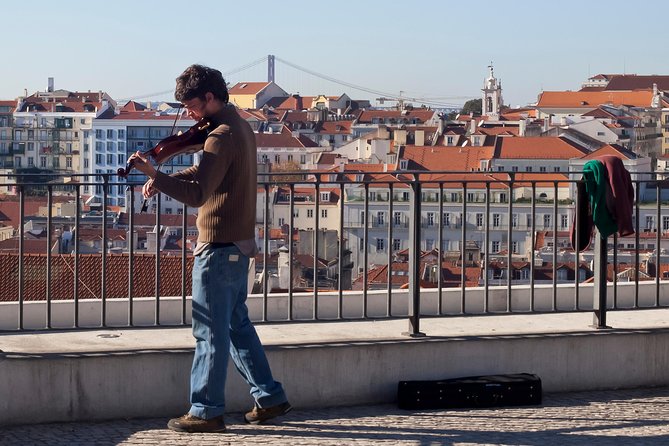
If you plan to see live Fado later, this stop makes the music feel like it has geography. You stop hearing it as a distant Lisbon brand and start hearing it as something tied to a street-level community.
Praca Martim Moniz: Lisbon’s multicultural square
Then you arrive at Praca Martim Moniz, described as one of Lisbon’s most multicultural squares. This is a good reality check after the history-heavy stops. You can see how today’s cultural mix continues to define the neighborhood’s energy.
This stop also helps you understand why Mouraria is often described as a place where multiple cultural identities overlap. Squares are practical things in the city. They gather people. They concentrate activity. And in a multicultural district, they become visible proof.
Plan for about 20 minutes. Use it to look around and notice how streets feed into the square from multiple directions.
Largo do Intendente Pina Manique: urban renewal in action
Finally, the walk ends at Largo do Intendente Pina Manique (your tour end point). This stop is framed as a case study in Lisbon urban renewal.
That framing matters because it explains why Mouraria looks the way it does today. Urban renewal often changes building use, street flow, and neighborhood reputation. The tour gives you a lens for seeing those changes without ignoring what came before.
You’ll have about 15 minutes here. If you want to keep exploring after the tour, this ending point is helpful because you’re positioned near a lively transit node (the area is associated with the Intendente metro reference).
What I think makes this tour work best
This tour isn’t trying to do everything in three hours. It’s doing the right things well: viewpoints, architectural cues, art, and squares that show how culture lives outside.
In particular, the route makes a strong case for why a neighborhood walk can beat a checklist:
- You see the same district from multiple angles: hilltop view, church doorway, street-art wall, public square.
- You get historical interpretation connected to place names, not just generic background.
- The private format plus guide knowledge helps you slow down at the exact moments that matter.
If you like Lisbon in layers, you’ll enjoy this. If you like street art but also care about where the art sits in a real neighborhood story, this is a good match.
Practical tips so you enjoy the walk more
A few things that will make the experience smoother in Mouraria:
- Wear comfortable shoes. Even when the time per stop is short, streets can be uneven and tight.
- Bring a camera or phone with decent low-light ability if you plan to shoot in doorways and shaded alleys.
- Use the viewpoint early to get oriented. That makes the rest of the walk feel connected.
- If you’re sensitive to crowding, the private format helps, but squares can still get busy depending on the time of day.
Also, remember that alcoholic drinks, drinks, and snacks aren’t included. If you want something during the walk, you’ll need to purchase it.
Should you book this private Mouraria walking tour?
Yes, if you want a focused three-hour walk through Mouraria that actually explains what you’re seeing. This is especially worth it if you care about street art with context, you want Moorish-era connections tied to Lisbon’s later culture, and you’d like photo help from a professional photographer guide rather than just hoping your shots work out.
Book it if your group can meet the minimum of 2 people. If you’re traveling solo, you’ll want to check whether the organizer can pair you with another traveler.
In short: if you’re aiming for an authentic neighborhood story instead of a fast sightseeing loop, this one is a strong fit.
FAQ
How long is the Mouraria private walking tour?
The tour runs for about 3 hours.
What is the price per person?
It costs $32.51 per person.
Is the tour private?
Yes. It’s a private tour, and only your group participates.
Where does the tour start and end?
It starts at R. dos Fanqueiros 170, 1100-227 Lisboa, Portugal, and ends at Largo do Intendente Pina Manique, 1100-395 Lisboa, Portugal.
What language is the tour offered in?
The tour is offered in English. It may also be operated by a multilingual guide.
Are tickets or admissions included?
Admissions are listed as free for the stops included in the route.
What’s included in the tour?
A local guide, a professional guide, a professional photographer guide, and the private tour are included.
What isn’t included?
Alcoholic drinks (available to purchase), drinks, and snacks are not included.
What’s the cancellation policy?
You can cancel for free up to 24 hours in advance for a full refund. If you cancel less than 24 hours before the start time, the amount paid isn’t refunded.