REVIEW · WALKING TOURS
Lisbon´s Private Walking Sightseeing Tour
Book on Viator →Operated by TakingUThere · Bookable on Viator
Lisbon feels easiest when you walk it. This private, guide-led stroll threads together Lisbon’s big eras—earthquake-rebuilt downtown, medieval hilltop neighborhoods, and viewpoints that make you stop and stare—without feeling like a checklist. I love the private pacing and customization, so you can linger where your interests land. I also love the fast-track help for São Jorge Castle, which saves you from the long ticket-line problem that can eat up your morning.
A possible drawback: it’s a lot of uphill, downhill, and cobbles, and one past booking noted English can vary by guide. If clear communication is crucial for you, come with questions ready, and give your guide a moment to settle in before you pepper them with details.
In This Review
- Key Highlights You’ll Actually Feel
- A Private Old-Town Stroll Beats a Scripted Bus Day
- Meeting at Arco da Rua Augusta: Start Where Lisbon Opens Up
- Baixa, Rossio, and Restauradores: The Rebuild You Can Still See
- Terreiro do Paço and the Rua Augusta Portal Feeling
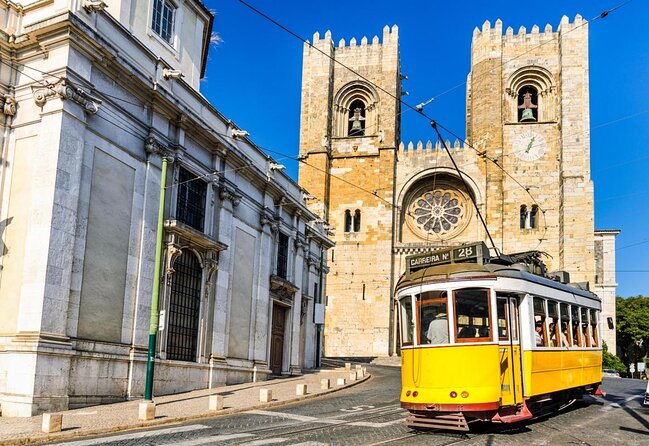
- Lisbon Cathedral and the Holy Door: Moorish Layers in One Building
- Roman Theatre at Museu de Lisboa: The Surprise Middle Layer
- São Jorge Castle: Fast-Track Advantage With a Big Payoff View
- Miradouro de Santa Luzia: Alfama’s Edge From a Gorgeous Balcony
- Alfama: The Oldest Neighborhood, Up Close
- Bairro Alto and Largo do Carmo: Two Neighborhood Moods in Short Order
- Elevador de Santa Justa: Neo-Gothic Lines and a Classic View
- Praca Dom Pedro IV and Rossio’s Dark Chapter
- Price and Value: Where the $60.01 Makes Sense
- What This Tour Is Best For (and When to Skip)
- Should You Book This Tour?
- FAQ
- Where does the tour start and end?
- How long is the Lisbon private walking tour?
- Is this tour private?
- Are monument entrance tickets included?
- Do you get fast-track access anywhere?
- What should I bring for the day?
Key Highlights You’ll Actually Feel
- Private guide, your group only: you’re not pushed along with strangers.
- São Jorge Castle fast-track support: the ticket isn’t included, but line-waiting is reduced.
- Alfama on foot: you get the feel of the oldest Lisbon neighborhood, not just photos.
- Miradouros with big views: Santa Luzia and Santa Justa deliver classic panoramas.
- Historic stops with context: earthquake, Moorish-Christian transitions, and even the Inquisition, explained with care.
A Private Old-Town Stroll Beats a Scripted Bus Day
Lisbon’s old center is made for walking. Streets twist. Viewpoints pop up between buildings. And the city’s story is written across layers of time, from Roman-era foundations to Moorish walls to modern-day Lisbon rebuilt after the 1755 earthquake.
This tour works because it’s focused on the historic core, not on trying to cram in Belém too. You get a dense hit of Lisbon’s identity in about 4 hours, with a route that can flex around weather and your preferences. For first-timers, that matters. For return visitors, it can still feel fresh if you care about why the city looks the way it does.
The group is private—just you and your guide—so you can ask for detours, skip a stop if your legs are burning, or swap the order if the weather turns.
You can also read our reviews of more walking tours in Lisbon
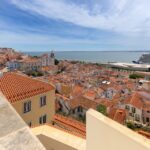


Meeting at Arco da Rua Augusta: Start Where Lisbon Opens Up
You begin at Arco da Rua Augusta (R. Augusta 2), right in the downtown zone called Baixa Pombalina. This area was rebuilt after the 1755 earthquake, which is the big “why” behind the wide avenues and grand 18th-century architecture. Standing here, you can feel how Lisbon planned its comeback: squares connected by straight streets, with a sense of order after chaos.
From a practical angle, this location is also a good launch point. It’s central and easy to orient yourself. If you’re used to cities where you need a map just to start, Lisbon can be different—Baixa helps you get your bearings fast.
Tip: wear shoes you trust. The route mixes smooth walkways with cobbled sections, and those add up over a few hours.
Baixa, Rossio, and Restauradores: The Rebuild You Can Still See
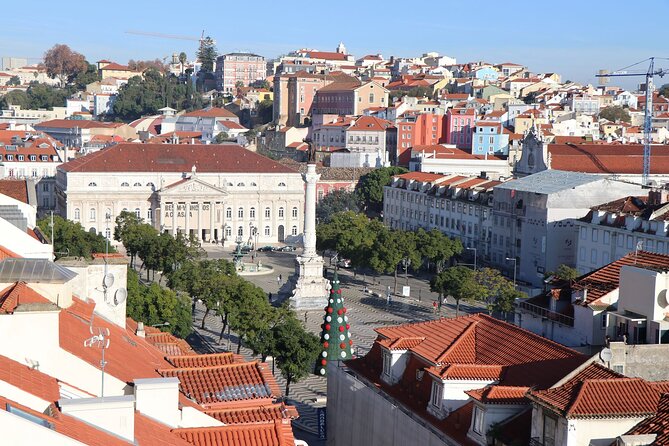
In the Baixa area, the tour heads through the heart of Lisbon, built on a scale of about 255 hectares. You’ll connect the dots between major squares and streets that were redesigned after the quake.
Why this stop is worth your time: it gives you the context for everything else. When you later climb into Alfama’s tighter lanes, you’ll understand the contrast—one Lisbon reorganized and one Lisbon growing organically over centuries.
If you love architecture and city planning, this is one of the strongest “value-per-minute” segments. If you just want pretty scenes, you still get plenty—because those elegant grids make every viewpoint later look even more dramatic.
Terreiro do Paço and the Rua Augusta Portal Feeling
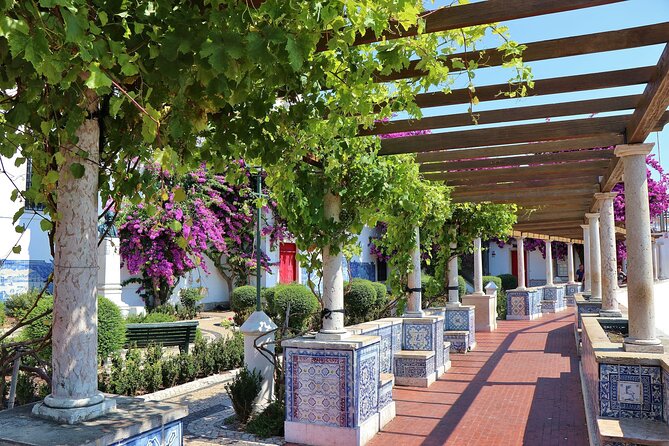
Next comes Terreiro do Paço, the waterfront square where the Rua Augusta arch symbolizes Lisbon facing outward—an opening to the world. The tour frames it like a passage from darkness and ignorance to light and wisdom, which is a poetic way to think about a city that reinvented itself again and again.
Practically, it’s also a great mid-tour reset. You get a breather area, wide space for photos, and a clearer sense of where you are relative to the river.
Note: this is more about explanation than museum time. So even if you want less talking, you’ll still benefit from the “why” behind the places.
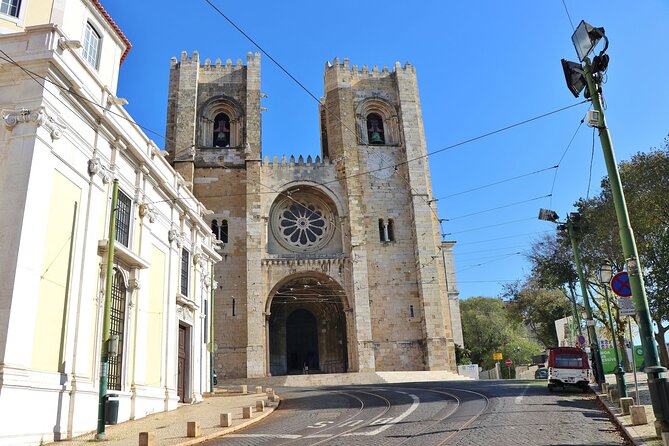
Lisbon Cathedral and the Holy Door: Moorish Layers in One Building
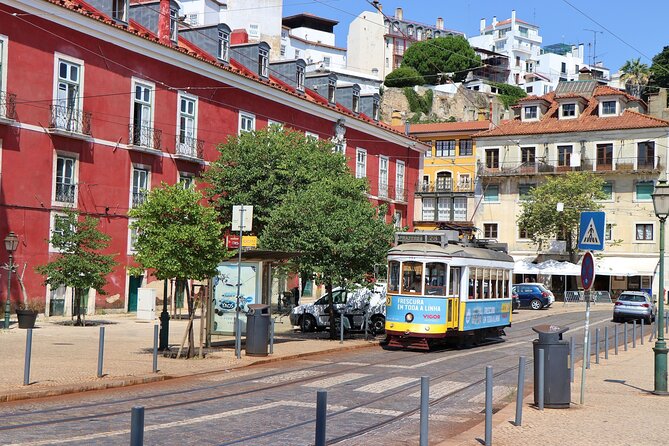
At Lisbon Cathedral, you’re not just seeing a church. You’re seeing a timeline stacked on top of itself.
The tour explains how the site connects to Lisbon’s shift after the Christian reconquest. There was a mosque on the same location, and later the cathedral was built there. The star detail: the cathedral has a Holy Door, one of the few in the Christian world.
The best part here isn’t only the door. It’s the way the guide ties religious history to Lisbon’s changing political power. Even if you’re not a church-architecture person, you’ll likely find the explanation changes the way you look at the building.
If you’re sensitive to long waits at religious sites, keep in mind this stop is set up for a short visit with your guide rather than a deep, timed ticket session.
You can also read our reviews of more private tours in Lisbon






Roman Theatre at Museu de Lisboa: The Surprise Middle Layer
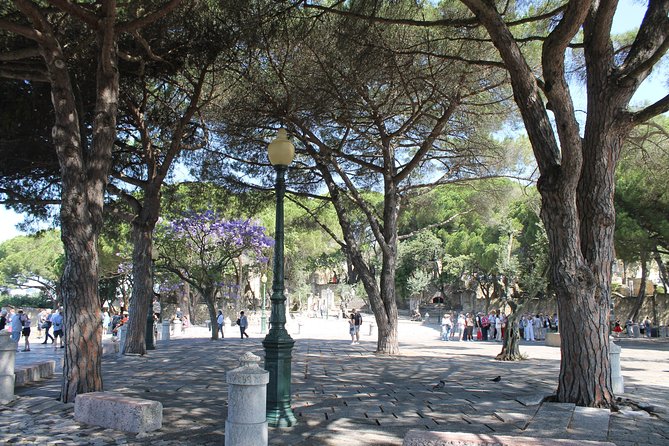
You’ll also stop at Museu de Lisboa – Teatro Romano, home to a Roman theatre built in the time of Augustus. Roman Lisbon was called Felicitas Iulia Olisipo, and the guide links its growth to peace in the empire and commerce across provinces.
This is a “quiet wow” stop. Roman ruins in a modern city don’t always land emotionally, but the explanation helps. It turns the theatre from a wall of stones into a real piece of daily life: a maritime city in Lusitania’s world.
One more practical note: the time here is short. So it’s ideal if you prefer meaningful snapshots over long museum sessions.
São Jorge Castle: Fast-Track Advantage With a Big Payoff View
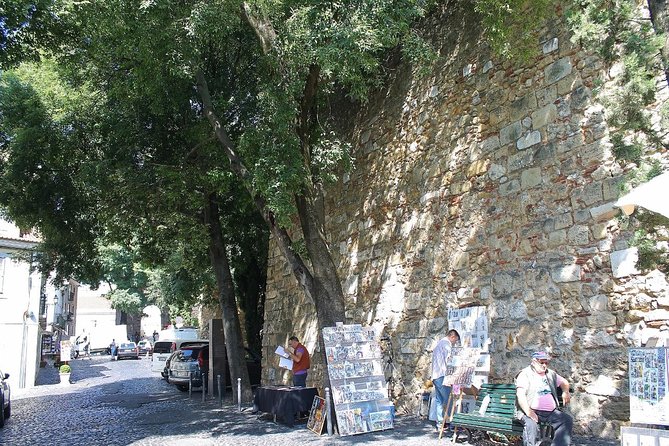
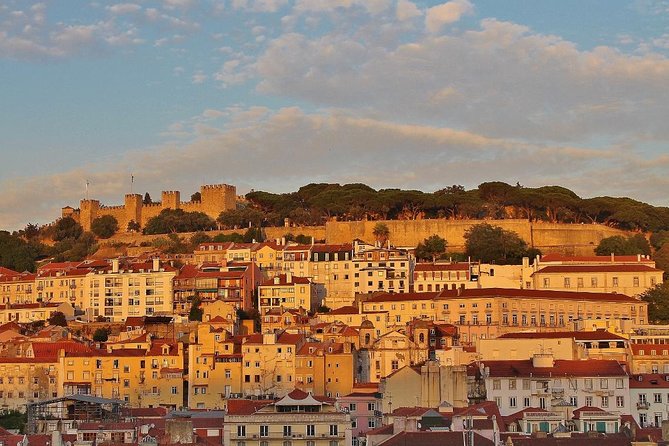
Then you head into the castle zone: Castelo de São Jorge. The tour frames the castle as a strategic medieval citadel, fortified under Moorish rule and later taken by D. Afonso Henriques in 1147 after a long siege.
For views alone, São Jorge is worth it. But what makes this tour especially useful is the fast-track line help your guide can arrange. The ticket itself is not included, and you may still need to decide on entry based on time and your energy level.
The tour also makes this easy: if you want to go inside, you can ask your guide to help with tickets to reduce waiting. That’s a real difference versus arriving on your own when the line is long and your day gets squeezed.
One booking note worth your attention: some people reported frustration with communication or identification at the meeting point. So keep your phone handy and check the guide’s details right at the start.
Miradouro de Santa Luzia: Alfama’s Edge From a Gorgeous Balcony
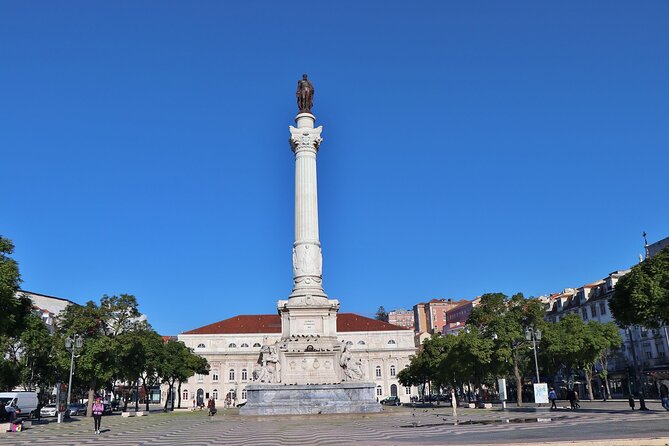
At Miradouro de Santa Luzia, the tour aims at one of Lisbon’s classic panoramas. From here you look toward Alfama, the oldest neighborhood, and on good weather you can even see the Arrábida Natural Reserve far to the south.
This stop matters because viewpoints in Lisbon aren’t only for sightseeing. They’re for orientation. Once you’ve seen Alfama from above, the later walk through it makes far more sense.
Also, it’s a nice change of pace—less climbing than some other stops, and more “stand here and absorb it” time.
If you travel in heat, use this as your sunscreen moment. Even with a short visit, the sun can hit hard on the hilltops.
Alfama: The Oldest Neighborhood, Up Close
Now the tour shifts into character mode with Alfama. The guide explains the name comes from the Moorish al-hamma, linked to baths or fountains.
This is where Lisbon feels most itself: narrow lanes, lived-in streets, and a sense that time moved differently here than it did in the planned Baixa grid.
The best way to enjoy Alfama during this tour is to use it for atmosphere more than for finishing. You’re not trying to conquer every street. You’re getting the feel—what it looks like, how it breathes, and why it’s still Lisbon’s emotional core.
Practical consideration: you’ll be walking up and down. That’s not a complaint; it’s the point. Just be smart about pacing and water.
Bairro Alto and Largo do Carmo: Two Neighborhood Moods in Short Order
After Alfama, you move toward Bairro Alto. The tour gives you the idea of what you can do later in Lisbon from this higher area—helpful if you want to plan a return walk on your own.
Then you reach Largo do Carmo, near Chiado, with historical jacaranda trees and the ruins of the old Convento do Carmo, where museums are currently installed.
Why these stops work: they connect the dots between Lisbon’s entertainment and its intellectual side, between old stones and modern museum life. Also, the tour keeps each segment compact, so you’re not stuck in one area too long.
If you love street trees and architecture, Largo do Carmo is a pleasing interlude. If you’re purely view-focused, treat it as a brief pause before the next big panorama moment.
Elevador de Santa Justa: Neo-Gothic Lines and a Classic View
Next is Elevador de Santa Justa, a neo-Gothic lift built in 1902. Even if you don’t ride it, the structure itself is worth seeing. The tour also shares the design history, including the engineer Raoul Mesnier du Ponsard, with a note about how it’s often compared to France’s famous engineers (the tour clears up the popular myth).
From the top, you get a strong view over Lisbon and Rossio Square. This is one of those moments where you stop thinking about history and start thinking about your next photo, because the city is laid out below like a diagram.
If you’re already tired from walking, this stop can still feel like a win because you get payoff without needing a long museum commitment.
Praca Dom Pedro IV and Rossio’s Dark Chapter
The tour ends with a thoughtful but heavy note at Praça Dom Pedro IV, historically tied to the Holy Inquisition in Portugal. The explanation centers on how public punishments and killings occurred there.
This stop is important because Lisbon’s story isn’t only charming angles and sunny squares. If you want the full picture, you need the hard parts too.
Then the tour finishes at Miradouro de São Pedro de Alcântara, which works well as a final viewpoint. It’s a gentle landing after the heavier story.
Price and Value: Where the $60.01 Makes Sense
At about $60.01 per person for a private walking tour lasting roughly 4 hours (often described as around 5 on the ground), the value is mostly in three things:
- You’re buying a guide, not a route. The itinerary can be adjusted to your interests, so you’re more likely to remember it as Lisbon-specific, not generic sightseeing.
- Fast-track help for São Jorge Castle reduces one of the most common travel headaches in Lisbon: waiting in long lines.
- It’s built for orientation in the historic core. You get context for what you’ll see later on your own.
Entrance tickets to monuments are not included, which means you’re in control of what you pay for. That’s a plus for travelers who prefer flexibility. It can also be a downside if you were hoping everything is fully bundled and you don’t want to make decisions in the moment.
If you plan to enter multiple sites (especially inside São Jorge Castle), you’ll want to set aside extra money. If you’re happy with mostly guided exterior viewing and brief stop-ins, you can keep costs predictable.
What This Tour Is Best For (and When to Skip)
This tour is a good match if you:
- want a first-timer orientation to Lisbon’s old town
- like learning the story behind architecture and street layout
- prefer a private guide who can adjust the flow
- plan to revisit neighborhoods later and want a mental map first
It may not be ideal if you:
- want a fully museum-heavy day with lots of ticketed interiors
- have very limited mobility or can’t handle steep cobbled sections
- need consistently fluent English communication without any risk of variation (one past booking flagged that as an issue)
Should You Book This Tour?
Yes—if you want Lisbon’s old town explained in a way that helps you walk it again later with confidence. The combination of Alfama + viewpoints + key landmark context is exactly the kind of value a private guide adds, and the São Jorge fast-track support can save time when lines are long.
I’d especially book this if you’re the type who likes knowing why a square exists, why a church was built on an earlier site, or why a neighborhood name matters. If that’s you, you’ll get your money’s worth.
If you’re more of a relax-and-stroll traveler with little interest in history, consider trimming expectations. This tour is informative by design. And bring comfortable shoes. Lisbon will test them.
FAQ
Where does the tour start and end?
The tour starts at Arco da Rua Augusta, R. Augusta 2, 1100-053 Lisboa and ends at Miradouro de São Pedro de Alcântara, R. de São Pedro de Alcântara, 1250-238 Lisboa.
How long is the Lisbon private walking tour?
It runs for about 4 hours (the tour is described as approximately 4 hours, and the experience is also presented as a private 5-hour style tour).
Is this tour private?
Yes. It’s a private tour, so only your group and your professional guide participate.
Are monument entrance tickets included?
No. Entrance tickets to monuments or parks are not included. Many of the stops are free to view from outside, and you can decide on paid entry where available.
Do you get fast-track access anywhere?
The guide provides fast-track help for São Jorge Castle (ticket not included), which can help you avoid long lines.
What should I bring for the day?
Bring comfortable shoes, sunscreen, and a camera. The route requires moderate physical fitness due to walking and hills.