REVIEW · CRUISES & BOAT TOURS
Lisbon Sunset Sailing Tour with White or Rosé Wine and Snacks
Book on Viator →Operated by BYX - Best Yacht Xperience · Bookable on Viator
A sunset on the Tagus feels cinematic. This Lisbon sailing tour heads out about two hours before sunset, so you get more river sights than the usual late departures, with a small group that stays calmer than land tours. I like the small-group size (max 10) and the way the crew connects what you see—bridges, forts, palaces—to Portugal’s story.
One thing to consider: this is a smaller sailboat setup, so comfort can be basic, with limited seating and no onboard bathroom reported for this kind of sailing.
In This Review
- 4-6 key things you’ll notice right away
- Sunset on the Tagus: Why the Early Departure Matters
- Getting There at Izanagi: Meeting Point and Simple Logistics
- Small Sailboat Reality: Comfort, Space, and What You’ll Actually Do
- Ponte 25 de Abril: Lisbon’s Bridge Moment From the River
- Why it’s worth noting
- Cristo Rei Across the Water: The View That Puts the City in Perspective
- Belém’s Icon Set: Torre de Belém and the Padrão dos Descobrimentos
- Torre de Belém
- Padrão dos Descobrimentos
- MAAT on the Riverfront: Art, Architecture, and a Power-Plant Backdrop
- Palácio Nacional da Ajuda: A Royal Stop Without the Museum Lines
- The 17th-Century Palace Museum: Overseas Art Collections by the Tagus
- Wine, Snacks, and the Small Details That Make or Break It
- Music, Talking, and the Level of “Tour” You Should Expect
- Weather Tips: Wind, Rain, and Why Layers Beat T-shirts
- Who This Tour Suits Best (and Who Might Skip It)
- Should You Book This Lisbon Sunset Sail?
- FAQ
- What time does the Lisbon sunset sailing tour start?
- How many people are on the boat?
- What’s included in the price?
- Is there transportation included to or from the meeting point?
- Do they offer wine, and do I get to choose?
- Is there a bathroom onboard?
4-6 key things you’ll notice right away
- Two-hour early start means better light and more landmarks before the skyline darkens
- Max 10 travelers keeps it intimate and makes it easier to hear the guide and swap photo tips
- Riverfront landmarks from the water: Ponte 25 de Abril, Cristo Rei, Torre de Belém, and more
- Wine and snacks included with Portuguese-style bites like cheese and chouriço
- Crew-led storytelling can be fun and personal, with captains and guides named Vasco, Fernando, Manuel, Anna, Sergio, and Miguel popping up in guest experiences
- Weather can change fast on the water, so bring a layer and be ready for wind or rain
Sunset on the Tagus: Why the Early Departure Matters
The big reason this tour works is timing. Leaving at 3:30 pm and cruising for about two hours puts you on the water while Lisbon is still in full daylight, then into the golden-hour glow. Traditional sunset tours often start too late and spend most of the trip in dim light.
Here, you see the river’s geography clearly before sunset and you still get the payoff at the end. That means you can actually match what you’re looking at to Lisbon’s map: bridges first, then the Belém area, then the city-side monuments as the light softens.
You can also read our reviews of more boat tours in Lisbon



Getting There at Izanagi: Meeting Point and Simple Logistics
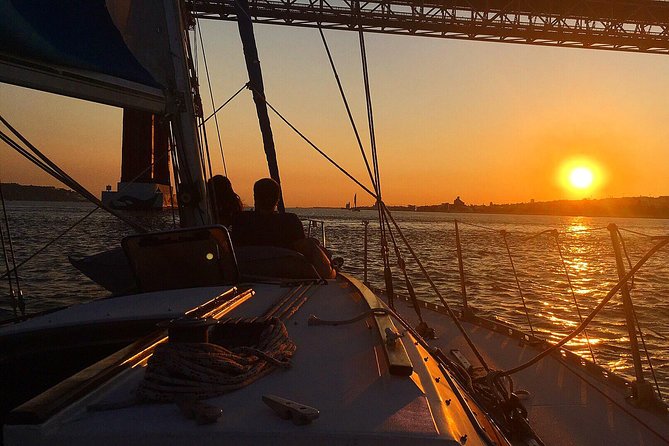
You meet at Izanagi (Doca de Santo Amaro), Armazém 0, right by the waterfront in Lisbon. The good news: it’s described as near public transportation, so you’re not forced into a car or taxi-only situation.
Plan to arrive a little early. Even if check-in is quick, it helps you settle in, take a last look at the Tagus, and be ready when the crew gets moving. Also, you’re ending back at the same meeting point, so you’re not left juggling a complicated finish.
Small Sailboat Reality: Comfort, Space, and What You’ll Actually Do
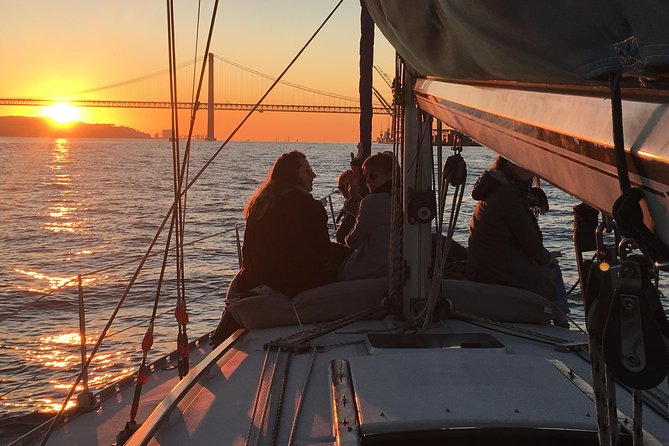
This is a sailing experience with an intimate scale: the group is capped at 10 travelers, and the boat is often described as on the smaller side (around 30 feet). That’s part of the charm. You get that close-to-the-water feeling and a more personal vibe with the crew.
The trade-off is practical. One report specifically noted no bathroom on this two-hour cruise, and another pointed out seating is basically a hard deck area. I’d treat it like a “stand/sit lightly and enjoy” outing, not a comfort-lounge scenario. If you hate wind on bare arms, bring layers.
Ponte 25 de Abril: Lisbon’s Bridge Moment From the River
You’ll pass Ponte 25 de Abril, the suspension bridge linking Lisbon to Almada. It was built in 1966 by the American Bridge Company, and it used to be called Ponte Salazar. After the Carnation Revolution in 1974, it was renamed to honor April 25.
From the Tagus, the bridge doesn’t just look impressive—it gives you scale. Lisbon feels stretched out along the water, and the river becomes the main route for the city. If you’re the kind of person who likes seeing how a city is organized, this stretch gives you that quick visual map.
Why it’s worth noting
A lot of Lisbon monuments are best appreciated slowly on foot. This cruise starts with a giant piece of infrastructure, so you get oriented fast and you understand the river’s role in daily life.
You can also read our reviews of more wine tours in Lisbon





Cristo Rei Across the Water: The View That Puts the City in Perspective
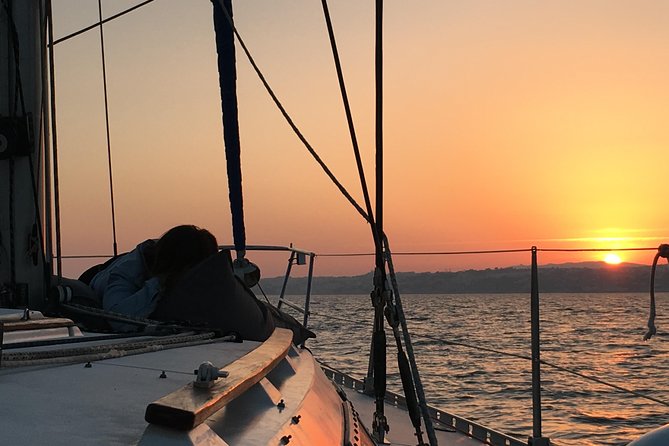
Next comes Cristo Rei in Almada, the Catholic shrine overlooking Lisbon. It was erected in 1959, and it takes inspiration from Rio’s famous Christ the Redeemer. Cristo Rei is 110 meters tall (about 360 feet, 11 inches).
From the Tagus, you’re not just looking at a statue. You’re seeing how Lisbon stacks up in depth: water in front, rooftops and hills behind, and a landmark that helps you read the skyline from a distance.
If you like photo angles, this is a strong moment. It’s also the point where the “sunset sail” label starts to feel real, since the light begins to skim across the river surface.
Belém’s Icon Set: Torre de Belém and the Padrão dos Descobrimentos
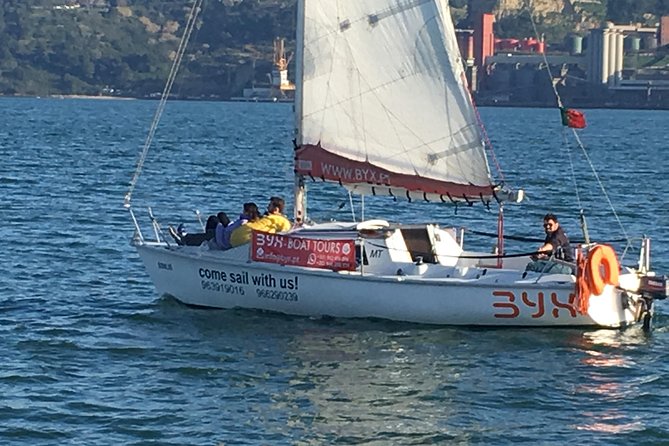
Belém is where the cruise turns into a true highlights reel.
Torre de Belém
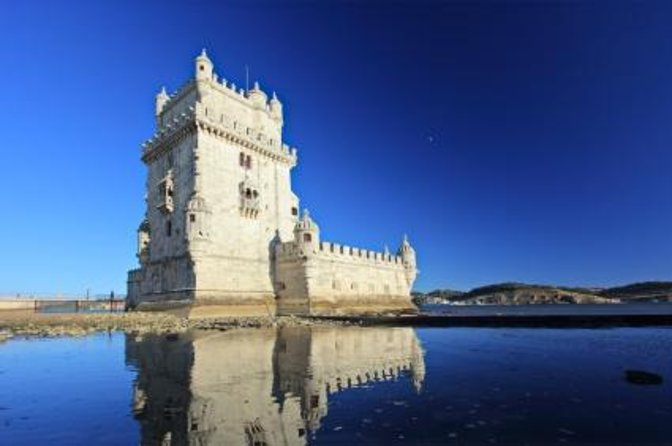
You’ll be looking toward Torre de Belém, one of Lisbon’s most iconic symbols. The tower began as an idea for a lighthouse and later shifted into a defensive fortress role under King Manuel I.
From the water, you understand why it belongs so tightly to the river mouth. It’s not just a pretty tower in a plaza; it’s built for maritime watchfulness.
Padrão dos Descobrimentos
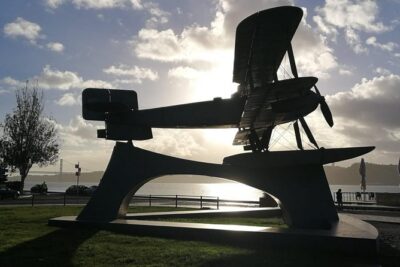
Then there’s the Padrão dos Descobrimentos, a stone monument shaped like a caravel frozen mid-swell. It was inaugurated in 1960 for the 500th anniversary of Henry the Navigator’s death.
The monument is 56 meters tall. At the prow is Henry, with explorers behind him including Vasco da Gama, Diogo Cão, Fernão de Magalhães, and 29 others. Even if you don’t memorize names, it’s powerful to see the figures arranged like a ship crew, right beside the river they helped define through the voyages.
MAAT on the Riverfront: Art, Architecture, and a Power-Plant Backdrop

After the older monument zone, you get a modern Lisbon layer with MAAT. This Lisbon cultural project focuses on Art, Architecture, and Technology. The museum building sits on the Tagus west of the city center, and it’s described as one of Europe’s more lyrical new museums.
What makes it interesting from a boat is the setting. MAAT is physically tied to Portugal’s industrial story through its connection to the Tejo Power Station, which is an important example of early 20th-century industrial architecture.
From the sailing deck, MAAT also works as a visual pause. You go from fort-and-exploration stone to sleek contemporary curves, all framed by the river.
Palácio Nacional da Ajuda: A Royal Stop Without the Museum Lines
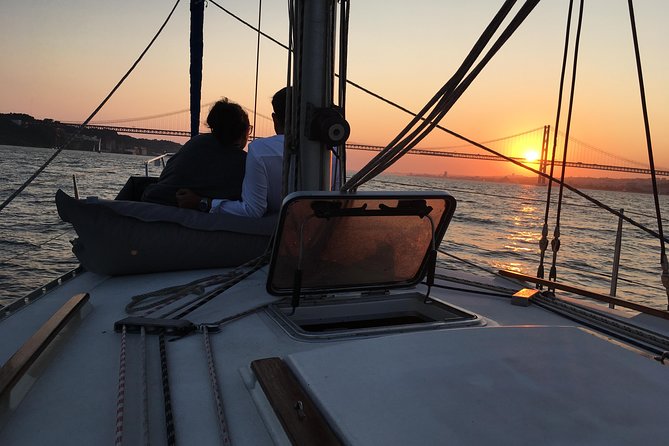
You’ll glide past the Palácio Nacional da Ajuda, a neo-classical palace built in the first half of the 19th century. It became the royal residence when D. Luís I became king and married D. Maria Pia of Savoy.
The palace closed in 1910 during the proclamation of the Portuguese Republic and later reopened as a museum in 1938. Today, it’s also used for major presidential ceremonies. That matters because it’s not only a pretty building; it’s still part of Portugal’s public life.
On the water, you won’t tour interiors, but you’ll get the satisfaction of seeing where modern Portugal’s civic moments sit atop layers of monarchy.
The 17th-Century Palace Museum: Overseas Art Collections by the Tagus
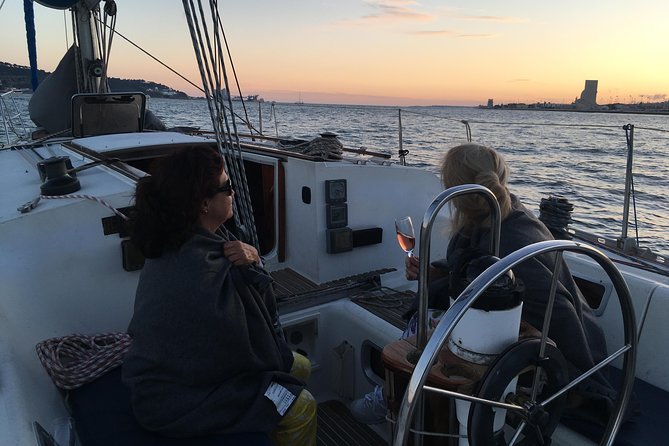
One of the most compelling parts of this route is the way it points toward Portugal’s overseas connections. You’ll pass a museum housed in a 17th-century palace, with buildings on the site of a 16th-century Carmelite convent. Only a Baroque chapel remains from that earlier convent.
The museum also has a garden overlooking the Tagus, and it holds a strong collection of decorative pieces connected to overseas cultures, including items from Africa, India, and China. Expect categories like carved ivory, furniture, embroidery, silverware, porcelain, silks, and Namban art, with Japanese screens and lacquerware.
From a sailing angle, this stop works because it keeps Lisbon from feeling like only castles and tiles. It’s Lisbon as a crossroads—seen through objects, patterns, and long-distance links.
Wine, Snacks, and the Small Details That Make or Break It
This cruise is built around wine and snacks, included in the price. A sample menu points to Portuguese cheese and/or chouriço alongside wine. Many guests describe a smooth flow of wine during the ride, which is great because you don’t need to figure out cash-only purchases mid-cruise.
Still, pay attention to reality. The tour is advertised as offering white or rosé, but some people have reported that the wine selection didn’t match exactly, with green wine showing up instead, and one note that rose wasn’t available. So I’d go in expecting wine, not a guaranteed specific label.
Food is also small-scale. One guest called the snack plate very light, so think of it as an added bonus, not dinner. If you’re hungry, plan a meal before you arrive.
Dietary needs are a mixed bag. One guest noted a vegan-friendly board, which is a positive sign. But another described dietary restrictions not being handled well on board. If you have dietary needs, write them clearly when booking and follow up with the crew before departure so expectations are aligned.
Music, Talking, and the Level of “Tour” You Should Expect
This experience sits in a sweet spot for many people: it’s not a museum lecture, but it’s also not totally silent sightseeing. The crew adds historical and cultural context as you sail, and several guide names show up in guest experiences, including Vasco, Fernando, and Manuel. Other experiences mentioned hosts like Anna and Sergio, and Miguel and Alfonso, suggesting the operator rotates staff while keeping a story-first approach.
If you want a formal, stop-by-stop educational tour with lots of standing around, you might find the vibe more relaxed. But if you like learning in motion—asking quick questions between passes at landmarks—you’ll likely enjoy the format.
Music can also be part of the atmosphere, since some people mentioned a lively onboard soundtrack. Combine that with included wine, and you get the “sunset ritual” feeling.
Weather Tips: Wind, Rain, and Why Layers Beat T-shirts
Lisbon sunsets are famous, but the Tagus can be a different story. Multiple guest notes mention starting in rain and then getting clear skies, so a rain jacket can be worth packing even if the day looks good.
Also, the air can turn chilly fast once the sun drops. One note specifically recommended bringing something warm for early October. Even on a mild day, wind off the river can make you feel colder than you expect.
If you’re the type who hates being uncomfortable, bring a windbreaker and keep your phone ready for photos early, when you still have warmer light and less glare.
Who This Tour Suits Best (and Who Might Skip It)
This Lisbon sunset sailing tour is a strong match for:
- People who want views plus context without spending a whole day walking
- Couples and small groups who like a more personal pace
- First-timers to Lisbon who want orientation fast and a photo-heavy finale
You might want to choose something else if:
- You need a guaranteed onboard bathroom
- You want a long, structured, museum-style explanation for every stop
- You prefer larger boats with more room and softer seating
Given the price is $50.91 per person for about two hours and includes wine, snacks, insurance, and a certified crew, it’s fairly priced for a small-group sunset sailing plan. Just make sure your expectations match the format: it’s about the river ride and the sunset mood, with historical talk sprinkled in.
Should You Book This Lisbon Sunset Sail?
I think you should book it if your Lisbon trip needs one memorable, low-effort evening that mixes landmark views with a human, story-led crew. The combination of small-group sailing, early departure before sunset, and a route that covers major sights like Belém and the bridge area makes it a smart use of time.
Before you go, do two things: bring layers for wind, and be clear about wine and dietary expectations when booking. If you’re flexible and you enjoy the calm of being on the Tagus, this is a very easy “yes” for your itinerary.
FAQ
What time does the Lisbon sunset sailing tour start?
The tour starts at 3:30 pm and runs for about 2 hours.
How many people are on the boat?
The tour is limited to a maximum of 10 travelers, keeping it small-group and intimate.
What’s included in the price?
The price includes beverages, snacks, insurance, and a certified crew, plus sightseeing time on the river.
Is there transportation included to or from the meeting point?
No. Transportation to/from attractions is not included. The meeting point is described as near public transportation.
Do they offer wine, and do I get to choose?
Beverages are included, and the experience is advertised as white or rosé wine with snacks. Some experiences have indicated the wine options can vary.
Is there a bathroom onboard?
One reported detail is that there is no bathroom on this two-hour sailing.