
REVIEW · COOKING CLASSES
Lisbon Market and Food Tour with Cooking Class and Lunch
Book on Viator →Operated by Cooking Lisbon · Bookable on Viator
A market visit and cooking class in one half-day. This Lisbon experience pairs a small-group market tour with a hands-on Portuguese cooking session where you shop for fresh ingredients and then cook a full menu. What I like most is the fish-and-shellfish focus at the market and the fact that you eat what you make, with Portuguese wine at the end. The main catch to consider is that it’s a true cooking workout, and the menu typically leans seafood, so come with curiosity (or clear allergy needs).
You start in central Lisbon at R. Bernardim Ribeiro, then move into a well-equipped kitchen setting where the chef teaches step-by-step. The group stays small (maximum 12), so it feels more like learning with friends than getting shuffled through stations.
In This Review
- Key highlights you’ll feel the moment you start
- A market morning that turns into lunch at the table
- Where you meet and how the timing usually feels
- The market part: fresh fish, produce, and tasty sampling
- Cooking Lisbon style: hands-on fish, meat, and dessert
- Expect support, not stress
- The lunch moment: your meal plus Portuguese wine
- What makes the chefs and hosts matter (and why you should care)
- Dietary needs: how adaptations work in real life
- Who this tour suits best (and who should think twice)
- Is $141.50 good value for a 4-hour food-and-cooking class?
- Should you book Lisbon Market and Food Tour with Cooking Class and Lunch?
- FAQ
- What time does the Lisbon market and cooking experience start?
- How long is the tour?
- How many people are in the group?
- Is the tour offered in English?
- Can the class adapt to food allergies?
- Is there a cancellation deadline for a full refund?
Key highlights you’ll feel the moment you start
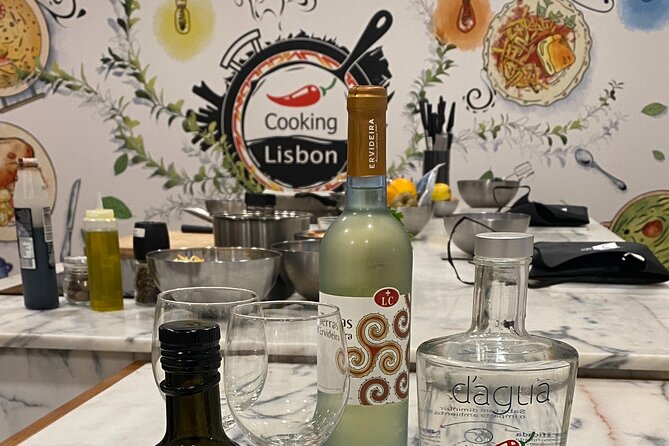
- Max 12 people keeps the attention on you, not on the clock
- Market shopping for fresh seafood and produce sets you up for better flavor
- Hands-on Portuguese menu typically includes fish, a meat dish, and a dessert
- Practical cooking skills like filleting fish and even shucking oysters, depending on the day
- Wine and snacks during the session so you’re not just standing and watching
- Chefs with strong teaching energy (names you’ll see praised include Renata, Philipa, Paulo, Pedro, and Gui)
A market morning that turns into lunch at the table
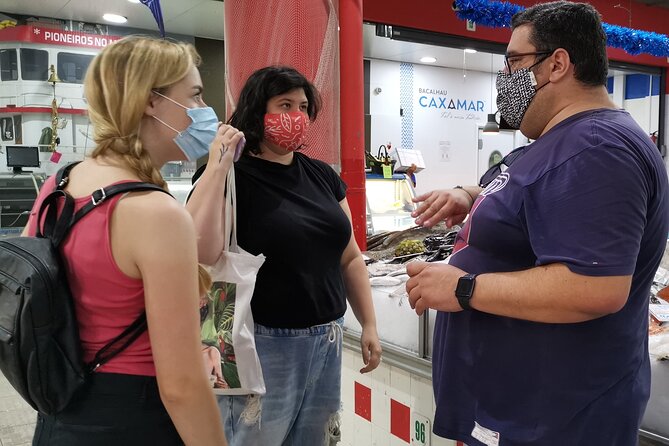
Lisbon food is at its best when it starts with the market. This is that kind of morning. You meet at R. Bernardim Ribeiro 9, then head out with your chef/instructor to buy the ingredients that will become your lunch.
What makes it stand out is the mix of time spent choosing real food—fresh vegetables, fish, and shellfish—and time spent learning how Portuguese dishes are put together. If your Lisbon plan includes eating well but you hate the idea of just reading a menu and hoping for the best, this gives you control. You leave with the confidence to make at least one or two dishes when you’re home.
And yes, it’s a meal you actually finish. At the end, you sit down with your new foodie friends and eat what you prepared, paired with Portuguese wine.
You can also read our reviews of more food & drink experiences in Lisbon



Where you meet and how the timing usually feels
You start at 9:30am at R. Bernardim Ribeiro 9, 1150-068 Lisboa. The activity ends back at the meeting point, so you’re not stuck figuring out how to get home mid-day.
The schedule is listed at about 4 hours, but in real life it can drift longer if the market shopping runs fun or your group cooks at a calm pace. One reason that matters: you’re using your morning for a full food experience, not just “a quick stop.” Plan your afternoon with some breathing room, because you’ll come out fed and mildly proud.
Good news: it’s near public transportation, and it’s designed for a small group, so getting there is usually straightforward.
The market part: fresh fish, produce, and tasty sampling
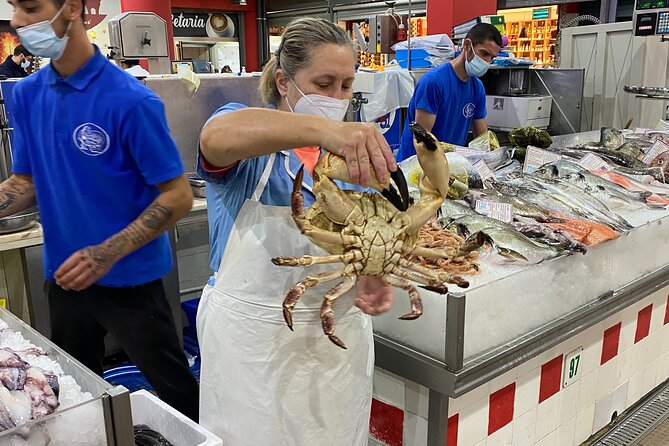
The market tour is the heart of the value here. Instead of pre-selected ingredients and a quick photo stop, you’re walking around and getting a feel for the day’s food. Your chef/instructor meets you, then you explore the variety you’d expect in Lisbon—bright vegetables, lots of seafood choices, and the kind of fish display that makes you hungry before cooking even starts.
You may also do tasting along the way. Many groups mention sampling items like bread and cheese, which helps you understand what you’re buying and why it belongs with the meal you’ll cook later.
One practical detail I appreciate: the shopping portion isn’t too long to feel exhausting. It’s paced to keep you moving, with enough time to ask questions and see different ingredients up close.
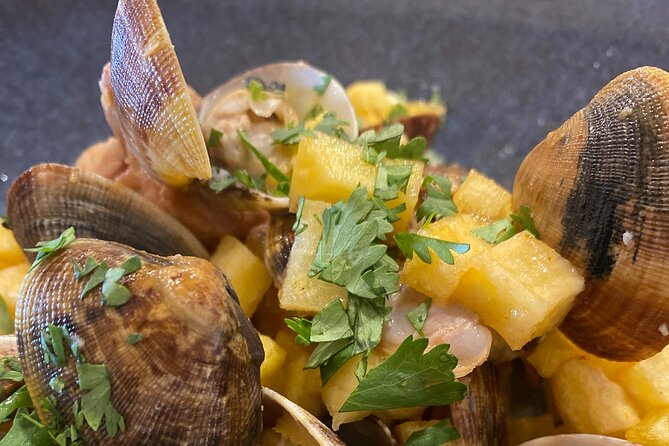
What you’ll likely notice: the sheer range of seafood options. If you’ve never paid attention to shellfish varieties or you’re unsure what goes with a cataplana-style dish, seeing the ingredients in person is a shortcut to better cooking later.
Cooking Lisbon style: hands-on fish, meat, and dessert
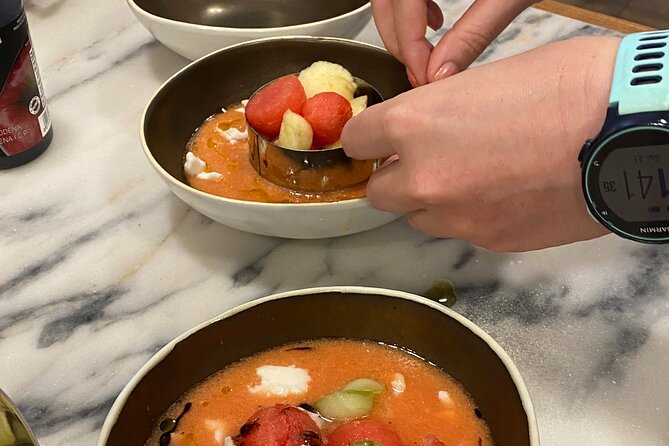
After the market, you head back to the cooking space, which is set up for real work (not a cramped demo kitchen). This is where the experience becomes practical. You’ll chop, prep, cook, and plate as a group, guided through techniques with clear instructions.
The menu is described as a traditional Portuguese meal with:
- a fish dish
- a meat dish
- and a dessert
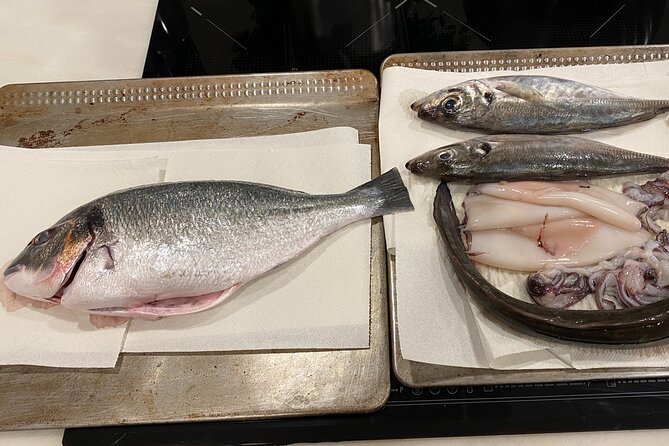
A sample menu example includes Peixinhos da Horta (Portuguese tempura) and Cataplana (seafood cataplana), finished with an orange roll from the Algarve. Other common-course mentions include items like bread soup and mussels, plus the sort of tasting that may include extra shellfish.
Some chefs and assistants are praised for teaching skills that go beyond basics. People have specifically mentioned filleting fish and shucking oysters. Even if your exact tasks vary by day, the point is the same: you’re not just watching, and you’re not stuck doing one simple task the whole time.
Expect support, not stress
Because the group is small, the chef can correct your technique when needed. People mention instruction that feels friendly and patient, and it’s clear the kitchen has what you need: tools, ingredients, and space to work.
A key value here is pacing. You don’t feel rushed through steps, and you get snacks during the class, which helps if you’re hungry in the middle of chopping and cooking.
You can also read our reviews of more tours and experiences in Lisbon






The lunch moment: your meal plus Portuguese wine
Once everything is ready, you eat together. This part matters more than it sounds. A lot of cooking classes stop at the work and send you off. Here, the meal is the payoff.
Portuguese wine is included, and you’ll usually have other drinks too (water and juice are mentioned). It turns the end of the class into a proper shared lunch rather than a hurried tasting.
You’ll also get to compare notes with the group. That might sound social, but it’s also practical: you’ll hear how others approached the same ingredient, and you’ll pick up small tips you can reuse later.
And yes, it feels like you’re doing something worth the time you gave up. The best ones leave you with memories tied to flavors, not just photos.
What makes the chefs and hosts matter (and why you should care)
One of the strongest signals in the experience is the teaching style. Names that come up again and again include Renata, Philipa, Rodrigo, Pedro, Gui, Pablo, Paulo, Carina, and assistants like Fernanda. Across those different names, the praise stays consistent: the chefs keep things fun, explain steps clearly, and make sure everyone participates.
Why that matters for you: a market + cooking class can go one of two ways. Either you feel guided and confident, or you feel lost and stuck at a station waiting for someone else to move on. This experience is built to keep you in the first category.
Also, if you have questions—about ingredients, about technique, or about how to eat Portuguese food beyond tourist spots—this is the kind of setting where a chef is happy to answer. The tone is relaxed, even when you’re working with real seafood and real flavors.
Dietary needs: how adaptations work in real life
The experience says you can tell them your food allergies to adapt the class. That’s exactly what you want to see. It means the cooking team expects dietary information rather than assuming everyone will eat the same menu.
One specific mention: gluten-free tailoring has been done for at least one group. That doesn’t guarantee every dietary style can be handled the same way, but it does show flexibility.
If you’re allergic rather than just picky, send your details early. Keep it simple: list the allergy clearly and double-check that the adaptation you need is realistic for the dishes you’ll be cooking.
Who this tour suits best (and who should think twice)
This is a great fit if you:
- enjoy cooking enough to actually do it with your hands
- want a Lisbon food experience that’s more than a meal out
- like seafood and want to understand it in Portugal’s context
- prefer small-group learning over big bus tours
- want wine included with lunch, without the awkwardness of a formal restaurant
It may be less ideal if you:
- don’t want to work in the kitchen at all
- hate seafood and shellfish (the market focus and menu strongly lean that way)
- want a purely sightseeing-focused day with zero cooking involvement
If you’re on the fence, think about what you’re trying to get out of Lisbon. If it’s “taste and learn,” this works. If it’s “see as much as possible,” you might feel like you spent the morning inside, then got hungry anyway.
Is $141.50 good value for a 4-hour food-and-cooking class?
At $141.50 per person, you’re paying for three things that add up fast if you do them separately:
1) a guided market visit with hands-on shopping
2) a full cooking session with instruction and equipment
3) a multi-course lunch with wine
The small-group cap (maximum 12) also matters for value. You’re not paying restaurant prices and then receiving a single small tasting. Instead, you’re doing the work and getting the meal that follows.
You should also consider what your alternative costs would be. If you tried to replicate this yourself, you’d still need market access, ingredients, and a place to cook (plus cleanup). Here, the kitchen is already set up for it, and the teaching is built in.
So the value is strong if you’re the kind of traveler who likes learning by doing.
Should you book Lisbon Market and Food Tour with Cooking Class and Lunch?
I’d book it if you want a Lisbon morning that blends market culture with real cooking skills and an actual lunch you helped make. The combination of fresh shopping, hands-on prep, and a table meal with wine is hard to beat for the price.
Book with confidence if:
- you like seafood or you’re open to it
- you want a small-group experience with guided steps
- you’d rather learn Portuguese cooking traditions than just order them
Skip or reconsider if:
- you’re not comfortable with a hands-on cooking format
- seafood is a hard no for you
- your schedule can’t spare a half-day meal plan
If your goal is to leave Lisbon with flavors you can picture later, this one has a good chance of doing that.
FAQ
What time does the Lisbon market and cooking experience start?
It starts at 9:30am.
How long is the tour?
It’s listed at about 4 hours.
How many people are in the group?
The group has a maximum of 12 travelers.
Is the tour offered in English?
Yes, it’s offered in English.
Can the class adapt to food allergies?
Yes. You can tell them your food allergies so they can adapt the class.
Is there a cancellation deadline for a full refund?
Yes. You can cancel up to 24 hours in advance for a full refund.
If you want, tell me your group’s ages and any dietary limits (even just no seafood vs. allergy), and I’ll help you decide if this is the best fit for your Lisbon day plan.