REVIEW · HISTORICAL TOURS
Lisbon Historical Downtown Private Tour
Book on Viator →Operated by João's Journeys · Bookable on Viator
Two hours, and Lisbon feels mapped. This private downtown loop strings together landmark churches, top viewpoint stops, and classic Alfama street time, with most stops listed as free.
I especially like how the route mixes big history with the kind of scenery you remember later.
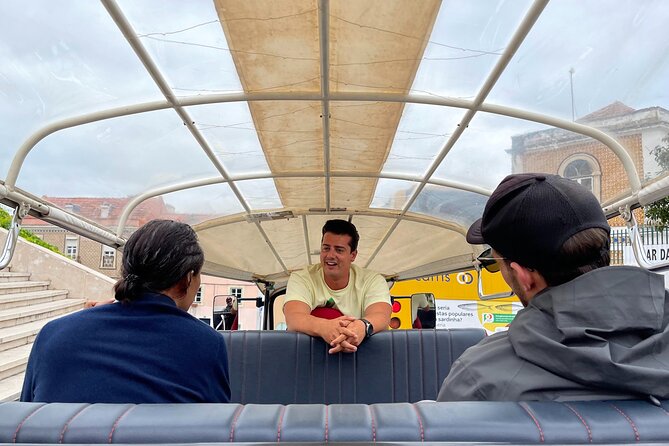
I love that it’s set up as private transportation for only your group, so you can move at a comfortable pace and ask questions as you go. In the guide praise, João and Ricardo come up for warm, energetic storytelling and a “good driver” focus that matters in Lisbon’s hills.
One possible drawback: the timing is tight. You’ll only get about 10 to 20 minutes per key stop (for example, 20 minutes at Miradouro da Senhora do Monte), so go in ready to skim fast and save extra wandering for later.
In This Review
- Key highlights worth planning around
- The 2-hour “greatest hits” route (and how it helps you)
- Lisbon Cathedral: a 12th-century anchor stop
- Portas do Sol: Alfama’s high viewpoint in 15 minutes
- Miradouro da Senhora do Monte: the top view for the city center
- The patron saint church stop: a quick but meaningful detour
- National Pantheon: where recent Portuguese figures rest
- Alfama streets plus ginginha: old neighborhood with a small taste
- Convento do Carmo ruins: the 1755 earthquake made visible
- Bairro Alto and the castle view finale at São Pedro de Alcântara
- Price and value: what $155.77 really buys you
- What it feels like on the ground: pace, breaks, and comfort
- Who this tour suits best
- Should you book this Lisbon Historical Downtown Private Tour?
- FAQ
- How long is the Lisbon Historical Downtown Private Tour?
- Where does the tour start, and where does it end?
- Is this tour private?
- Is pickup available?
- Is the tour in English?
- Do I need to buy separate tickets for the listed stops?
- What happens if the weather is bad or I cancel?
- Are service animals allowed?
Key highlights worth planning around
- Alfama viewpoints with photo-ready pull-offs: Portas do Sol and Senhora do Monte stack the best city angles in a short time.
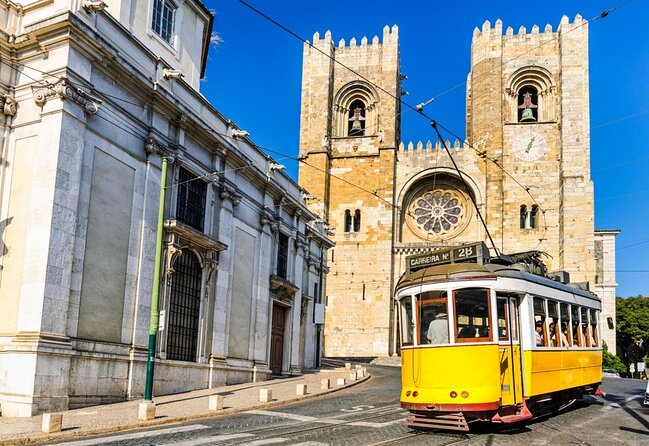
- Lisbon Cathedral with an early-Portugal backstory: construction ordered in 1147 by Portugal’s first king, and it’s presented as Lisbon’s first church.
- Ginginha taste inside the oldest neighborhood: you get a quick stop in Alfama to try the typical wild cherry licor.
- Earthquake-era ruins at Convento do Carmo: the convent ruins connect you directly to 1755 and what survived.
- A finale view that includes the castle: Miradouro São Pedro de Alcântara frames downtown with the castle up top.
The 2-hour “greatest hits” route (and how it helps you)
This tour is built for orientation. In about 2 hours, you hit the Cathedral area, climb through viewpoints, and then loop into Alfama and nearby downtown sights, ending back at the start point.
That structure is practical on a first day: you see the main historical layers and the steep angles Lisbon is famous for, without committing to a full half-day. If you’re trying to fit Lisbon into a tight schedule, this kind of focused route can save you hours of guessing where to go next.
It’s also private, so you’re not stuck with a slow-moving group plan. In a city like Lisbon—where a street can be charming and steep in the same breath—having your own pace matters.
You can also read our reviews of more private tours in Lisbon


Lisbon Cathedral: a 12th-century anchor stop

You start at Lisbon Cathedral, tied to a very specific origin story. Construction was ordered by Portugal’s first king in 1147, and it’s described as the first church in Lisbon. The stop is listed at about 10 minutes, and admission is shown as free.
What I like about putting the Cathedral early is that it gives context before you start looking outward. Once you’ve got that “early Lisbon” feeling in your head, the viewpoint stops in Alfama and the later ruins hit harder. It also helps you understand why the old quarters feel tightly packed: this is a city that grew up in layers.
Consideration: because the time is short, treat this as a quick reset rather than a long deep look. If you want to read every sign and soak it in, you’ll need extra time later on your own.
Portas do Sol: Alfama’s high viewpoint in 15 minutes
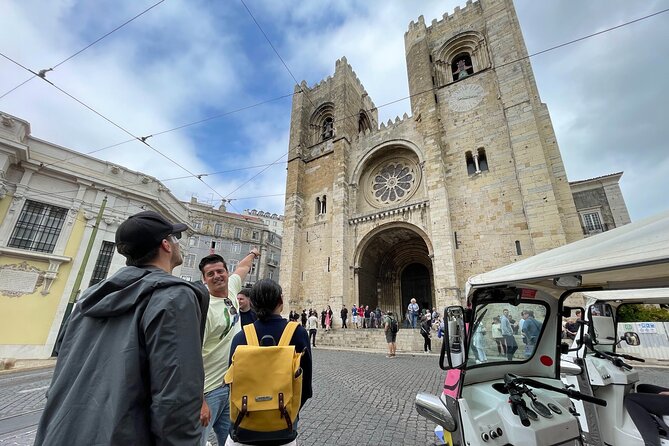
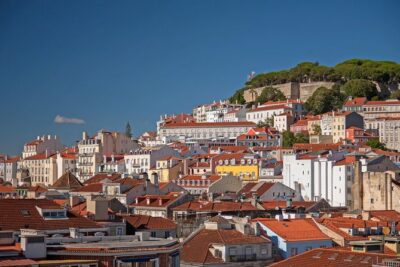
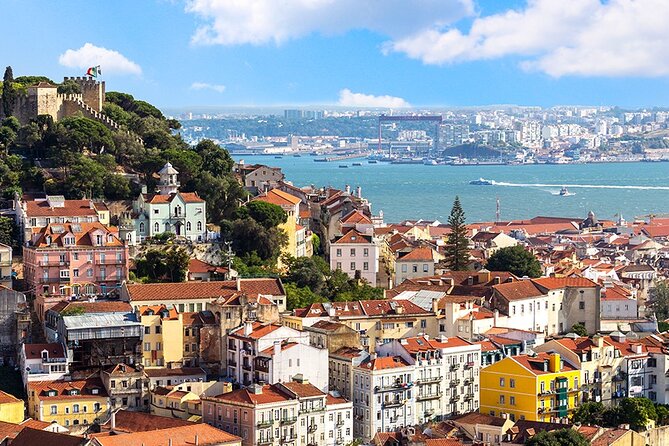
Next is Miradouro das Portas do Sol, described as the highest viewpoint of Alfama. This stop is set at about 15 minutes, with free admission. You’ll also see a small remaining part of the original medieval wall and a statue of St. Vincent, Lisbon’s patron saint.
This is one of those Lisbon stops that doesn’t need a museum. The “why” is simple: you’re getting the shape of the neighborhood. Alfama’s winding streets and layered rooftops make more sense when you can see the slope and the way buildings cascade downhill.
If you’re the type who likes photos with context (not just selfies), aim to pause for one wide shot, then one or two angles that show street lines. Fifteen minutes is enough for that if you’re ready.
Miradouro da Senhora do Monte: the top view for the city center
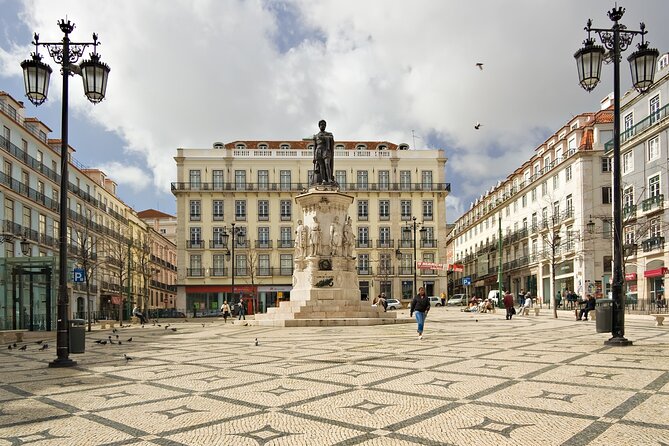
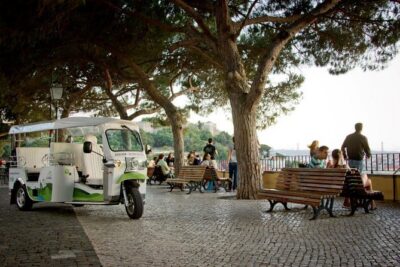
Miradouro da Senhora do Monte follows, and it’s the highest viewpoint of the center of Lisbon, with a panoramic city view. This stop is listed at about 20 minutes, again with free admission.
I think this is the “big picture” moment on the tour. Portas do Sol shows you Alfama; Senhora do Monte shifts you to the entire city grid and hills. It’s also a good breath break in the middle of church-and-history pacing, even if you still have to keep an eye on the schedule.
Tip: since the tour assumes good weather, you’ll likely want a time when the light looks crisp. If visibility is cloudy or hazy, this stop still works, but the panoramic impact gets softer.
The patron saint church stop: a quick but meaningful detour
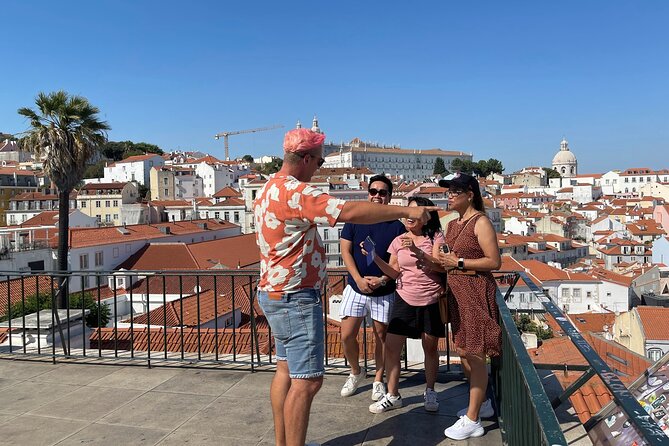
After the center-view moment, the route includes a 16th-century church dedicated to Lisbon’s patron saint. The description is specific about the church’s dedication, even if the listing doesn’t give the full name here. Admission is again shown as free.
Why this fits the tour: it keeps the patron-saint thread going after the St. Vincent statue at Portas do Sol. These repeats help your brain connect locations. Instead of seeing random buildings, you start recognizing the same themes popping up in different neighborhoods.
This stop looks designed for a short visit. So keep expectations realistic: you’ll likely get a look and a quick story, not a long, sit-and-read plan.
You can also read our reviews of more historical tours in Lisbon





National Pantheon: where recent Portuguese figures rest
The next stop is the National Pantheon, described as the final resting place of some of the most important people of Portugal’s recent history. Admission is listed as free.
Even with limited time, the Pantheon works as a “now-and-then” bridge. Earlier stops point you to the deep medieval roots; this one brings you toward modern national identity. If you like understanding why a city honors certain chapters of history, this is a solid checkpoint.
Consideration: the listing doesn’t specify how long you’ll spend here. Plan for it to be brief compared to the viewpoint breaks, and use it as a chance to orient yourself before moving into the street-level neighborhoods.
Alfama streets plus ginginha: old neighborhood with a small taste
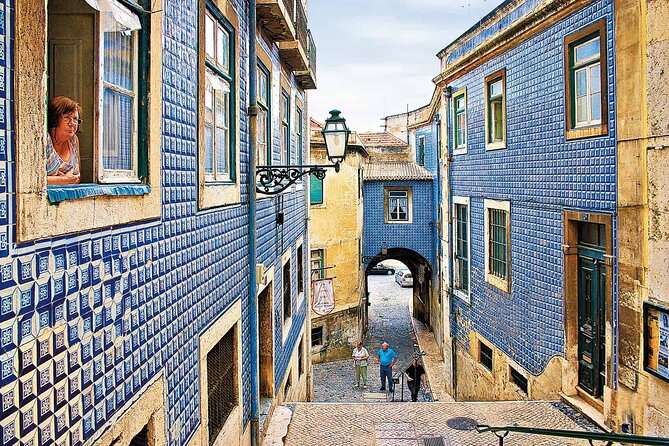
After the Pantheon, the tour heads into Alfama, described as Lisbon’s oldest neighborhood. You’ll see narrow streets and crooked buildings, then you get a taste of ginginha, Lisbon’s typical wild cherry licor. The Alfama stop is listed at about 15 minutes, with free admission.
This is the kind of stop that feels small, but it’s memorable. You’re not being asked to do a full meal. Instead, you get one local flavor tied to the neighborhood itself, so it lands as a cultural detail rather than a random souvenir move.
If you’re sensitive to alcohol, you can still treat this as a quick sip. It’s short enough that it doesn’t have to derail your afternoon, and it’s part of why this tour feels lighter than a purely museum-style route.
Convento do Carmo ruins: the 1755 earthquake made visible
One of the most historically grounded stops comes next: Convento do Carmo. The convent was destroyed during the big earthquake of 1755, and this stop lets you see the ruins. Admission is listed as free, and the time is about 15 minutes.
I like ruins when they’re explained in plain terms. This one has a built-in “lesson”: Lisbon didn’t just build over time; it rebuilt after disaster. Seeing the remains near other major sights also shows how the city’s layers sit right beside each other, not behind glass.
Also nearby is the Santa Just Lift, mentioned as something you can do a quick visit to next door during this stop. That’s a nice add-on if your legs are okay with a short extra look.
Practical note: ruins can mean uneven ground. Wear shoes you’d be comfortable in anywhere old-stone exists.
Bairro Alto and the castle view finale at São Pedro de Alcântara
Later in the route, the plan brings you through Bairro Alto, described as a 16th-century neighborhood created to house everyone working on Portugal’s maritime discoveries. Admission is listed as free, though the route doesn’t give a fixed time right next to that line.
Then your tour ends with Miradouro São Pedro de Alcântara. From this viewpoint, you can see downtown Lisbon with the castle sitting on top. The stop is listed at about 10 minutes and is free.
This is a great closer because it pulls the whole story into one frame. You’ve got old Lisbon (Alfama), institutional power and memorial spaces (Cathedral and Pantheon), and then the city view that includes the castle. By the time you’re looking downhill, everything starts to feel connected.
Keep your expectations tuned to the time: 10 minutes is for the main view, not for wandering deep. Use that final pause for one steady photo and one quick scan of where you might want to return later.
Price and value: what $155.77 really buys you
The price is $155.77 per person for an experience listed at around 2 hours with private transportation. On paper, that might feel like a splurge compared to walking routes. In practice, you’re paying for three value points:
First, you’re paying for friction removal. The route includes multiple steep-ish viewpoint stops in a short window, and Lisbon punishes slow planning. Private transport keeps you from spending half the trip figuring out how to get between heights.
Second, you get private pacing. Because it’s only your group, you can stop for questions and adjust around real attention spans. Reviews for João and Ricardo lean hard toward guide energy and engaging explanations, which matters when you have limited hours.
Third, the stop mix is high-effort, low-hassle. You’re getting named landmarks like Lisbon Cathedral and Convento do Carmo, plus viewpoints like Portas do Sol and Senhora do Monte, plus a practical local taste with ginginha. With most listed admissions showing as free, you’re not stacking extra entry fees on top.
One more practical detail: it’s commonly booked about 10 days in advance on average. If you’re traveling during peak season or on weekends, I’d book early so you can pick a time that matches the weather window.
What it feels like on the ground: pace, breaks, and comfort
This tour is built around quick, high-impact stops. You’ll spend time outside at viewpoints, spend brief moments at churches and monuments, and you’ll get short neighborhood texture in Alfama.
That pacing is a plus if you want momentum. It’s a minus if you want to linger in every chapel or read every plaque for a long time. You’re choosing a “see it and understand it” format, not a “slow day with long pauses” format.
Comfort matters. Bring shoes that handle uneven surfaces and hills. Also keep your phone ready, because these miradouros are exactly where you’ll want to capture the angles for later when you compare neighborhoods.
Who this tour suits best
This works especially well if:
- You’re visiting Lisbon for the first time and want orientation fast.
- You want to move between viewpoints without turning it into a daily workout plan.
- You prefer a private guide approach—asked-and-answered history beats reading alone when time is tight.
- Your group includes different ages, since the stops are short and varied (cathedral, viewpoints, ruins, neighborhood streets).
It might not be your best match if:
- You want a long, in-depth architecture or religious-art session at each site.
- You hate tight schedules and prefer slow wandering without returning to a set path.
Should you book this Lisbon Historical Downtown Private Tour?
I think this is a smart booking when you want a compact, high-meaning route through Lisbon’s core. You get landmark context (Cathedral), viewpoint clarity (Portas do Sol, Senhora do Monte), visible historical consequence (Convento do Carmo and the 1755 earthquake), and a taste of everyday neighborhood culture (ginginha in Alfama).
If you book, go in with a simple plan: treat the stop time as “first look,” then pick one or two places you want to revisit on your own later. With private transportation, a small-group feel, and guides like João and Ricardo getting strong praise for energy and engaging explanations, this is the kind of tour that helps your Lisbon days connect instead of feeling like random sightseeing.
FAQ
How long is the Lisbon Historical Downtown Private Tour?
It runs for approximately 2 hours.
Where does the tour start, and where does it end?
The meeting point is Praça da Figueira, 1100-241 Lisboa, Portugal, and the tour ends back at the same meeting point.
Is this tour private?
Yes. It’s a private tour/activity, and only your group participates.
Is pickup available?
Pickup is offered.
Is the tour in English?
Yes, it’s offered in English.
Do I need to buy separate tickets for the listed stops?
Admission is listed as free for the stops included in the route, and you’ll use a mobile ticket.
What happens if the weather is bad or I cancel?
Free cancellation is available up to 24 hours in advance for a full refund. The experience requires good weather, and if it’s canceled due to poor weather you’ll be offered a different date or a full refund.
Are service animals allowed?
Yes, service animals are allowed.