REVIEW · TUK TUK TOURS
Lisbon: Half-Day Private Guided Tuk-Tuk Tour
Book on GetYourGuide →Operated by Live Portugal - Tours & Tales · Bookable on GetYourGuide
Lisbon on wheels beats Lisbon on foot. This private, electric tuk-tuk ride strings together the city’s steepest neighborhoods with a local storyteller guiding the way, often including street-art context that you’d otherwise miss. Guides like Diana and Tiago are known for making the stops feel personal, not canned.
I love how the route mixes “big sights” with the kind of lanes you can’t easily reach on a big bus. I also love the food payoff: you get a choice of a Pastel de Nata or Portuguese liqueur, then a quick Pastéis de Belém stop later.
One thing to consider: you’ll feel plenty of cobblestone and hill bumps, and the seat fit can be tight for some body types. If you have back issues or trouble getting into the vehicle, this one is not a match.
In This Review
- Key Points to Know Before You Ride
- How the Electric Tuk-Tuk Changes the Way You See Lisbon
- Starting in Baixa and Lisbon Cathedral: A Strong First Impression
- Portas do Sol and Miradouros: Where the Views Actually Make Sense
- Graça, Mouraria, and Street-Art Stories: Lisbon’s Creative Side
- Monastery of São Vicente de Fora and Santa Engrácia: Old Lisbon Indoors
- Alfama: The Quick Walk, the Wine Tasting, and the Feeling of the City
- Chiado, Carmo Convent, and Igreja de São Roque: The City’s Middle Ground
- Miradouro de São Pedro de Alcântara, Lapa, and Estrela: Views With Variety
- Tagus River, 25 de Abril Bridge, and the Drive to Belém
- Belém in One Half-Day: Jerónimos, Tower Views, and Pastéis de Belém
- Price and Comfort: Is $99 a Good Value?
- Who This Tour Suits Best (and Who Should Skip It)
- Should You Book This Lisbon Half-Day Private Tuk-Tuk Tour?
- FAQ
- How long is the Lisbon half-day private guided tuk-tuk tour?
- What does the tour cost?
- Is this tour private?
- Are hotel pickup and drop-off included?
- What food or drinks are included?
- Does the tour include entrance fees to monuments?
- Which languages are available for the live guide?
- What areas will you visit?
- Are oversize bags allowed?
- Is the tour suitable for wheelchair users or people with mobility impairments?
Key Points to Know Before You Ride
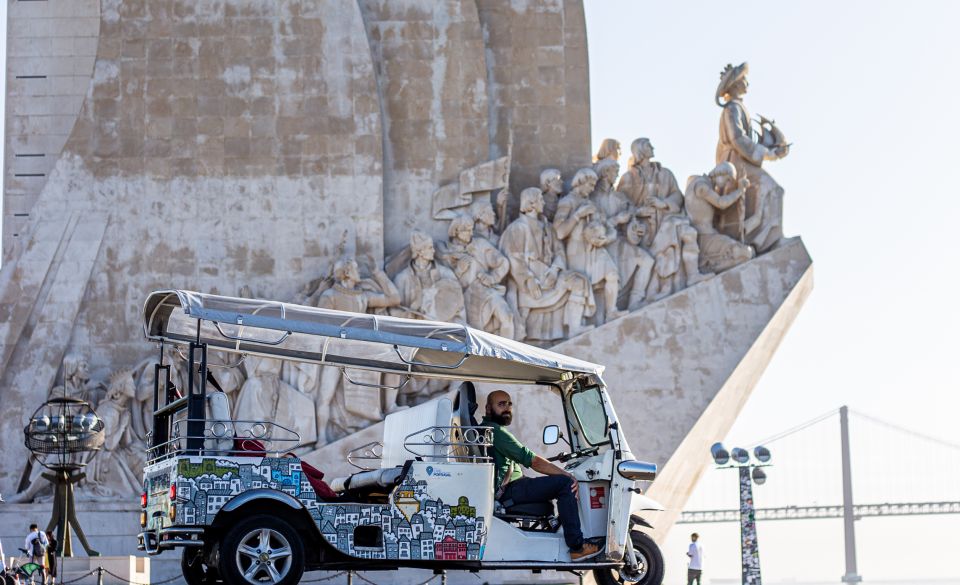
- Electric tuk-tuk + private pacing: You can slow down for photos and viewpoints without holding up other people.
- Storytelling that connects neighborhoods: Stops tie into history, culture, and even the street-art side of Lisbon.
- A smart mix of viewpoints and interiors: You’re not just looking from the outside; you’ll also get guided visits at key places.
- Fast access through narrow streets: This is built for Lisbon’s hills, tight turns, and uneven roads.
- Food included at the right moments: A sweet or liqueur treat early, then Pastéis de Belém in Belém.
- Expect short walks: One quick stretch in Alfama, plus time at photo terraces.
How the Electric Tuk-Tuk Changes the Way You See Lisbon
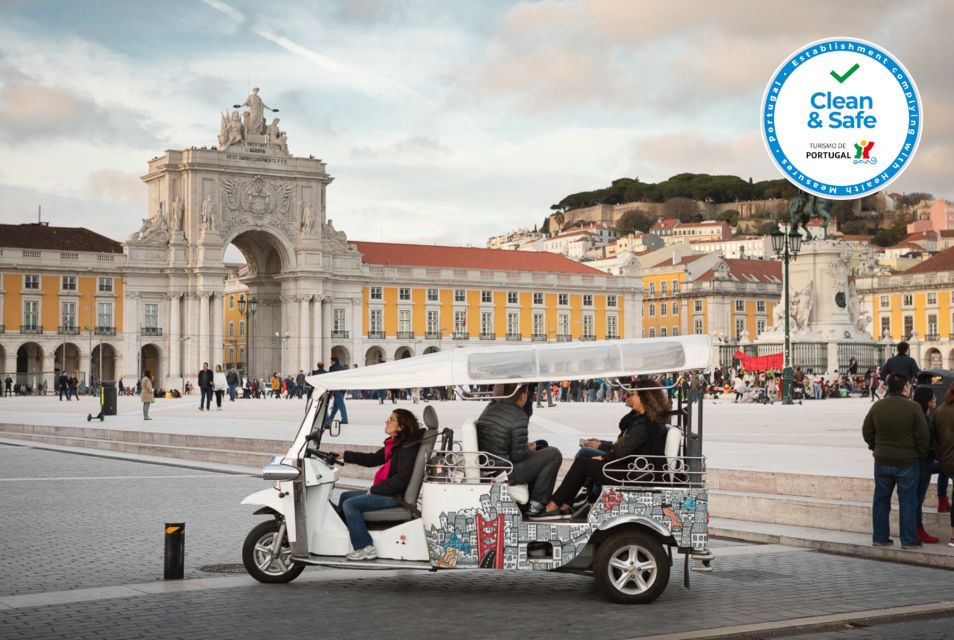
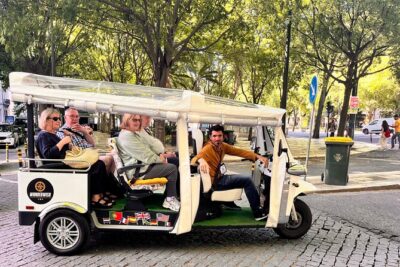
Lisbon is beautiful, but it’s also relentless. Hills. Steps. Cobblestones. This tour is designed for that reality, using an agile, electric tuk-tuk so you can cover serious ground without burning all your energy before lunch.
The private format matters more than it sounds. You’re not stuck with a rigid script. If you want more time on a terrace or fewer photo stops, your local guide can shape the pace within the overall route.
And the guide makes the difference. People rave about guides who can talk history without sounding like a textbook. I especially like the way guides such as Margarita and Tiago weave local detail into what you’re seeing, so places like Alfama and Graça feel connected instead of random.
You can also read our reviews of more guided tours in Lisbon



Starting in Baixa and Lisbon Cathedral: A Strong First Impression
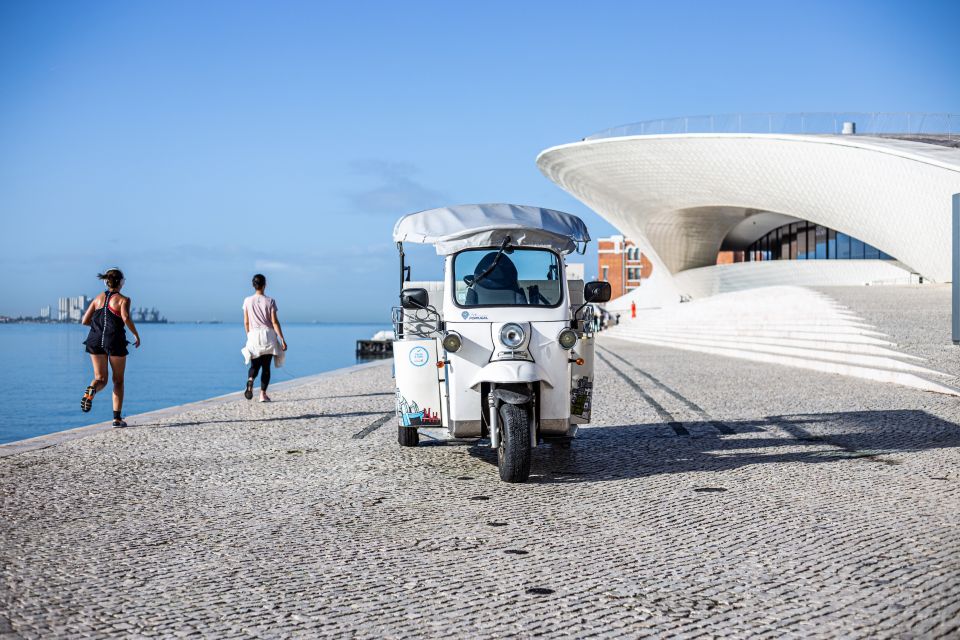
You begin in Baixa de Lisboa, where the city’s central energy sits at ground level and the streets feel more navigable. It’s a good “warm-up” zone because it sets up what Lisbon does next: climb into the viewpoints and older quarters.
From there, you head to Lisbon Cathedral for a guided introduction and photo stop. Even if you’re not a hardcore church person, cathedrals here are more than pretty architecture. They’re anchor points for Lisbon’s identity, with layers of time visible in the story your guide tells.
A practical note: early parts of the ride give you context. You’ll understand what you’re looking at later when the tour shifts into older districts and lookout points.
Portas do Sol and Miradouros: Where the Views Actually Make Sense
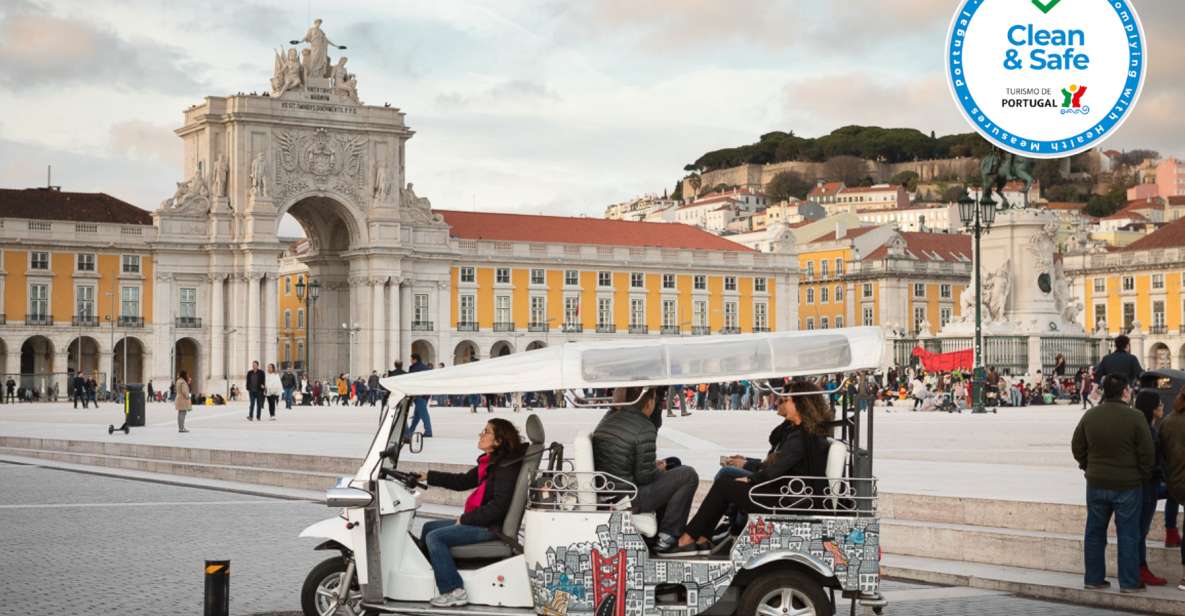
Next comes a classic terrace stop at Portas do Sol, followed by the higher, even more dramatic viewpoint at Miradouro da Senhora do Monte. These aren’t just “pretty postcard” breaks. They’re where the neighborhoods click into place—how the hills stack, where the river sits, and why Alfama feels built into the slope.
If you’ve only seen Lisbon from a single viewpoint, you might think the city is one flat panorama. Here, you’ll see it as a set of layers. Your guide’s job is to point out the logic behind it all, so when you later wander on your own, you don’t feel lost.
You’ll also get quick photo moments rather than long waits. That keeps the tour moving, which is important when your half-day includes Belém later.
Graça, Mouraria, and Street-Art Stories: Lisbon’s Creative Side
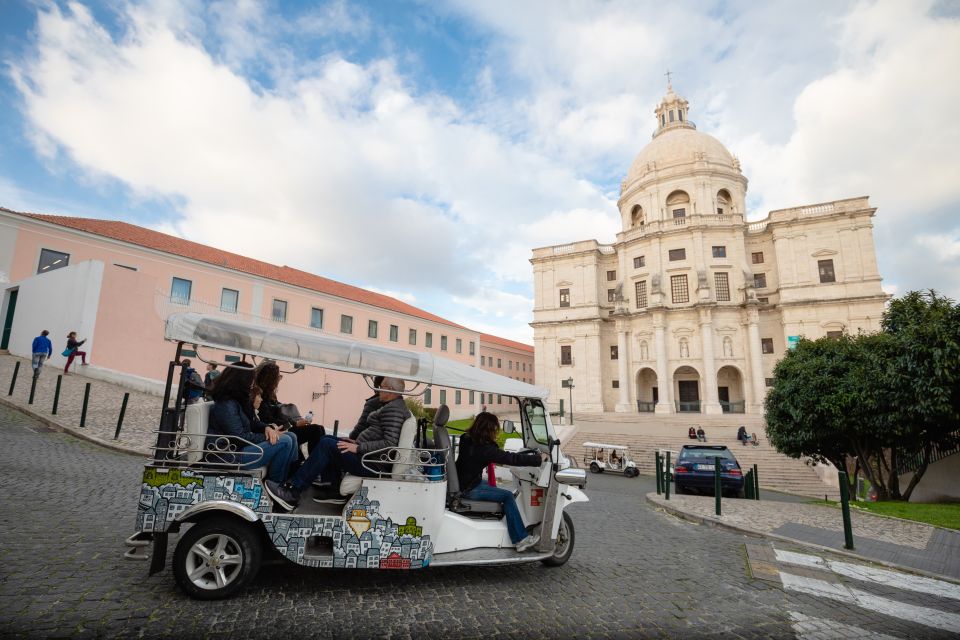
The route threads through Graça Historic District and Mouraria, two areas that feel lived-in and full of character. This is where the tour’s “story” angle really earns its price.
Lisbon has a street-art voice, and your local storyteller’s job is to give it context—where it fits in the city’s history and what it reflects about people and neighborhoods. You don’t need to be an art expert. You just need a guide who knows how to translate what you’re seeing into something you can remember later.
Graça and Mouraria are also a lesson in Lisbon logistics. These streets can be narrow and uneven, which is exactly why the tuk-tuk is the right tool. You can reach the best vantage points without spending the whole day negotiating steep footpaths.
Monastery of São Vicente de Fora and Santa Engrácia: Old Lisbon Indoors
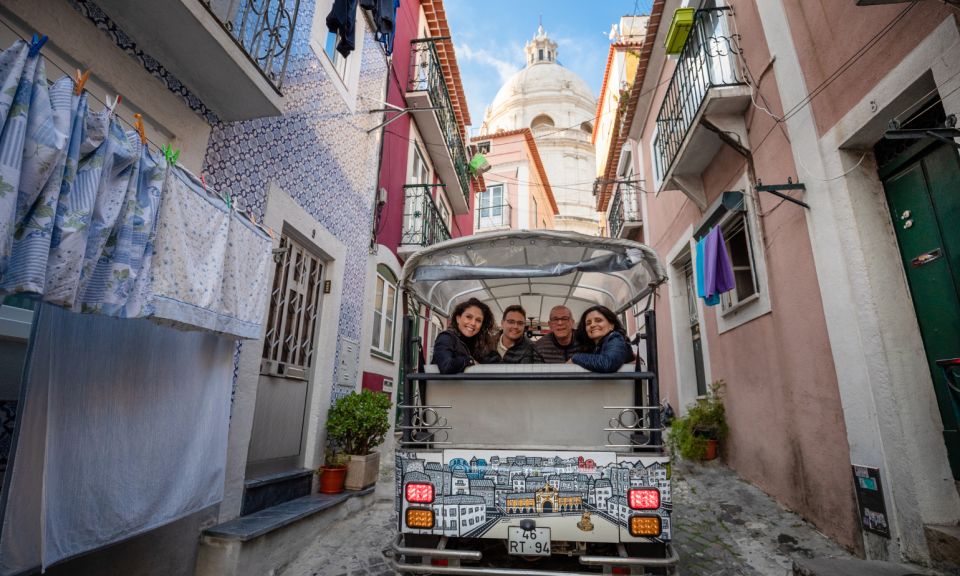
You’ll pause at Monastery of São Vicente de Fora for a photo stop and guided visit. Monasteries can feel like museum-y stops, but in Lisbon they often work better as “story stops,” where the guide connects power, belief, and everyday life.
Then there’s National Pantheon of Santa Engrácia, again with a photo stop and guided commentary. The key benefit here is pacing. The tour balances viewpoint stops with interior time, so you don’t fry in the sun (or get drenched in a surprise shower) just hunting for the next view.
If you want souvenirs, you’ll find plenty of chances to buy small things near these areas. If you prefer just photos and walking, you’ll be fine too—most time is spent on guided orientation and short stops.
You can also read our reviews of more private tours in Lisbon




Alfama: The Quick Walk, the Wine Tasting, and the Feeling of the City
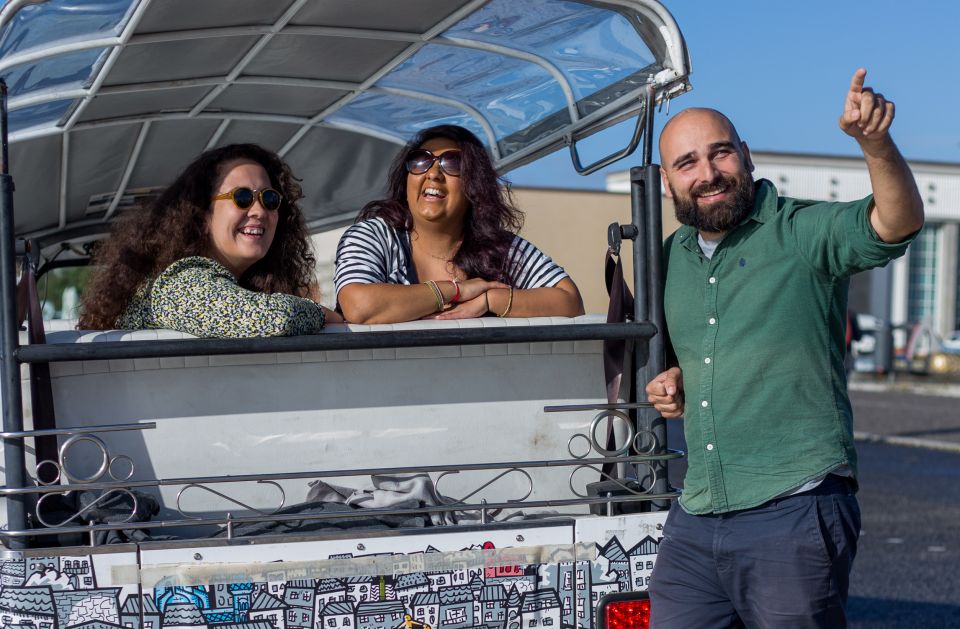
Here’s the heart of old Lisbon. Alfama is the district people talk about, but it’s more than the postcard label. During the stop you’ll get a guided look, plus a short walk (around 10 minutes) and wine tasting.
That combination is practical. The walk portion gives your legs a taste of the streets without turning the tour into a full hike. The wine tasting gives you a cultural moment you can’t replicate by reading plaques.
One more reason this matters: Alfama is where you’ll understand why Lisbon’s views are so dramatic. When you’re sitting on a terrace earlier, it’s easy to admire the panorama. In Alfama, you see the city’s street-level texture—the way buildings climb, curve, and compress.
Chiado, Carmo Convent, and Igreja de São Roque: The City’s Middle Ground
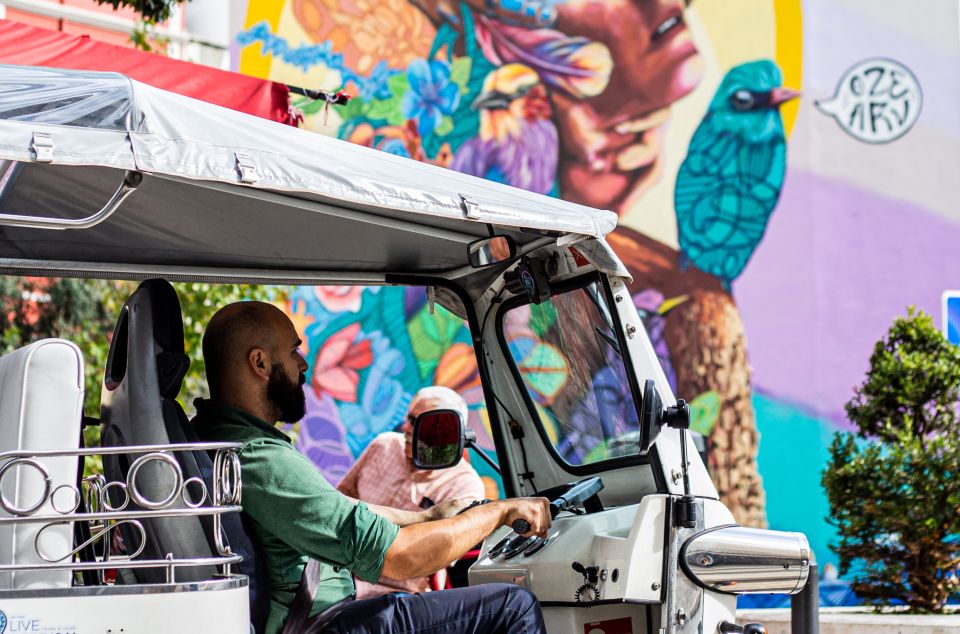
After you’ve been up high and through older lanes, you drop toward Chiado and then onto stops like Carmo Convent with guided sightseeing and Igreja de Sao Roque with a photo stop and guided visit.
This segment helps you broaden your Lisbon mental map. Chiado gives you a different mood—still historic, but with a more refined feel than the older hill quarters. Carmo Convent is a strong visual anchor, and Sao Roque tends to deliver an interior experience that breaks up the day nicely.
If you like architecture or just want a break from looking outward, these are good stops. You get a structured sense of place, not random sightseeing.
Miradouro de São Pedro de Alcântara, Lapa, and Estrela: Views With Variety
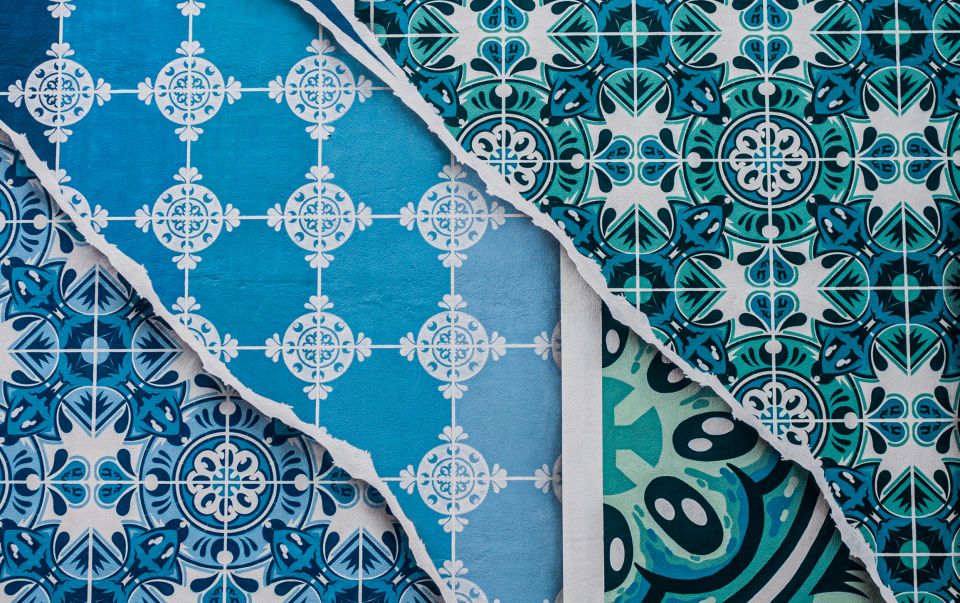
The tour continues to Miradouro de São Pedro de Alcântara, then moves through Lapa for photo and guided sightseeing moments, and on to Estrela Basilica for another guided visit.
This is a “variety” zone. You’ve already had a couple of big viewpoints, but these give you different angles and a chance to understand how Lisbon’s skyline shifts across districts. It’s also a break from crowded tram lines and slow bus routes.
One tip: bring something lightweight for photos. Even if the weather seems fine, viewpoints can get breezy and cool fast.
Tagus River, 25 de Abril Bridge, and the Drive to Belém
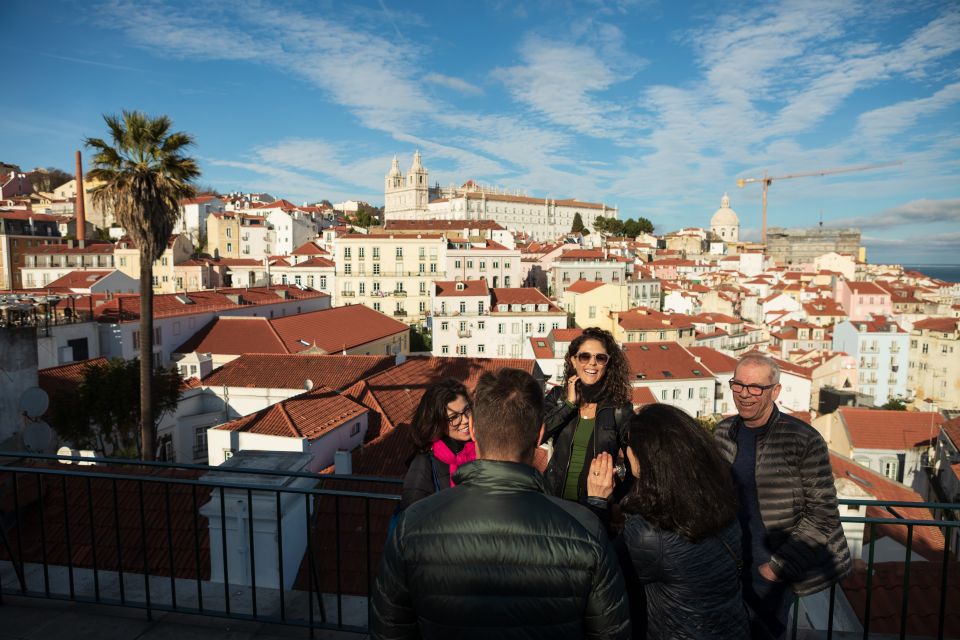
You get a Tagus River guided segment with sightseeing and scenic views on the way, then later a stop that brings in the famous 25 de Abril Bridge.
This part is important because it reminds you Lisbon isn’t only hills and churches. It’s a maritime city. Your guide can connect the river to what Lisbon built, what it traded, and why areas like Belém matter later.
The drive itself is part of the fun. In the right light, you’ll see the city’s layers from a distance rather than only up close.
Belém in One Half-Day: Jerónimos, Tower Views, and Pastéis de Belém
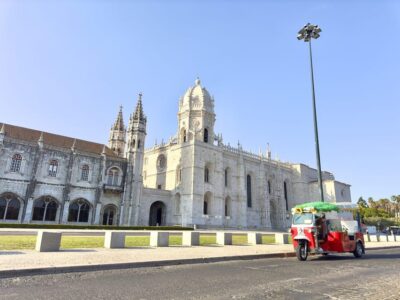
Belém is where the tour makes good on its promise of Lisbon highlights. You’ll hit photo stops and guided sightseeing at Jerónimos Monastery, Belém Tower, and the Monument to the Discoveries.
Jerónimos isn’t just impressive—it’s a story anchor for Portugal’s era of exploration. Your guide’s job is to give you the framework so the details don’t blur together. And the tower photo stop is one of those moments where the scenery does the heavy lifting: you’ll know instantly why it’s famous.
Then comes the food moment: Pastéis de Belém with a short dessert break. Even if you’re on a tight schedule, this is worth it. It’s simple, quick, and tied to the Belém area in a way other desserts won’t be.
Price and Comfort: Is $99 a Good Value?
At $99 per person, you’re paying for four things you’d struggle to assemble cheaply: a private local storyteller, an electric tuk-tuk built for narrow streets, hotel pickup/drop-off within the city center, and included treats (sour cherry liqueur plus the option of Pastel de Nata, depending on your selection). You’re also covering a lot of geography in one go—from Baixa and the cathedral zone all the way through to Belém.
What you’re not getting is monument entry fees. Some guided stops may include access only if the entrance is handled on your side, so plan for that if you’re determined to go inside every listed building.
Comfort is the one variable. Many guides report smooth, careful driving, but the ride can be bumpy. One review complaint noted seating/footboard tightness. If you’re tall or sensitive to leg positioning, it’s worth asking what seat setup is best for your group, or choosing the earlier time slot when streets may be quieter.
Who This Tour Suits Best (and Who Should Skip It)
This is a strong pick for:
- First-timers who want an overview fast
- People who hate waiting in long lines or on crowded public transport
- Families with older kids who can climb into the vehicle and handle short stops
- Anyone who wants history mixed with viewpoints and local food
It’s not a fit for:
- Wheelchair users or people who can’t manage vehicle access
- People with significant back problems or mobility impairments
- Pregnant travelers (listed as not suitable)
- Anyone traveling with oversize luggage
If you’re the type who wants to “set the stage” for the rest of your trip, this tour does that. You’ll leave with a mental map you can use when you book day visits or wander independently.
Should You Book This Lisbon Half-Day Private Tuk-Tuk Tour?
If your goal is efficient, fun, and local, I’d book it. The big win is the combination: private electric transport through Lisbon’s tight, steep neighborhoods plus a guide who explains what you’re seeing (and often brings street-art context into the mix).
I’d think twice if you’re very sensitive to bumps or you’re expecting a smooth, luxury-car ride. This is built for Lisbon’s real streets, not a flat-surface fantasy. Also, if you already know you want lots of museum time, you may find the included moments are best as an orientation, not a substitute for deeper visits.
Bottom line: for most people visiting Lisbon with limited time, this is a smart way to get the city’s highlights without wearing yourself out before dinner.
FAQ
How long is the Lisbon half-day private guided tuk-tuk tour?
The duration is listed as 3 to 6 hours, with a tour described as around 4 hours.
What does the tour cost?
The price is $99 per person.
Is this tour private?
It can be private or small groups are available. The maximum occupancy is 6 people total.
Are hotel pickup and drop-off included?
Yes. Hotel pickup and drop-off are included from locations within the city center.
What food or drinks are included?
You get a sour cherry liqueur as part of the inclusions, and you also have a choice of a Pastel de Nata or a traditional Portuguese liqueur. In Belém, there is also a Pastéis de Belém dessert stop.
Does the tour include entrance fees to monuments?
No. Entrance fees in monuments are not included.
Which languages are available for the live guide?
Live tour guide languages listed are German, English, Portuguese, Spanish, Italian, and French.
What areas will you visit?
The tour includes stops and guided sightseeing across Lisbon districts such as Baixa, Chiado, Bairro Alto area, Graça, Alfama, Belém, and more, with specific named stops like Lisbon Cathedral, Portas do Sol Terrace, Miradouros, and Jerónimos Monastery.
Are oversize bags allowed?
No. Oversize luggage is not allowed.
Is the tour suitable for wheelchair users or people with mobility impairments?
No. It is listed as not suitable for wheelchair users and people with mobility impairments, and some level of mobility is required to climb into the vehicle.