REVIEW · CYCLING TOURS
Lisbon E-Bike Guided Food Tour with Five Food Tastings
Book on Viator →Operated by Boost Portugal · Bookable on Viator
Lisbon by e-bike turns steep streets into an easy stroll, and the five tastings make it feel like real city living. You’ll get fitted with an electric bike and helmet, then roll through core neighborhoods while your guide connects each stop to what happened there and why it still matters.
What I like most is the combination of practical riding time plus food that actually teaches you Lisbon flavors. I also love that guides such as Peter Mendes and Matilda (Tilly) are praised for clear, engaging storytelling that helps the sights make sense fast.
One thing to think about: this is a street ride in the city. If you’re not comfortable riding near traffic and on uneven surfaces, plan to be extra cautious and take your time on the bike.
In This Review
- Key highlights to look for
- E-bikes in Lisbon: the hills are the whole point
- Where you meet and what to prepare before you roll
- Stop 1: Praça do Comércio and the earthquake rebuild story
- Stop 2: Alfama’s medieval lanes, fado, and Santo António in June
- Stop 3: Panteão Nacional (St. Engratia) and the long baroque build
- Stop 4: Miradouro da Senhora do Monte for the view, then down toward Mouraria
- Stop 5: Praça da Figueira and Lisbon’s market past
- The food plan: five tastings and two drinks, with Lisbon classics
- Why the $83.13 price can be good value
- Group size, pacing, and the kind of riding you should expect
- Who should book this Lisbon e-bike food tour
- Should you book it?
- FAQ
- How long is the Lisbon e-bike guided food tour?
- How many food tastings and drinks are included?
- Are tickets to monuments or attractions included?
- Is hotel pickup provided?
- Are there height, weight, or other limits to join?
- What happens if it rains?
Key highlights to look for
- Electric bike fitting and a short adaptation lesson so you’re not figuring it out on the first hill
- Five food tastings and two drinks built for an easy introduction to Portuguese classics
- Story stops with real context, from the 1755 earthquake rebuild to centuries of baroque architecture
- Big-picture views from Senhora do Monte, then a downhill route that passes Mouraria’s international mix
- Small group size up to 24, which helps you hear your guide and keep the pace comfortable
E-bikes in Lisbon: the hills are the whole point
Lisbon is famous for slopes, steps, and cobblestones that can feel like a leg-day plan. This tour uses an electric bike, plus a helmet you must wear, so you spend your energy enjoying the city instead of fighting it. You also get an adaptation lesson before you go, which is a big deal for first-time riders.
Fitness wise, the requirement is moderate. That usually means you’ll want to be comfortable riding for about three hours, but the motor helps with the climbs. Height and weight matter too: you must be at least 1.5 meters tall and weigh no more than 118 kg, and adult pricing applies to everyone.
You can also read our reviews of more food & drink experiences in Lisbon



Where you meet and what to prepare before you roll
You start at Boost Portugal – Urban Thrills, R. dos Douradores 16, right near public transportation. The tour ends back at the same meeting point, so you don’t have to worry about getting stranded across town.
I’d treat check-in like part of the experience. You’re asked to check in 15 minutes early, and a little buffer gives you time to get your helmet, bike fit, and questions handled before the group heads out. Bring what you’d normally bring for Lisbon walking—closed-toe shoes help a lot on bike pedals and uneven pavement.
Weather is handled with ponchos if it rains. Also, the rules are strict for safety and comfort: no pregnant travelers, no intoxicated people, and it’s not recommended for people who are mentally or physically incapacitated or who have prosthesis.
Stop 1: Praça do Comércio and the earthquake rebuild story

Your tour begins at Praça do Comércio, the big river-facing square people photograph for a reason. It was the centerpiece of Lisbon’s reconstruction after the 1755 earthquake, when much of the city lay in rubble. Being flat and open compared to the hills gives you a good first feel for where you are and how your bike handles in a wide space.
This is also one of Lisbon’s most popular squares and among the largest in Europe, so don’t expect quiet. The value of starting here is that it sets the tone: Lisbon isn’t just old for the sake of old—it was rebuilt, reorganized, and shaped by real events.
Practical note: there’s no admission ticket fee mentioned for this stop, so you can focus on the ride and the story rather than paperwork.
Stop 2: Alfama’s medieval lanes, fado, and Santo António in June
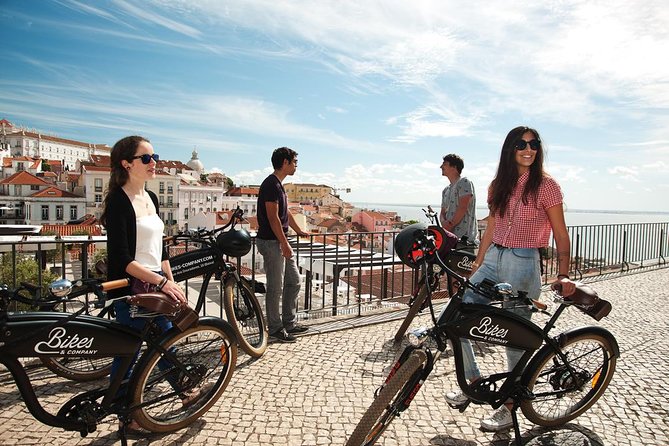
Next comes Alfama, Lisbon’s oldest neighborhood and one of its most charming. The streets here keep a medieval feel with steep, cobblestoned lanes, plus a layout that makes you slow down naturally. Alfama is also closely tied to fado houses, so even if you’re not doing a live performance, the neighborhood has that musical identity baked into it.
A highlight from the guide story is the Santo António festivities in June, when thousands of people flood the area. Alfama is also described as unusually resilient during the 1755 earthquake, which helped preserve its authenticity. You’ll also notice the Moorish atmosphere—alleyways, staircases, and everyday details like clothes drying on windows.
The drawback to expect: the charm comes from the physical reality of Alfama. It’s steep and uneven. With the e-bike, it’s manageable, but you should still be ready to move carefully and keep your balance.
Stop 3: Panteão Nacional (St. Engratia) and the long baroque build

Your favorite stop is at Panteão Nacional, known as the St. Engratia Church. It’s a majestic baroque monument that took three centuries to build, starting in 1682 and finishing in 1966. That timeline alone helps you understand why the building feels like it belongs to multiple eras at once.
This stop also has meaning beyond architecture. It’s the resting place of important cultural and political figures in Portugal, so you’re not just looking at a pretty building—you’re standing at a national memory site.
Since there’s no admission ticket requirement noted here either, you can enjoy the stop without adding extra costs. Still, if you’re the kind of traveler who loves reading stone inscriptions and searching for symbols, give yourself a little mental room to do that during your short pause.
You can also read our reviews of more tours and experiences in Lisbon





Stop 4: Miradouro da Senhora do Monte for the view, then down toward Mouraria
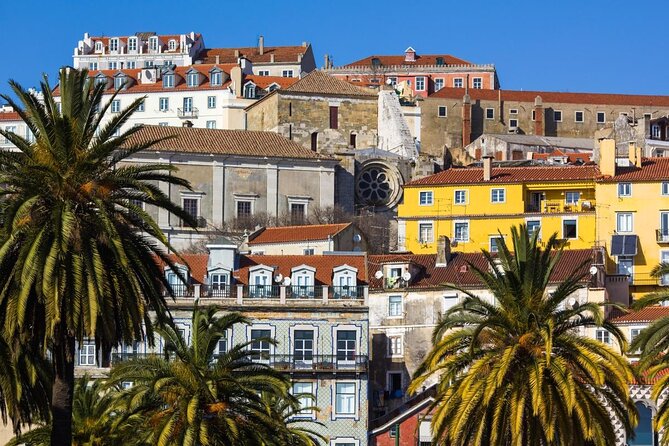
From Alfama and up, you’ll reach Miradouro da Senhora do Monte, one of Lisbon’s highest points. The main reason this stop matters is the view—especially around sunset, when the city spreads out below you.
After you take in the viewpoint, the tour starts going downhill. This shift changes the mood fast: from scenic pause to kinetic movement. As you descend, you’ll “salute” Mouraria, Lisbon’s most multiethnic neighborhood.
Here’s a detail I love because it’s specific: about a fifth of Mouraria’s population is from Asia, mainly China, Bangladesh, India, and Pakistan. That shows up in the restaurant mix, so the story stays connected to what you can actually eat once you’re done riding.
If you’re prone to motion sickness, focus on smooth breathing during the descent. It’s not stated as rough, but downhill streets can feel sharp on a bike.
Stop 5: Praça da Figueira and Lisbon’s market past
Your final main stop is Praça da Figueira, tied to Lisbon’s former role as a trading hub. This square used to be the city’s main marketplace, and it once held a covered market built in 1885. That market was demolished in the 1950s, and in its place a bronze equestrian statue of King João I was erected.
This is the kind of stop that helps you connect past commerce to present streets. Even if you don’t think of Lisbon as a shopping city today, the square’s history explains why the area became an anchor point.
The stop is short, but it lands a satisfying note: you’ve gone from post-earthquake reconstruction to medieval streets, national monuments, panoramic views, then back to a public square built for daily movement and trade.
The food plan: five tastings and two drinks, with Lisbon classics

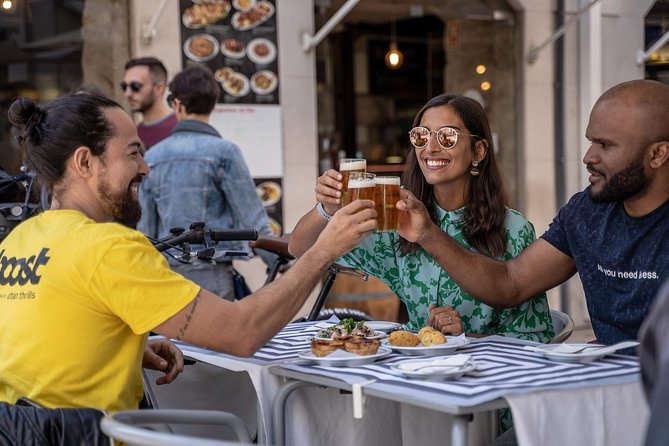
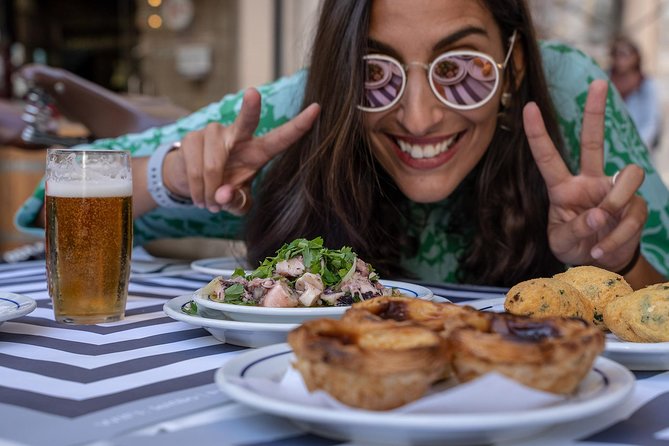
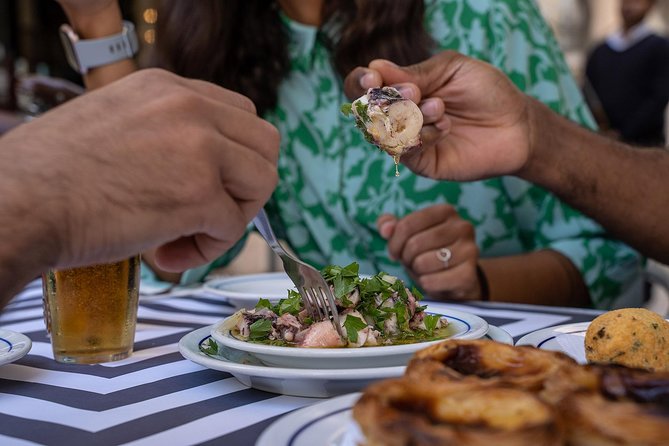
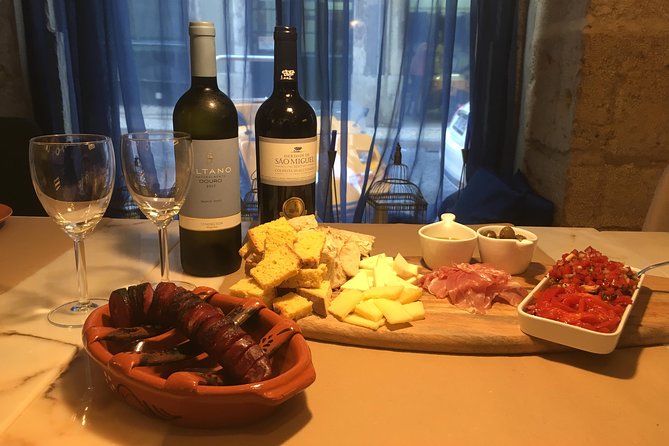
The tour includes five food tastings and two drinks. The exact selection can change based on availability and your profile, but you’ll see a clear Lisbon pattern: pastries, snacks for sharing, and meal-style bites like sandwiches.
A common starter is pastel de nata with coffee or a soft drink. If you’ve wondered what makes Lisbon’s famous egg tart so addictive, this is the low-effort way to find out. It’s also a smart opening course because it’s easy to compare bites across the city.
You’ll also likely get Portuguese snack-style items such as olives, bread, cheese, and caldo verde. Other possibilities include sausages or pica-pau (meat with pickles) plus a cod pastry, and a glass of vinho verde. There’s usually a choice between water or soft drinks too.
For a heartier bite, bifana often shows up, paired with Imperial draft beer or a soft drink. Bifana is one of those “locals eat this anytime” foods, and tasting it on a guided bike tour makes the city feel less like a museum and more like a living place.
Important practical point: the tour covers tastings, not full meals. Extra food or drinks are on you after the included portions.
Why the $83.13 price can be good value
At $83.13 per person for about three hours, you’re paying for more than “just food.” You’re also paying for an electric bike, the fitting, the adaptation lesson, a helmet, and insurance coverage (liability and personal accident insurance). Add the local storyteller guide and VAT (23%), and the price starts to look more like a packaged experience rather than a snack crawl.
This tour can be especially good value if:
- you want a first-time-friendly overview without spending time planning routes
- you’re happy to learn as you ride, not just stop for photos
- you’d rather pay for tastings than hunt for small plates all over town
Costs that can change your real total: monument or attraction entrances are not included, and any extra food or drinks aren’t included. If you love turning tours into full meals and drinks, you’ll spend more on top.
Group size, pacing, and the kind of riding you should expect
With a maximum of 24 travelers, the group is big enough to feel lively but small enough that you shouldn’t get lost in the shuffle. You’ll likely pause often for the key story stops, plus there’s a moment to relax at the top of the viewpoint before you head downhill.
The biggest consideration is your bike comfort. You’ll be riding in city conditions, so you should follow the road rules, keep a steady pace, and treat the helmet as non-negotiable. The tour explicitly asks you to use the bike responsibly, and it forbids some safety-sensitive situations.
This is not the tour for you if you:
- can’t meet the height and weight requirements
- are pregnant
- have prosthesis or you’re not physically able to ride safely
- feel uneasy riding close to normal street activity
If you’re the kind of person who enjoys learning history through neighborhoods, this tour clicks. Guides like Peter Mendes and Matilda (Tilly) are praised for making Lisbon feel understandable, not overwhelming.
Who should book this Lisbon e-bike food tour
I’d book it if you’re doing Lisbon for the first time and want a fast route that still feels human. It’s also a great fit if you want food that’s tied to place—pastry, snacks, soup, sandwiches, and local drinks—without turning the day into multiple separate reservations.
You might skip it if you prefer slow, foot-only exploration with zero bike time. You’d also pass if you strongly dislike any bike riding in the city, even with an e-bike.
That said, for most people who can ride safely, this tour is one of the more efficient ways to see major Lisbon areas while eating your way through Portuguese basics.
Should you book it?
Yes, I think it’s worth booking if you want an easy, structured introduction to Lisbon’s key neighborhoods plus five tastings. The included bike lesson, mandatory helmet, and insurance coverage add real peace of mind, and the stops are chosen for story value—from the 1755 earthquake rebuild to baroque architecture and downhill glimpses of Mouraria.
If you hate riding near traffic or you’re unsure about bike comfort on cobblestones, hold off. You’ll have a better time choosing a walking-focused food tour instead.
FAQ
How long is the Lisbon e-bike guided food tour?
It’s about 3 hours.
How many food tastings and drinks are included?
The tour includes five food tastings and two drinks.
Are tickets to monuments or attractions included?
No. Tickets or monuments entrance are not included.
Is hotel pickup provided?
No. Hotel pick-up and drop-off are not included.
Are there height, weight, or other limits to join?
Yes. You must be at least 1.5 meters tall and no more than 118 kg. The tour is forbidden for pregnant women, and it’s also not recommended for intoxicated people or for people who are mentally or physically incapacitated or have prosthesis.
What happens if it rains?
Ponchos are provided in case of rain.