REVIEW · ALFAMA & OLD TOWN TOURS
Lisbon Downtown & Alfama with a guide Walking tour
Book on Viator →Operated by Cooltour Lisbon · Bookable on Viator
Alfama’s alleys hit fast. This guided walk strings together Lisbon’s must-see layers, from the grand riverside square to the medieval lanes of Alfama, with a small group keeping things personal. You’ll get a clear sense of how Lisbon rebuilt itself after disaster and how faith, music, and everyday street life shaped the city.
I especially like the way the stops connect into a story you can actually follow. You pause at places like Praça do Comércio and then walk uphill into the older quarter, where each viewpoint and church adds another chapter. I also like the culture side, with an easy stop at the Fado Museum to put names and instruments to what you’ll hear later around town.
One thing to keep in mind: it’s short—about 2 hours—and there’s a considerable amount of walking. If you’re hoping for a slow, relaxed afternoon, bring good shoes and accept that Lisbon’s hills (and steps) are part of the deal.
In This Review
- Key highlights worth planning around
- A 2-hour Alfama walk that actually gives you orientation
- Logistics that matter: meeting times, end point, and real walking
- Augusta Street Arch to Praça do Comércio: the Portugal story in one stretch
- José Saramago and the Fado Museum: culture stops with context
- Alfama’s medieval lanes, and why the earthquake matters
- Feira da Ladra, then into the Cathedral and Saint Anthony traditions
- Lisbon Cathedral (Sé): a site with Islamic roots
- Church of Saint Anthony: a tradition you can picture
- A monastery stop that shows Portugal’s church-building pattern
- São Jorge area gates and the Door of the Sea
- Price and value at about $3 with a live guide
- Should you book this Lisbon Downtown & Alfama walking tour?
- FAQ
- How long is the Lisbon Downtown & Alfama guided walking tour?
- What time does the tour start?
- Where do I meet the guide?
- Where does the tour end?
- Is there a maximum group size?
- What’s included in the tour price?
- Are food and drinks included?
- Is the mobile device required?
- Are there self-guided tours in the Vox City app included?
- What should I bring for the walking route?
Key highlights worth planning around
- Small group (max 20): you’re more likely to get real back-and-forth with your guide than just a lecture.
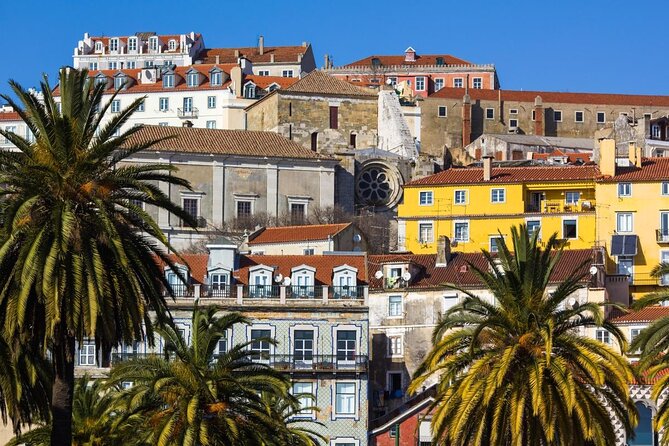
- Alfama on foot: medieval alleys plus photo-friendly viewpoints, and the quarter’s survival through the 1755 earthquake adds context.
- Fado Museum stop: a focused way to understand the music tradition tied to Lisbon identity.
- Feira da Ladra access: when it’s running (Tuesday and Saturday), you’ll pass through the vibe of Lisbon’s open-air flea market area.
- Lisbon Cathedral layers: the church sits on a site tied to Moorish history, then centuries of collapses and repairs shaped the look.
- Time-efficient route: you get downtown landmarks and Alfama in one compact outing, ending near Rossio Square.
A 2-hour Alfama walk that actually gives you orientation
Lisbon can feel like a lot at once. You see a postcard view from a miradouro, then you’re dropped into another uphill neighborhood and suddenly you’re guessing what you’re looking at. This tour helps you place things fast.
You start in the downtown core and work your way toward Alfama’s medieval heart. The guide’s job is to connect the dots: Portugal’s political turning points after the 1755 Lisbon earthquake, how rebuilding reshaped the waterfront and Baixa, and why so many landmarks sit where they do. When the route moves from Praça do Comércio toward the older streets, the city stops looking random.
And yes, this route can feel like a sprint. But for first-time orientation—especially if you’ve only got a limited window—it’s a strong way to get your bearings.
You can also read our reviews of more walking tours in Lisbon


Logistics that matter: meeting times, end point, and real walking
The meeting point is Rua dos Douradores, address 16, and the tour runs at 09:45 or 13:45. It ends at Rossio Square (Praça do Rossio), which is handy because Rossio is a central hub for metro/buses and onward exploring.
A few practical notes I’d take seriously:
- Expect a considerable amount of walking. Even if you’re not hiking, you’ll cover distance through uneven historic streets.
- Bring tennis shoes or other supportive footwear. In summer, add sunscreen; in winter, plan for cold.
- Bring a bottle of water. There’s no mention that drinks are included, so don’t assume you’ll have a convenient stop for it.
- This is aimed at people with moderate physical fitness. If you’re sensitive to steep grades, take it slow on the climbs.
Guides are often praised for adjusting pace for different comfort levels. If you’re traveling with someone who walks slower, this is one of the tours where that can matter.
Augusta Street Arch to Praça do Comércio: the Portugal story in one stretch
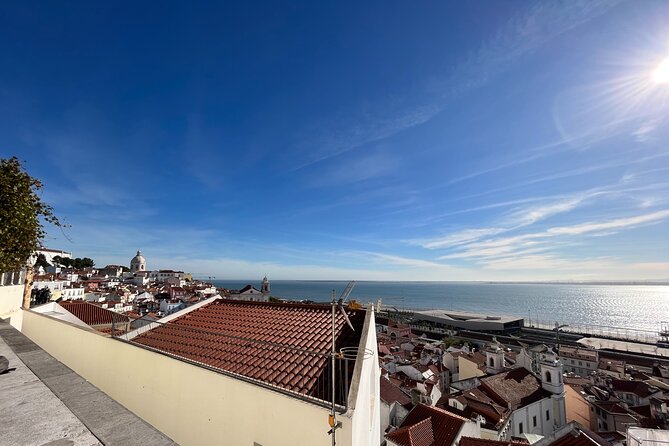
You begin near the Augusta Street Arch, a big symbol placed in Praça do Comércio. It’s the kind of monument you can easily treat as a pretty backdrop—until someone explains why it’s there. The arch is positioned as a grand entry into Lisbon’s civic story, with symbols that reference Portugal’s history and cultural icons.
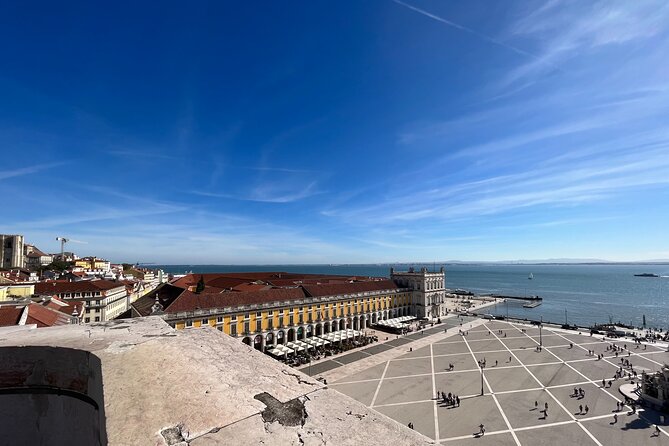
Then you move into Praça do Comércio (also called Terreiro do Paço). This is one of the most dramatic “starting rooms” Lisbon has. It’s waterfront-facing toward the Tagus (Tejo), and the sheer openness makes it easier to understand how the city used to connect to the river as a gateway.
The key detail you’ll want to listen for: this square hosted the Paço da Ribeira before it was destroyed by the 1755 Lisbon earthquake. After that, the area was rebuilt as part of the Pombaline downtown (Baixa) plan ordered by Sebastião José de Carvalho e Melo, the 1st Marquis of Pombal (minister from 1750 to 1777). That’s the moment Lisbon goes from legend to a real urban design story.
If you like architecture that comes with receipts, this stop is worth it. If you hate long standing around, this is still fine because the time here is short and the route moves on.
José Saramago and the Fado Museum: culture stops with context

After the square, the walk shifts into a different kind of Lisbon: the Portugal you get from literature and music, not just monuments.
You’ll see the building originally built in 1521, which now serves as the headquarters of the José Saramago Foundation. Saramago is the only Portuguese author who has won the Nobel Prize for Literature, and the foundation is devoted to his work and message. Even if you’re not a literature person, it’s a nice reminder that Lisbon isn’t stuck in medieval time.
Then comes the Fado Museum, where you can connect the dots to a Lisbon sound you’ll keep hearing about. Fado is traditionally a guitar-led music style, and the museum preserves and exhibits its legacy and cultural influence. The value here is simple: a short guided stop helps you decode what you’re seeing and hearing later, instead of treating it like just another performance.
One consideration: museums take attention. If you’d rather spend your mental energy on views and streets only, you may want to keep your expectations practical—this is a quick cultural anchor, not a long museum day.
Alfama’s medieval lanes, and why the earthquake matters
This is the heart of it. You enter Alfama, Lisbon’s most emblematic quarter and a standout walking and photography zone thanks to its medieval alleys and long views.
The big reason Alfama feels different is physical: its dense bedrock helped it survive the 1755 earthquake. So when you walk through residential lanes that feel like a time capsule, it’s not just cute—it’s survival. That turns the neighborhood from a set of streets into a living story of resilience.
The walk here also sets you up for viewpoints. You’ll pause along the route at key lookouts around the old walls area, including a spot from the Cerca Moura (Moorish city wall). From there, you can see major Lisbon landmarks, and the position is described as roughly midway between São Jorge Castle above and the cathedral.
Somewhat nearby, you’ll also see a church originally built by the Knights of the Order of Malta in the 12th century. It’s the kind of place where a short explanation makes you notice details you’d otherwise walk right past.
If you’re the type who likes to photograph from different angles, this section is where you’ll feel it pay off.
You can also read our reviews of more guided tours in Lisbon





Feira da Ladra, then into the Cathedral and Saint Anthony traditions
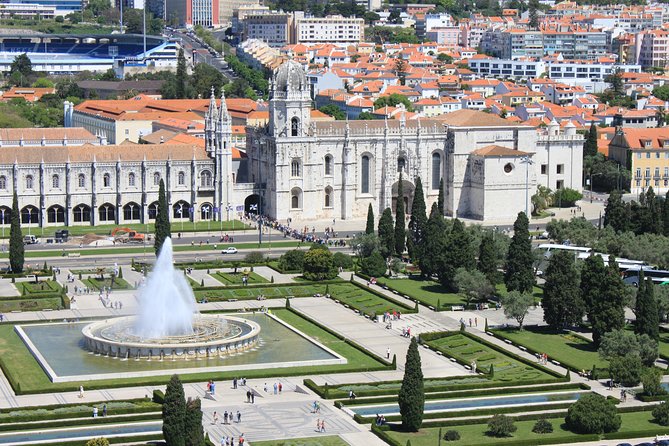
One of the most “local Lisbon” parts of this route is the Feira da Ladra open-air flea market area. It’s held Tuesday and Saturday in and around Campo de Santa Clara. Even if you don’t plan to shop, the market atmosphere gives context to Lisbon as a daily-life city, not a theme park.
From there, the tour keeps moving through religious landmarks that explain Lisbon’s layered past.
Lisbon Cathedral (Sé): a site with Islamic roots
You’ll visit the Lisbon Cathedral, commissioned by King Afonso I in 1150, built where a mosque erected by Islamic Moors once stood. And because the cathedral experienced collapses and renovation work over time, today you get a mixture of styles rather than one clean look from a single era.
Church of Saint Anthony: a tradition you can picture
You’ll also stop at a church built on the purported birthplace of Saint Anthony of Lisbon. This is the saint tied to traditions around newlyweds and marriage vows. In this spot, there’s a custom where single women might throw a coin to the saint’s statue while hoping for marriage within a year. It’s simple, symbolic, and very Lisbon—faith mixed with everyday practice.
If you’re uncomfortable with cultural traditions, this isn’t intense. It’s just one of those small moments that makes the tour feel human.
A monastery stop that shows Portugal’s church-building pattern
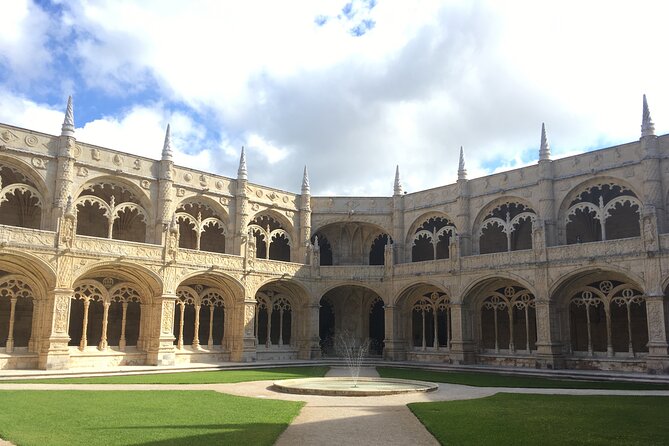
Next you’ll see a monastery presented as a model for later Portuguese church-building. It remained in use until the abolition of religious orders in the early 19th century. That timeline helps you understand why so many buildings in Lisbon have both spiritual and historical weight.
One note: the monastery/cathedral/church sequence can be a lot in a row. But since each stop is explained for a different reason—location history, religious tradition, and architectural influence—it doesn’t blur together.
São Jorge area gates and the Door of the Sea
As you approach the São Jorge area, you’ll reach a small plaza within about 500 meters of São Jorge Castle. Even without going up to the castle itself, this is a good neighborhood staging point, because you’re already thinking in layers: city walls, gateways, and where people entered from.
You’ll also visit the Door of the Sea, named for being one of the main entrances into the city from the beach and harbor when Lisbon was fortified. This kind of detail is why I like guided walking tours: suddenly you understand movement—how people would have traveled through gates, not just where the buildings are.
The last touch is a stop at a family-owned grocery store that specializes in canned fish. It’s not flashy, and that’s exactly why it works. It grounds the walking route in what Lisbon has long traded, preserved, and eaten.
Then you finish back in the downtown circulation near Rossio Square.
Price and value at about $3 with a live guide
The price listed here is unusually low for a guided walking tour. Even if you ignore the exact number and focus on the structure, the value is clear: you’re paying for a professional guide, a compact route, and multiple landmark explanations packed into about two hours.
What makes the value feel real (not just “cheap”):
- Small group size (max 20), which helps you hear and ask questions.
- Stops across different Lisbon themes: civic rebuilding in Baixa, music culture at the Fado Museum, and layered religious history in Alfama.
- Some entry is listed as free for certain segments like Praça do Comércio and an Alfama segment, so you’re not always paying another fee right at the moment you want to keep moving.
- You also get 5 FREE self-guided walking tours in the Vox City app, plus multilingual audio commentary in English, French, Italian, Spanish, Chinese, and German.
The only “value catch” I’d watch is time. Two hours means you won’t slow down for long sits or deep museum-style looking. This is an overview with strong direction—perfect for early in your trip, less ideal if you already know Lisbon well and want long, independent roaming.
Should you book this Lisbon Downtown & Alfama walking tour?
Book it if:
- You want a fast, guided way to understand Lisbon’s major layers—downtown planning, Alfama’s medieval survival, and the role of churches and music.
- You like walking tours with explanations that help you orient yourself, not just point-and-stare sightseeing.
- You’re traveling with others and like the idea of a group kept to 20 people or fewer.
Skip or adjust expectations if:
- You’re hoping for a full day. This is about 2 hours, and it moves.
- You want long, independent time in museums or markets. Here, the market and museum moments are stops, not long hangs.
- Hills and stairs will be a problem for your group. The tour is described as involving considerable walking, and Lisbon’s grades are real.
If you’re early in your Lisbon stay or you just want a solid orientation that ties sights together, this is an easy yes.
FAQ
How long is the Lisbon Downtown & Alfama guided walking tour?
It’s listed as about 2 hours.
What time does the tour start?
It has meeting times at 09:45 and 13:45.
Where do I meet the guide?
The meeting point is Rua dos Douradores, number 16, Lisbon.
Where does the tour end?
The tour ends at Rossio Square (Praça do Rossio).
Is there a maximum group size?
Yes, the maximum is 20 travelers.
What’s included in the tour price?
You get a professional guide, insurance according to Portuguese law, and access to mobile ticketing, plus Vox City app materials and multilingual audio commentary.
Are food and drinks included?
No. Food and drinks are not included unless specified.
Is the mobile device required?
Yes. Mobile device is listed as not included, so you’ll likely need your own.
Are there self-guided tours in the Vox City app included?
Yes, 5 free self-guided walking tours in the Vox City app are included.
What should I bring for the walking route?
Wear tennis shoes or appropriate footwear, bring water, and plan for season conditions (sunscreen in summer, jacket in winter).