REVIEW · CYCLING TOURS
E-bike Tour Lisbon Essential
Book on Viator →Operated by Lisboa Autêntica · Bookable on Viator
Lisbon’s hills get easier fast. This 3-hour e-bike tour strings together Lisbon’s oldest streets, top viewpoints, and big central squares in one smooth loop, with Bosch-assisted e-bikes and English-speaking guides who keep the ride relaxed and fun. I like how the route builds a feel for the city quickly, and how guides such as Jorge, Bruno, Xavier, and Daniel are praised for pacing, humor, and keeping everyone comfortable. One thing to consider: you’re still riding a bike in pedestrian-heavy areas, with cobblestones and traffic in the mix, so you’ll want basic balance and patience.
You’ll get a smart mix of neighborhoods and landmarks. You spend a full hour in the Castelo, Alfama & Mouraria area, then you pop out for quick panoramic breaks like Miradouro da Senhora do Monte and Miradouro São Pedro de Alcântara. The stop sizes keep the energy up without turning it into a sprint.
For value, it’s hard to beat: helmet, bottled water, e-bike, and insurances are included, and the group is limited to 10 people. The only notable extra cost is Panteão Nacional, where entry isn’t included. Also, the experience requires good weather, so if the day is wet or rough, you may be offered a different date or a refund.
In This Review
- Key things that make this Lisbon e-bike tour work
- Why this “Lisbon Essential” ride is a smart first-day move
- Starting point and getting comfortable before you roll
- Castelo, Alfama & Mouraria: the old Lisbon intro that actually clicks
- Miradouros: short breaks that give you Lisbon’s skyline language
- Mosteiro de São Vicente de Fora: a quick stop with a clear meaning
- Panteão Nacional: the one place where entry costs extra
- Feira da Ladra timing: when the flea market appears
- Praça do Comércio and Baixa: Lisbon’s main stage and street grid
- Chiado and Largo do Carmo: different vibes in a short ride
- Igreja de São Roque: a Jesuit church stop that lands fast
- Miradouro São Pedro de Alcântara to Avenida da Liberdade: modern Lisbon’s spine
- Jardim do Torel: the quiet ending that feels like a local angle
- E-bike reality check: hills, safety, and the equipment you rely on
- Price and value: what you’re really paying for
- Weather, rain, and why timing matters in Lisbon
- Who should book this tour
- Should you book this Lisbon Essential e-bike tour?
- FAQ
- How long is the Lisbon Essential e-bike tour?
- How much does it cost per person?
- What’s included in the price?
- Is Panteão Nacional admission included?
- When does Feira da Ladra happen on this route?
- Where does the tour start and end?
- Is the tour offered in English?
- Is this tour family-friendly?
- What happens if the weather is poor?
Key things that make this Lisbon e-bike tour work
- Bosch System e-bikes: motor assist makes steep Lisbon hills much more manageable.
- Small group size (max 10): you’ll ride as a tight group with less waiting around.
- Classic neighborhoods plus big-city centers: Alfama + Mouraria viewpoints paired with Baixa and Praça do Comércio.
- Photo-friendly miradouros: several short viewpoint stops that help you orient quickly.
- Family-friendly gear: baby seats, plus a cargo bike option for children, and e-bikes suited for kids around 1.50 m tall.
- Feira da Ladra timing matters: you may catch the flea market on Tuesdays and Saturdays.
Why this “Lisbon Essential” ride is a smart first-day move
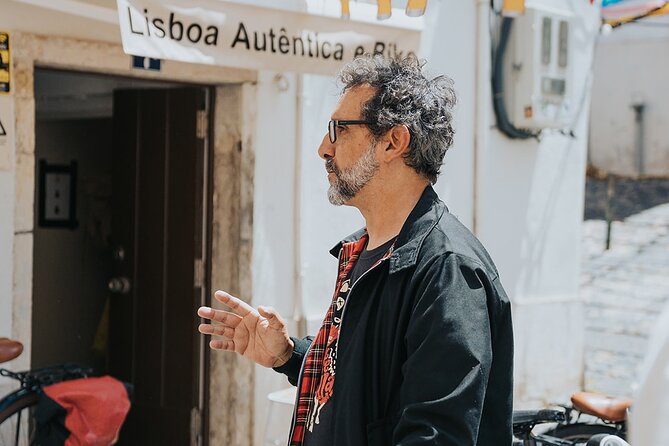
If you want Lisbon in a hurry—but still want it to feel real—this kind of e-bike orientation makes a lot of sense. In just about 3 hours, you cover old streets, skyline viewpoints, and the city’s main ceremonial spaces. It’s not trying to be “everywhere.” It’s trying to give you the right anchors.
I love that it’s built around areas you’ll actually want to revisit later. Alfama and Mouraria are the kind of neighborhoods where your brain needs landmarks—churches, viewpoints, street patterns—so you can wander confidently afterward. Then the ride pushes you toward Baixa and Chiado so you understand how the city’s geography and bustle connect.
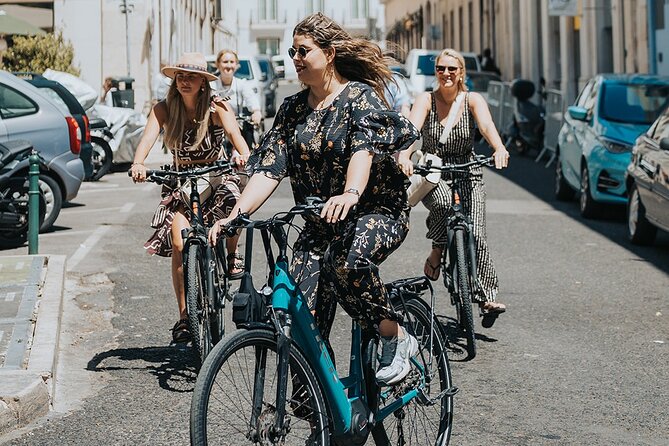
The e-bikes change the math. Lisbon hills are no joke, but motor assist means you can keep moving without turning the day into a training session. Many guides also appear to be flexible with pace and route when groups need extra stops or a slower tempo.
You can also read our reviews of more cycling tours in Lisbon


Starting point and getting comfortable before you roll
You meet at Largo Severa 7A, 1100-132 Lisboa. It’s a convenient spot in central Lisbon and near public transportation, which helps if you’re arriving from elsewhere in the city. The tour ends back at the meeting point, so you don’t have to think about “how do I get back?”
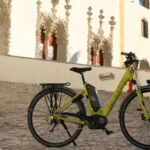
Once you’re on the bike, expect a guided rhythm. The tour includes helmets, plus bottled water, and you’re covered by insurance. The e-bike setup uses a Bosch System, and in some cases the bikes have been described as Bosch-powered models such as Riese & Müller or Trek. That usually matters because you want a bike that feels stable and responsive on uneven ground.
One practical reality: you’re not on a closed-course track. You’ll share space with pedestrians, and some parts of Lisbon are tight or visually complex. If you’re a new rider, it helps to focus on staying relaxed, keeping your speed gentle near people, and trusting the guide’s lead line.
Castelo, Alfama & Mouraria: the old Lisbon intro that actually clicks

The tour begins with Castelo, Alfama & Mouraria, and this is where the neighborhood character comes alive. You get a full hour here, which is a gift. A lot of Lisbon tours rush this area like it’s just a backdrop. This time, you’re given enough time to absorb the terrain and the vibe.
Alfama and Mouraria are older, more traditional, and less “straight-line” than much of the rest of Lisbon. Riding through the area on an e-bike helps you move up and down without losing the thread. You can stop for photos, look at facades, and understand how those narrow lanes and lookout points relate to each other.
If you’re wondering whether you’ll feel safe on hills and cobbles, it’s worth knowing that many riders have said the route and guide choices keep things manageable. Still, you should go in with the mindset that this is city riding—your job is to ride predictably, and the guide’s job is to keep the group together.
Miradouros: short breaks that give you Lisbon’s skyline language
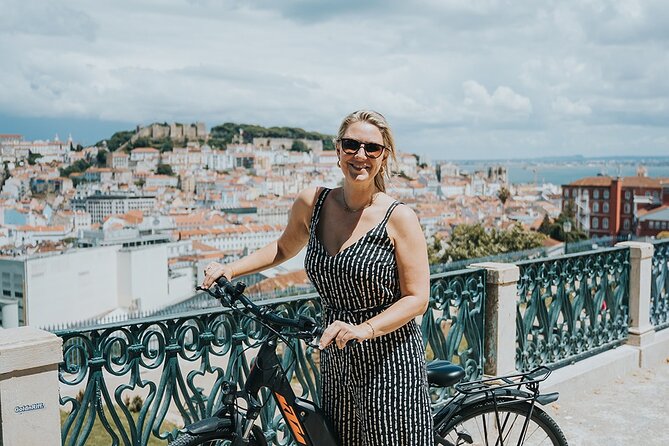
After the old neighborhoods, the tour moves to viewpoints—fast, focused, and built for taking in the city without draining your energy.
You’ll stop at Miradouro da Senhora do Monte for about 20 minutes. This is a classic Lisbon look-out spot, and it’s one of those places where your map brain starts working. You see how Lisbon stacks on the hills, where the city opens up, and why the viewpoints matter so much.
Later you’ll also reach Miradouro São Pedro de Alcântara for around 10 minutes. That mix of viewpoints—some older-feeling, some closer to central views—helps you create a mental model of where everything sits.
A tip for viewpoint stops: keep your photo-taking efficient. The time is limited, and Lisbon is full of angles. If you spend 10 minutes adjusting your camera on a windy edge, you’ll feel rushed and less relaxed.
Mosteiro de São Vicente de Fora: a quick stop with a clear meaning
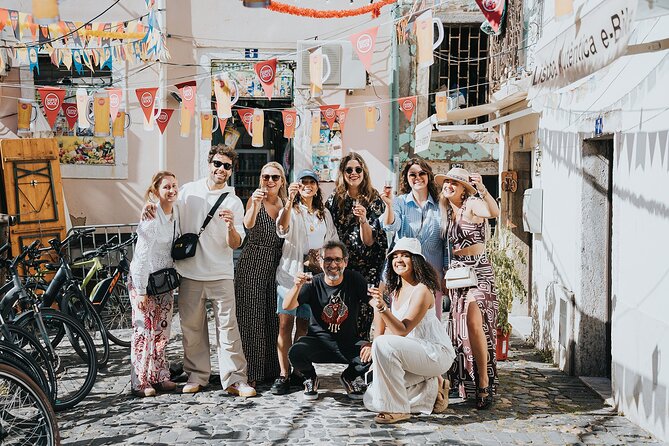
Next up is Mosteiro de Sao Vicente de Fora, around 10 minutes. This stop is tied to the patron saint of Lisbon, so you’re not just passing a building—you’re getting a cultural reference point. Even if you only have a few minutes, that context makes architecture easier to read.
Places like this can feel “short-changed” on tours. But when a stop has a story tied to local identity, 10 minutes can be enough to land the why. It’s also a nice contrast after the physical climb and view moments.
You can also read our reviews of more tours and experiences in Lisbon



Panteão Nacional: the one place where entry costs extra
You’ll have a short stop at Panteão Nacional for about 10 minutes, and entry there is not included. The building is described as huge and white-stone, with an endless history to share—so it’s clearly worth seeing, just be aware you may need to pay for admission separately.
If you don’t want to pay for the inside, you can still enjoy the exterior and the fact that it’s a major Lisbon landmark. But if you love monuments, it’s the one add-on that can be worth budgeting for.
Feira da Ladra timing: when the flea market appears

One of the more fun “lived-in Lisbon” moments is the flea market area at Campo de Santa Clara—Feira da Ladra. You’ll have about 10 minutes here, and admission is free.
Here’s the catch: Feira da Ladra runs on Tuesdays and Saturdays. So if your visit lands on those days, this stop can feel like a Lisbon snapshot—local commerce, browsing, and busy energy. If it’s not Tue/Sat, you’ll still see the area, but it won’t be a full-market scene.
Either way, it’s a good break between viewpoints and big central spaces. Just watch your footing in busy zones and keep moving when the group moves.
Praça do Comércio and Baixa: Lisbon’s main stage and street grid
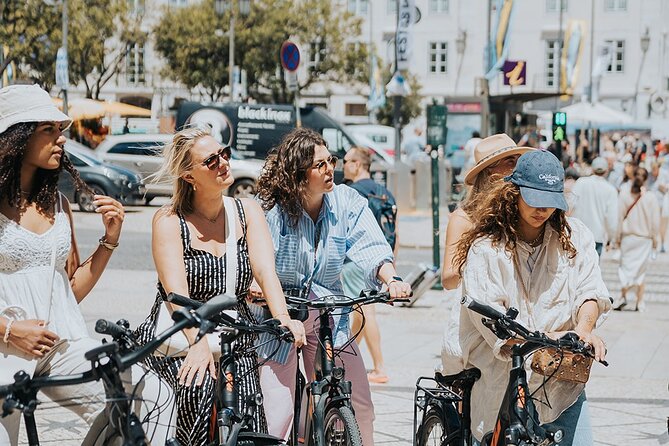
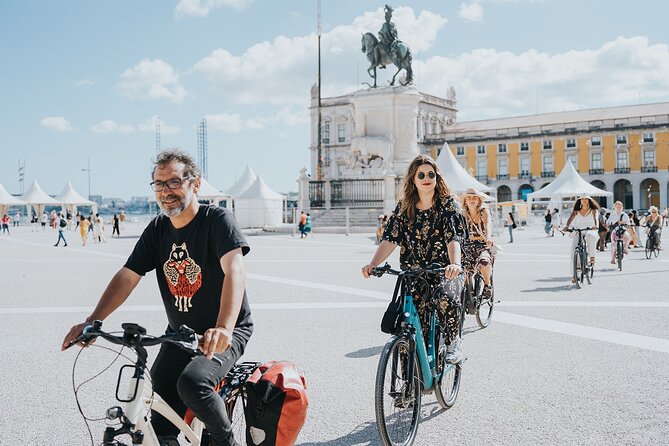
Then you head toward Praca do Comercio (also called Terreiro do Paco), about 10 minutes. This is one of Lisbon’s great open squares, and it’s the kind of place where you instantly understand how the city organizes crowds and ceremonies.
After that comes Baixa de Lisboa, around 10 minutes. The value here is practical: you see the grid of planned streets, the majesty of Rua Augusta, and the Triumphal Arch. This is where Lisbon turns from medieval-feeling lanes into more organized, “walkable-to-shop” boulevards.
If you’re doing Lisbon for the first time, Baixa is where you’ll likely base yourself later. So getting oriented to where Rua Augusta funnels people and where the arch sits relative to the rest of the center helps a lot.
Chiado and Largo do Carmo: different vibes in a short ride

Next is Chiado, about 5 minutes. It’s the bohemian-feeling area—more artsy, more lively in a different way than Alfama. You don’t spend long here, but that brief look is enough to point you toward a future walk.
Then you visit Largo do Carmo for about 10 minutes, tied to revolutionary history. It’s a quick historical pause, and quick history can actually be helpful on an e-bike tour. It prevents the day from becoming only “pretty stops.” You start noticing that Lisbon is political and religious and cultural all at once.
Igreja de São Roque: a Jesuit church stop that lands fast
Igreja de Sao Roque comes next, about 10 minutes. It’s the Jesuit church, and that identity matters. Lisbon’s religious buildings vary a lot in style and purpose, and a short stop like this helps you build a map in your head.
It’s also an easy rhythm change. After viewpoints and squares, a church stop gives you a chance to cool down and reset. Just don’t expect a long sit-down visit; it’s a quick, guided moment.
Miradouro São Pedro de Alcântara to Avenida da Liberdade: modern Lisbon’s spine
You’ll return to another panoramic stop at Miradouro São Pedro de Alcântara for about 10 minutes, then continue toward Avenida da Liberdade for around 5 minutes.
Avenida da Liberdade is one of Lisbon’s main arteries, and seeing it from the route is helpful. It shows you the city’s wider, straighter movement compared with the older quarters. If you later want to walk from shop streets to monuments, this is the “spine” that connects it all.
Short stops work here because you’re not meant to do everything. You’re meant to get the feeling of the city’s structure.
Jardim do Torel: the quiet ending that feels like a local angle
Finally, you end near Jardim do Torel, about 10 minutes. It’s described as one of the more unknown spots. That’s exactly why I like it as a closing note. It gives the day a softer landing after big viewpoints and recognizable streets.
If you have energy afterward, this kind of stop is perfect for stretching your legs and taking a slow walk without a giant crowd. Even 10 minutes can point you in a direction for later.
E-bike reality check: hills, safety, and the equipment you rely on
Here’s what matters for you to know before booking: this tour is designed for people who want an easier time with hills, not for people who want a risk-free bike ride like a leisure path.
Many riders have said they felt safe and that bike lanes exist in some areas, which helps. Others have pointed out that parts of the city can feel crowded and that you’re riding among pedestrians. If you’re a confident cyclist, you’ll probably feel comfortable. If you’re nervous, it still may be doable, but keep expectations realistic: you’ll be alert.
Equipment is part of the comfort equation. The tour includes a helmet, and there’s bottled water. Some riders have noted the bikes are in good shape, while others have said bikes can be a little worn. I’d treat that as a reason to ask staff to show you how to use the assist level and to check brakes before you leave the meeting point.
One review also mentioned a flat tire situation that got handled with a replacement quickly. Another mentioned an accident on slippery rainy streets and the guide helping immediately, including a bike first-aid approach. That’s the kind of contingency you want to hear about, even if you never need it.
Price and value: what you’re really paying for
At $48.27 per person for about 3 hours, this is priced like an efficient orientation plus an active experience. You’re not just paying for a bike rental. You’re paying for:
- a guided route that stitches together neighborhoods and viewpoints,
- included helmet and water,
- insurance coverage,
- and the practical advantage of Bosch assist on hills.
This can be excellent value when you’re short on time and want to see more than you could comfortably manage by foot in the same half-day. It’s also a solid deal for families because the operator provides options like baby seats and a cargo bike for two children.
If you’re the kind of traveler who loves walking every street slowly, this may still feel fast. But if you want orientation plus viewpoints without exhaustion, the price lines up well with what you get.
Weather, rain, and why timing matters in Lisbon
This experience requires good weather. If it’s canceled due to poor weather, you’ll be offered a different date or a full refund. Lisbon can go from pleasant to slick quickly, and slippery cobblestones can turn a normal ride into something tense.
If rain shows up, I’ve seen mentions of guides helping with rest breaks and even ponchos. Still, don’t plan on rain being “fun by default.” Bring a waterproof layer and be ready for slower, careful riding if conditions are wet.
Who should book this tour
This is a great fit if:
- you’re new to Lisbon and want orientation fast,
- you want hills handled without turning the day into a workout,
- you’re traveling with teens or kids and need family-friendly bike options,
- you like history told in small chunks tied to places you can picture later.
It may be less ideal if you:
- hate riding near pedestrians or tight city streets,
- have a strong preference for fully off-traffic paths,
- or you’re looking for long, deep museum time (Panteão Nacional is a short stop and entry isn’t included).
Should you book this Lisbon Essential e-bike tour?
I’d book it if your goal is a half-day that gives Lisbon’s layout a fast, memorable shape. The combination of Alfama/Mouraria, several miradouros, and the central squares and street grid is the kind of mix that helps you explore on your own afterward without feeling lost.
I’d think twice if you’re very anxious about bike control or you don’t like riding in crowded pedestrian areas. In that case, you might still enjoy it—but go in calmer, keep your expectations city-real, and be ready to ride predictably.
If you can ride a bike and you want a lively introduction, this tour is a strong choice for most people.
FAQ
How long is the Lisbon Essential e-bike tour?
It’s about 3 hours.
How much does it cost per person?
The price is listed as $48.27 per person.
What’s included in the price?
You get a Bosch System e-bike, a helmet, bottled water, and insurance.
Is Panteão Nacional admission included?
No. Entry to Panteão Nacional is not included, though the tour includes a short visit time there.
When does Feira da Ladra happen on this route?
Feira da Ladra at Campo de Santa Clara takes place on Tuesdays and Saturdays.
Where does the tour start and end?
It starts at Largo Severa 7A, 1100-132 Lisboa, Portugal, and ends back at the same meeting point.
Is the tour offered in English?
Yes, it’s offered in English.
Is this tour family-friendly?
Yes. There are baby seats, a cargo bike option where two children can ride, and an e-bike suited for children around 1.50 m tall.
What happens if the weather is poor?
The experience requires good weather. If it’s canceled due to poor weather, you’ll be offered a different date or a full refund.