REVIEW · HISTORICAL TOURS
Historical Private Walking Tour of Lisbon
Book on Viator →Operated by Tours Bernardo · Bookable on Viator
Lisbon rewards slow walking, and this route is built for it. You’ll trace the historic centre from Praça dos Restauradores down toward the river, then climb through Alfama and finish near Largo do Carmo with end-of-day city views. I like that the tour feels like an efficient introduction: major squares, classic viewpoints, and key neighbourhoods in one go. I also like the simple food-and-drink stops, including pastel de nata and a local ginja. The one caution: this is hill walking, and some famous sights (like Sé Cathedral and the Santa Justa elevator) cost extra.
This is a private tour for just your group, lasting about 3 to 4 hours, with a mobile ticket. If you have very limited mobility or dislike steep climbs, you may want to skip it or choose a shorter, flatter option.
In This Review
- Key things to know before you go
- Why This Walking Route Makes Lisbon Click
- Pace, Hills, and What 3 to 4 Hours Really Means
- Stops 1 to 4: Starting at Restauradores and Heading into the Historic Centre
- Praça dos Restauradores
- Monumento a D. Pedro IV
- Igreja de São Domingos
- Praça da Figueira
- Stops 5 to 7: Miradouros, a Custard Tart Break, and Tile-Beauty Views
- Miradouro Chão do Loureiro
- Santo António pastry stop
- Miradouro de Santa Luzia
- Stops 8 to 11: Portas do Sol, Amália’s Mural, and the Streets of Alfama
- Miradouro das Portas do Sol
- Calcada da Amália
- Alfama: Lisbon’s oldest street maze
- Lisbon Cathedral (Sé) area
- Stops 12 to 14: Riverfront Drama at Praça do Comércio and the Chiado Finale
- Praça do Comércio (Terreiro do Paço)
- Rua Augusta
- Chiado
- Stop 15: Largo do Carmo, the Revolution Place, and Santa Justa View Time
- Price and Value: What You’re Paying For (and What Costs Extra)
- Bernardo’s Guide Style: Punctual, Friendly, and Easy to Follow
- Who This Tour Fits Best
- Should You Book This Tour?
- FAQ
- How long is the Lisbon walking tour?
- Is this tour private?
- What is included in the tour price?
- What’s not included?
- Where does the tour start and end?
- What kind of ticket do I receive?
- How fit do I need to be?
Key things to know before you go
- Private and personal: only your group joins, so you can ask questions as you walk
- Viewpoints are the payoff: multiple miradouros let you see Lisbon from different angles
- Included treats: pastel de nata plus a beverage, and ginja during the route
- Main sights, not ticket lines: you pass major landmarks, but some entrances are optional extra
- Good weather matters: the itinerary relies on views and outdoor walking
Why This Walking Route Makes Lisbon Click
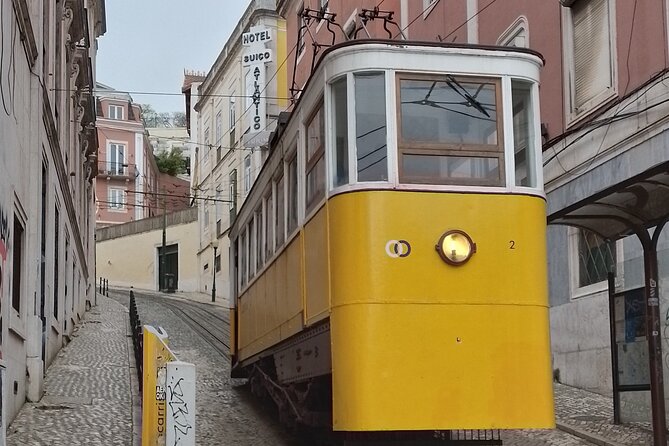
If it’s your first time in Lisbon, you want two things fast: good orientation and the right mix of street-level life plus postcard views. This tour gives you both. You start near Praça dos Restauradores, then work your way through the centre, hit several iconic squares, and end on the Largo do Carmo side where you’re close to the Santa Justa elevator area.
The route also helps you understand how Lisbon’s layers connect. You’ll see the formal city centre squares, the riverfront drama at Praça do Comércio, the winding, older streets of Alfama, and then the stylish Chiado section before finishing where the Carnation Revolution ended.
And since it’s private with a local guide (Bernardo), it tends to feel like you’re getting the story in the order your feet naturally move—rather than bouncing around on a bus schedule.
You can also read our reviews of more walking tours in Lisbon


Pace, Hills, and What 3 to 4 Hours Really Means
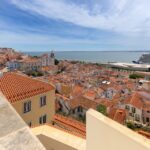
The tour runs about 3 to 4 hours and covers roughly 5 km of walking. That distance doesn’t sound scary until you remember Lisbon has seven hills. Expect ups and downs—some of them steep enough that you’ll feel it in your legs more than in your lungs.
This matters because the experience is built around multiple stops and viewpoints. If you slow down a lot or take frequent breaks, you can stretch the time beyond 4 hours. If you’re comfortably active, though, the walking feels manageable: short stop-and-go segments, with plenty to look at while you catch your breath.
If you’re unsure about your stamina, be honest. The tour provider explicitly recommends moderate physical fitness, and says it’s best to avoid if you’re very unfit.
Stops 1 to 4: Starting at Restauradores and Heading into the Historic Centre
Praça dos Restauradores
You begin at Praça dos Restauradores. This is a great launch point because it’s packed with recognizable landmarks and it points toward the city’s grander boulevards. You’ll see the Restauradores obelisk, the calçateiros statue, the Glória elevator, and you’ll get a sense of how this area connects to Avenida da Liberdade.
Even if you don’t go inside anything, the square works like a map legend. From here, you can start to understand where Lisbon’s different vibes begin: formal streets up top, older quarters down toward the river.
Monumento a D. Pedro IV
Next is the centre hub around Monumento a D. Pedro IV. From this focal point, you can spot big pieces of the city picture, including the Carmo convent, Maria II Theatre, and the Castle of São Jorge.
This stop is useful if you like context. It’s one of those moments where you start thinking, Oh, so that’s where things connect.
You can also read our reviews of more private tours in Lisbon






Igreja de São Domingos
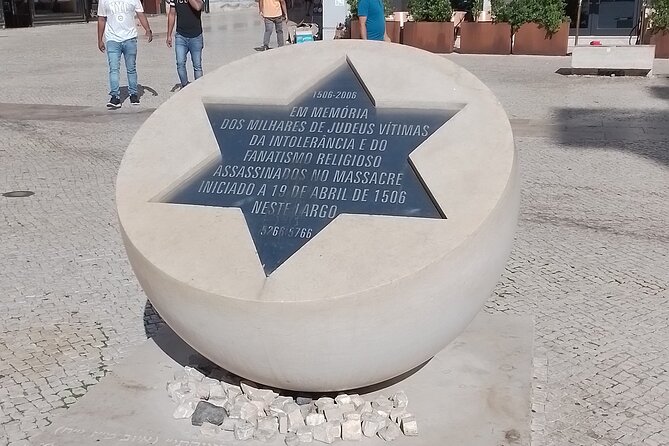
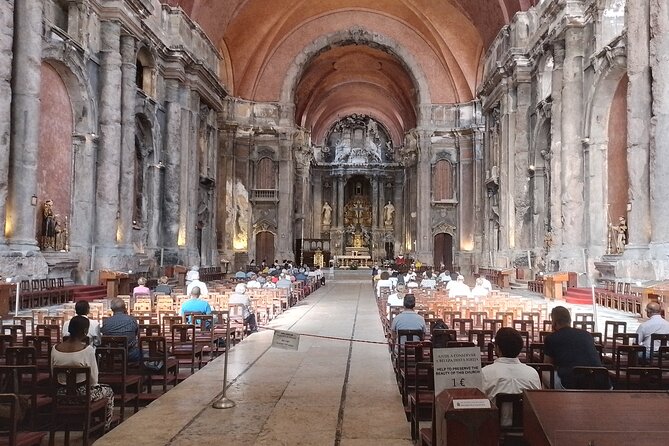
Then you’ll pause at Igreja de São Domingos. The details matter here: you’ll see the São Domingos Church, the monument of the Star of David, and you’ll learn about the oldest ginja shop. That last detail matters because it’s one of those Lisbon facts that explains why ginja is more than a drink—it’s tied to local places and tradition.
Praça da Figueira
At Praca da Figueira, you reach a classic market square feel. Here you’ll spot the statue of D. João I, the well-known Confeitaria Nacional, and a quirky landmark: the doll hospital.
This square is a nice breather before you start chasing the viewpoints. If you like street details—signs, people, shopfronts—this is where Lisbon starts to feel like real daily life.
Stops 5 to 7: Miradouros, a Custard Tart Break, and Tile-Beauty Views
Miradouro Chão do Loureiro
From Praça da Figueira, you head toward Miradouro Chão do Loureiro, a viewpoint right below the Castle of São Jorge. The big draw is the sightline: you’ll see the Tagus River (Tejo) and the 25 de Abril Bridge from up high.
Tip: This is one of those stops where you should take a full minute before moving on. The guide’s job is to point out what you’re looking at, but you still need a moment to visually “lock in” the geography.
Santo António pastry stop
Then you get a short break at a local pastry shop in the Santo António area. This is where the tour’s food inclusion pays off. You’ll try a famous pastel de nata (custard tart) and have a beverage. You can also see the custard making process.
This is a smart timing choice. It happens after you’ve done some climbing for viewpoints, so the break feels like a reward, not a random detour.
Miradouro de Santa Luzia
Next up is Miradouro de Santa Luzia. The viewpoint is on the top side of Alfama and it’s known for tile artwork—beautiful tile portraits—along with the views.
If you’ve ever wondered why Lisbon looks so photogenic, tiles like this are a big part of the answer. It’s not just a pretty backdrop; it’s an identity.
Stops 8 to 11: Portas do Sol, Amália’s Mural, and the Streets of Alfama
Miradouro das Portas do Sol
At Miradouro das Portas do Sol, the view shifts again. You can see the Vasco da Gama Bridge and the St. Vincent church in the distance.
Multiple viewpoints are the point of this tour. One lookout teaches you the city’s layout; three or four lookouts let you see how Lisbon bends around its river and hills.
Calcada da Amália
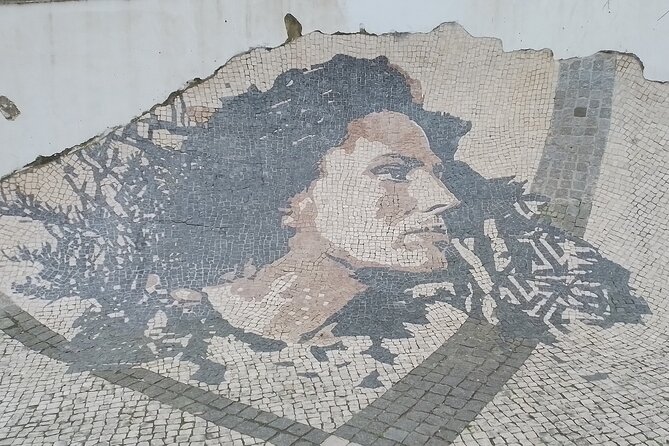
Then you walk the Calcada da Amália, a cobble mural celebrating Amália Rodrigues, Portugal’s most famous fado singer. It’s a small stop that feels meaningful, because it ties Lisbon’s music culture to the street itself.
Alfama: Lisbon’s oldest street maze
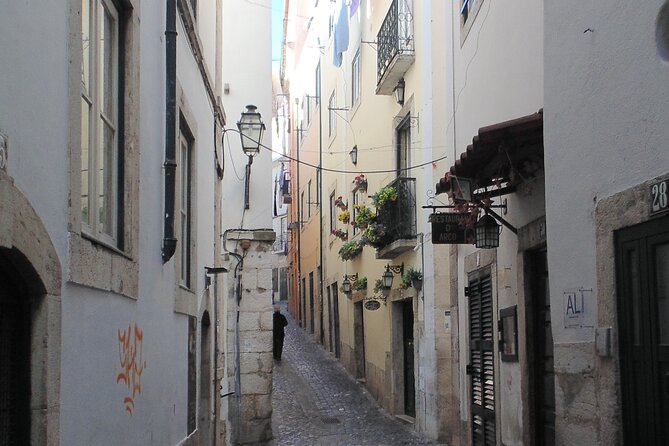
Now the tour steps into its signature neighbourhood: Alfama. This is Lisbon’s oldest neighbourhood in Portugal, and it’s famous for narrow, winding streets. This part of the walk is less about checking boxes and more about slow observation—small facades, tight corners, and the sense that you’re stepping into a different tempo.
If you’re the type who enjoys walking without always knowing the next bend, Alfama is where this tour shines.
Lisbon Cathedral (Sé) area
You also stop at Lisbon Cathedral, described here as the oldest cathedral in Lisbon. You’ll see it as a symbol of the city, and you’ll also notice the Santo António church across the way.
One practical note: entrance to Sé Cathedral is not included. The tour lists adult entry at 5 euros, with reduced pricing for children 7–12 and lower rates for the 3 euros range. If cathedral interiors matter to you, plan a budget.
Stops 12 to 14: Riverfront Drama at Praça do Comércio and the Chiado Finale
Praça do Comércio (Terreiro do Paço)
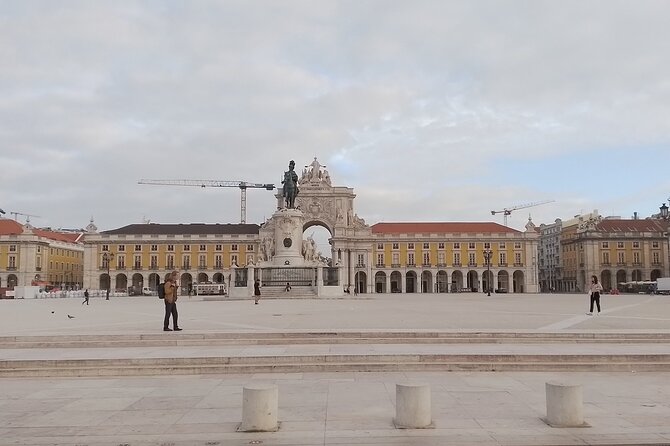
Then you reach Praça do Comércio, also called Terreiro do Paço. This is the biggest square near the river and it works like a ceremonial gateway: the grand entrance coming from the water, with the Rua Augusta Arch nearby.
This stop is about scale. Standing in the open space, looking toward the river, you feel why this area has always been a Lisbon focal point. It’s also a helpful reset before the more intimate streets of Chiado.
Rua Augusta
Next is Rua Augusta, the famous street connecting Praça do Comércio to the Pedro IV area. This is a classic pedestrian spine—shopping, people-watching, and a clear “walk this way” corridor through the centre.
If you like atmosphere more than history details, this section is for you. If you’re sensitive to crowds, you’ll still have time to pause—just don’t expect quiet.
Chiado
Finally, you reach Chiado, one of Lisbon’s emblematic neighbourhoods. It’s known for boutique shops and a theatre hub feel. You’ll also pass major cultural anchors such as the oldest bookshop in the world and Camões square, plus the Brasileira Café.
This is a good ending zone because it shifts Lisbon into a more elegant, more modern mood—without losing the historic core vibe.
Stop 15: Largo do Carmo, the Revolution Place, and Santa Justa View Time
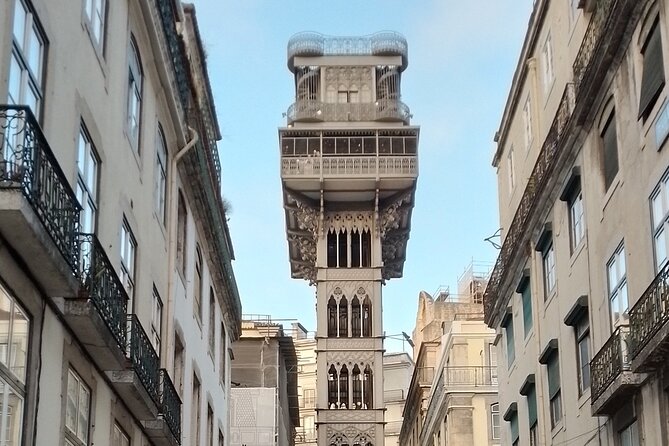
Your tour ends at Largo do Carmo, a historic square tied to the Carnation Revolution. This is where the revolution ended with the dictatorship period ending, and it’s also home to major landmarks you can see around the square, including the Carmo convent and access toward the Santa Justa elevator area.
The finish matters because it gives you a final viewpoint overlooking the city centre. Even if you’ve taken photos all day, the angle near Santa Justa is a nice last look—like closing a travel book with one more page that sums everything up.
Also, Santa Justa elevator entry isn’t included. The tour lists 5.30 euros return trip, so if you want that ride, you’ll need to decide on the spot.
Price and Value: What You’re Paying For (and What Costs Extra)
The price is $72.30 per person for a private 3 to 4 hour walk. In practical terms, you’re paying for three things:
- a guide who keeps the story moving in the exact order your feet follow
- efficient access to top sights across multiple neighbourhoods
- included food and drink stops that would cost extra on your own
And those inclusions are real: you get ginja (a local liquor) and a breakfast stop for pastel de nata and a beverage.
What’s not included is also clearly spelled out, so you can plan without surprises:
- Sé Cathedral entrance: adults 5 euros; children 7–12 3 euros
- Santa Justa elevator: 5.30 euros return trip
- Carmo convent entrance: adults 7 euros; seniors/students 5 euros
- Rua Augusta Arch: 3 euros for adults
My value advice: if you love interiors and paying to go inside is part of your travel style, add at least one of the ticketed options (Sé, Carmo, or Santa Justa). If you prefer outdoor views and street-level landmarks, you can still have a great day without those entrances.
Bernardo’s Guide Style: Punctual, Friendly, and Easy to Follow
The guide name you’ll likely meet is Bernardo. Based on the guide’s track record, the big strengths are simple: he shows up on time, speaks excellent English, and guides with a professional, smooth rhythm.
That’s not fluff. In a city with hills and tight streets, guidance quality affects how much you enjoy the day. You don’t want to spend your sightseeing energy figuring out what you’re looking at. A good guide does that work for you.
Who This Tour Fits Best
This works especially well if:
- it’s your first time in Lisbon and you want a fast, coherent overview
- you like viewpoints and neighbourhood walking more than museum time
- you want a private guide who can keep things clear and efficient
It may not be ideal if:
- you’re very unfit and hills are a struggle
- you can’t handle multiple outdoor viewpoints
- you want guaranteed entry to every named landmark (several key spots require separate tickets)
Should You Book This Tour?
Yes, if you want a private, high-value introduction to Lisbon that mixes major squares, Alfama street life, and several viewpoints—without spending your day ticket-hunting. The included pastel de nata and ginja are bonus comfort points, not gimmicks.
Book it with a smart mindset: wear good shoes, plan for stairs and hills, and treat ticketed entrances (Sé, Santa Justa, Carmo convent, Rua Augusta Arch) as optional add-ons based on what you personally want to go inside.
If Lisbon hills scare you, or if you only want flat walking, consider a gentler route instead. But if you’re up for a real Lisbon walk, this one gives you a lot of city in a few hours.
FAQ
How long is the Lisbon walking tour?
It lasts about 3 to 4 hours.
Is this tour private?
Yes. It’s private, so only your group participates.
What is included in the tour price?
You’ll get ginja as part of the tour and you’ll also stop at a local pastry for pastel de nata (custard tart) plus a beverage.
What’s not included?
Sé Cathedral entrance, Santa Justa elevator entrance (return trip), Carmo convent entrance, and the Rua Augusta Arch entrance are not included.
Where does the tour start and end?
It starts at Praça dos Restauradores, Lisboa and ends at Largo do Carmo, Lisboa.
What kind of ticket do I receive?
The tour uses a mobile ticket.
How fit do I need to be?
The tour is recommended for travelers with moderate fitness. Lisbon has seven hills and you’ll be walking up and down for about 5 km, so it may not suit people who are very unfit.