REVIEW · LISBON WALKING TOURS
Highlights and Secrets of Lisbon Private Walking Tour
Book on Viator →Operated by Local CoolTour · Bookable on Viator
Lisbon is a city you feel before you fully understand it. This private walking tour strings together big sights and the little local stops that make the city click, from pastel de nata to the ruins of Carmo and sweeping viewpoints.
Two things I like a lot: you get a real food-and-sight route (coffee, custard tarts, and ginjinha aren’t random add-ons) and the guide steers you through major landmarks without turning it into a checklist. The one thing to weigh is that the tour covers a lot of walking in about 3 hours, and a couple of stops have entry costs you’ll pay on your own.
I also noticed the guide quality matters. In one standout experience, the group was led by Rodrigo, and he came across as both fun and sharply on top of details.
In This Review
- Key points that make this Lisbon tour worth your time
- Why this private Lisbon walk feels like a local route
- The 3-hour rhythm: what the route gets you in a short time
- Starting at Praça Luís de Camões: a quick lesson before you walk
- Rua do Loreto 4: pastel de nata plus coffee, the Lisbon way
- Igreja de São Roque area: Saint Roch and Brotherhood power
- Trindade: oldest brewery in Lisbon and those masonic azulejos
- Convento do Carmo and the Carmo Archaeological Museum: ruins that mean something
- Santa Justa elevator: engineering views over Baixa and Alfama
- Rua Garrett, Rua Augusta, and Praça do Comércio: Lisbon rebuilt in grand style
- Igreja Nossa Senhora da Conceição Velha: the earthquake survivor in Manuelino style
- Casa dos Bicos and José Saramago: a palace with literary gravity
- Lisbon Cathedral: from mosque origins to Romanesque-Gothic mix
- Miradouro de Santo Estevão: ginjinha plus one of Lisbon’s best viewpoints
- Alfama walk and Fado Museum area: finishing near music
- Food and drink pacing: how the tastings work with the walking
- Price and value: what $79.52 buys you (and what costs extra)
- Departure times and planning: why booking earlier helps
- Who should book this Lisbon tour (and who might skip it)
- The booking call: should you go for it?
- FAQ
- How long is the Lisbon private walking tour?
- How much does the tour cost per person?
- Is this tour private?
- What does the tour ticket include?
- Are there any places where I need to pay extra?
- Where do I meet the guide, and where does the tour end?
- Do I get a mobile ticket?
- Are there group discounts?
- What is the cancellation policy?
Key points that make this Lisbon tour worth your time
- Private, group-only format: it’s just your group with a guide, not a cattle-call.
- Food stops are built into the route: pastel de nata, local coffee, and ginjinha aren’t afterthoughts.
- Carmo Convent and the museum add real context: the 1755 earthquake story and later political symbolism connect in a natural way.
- Big views with minimal fuss: Miradouro de Santo Estevão is a payoff, and Santa Justa delivers panoramic angles over Baixa and Alfama.
- Ticket mix is clear: one paid stop is included, while Santa Justa and the Fado Museum are not.
Why this private Lisbon walk feels like a local route
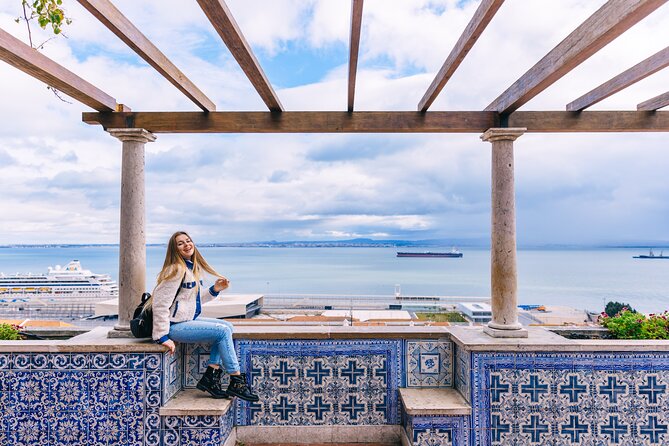
Lisbon can overwhelm you early on. The hills, the tiles, the churches, the viewpoints—it’s beautiful, but it’s also a lot. I like that this tour gives you a sensible path through neighborhoods so you stop wondering where things are and start enjoying how they connect.
This isn’t only about monuments. You’ll also get stops that explain why Lisbon looks the way it does—things like the masonic symbolism linked to azulejos in Trindade and the way masonic designs show up again in Praça do Comércio. If you enjoy culture that’s more than surface-level, that detail-spotting pays off.
Because it’s private, you can ask questions and move at a pace that suits your group. For first-time visitors, that can save hours of guessing and backtracking.
You can also read our reviews of more walking tours in Lisbon


The 3-hour rhythm: what the route gets you in a short time
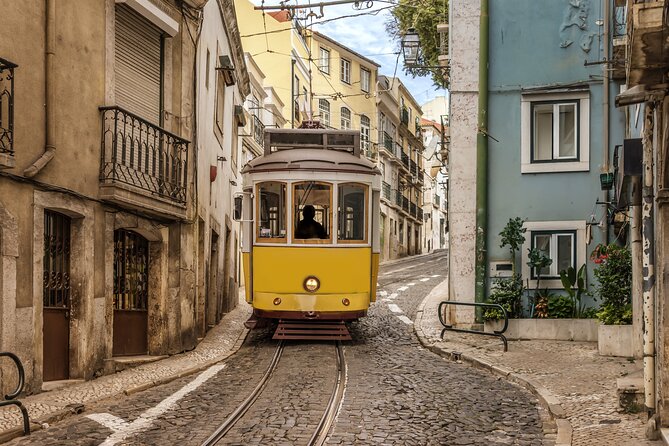
The tour is about 3 hours and ends near the Fado Museum in Alfama area. You start at Praça Luís de Camões, which is a great launching point because it’s easy to recognize and convenient if you’re arriving by public transportation.
The sequence is designed to help you go from central landmarks toward viewpoints and then down into the older quarters. You’ll hit a mix of churches, a major ruins site, a viewpoint cluster, and key Baixa streets—so you’re not stuck on one type of attraction.
And yes, you’ll eat along the way. That matters because it keeps you energized while walking.
Starting at Praça Luís de Camões: a quick lesson before you walk
You begin at Praça Luís de Camões, dedicated to Luis de Camões, described as the father of the Portuguese language. The square also gets framed as Lisbon’s twentieth-century cultural center, which gives you a bit of cultural grounding before you move into the older religious and civic spaces.
This early stop is short—about 15 minutes—but it helps you orient fast. I like opening with a place that feels connected to identity rather than jumping straight into a museum.
Rua do Loreto 4: pastel de nata plus coffee, the Lisbon way
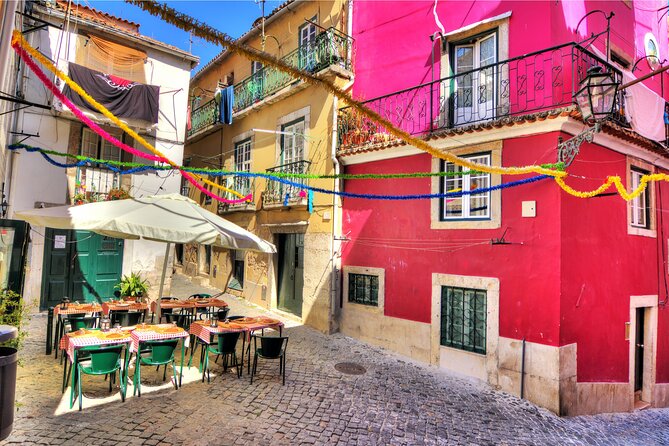
Next you head to Rua do Loreto 4 for one of the tour’s most practical pleasures: a typical pastel de nata and coffee. The stop is built around a traditional café setting, with the promise of especially good coffee.
This is more than snacking. It’s your first real taste of Lisbon’s everyday culture—sweet, simple, and meant to be eaten on the spot. If you’re the type who worries you’ll only have time for dessert later, this stops that worry.
Plan for a quick pause. You’ll be moving again soon, so don’t order something that turns your break into a long sit-down.
Igreja de São Roque area: Saint Roch and Brotherhood power
You then visit the Church of Saint Roch, an important religious site tied to the Brotherhood of Misericordia. The tour focuses on the church’s precious works in wood and gold, and how those details signal the power of the religious brotherhood.
This is a good stop if you like your sightseeing with context. Lisbon’s churches can look similar at a glance, but the stories behind them vary a lot. Here, you’re learning about an institution, not just admiring a façade.
You can also read our reviews of more private tours in Lisbon





Trindade: oldest brewery in Lisbon and those masonic azulejos

At Trindade, you’ll see the oldest brewery in Lisbon and the palace that housed it. The standout visual detail here is the azulejos—tiles—with masonic symbology.
I love stops like this because they reveal Lisbon’s layered identity: religious life, civic design, and even brewing history all leave marks in the city’s decoration. You’re also getting a break from only seeing sacred spaces.
If you’re taking photos, this is one to slow down for. Tiles and symbols reward a few extra minutes.
Convento do Carmo and the Carmo Archaeological Museum: ruins that mean something
Between Trindade and the next major site, you walk through the area tied to Convento do Carmo, which matters both for ancient history and contemporary history. The tour frames it as a symbol connected to the Carnation Revolution, while the museum experience connects to the 1755 earthquake damage.
Then you visit the Carmo Archaeological Museum. The key practical detail: you get a skip-the-line ticket, and it’s included. Inside, you’re looking at a gothic temple in ruins after the 1755 earthquake.
This stop is one of the emotional anchors of the tour. It’s not just old stone. It’s Lisbon’s story of destruction, endurance, and later political meaning—right there in the open air.
Santa Justa elevator: engineering views over Baixa and Alfama
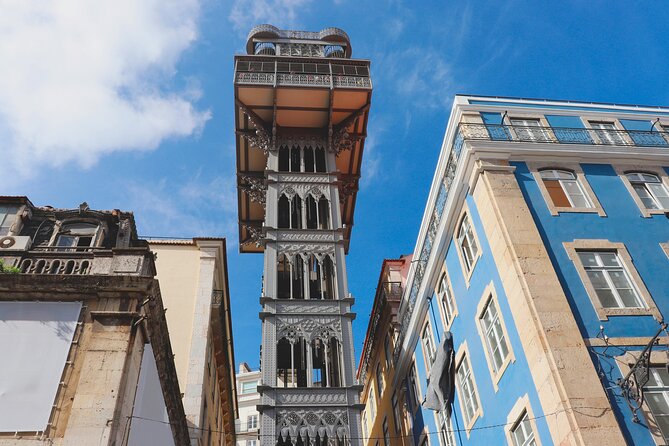
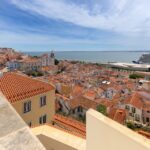
Next comes Elevador de Santa Justa. Even if you don’t go all the way up, you’ll get a strong look at it as early 1900s engineering and a key viewpoint over Baixa Pombalina, the hill of Alfama, and the Castle of São Jorge.
Important money note: admission for the elevator is not included. The tour gives you time to take in the elevator area and the panorama, but you’ll need to decide whether to pay for the ride separately.
If your legs are tired, you might still enjoy this area without going inside. If you can handle it, the elevator can turn into a satisfying skyline moment.
Rua Garrett, Rua Augusta, and Praça do Comércio: Lisbon rebuilt in grand style
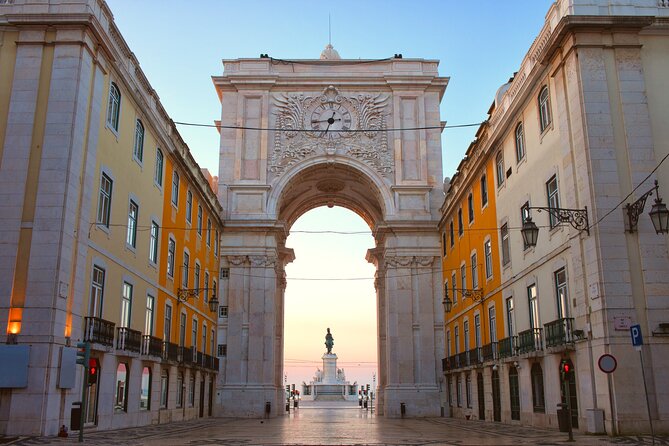
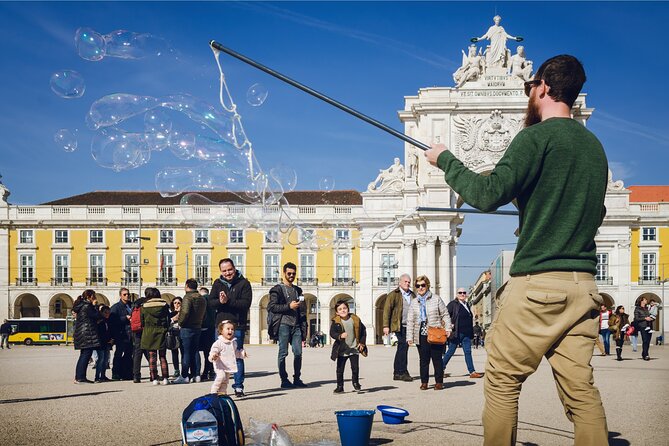
From the viewpoints, the route moves into Baixa Pombalina and elegant streets like Rua Garrett. You then stroll along Rua Augusta toward the monumental arch.
After that, you reach Praça do Comércio, described as the elegant entrance gate to the city. This square was rebuilt after the devastating 1755 earthquake, and it’s also designed with masonic symbols. You’ll also see Cais das Colunas, featuring a marble walkway once used to welcome kings, queens, and presidents.
This is the point where Lisbon feels most official and symmetrical, after all the hills and layered streets. It’s a nice contrast, and the scale is impressive.
If you like great public spaces, this will land well. If you prefer quiet, you may want to keep moving at a steady pace to avoid lingering in the busiest parts.
Igreja Nossa Senhora da Conceição Velha: the earthquake survivor in Manuelino style
You then visit Church Nossa Senhora da Conceição Velha, noted for surviving the earthquake. The façade is in the Manuelino style—Portuguese baroque—and the tour points out a fascinating theme: connections to women in its history.
This stop is short—about 10 minutes—but it’s the kind of quick visit that adds texture to your mental map. It helps you see Lisbon’s architecture isn’t just pretty. It has survival stories and social clues.
Casa dos Bicos and José Saramago: a palace with literary gravity
Next is Museu de Lisboa – Casa dos Bicos, which is housed in a palace that belonged to the first governor of the Indies. Today it hosts the foundation dedicated to José Saramago, the only Portuguese writer who won the Nobel Prize.
The stop is brief, but it’s an interesting switch from churches and viewpoints. You get a sense of Portugal’s global connections through the Indies story, and then you land on modern cultural recognition through Saramago.
If you enjoy literature, this can be a highlight even if you don’t plan to go deep inside other museums during your trip.
Lisbon Cathedral: from mosque origins to Romanesque-Gothic mix
At Lisbon Cathedral, the guide explains how the church was obtained from a former mosque. The façade is Romanesque, while the interior includes Gothic and neo-Gothic styles.
This is one of those stops where the details matter. The architecture isn’t random; it reflects centuries of change layered into one building. If you like religious and cultural transitions, you’ll enjoy how the tour frames the cathedral as a history lesson you can walk through.
Miradouro de Santo Estevão: ginjinha plus one of Lisbon’s best viewpoints
Now you hit Miradouro de Santo Estevão, one of the city’s viewpoint stars. And yes, this is where you taste ginjinha, a local liqueur made by the ladies of Alfama.
Time here is about 15 minutes. That’s enough to enjoy the view, take a few photos, and have your drink without feeling rushed into the next stop.
I like pairing a viewpoint with a local sip because it makes the place memorable. It also helps you avoid the classic trap: taking photos, then realizing you never actually paused.
Alfama walk and Fado Museum area: finishing near music
After Santo Estevão, you continue along the old quarter while still tasting ginjinha. The tour then ends near the Fado Museum in Alfama.
The Fado Museum itself is not included. But ending nearby is smart: you can decide on the spot if you want to spend more time on fado or just head back to wander streets at your own pace.
If you’re curious about music history, it’s a good optional add-on.
Food and drink pacing: how the tastings work with the walking
Here’s what you can expect to taste as part of the experience:
- Pastel de nata at Rua do Loreto 4
- Local coffee at the same stop
- Ginjinha at Miradouro de Santo Estevão (made by the ladies of Alfama)
The big practical win is that these are timed so you’re not hunting for food while you’re tired. Lisbon’s hills punish indecision, and planned tastings reduce decision fatigue.
My advice: bring water and wear shoes you trust. This tour can include a lot of elevation and street walking in a short window, and you’ll want your legs to feel steady.
Price and value: what $79.52 buys you (and what costs extra)
The price is $79.52 per person for a private 3-hour walking tour. That can sound steep until you compare how much you normally pay for a mix of paid admissions plus a guide’s time.
Here’s the value math based on what’s included:
- Carmo Archaeological Museum: admission included, and you get skip-the-line access.
- Most other stops: admission is listed as free.
- Elevador de Santa Justa: ticket not included.
- Fado Museum: ticket not included.
So you’re not paying for multiple attractions in one click. You’re paying for expert guidance plus one included admission that can otherwise eat time in lines.
If you plan to ride Santa Justa anyway, you’ll want to budget for it. If you skip the ride, you still get the engineering and viewpoint context.
Departure times and planning: why booking earlier helps
This tour has a wide range of departure times you can book online, with times accurate to within half an hour. That’s useful in Lisbon, where you might want to align your walking with daylight for viewpoints.
It’s also commonly booked far in advance—around 80 days on average—so if you have fixed travel dates, I’d lock it in early. The route hits popular areas, and a private slot is easier to secure when you’re not waiting until the last minute.
Who should book this Lisbon tour (and who might skip it)
This experience fits best if you:
- Want a first-time Lisbon route that blends major sights with local flavor
- Like walking with context rather than wandering randomly
- Care about food stops as part of the cultural story
- Prefer a private guide who can answer questions on the fly
You might choose something else if you:
- Really dislike uphill walking or long stints on your feet (the city is hilly)
- Want a strictly museum-heavy day with lots of indoor time
- Don’t enjoy viewpoints and church interiors
Most travelers can participate, and the meeting point is near public transportation, which helps. Just be realistic about footwear and stamina.
The booking call: should you go for it?
I think this tour is a strong pick if you want a guided day that actually reduces Lisbon stress. You get meaningful stops in major areas—Baixa, Alfama viewpoints, Lisbon Cathedral, and the Carmo ruins—plus the taste stops keep it fun.
My main caution is simple: plan your day around it. Wear comfortable shoes, and decide ahead of time whether you’ll pay for Santa Justa. If you do, you’ll feel like the money and time were used well.
If you’re traveling at a pace that leaves room for spontaneous stops after the tour, ending near the Fado Museum is a smart bonus.
FAQ
How long is the Lisbon private walking tour?
It runs about 3 hours.
How much does the tour cost per person?
The price is $79.52 per person.
Is this tour private?
Yes. It’s a private tour/activity, meaning only your group participates.
What does the tour ticket include?
The Carmo Archaeological Museum admission is included, and you’ll use a skip-the-line ticket for that stop.
Are there any places where I need to pay extra?
Yes. The Elevador de Santa Justa ticket is not included, and the Fado Museum ticket is also not included.
Where do I meet the guide, and where does the tour end?
You start at Praça Luís de Camões (Largo Luís de Camões, 1200-243 Lisboa). The tour ends near the Fado Museum in Alfama (Largo do Chafariz de Dentro 1, 1100-139 Lisboa).
Do I get a mobile ticket?
Yes, it includes a mobile ticket.
Are there group discounts?
Yes, group discounts are listed as part of the experience.
What is the cancellation policy?
You can cancel for a full refund up to 24 hours in advance of the experience start time. If you cancel less than 24 hours before, the amount paid is not refunded.