REVIEW · BELEM TOURS
Half Day Private Tuk Tuk Tour in Lisbon and Belém
Book on Viator →Operated by enRoute Lisboa · Bookable on Viator
Lisbon looks better at tuk tuk speed. In just half a day, this private ride strings together top viewpoints, old churches, and Belém’s monuments, with pickup and a route made for seeing more than you could on foot. You’ll bounce between hills and waterfront streets, then end where Portugal’s Age of Discoveries still feels close.
I especially like two things. First, the stops are timed for views you can actually enjoy—Portas do Sol, Senhora do Monte, and São Pedro de Alcântara give you classic Lisbon angles without the whole day hike. Second, the guide matters a lot on this kind of tour, and names like Carlos Ventura and João stand out for being on time, friendly, and fun to ride with.
One drawback to plan around: it’s packed into about 4 hours, so most places are quick photo stops rather than long museum visits. A few big entrances aren’t included too (think Elevador de Santa Justa, Belém Tower, and Panteão Nacional), so budget a little extra if those are must-dos.
In This Review
- Key things I’d highlight before you go
- Lisbon on wheels: why a private tuk tuk feels smarter than walking
- St. Anthony to the Sé: early stops that set Lisbon’s story
- Quick reality check on timing
- Miradouros and tiles: Portas do Sol, São Vicente de Fora, and the fado heart of Mouraria
- Drawback to consider here
- From Feira da Ladra to Rossio: markets, squares, and a classic Lisbon pace
- The big square: Praca do Comercio (Terreiro do Paco)
- Chiado, Bairro Alto, and Igreja de São Roque: Lisbon’s mix of art and street life
- Garden viewpoints and São Bento’s parliament: where the tour slows just enough
- Basilica da Estrela and the walk to Belém: getting a sense of Lisbon’s bigger scale
- Belém’s must-sees: Pastéis de Belém, Jerónimos, Belém Tower, and the Monument to the Discoveries
- A note on building a good Belém plan
- Price, value, and who this private tuk tuk tour fits best
- Should you book this Lisbon and Belém tuk tuk tour?
- FAQ
- How long is the Half Day Private Tuk Tuk Tour?
- How many people are in the private group?
- What does the tour include in terms of transport?
- Where does the tour take you?
- Are admission tickets included?
- Is there a mobile ticket?
- When does the tour operate?
- Is this suitable for most travelers?
- What day is Feira da Ladra market held?
- What is the cancellation policy?
Key things I’d highlight before you go
- Private group of up to 6: easier conversation and fewer awkward timing waits than shared tours.
- Miradouro strategy: you hit multiple famous viewpoints in limited time, so you see different parts of Lisbon’s layout.
- Real Lisbon neighborhoods, not just landmarks: Mouraria (fado’s heart) and Bairro Alto show up on the route.
- Belém in one sweep: Jerónimos Monastery and the Tower area are both included—plus a classic Pastéis de Belém stop.
- Free admission for many stops: several churches and viewpoints are listed as free, but some major sites cost extra.
- Tuk tuk convenience on hills: Lisbon’s gradients make this type of transport feel like a cheat code.
Lisbon on wheels: why a private tuk tuk feels smarter than walking
Lisbon’s charm comes with a catch: it’s hilly. Even between “must-see” places, you can end up spending time climbing, waiting for cabs, or doing a lot of stop-start walking. A tuk tuk flips that. You’re still seeing streets and squares up close, but you’re not paying in sweat every time you want another view.
This is also the kind of tour that works best as a group experience. With pricing set per group (up to 6), it can be good value if you’re traveling with family or friends. If you’re just one or two people, you’ll be paying more per person, but you still gain something real: a guide who can keep the route moving and adapt to what your group cares about most.
Pickup is offered, and you get a mobile ticket, which is handy when you’re hopping between neighborhoods. And since it’s private, you’re not trying to keep pace with strangers while you’re stopping for a photo at a miradouro.
You can also read our reviews of more private tours in Lisbon



St. Anthony to the Sé: early stops that set Lisbon’s story

The tour kicks off in the older part of town, starting with the Church of St. Anthony. It’s short on time, but meaningful: the church stands next to the house where St. Anthony was born. Even if you’re not chasing religious architecture, it’s a quick way to connect a famous Portuguese figure to a specific address in the city.
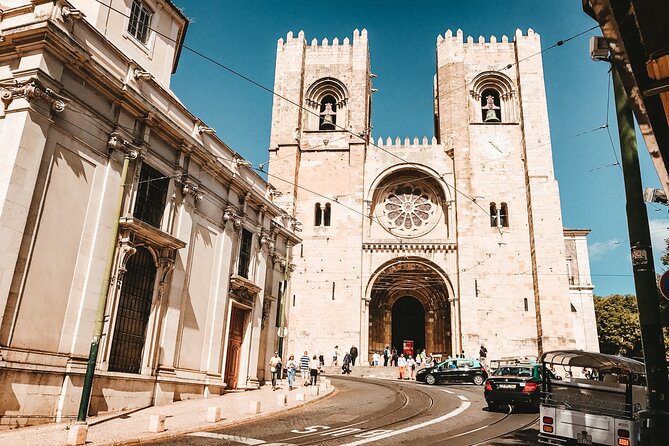
Next comes Lisbon Cathedral (the Sé). This stop isn’t about speed alone. You’re given a chance to explore the cathedral’s chapels and cloister and to notice how the building reflects multiple eras and styles. The key practical benefit here: it anchors you in the “old Lisbon” world before you start bouncing toward viewpoints and neighborhoods where the city looks more dramatic.
Then you have a Lisbon Museum stop tied to the Roman Theater. Lisbon’s ancient layers are easy to miss when you’re only focusing on the surface. Here, the tour gives you a way to ground what you’re seeing later—especially when you look at Lisbon’s layout from higher viewpoints. You get a reminder that this city has been shaped by different civilizations, not just the last few centuries.
Quick reality check on timing
Early stops are brief—some are around 5 to 15 minutes. That’s perfect for orientation. If you want a deep dive into any single building, this tour is best used as a sampler that helps you choose what to return to later.
Miradouros and tiles: Portas do Sol, São Vicente de Fora, and the fado heart of Mouraria
Lisbon’s best “wow” moments often happen at viewpoints. That’s why Portas do Sol is such a strong mid-tour stop. It’s famous for more than scenery. You’re also looking at the decorative azulejo tiles that make Lisbon look instantly Lisbon. Even if you only pause for 15 minutes, this is the kind of stop that makes the rest of the tour click—suddenly you understand where you are in the city.
Not far from the viewpoint energy, the route includes Igreja de São Vicente de Fora. This is one of those “don’t rush it” churches even when you’re on a schedule. It’s listed as a short stop, but the point is clear: it’s important and the artworks inside are unique. If you like churches, you’ll feel like you got a proper taste without losing the day.
Then comes Moorish Quarter time, specifically Mouraria. This area is tied to fado, and the tour context matters: it’s described as the heart of fado, where Severa—named as the first known fado singer—lived and performed. You’re not just moving through backstreets. You’re arriving in a neighborhood where the cultural story is part of the geography.
You’ll also pass by Praca Martim Moniz, which honors a nobleman tied to the 1147 conquest connected to D. Afonso Henriques. Again, it’s a short stop, but it helps turn streets into timeline.
Drawback to consider here
Neighborhood feel beats museum time on this route. If you’re the type who wants long, quiet reading in a museum, you may wish some viewpoint stops were a bit longer. But if your goal is seeing many places and getting a feel for Lisbon’s shape, these miradouro-heavy segments deliver.




From Feira da Ladra to Rossio: markets, squares, and a classic Lisbon pace
One of the fun surprises in the day is the stop at Feira da Ladra. It’s described as Lisbon’s most emblematic treasures market, where you can find original, kitsch, or vintage stuff—utilities, clothes, books, collectables, antiques, and items that are new or used. Practical tip: the market runs every Tuesday and Saturday. So if your tour day isn’t one of those, you’ll still pass through the area, but you won’t get the full market scene.
After that, the tour moves through iconic Lisbon squares like Praca Da Figueira and Rossio (Praça de D. Pedro IV). These are the kind of places where Lisbon feels social even when you’re not “going out.” You’ll get the orientation benefit quickly: Baixa Pombalina’s core feels clearer when you can stand in the middle of it.
Panteao Nacional (Santa Engrácia) shows up next with an important note: the admission isn’t included. Even so, the stop is worth considering because the building is described as grand Baroque and houses tombs of Portugal’s most distinguished figures. If you care about monuments that feel national, it’s one to budget for.
Then there’s a classic lift moment: Elevador de Santa Justa. It’s one of Lisbon’s most iconic elevadores, with a unique structure and a view from the top. Admission isn’t included, so you’ll be deciding on the spot if it’s worth the extra cost for your group. If you do go, this is a chance to get a vertical “map view” over Baixa and the surrounding streets.
The big square: Praca do Comercio (Terreiro do Paco)
Don’t skip Praca do Comércio. This is the area locals still call Terreiro do Paço, tied to the Paço da Ribeira area until the 1755 earthquake. The tour frames it as one of Europe’s largest squares, and you can feel why: it’s built for open space, river light, and long pauses. The stop is longer than many others—about 15 minutes—so you can actually use the time to take it in rather than just snap a photo and move on.
Chiado, Bairro Alto, and Igreja de São Roque: Lisbon’s mix of art and street life
As the route heads toward Chiado, you’ll get a sense of Lisbon’s hill geometry. Chiado is next door to Bairro Alto, and the area’s streets are shaped by a slope—meaning more up-and-down walking energy. Since you’re on tuk tuk, you’ll feel the elevation shift without getting stuck climbing every block.
Bairro Alto is described as one of the city’s nightlife hotspots, but it’s not only about nights out. It’s also one of Lisbon’s oldest and most traditional neighborhoods, and the tour gives it a daylight look so you can see the street character even if you’re not planning to go out.
Igreja de São Roque comes in as a more detailed church stop with a lot of context packed in. It’s described as one of the earliest Jesuit churches in the Portuguese world, serving as the Society’s home church in Portugal for over 200 years. After the Jesuits were expelled, the building shifted again after the 1755 earthquake when it became part of the Lisbon Holy House of Mercy (the Holy House of Mercy still connects to the building today). Even if you only skim the essentials inside, it’s the kind of church where the story makes the architecture feel more alive.
Garden viewpoints and São Bento’s parliament: where the tour slows just enough
Two miradouro stops are part of the “save your breath” plan, and they’re both worth it. Miradouro da Senhora do Monte is framed as one of the best views of Lisbon—15 minutes is short, but the point is to get the big panorama before you move on.
Then Miradouro de São Pedro de Alcântara brings in something different: it’s known for terraced gardens with statues and a fountain. From there, you get views toward São Jorge Castle, the Tagus River, and down into the heart of central Lisbon. The tour also notes that outdoor markets and art vendors can show up at this viewpoint at times of year—so even if your stop is brief, you’re landing in a place where Lisbon’s street culture spills into the view.
Next comes Príncipe Real Garden area and the regular Saturday organic market described in the tour info. The tour timing may not guarantee the market day, but you can still use the spot to see the neighborhood’s “people-watching” side.
Finally, you’ll see São Bento Palace, which houses Portugal’s parliament. It began as a Benedictine monastery, and now it’s a key political site. Even if you don’t go inside, it’s a reminder that Portugal’s civic life is layered over older institutions.
Basilica da Estrela and the walk to Belém: getting a sense of Lisbon’s bigger scale
Basilica da Estrela is listed as one of the most impressive and attractive churches in Lisbon, with time set aside to admire architecture and the surrounding area. This is a good change of pace after lots of viewpoints and squares. Churches like this help reset your brain: instead of scanning for views, you can focus on details like shape, façade presence, and overall street atmosphere.
Then the tour transitions toward Belém, which is Lisbon’s waterfront district and a different vibe entirely. You’ll end up at the riverside side of the city where the story shifts from medieval Lisbon streets to Portugal’s seafaring age.
There’s also a stop connected to Belém Palace, described as the current official residence of the president of Portugal. The tour info doesn’t promise a long on-site experience, but it does help you understand you’re in a major official zone, not just a tourist promenade.
Belém’s must-sees: Pastéis de Belém, Jerónimos, Belém Tower, and the Monument to the Discoveries

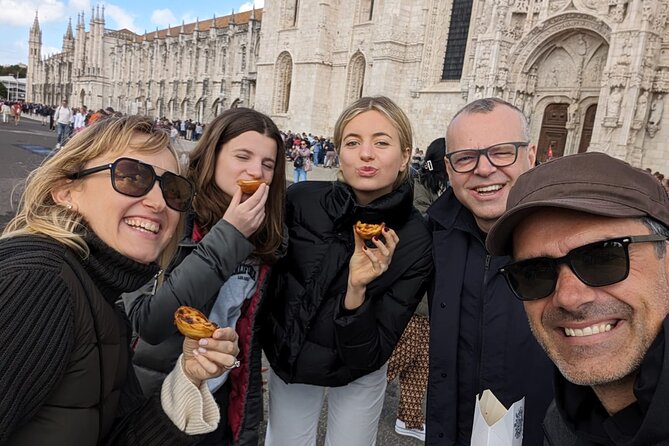
This is the segment most people remember. You get the sweet break first: Pastéis de Belém. The tour highlights the famous pastel de Belém (also known as pastel de nata) as one of Portugal’s calling cards. Even if you’re not a dessert person, this stop is smart because it turns the long sightseeing into a small reward—then you move straight into the biggest cultural monuments.
Next up is Mosteiro dos Jerónimos (Jerónimos Monastery). The tour info frames it around Henry and Manuel I’s devotion, and it notes the monastery’s association with the Order of St. Jerome—hence the Jerónimos name. It’s described as a cultural reference point that attracted artists and chroniclers for five centuries and that it served as a burial place for kings and later poets. The practical value of this stop: it gives you a strong “Portugal identity” anchor right at the water.
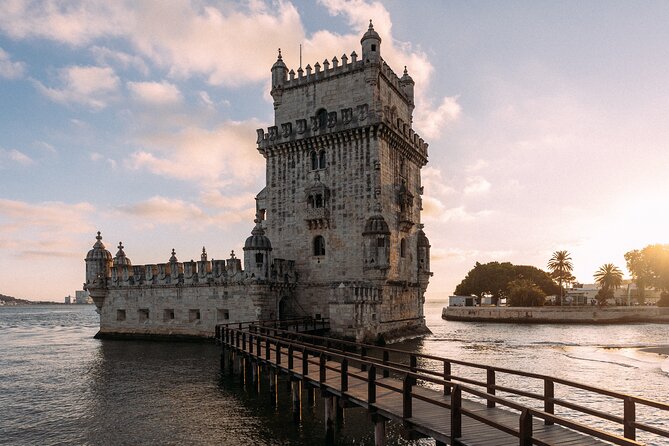
Belém Tower is next. It’s described as part of Tagus defense between 1514 and 1520, with features tied to military architecture—two distinct volumes and artillery levels for long-distance cannon fire and ricochet shots. Admission isn’t included, so you’ll have to decide if climbing inside is worth extra cost for your group. Either way, the tower stop is a key visual marker of Portugal’s maritime power.
The Monument to the Discoveries rounds out Belém. It’s explained as a monument rebuilt in 1960 for the fifth centennial linked to Henry the Navigator, with mosaics and coats of arms around the square area. Admission isn’t included, but the stop still matters because it connects the dots between what you just saw at Jerónimos and the seafaring narrative embodied by the tower and monument.
A note on building a good Belém plan
Because several Belém stops have admission tickets listed as not included (Belém Tower and Monument to the Discoveries), I’d go in expecting optional paid entries. Use the tuk tuk time to decide quickly with your group—don’t get stuck debating while you’re standing in line.
Price, value, and who this private tuk tuk tour fits best
At $370.43 per group (up to 6) for about 4 hours, the value depends on your group size and how you like to travel.
- If you’re 4 to 6 people: it can feel reasonable because you’re splitting the private cost, and you’re paying for time-saving transport plus a guide route that hits both Lisbon and Belém.
- If you’re 1 to 2 people: it’s pricier per person, but you’re buying convenience and direction. You’re also getting a private setting, which can reduce stress compared to shared group logistics.
- If your priority is seeing a lot of “big names” plus a few neighborhood moments: this fits well. The route includes churches, squares, miradouros, Mouraria, and Belém’s signature monuments.
Who it suits: first-timers who want orientation fast, couples who like personalized guidance, and small families who don’t want to burn time on hill climbs. If you’re the type who wants long museum hours at one site, this isn’t that style. It’s a sampler that helps you decide what to return to later.
Should you book this Lisbon and Belém tuk tuk tour?
I’d book it if you want a practical half-day plan that covers both Lisbon’s viewpoints and Belém’s top monuments without making you choose between “old city” and “waterfront.” The private format, the miradouro-heavy rhythm, and the guided touches (with guides like Carlos Ventura and João highlighted by their on-time friendliness) make it feel like a guided day, not just transport.
I’d think twice if your trip is built around deep, slow museum time at a single site, or if you strongly dislike optional paid entrances. This tour is quick by design, and a couple of the biggest-ticket spots aren’t included.
If you’re on the fence, here’s the simplest decision rule: if you want a lot of Lisbon in one afternoon, this is a strong match.
FAQ
How long is the Half Day Private Tuk Tuk Tour?
It runs for about 4 hours.
How many people are in the private group?
It’s a private tour/activity for your group only, with pricing set for groups up to 6.
What does the tour include in terms of transport?
You’ll ride in a tuk tuk, and pickup is offered.
Where does the tour take you?
You’ll see key areas in Lisbon and then go to Belém for major monuments and sights.
Are admission tickets included?
Many stops list admission as free, but some are marked as not included (for example Panteão Nacional, Elevador de Santa Justa, Belém Tower, and the Monument to the Discoveries).
Is there a mobile ticket?
Yes, the tour provides a mobile ticket.
When does the tour operate?
It lists opening hours Monday through Sunday from 7:30 AM to 8:00 PM.
Is this suitable for most travelers?
The info says most travelers can participate.
What day is Feira da Ladra market held?
Feira da Ladra takes place every Tuesday and Saturday.
What is the cancellation policy?
Free cancellation is available. You can cancel up to 24 hours in advance for a full refund. Canceling less than 24 hours before the start time won’t be refunded.