REVIEW · FOOD
Food & Wine Lisbon Tour with Local Guide in Private Eco Tuk Tuk
Book on Viator →Operated by Eco Tuk Tuk - Portugal · Bookable on Viator
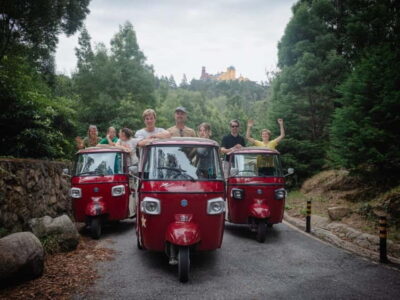
Lisbon tastes better when you roll through it. This private electric eco tuk tuk tour turns food, wine, and key landmarks into one easy loop across several neighborhoods. You’ll get a local guide’s take on what you’re seeing, plus snacks along the way so the day doesn’t turn into nonstop sightseeing.
I especially like the no-queue start and the fact that the vehicle is yours alone. I also like that the tasting plan can be adapted for vegetarians, so the tour stays fun even if your food choices are more limited.
One possible drawback: the experience is more about quick tastings than a sit-down meal. If you’re expecting a heavy food deep-dive (or a very specific set of classic items), the format may feel a bit light.
In This Review
- Key things to know before you ride
- Why an electric eco tuk-tuk suits Lisbon’s food stops so well
- Meeting at Lisbon Cruise Port: easy start, one clear location
- What tastings feel like on this Lisbon food and wine loop
- Cais do Sodré: riverside energy, markets, and fado nearby
- Chiado: elegant cafés, the oldest operating bookstore, and art-minded streets
- Bairro Alto: cobblestones, fado venues, and the best kind of evening energy
- Baixa after 1755: the city’s grid, the big squares, and the rebuilt Lisbon
- Sé de Lisboa and Portas do Sol: cathedral gravity and classic Alfama views
- Senhora do Monte and Graça: viewpoint time with a chapel story
- São Vicente de Fora, the National Pantheon, and Chafariz de El-Rei: Lisbon’s sacred and practical water
- Praça do Comércio: the grand riverside wrap-up
- Price and value: why $107 feels fair for a private electric tuk-tuk
- Who this private Lisbon food and wine tour is best for
- Should you book this Lisbon food and wine eco-tuk-tuk tour?
- FAQ
- FAQ
- How long is the Lisbon Food & Wine tour?
- Is this tour private?
- What’s the price per person?
- Where do I meet for the tour?
- Is pickup from a hotel included?
- What’s included for food and wine?
- Can the tour accommodate vegetarians?
- Are there photo stops built into the route?
- What happens if I’m late?
- Does the tour run in rain or heat?
Key things to know before you ride
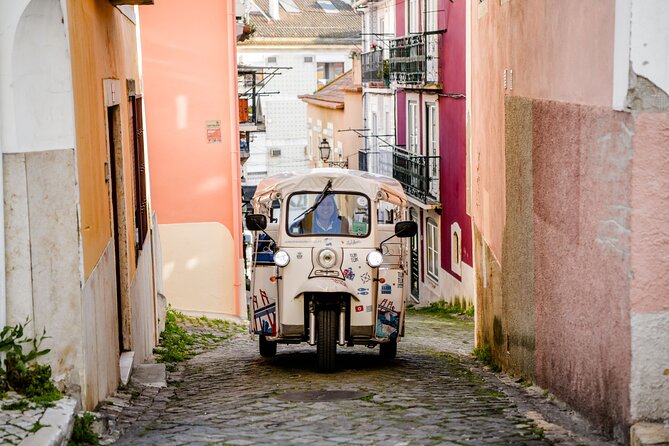
- Private tuk-tuk, just your group: It’s booked as your own vehicle time, not a shared shuffle.
- 100% electric and sustainable: You’re moving around Lisbon’s streets in a modern, quieter vehicle.
- Preset photo stops: You’ll hit planned viewpoints and landmarks for pictures, not freeform wandering.
- Rain-and-wind protection included: Blankets and protective covers help you stay comfortable outdoors.
- Vegetarian adaptation is built in: You can request a vegetarian-friendly approach for the tastings.
- Guide energy matters: If you can request Arthur, do it—people describe him as making Lisbon feel personal.
Why an electric eco tuk-tuk suits Lisbon’s food stops so well
Lisbon has hills, staircases, and tight lanes. This tour solves a very Lisbon problem: you still see a lot, but you don’t spend the day doing the steepest walking parts twice.
The 100% electric tuk-tuk also changes the vibe. It’s slower and more conversational than a bus, so you can actually hear the guide while you’re moving. And because it’s private, you can ask questions as you go instead of squeezing around other people.
There’s also smart comfort baked in. The tour provides blankets and protective covers for wind or rain, which matters because viewpoints and courtyards can be breezy even when the sun is out.
You can also read our reviews of more food & drink experiences in Lisbon



Meeting at Lisbon Cruise Port: easy start, one clear location
If you’re starting from the cruise port, the meeting point is very specific: Lisbon Cruise Port – Jardim do Tabaco Quay (Doca Jardim do Tabaco Terminal de Cruzeiros de Lisboa). The instruction is simple—stay next to the main building exit door and don’t leave the terminal.
This matters because the tour is designed to be efficient. You’re not waiting around to regroup across multiple pickup spots. It’s also why the tour notes that it begins without queues or waiting times—you should feel your day start moving quickly.
One more detail to keep in mind: pickup and drop-off at a hotel are not included. This tour is built around meeting at the stated point and returning there.
What tastings feel like on this Lisbon food and wine loop
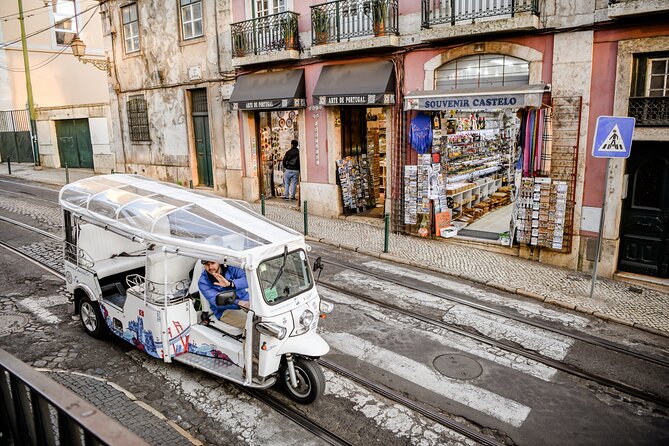
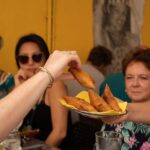
You’re not just sightseeing—you’re sampling as you sightsee. The tour includes snacks and different tastings of wine and cheeses, and the guide handles the pacing so you don’t miss the viewpoints.
If you’re picturing a full multi-course meal, recalibrate your expectations. This is more like a series of small, guided tastings that keep you moving through neighborhoods. One excellent example from an actual experience: one group described tastings that included multiple olive oils, bread, several cheeses, and wine/port samples. Another person mentioned a wish for more of certain classic bites, which is a good reminder that tasting menus can vary.
The good news? The tour can be adapted for vegetarians, so you’re not stuck watching others eat. And because it’s private, the guide can usually tailor the flow to your group’s needs within the preset plan.
Cais do Sodré: riverside energy, markets, and fado nearby
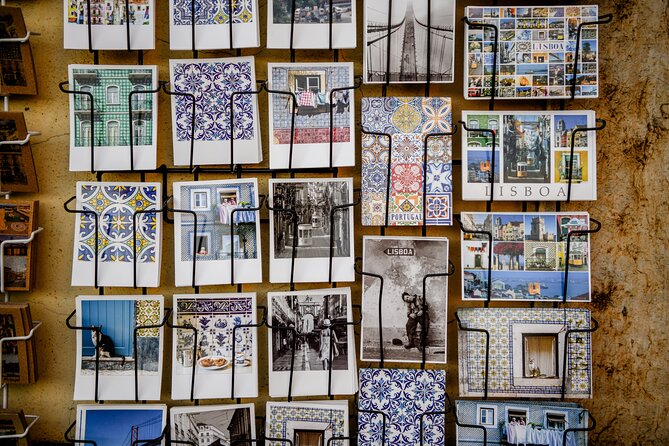
Your route starts in Cais do Sodré, a riverside district known for nightlife and restaurants. Even if you’re there in the daytime, you feel the neighborhood’s momentum—this is a place where locals and visitors mix and food options feel close at hand.
From there, you’ll spend time around Ribeira Market, a 19th-century-style food hub with a food court full of stalls. This is a great opening stop because it gives you fast context: Lisbon isn’t one flavor, it’s layers—simple bites, local specialties, and familiar international picks all in the same area.
The route also points toward Pink Street, where bars and restaurants cluster around the fado scene. You don’t have to wait for evening to understand why fado lives here; you’ll see the street energy and learn how the neighborhood shaped local culture.
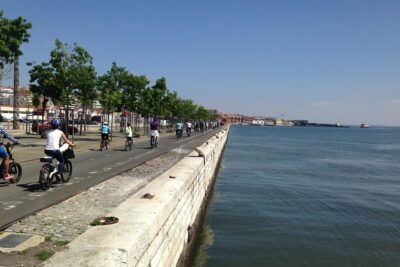
If weather is warm, the Ribeira das Naus promenade on the Tagus River becomes part of the mood. It’s one of those Lisbon stretches where a few minutes of fresh air makes the next climbs feel easier.
Chiado: elegant cafés, the oldest operating bookstore, and art-minded streets
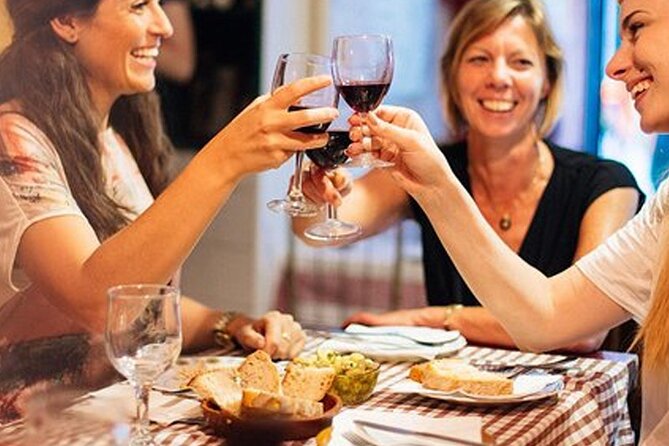
Next comes Chiado, a central neighborhood known for architecture, culture, cafés, and shops. It sits between Baixa and Bairro Alto, so it’s a smart transition zone—less chaotic than the night streets, but still full of character.
A standout landmark here is Café A Brasileira, plus the iconic Livraria Bertrand, widely noted as the world’s oldest operating bookstore. You’ll also pass by São Carlos Theater, which helps the area feel more like a cultural district than just a shopping corridor.
Why I like Chiado on this kind of tour: it gives you a break from the food-market intensity while still keeping things walkable and photogenic. And because you’re in a tuk-tuk, you can keep moving without turning this into a long day of streets-with-stairs.
You can also read our reviews of more tours and experiences in Lisbon




Bairro Alto: cobblestones, fado venues, and the best kind of evening energy
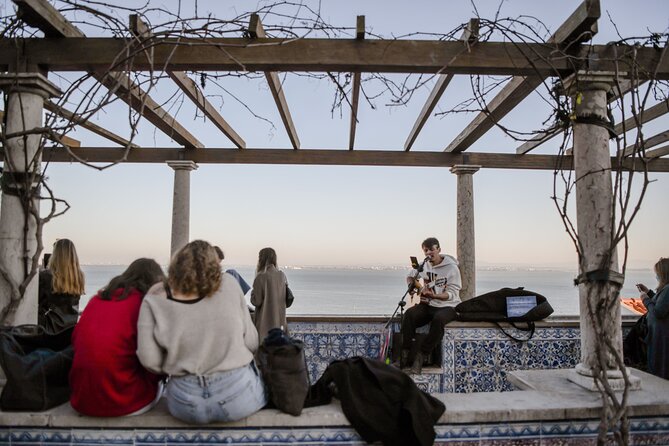
Then you head to Bairro Alto, one of Lisbon’s most famous hills for nightlife and bohemian vibes. The streets here feel like a maze—narrow, cobblestone, and packed with bars, restaurants, and late-night cafés.
A key practical win: Bairro Alto by foot can be slow-going. By tuk-tuk, you see the layout and the energy without losing time on the steepest bits. And since the guide is present while you’re in transit, you’ll understand why the neighborhood is so tied to fado—not just where to find it, but how it fits the street life.
In daytime, Bairro Alto shifts. It can feel more relaxed, with antique shops and art spaces. That contrast is part of the charm, and the tour flow is designed to let you experience both sides.
Baixa after 1755: the city’s grid, the big squares, and the rebuilt Lisbon
Baixa is the commercial and architectural heart of Lisbon. It’s the area with neoclassical buildings, wider streets than the older quarters, and a grid-like layout.
You’ll learn why it looks like it does: Baixa was extensively rebuilt after the 1755 earthquake, following a plan associated with the Marquis of Pombal. This matters because it turns architecture into story. You’re not just looking at buildings—you’re understanding why the streets feel ordered.
This is where Praça do Comércio and Rossio Square sit in the broader picture of downtown. You’ll also see Arco da Rua Augusta, the monumental arch that leads toward the river, and the Santa Justa Lift, the famous wrought-iron elevator.
Baixa is a good anchor on a food and wine tour because it brings structure. After winding older streets, this is the point where you can mentally reset and connect Lisbon’s neighborhoods into one plan.
Sé de Lisboa and Portas do Sol: cathedral gravity and classic Alfama views
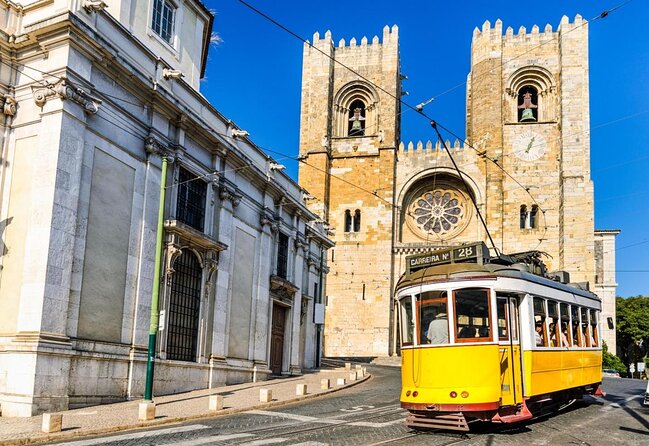
From Baixa, the route moves into landmark-heavy territory. You’ll reach Sé de Lisboa (the Basilica of Saint Mary Major / Lisbon Cathedral), whose construction began in 1148, shortly after Afonso Henriques conquered Lisbon. The tour notes this as the oldest church in Lisbon, which gives you a real sense of how long the city has kept records and rituals going.
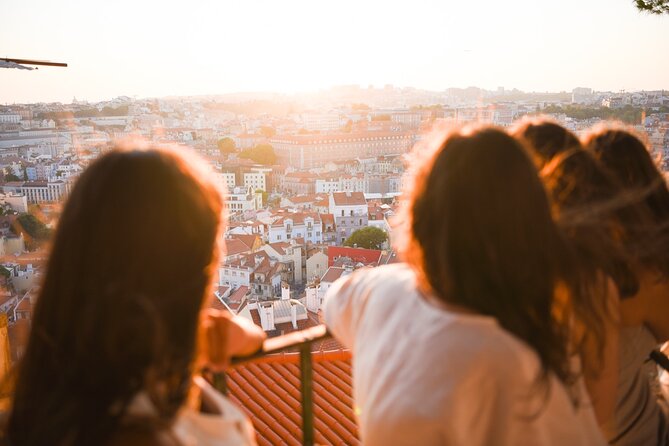
Then you head toward Largo das Portas do Sol in Alfama. This square is famous for panoramic views across the Tagus River, Baixa Pombalina, and the Castelo de São Jorge. The name itself connects to the city’s older walls and a gate facing east—sunlight at the rising point of the day.
If you like photo moments that don’t feel staged, Portas do Sol is the kind of spot that works. You get a viewpoint, a feeling for the neighborhood, and a natural transition into the hillier parts of the route.
Senhora do Monte and Graça: viewpoint time with a chapel story
Your tour then brings you to Miradouro Nossa Senhora do Monte in Graça. This is one of Lisbon’s most iconic viewpoints, and the tour includes the Chapel of Nossa Senhora do Monte area. The guide will connect it to the area’s long timeline, including references to Lisbon’s reconquest from the Moors and renovations following the 1755 earthquake.
The time here is short—about 10 minutes—and that’s a good thing. In Lisbon, viewpoints can turn into a long wait for the right light, but on a structured food tour you get the view and keep going.
Graça itself is often considered more authentic and less touristy than some central pockets. You’ll get the feel of narrow streets, local community life, and plenty of cafés and miradouros. The hill setting makes it easy to understand why Lisbon’s best views come from climbing just enough.
São Vicente de Fora, the National Pantheon, and Chafariz de El-Rei: Lisbon’s sacred and practical water
Next up, you’ll pass by Monastery of São Vicente de Fora at the intersection of Graça and Alfama. The name “de fora” connects to being outside city walls and not under the bishop’s jurisdiction at the time the parish was organized.
Then the tour includes the National Pantheon of Portugal (Panteão Nacional), located in the Church of Santa Engrácia. Here’s a detail that gives you something to watch for: the current building stands on a site where a church was erected in 1568, and it became the pantheon in 1916.
After that, you’ll see Chafariz de El-Rei, described as the first public ornamental fountain in Lisbon, dating back to the 13th century. The fountain ties into the city’s water supply story—built using excellent groundwater in Alfama—and it even links to supply routes during the Age of Discovery. The channeling of water to ship supply is referenced in the tour’s information, which makes this stop more than a pretty façade.
Even if fountains aren’t your thing, these stops help you understand Lisbon as a working city, not just a scenic one.
Praça do Comércio: the grand riverside wrap-up
Finally, you land at Praça do Comércio, a major riverside square next to the Tagus. It’s the former site of the Portuguese kings’ palace for about two centuries, now partly occupied by government departments.
This square is enormous—about 36,000 m²—and it’s bordered by 79 arches. If you want one last big “Lisbon looks like Lisbon” moment before heading back, this is it. It also works as a psychological reset: after hills and narrow streets, the open space lets your eyes rest.
And because the tour ends back at the meeting point, you get a clean finish rather than trying to navigate the city on your own while hungry.
Price and value: why $107 feels fair for a private electric tuk-tuk
At $107.03 per person for about 3 hours, you’re paying for more than sightseeing. You’re paying for a private vehicle, an expert local driver/guide, and guided tastings with wine and cheese components.
Here’s where the value usually shows up:
- You’re not hiring a car and separately arranging tastings. The guide handles the flow.
- You’re traveling in an electric tuk-tuk, with blankets provided for weather. Comfort is part of the deal.
- You get preset photo stops and landmark access, which saves time compared to self-guided guesswork.
It’s not a bargain in the sense of a cheap group bus. But it is good value for a private, short, high-impact orientation—especially if you’re on limited time or you want to taste rather than only look.
One practical tip: this tour is ideal if you want an efficient “Lisbon sampler.” If you want a long, sit-down meal and heavy food storytelling, you may still want to add a separate dinner plan afterward.
Who this private Lisbon food and wine tour is best for
This tour is a strong fit if you want:
- A private guide and a smoother city loop
- Classic neighborhoods in one morning/afternoon
- Small tastings of wine, cheeses, and snack-style bites
- Less walking on hills, more views for your time
It also tends to work well for seniors since the vehicles are described as suitable and drivers help with getting on. The tour notes it’s in English, and it says most travelers can participate.
If you’re traveling as a couple, this private format is especially satisfying: you can keep the pace comfortable, and the guide can tailor questions to what you care about—food sourcing, neighborhood changes, or just the stories behind each landmark.
If you can request a guide, one person specifically suggested asking for Arthur. Another praised Thiago as knowledgeable and enthusiastic. That’s a pretty clear hint that guide personality can shape the whole experience.
Should you book this Lisbon food and wine eco-tuk-tuk tour?
Yes—if you want a smart, private way to get oriented and taste Lisbon without turning your day into a steep walking test. With a 5 out of 5 rating and strong recommendation rates, it looks like a safe bet for first-time visitors who want food and landmarks together.
Book it if:
- You like guided tastings more than a full sit-down meal
- You want electric tuk-tuk convenience between neighborhoods
- You’re comfortable with a route that has preset photo stops and can shift a bit due to street closures or demonstrations
Skip it (or plan for add-ons) if:
- You’re expecting a very specific set of Portuguese dishes every time
- You want a long, sit-down food experience as the main event
FAQ
FAQ
How long is the Lisbon Food & Wine tour?
It’s about 3 hours (approx.). The exact timing depends on the route and any street closures or demonstrations.
Is this tour private?
Yes. It’s a private tour, meaning only your group participates.
What’s the price per person?
The price is $107.03 per person.
Where do I meet for the tour?
You meet at Lisbon Cruise Port – Jardim do Tabaco Quay, at Av. Infante Dom Henrique, 1100-651 Lisboa. The activity ends back at the meeting point.
Is pickup from a hotel included?
No. Pick-up and drop-off at the hotel is not included. Pickup offered is tied to the cruise port meeting setup.
What’s included for food and wine?
The tour includes snacks with different tastings such as wine and cheeses (and other tasting-style bites). The menu can be adapted to vegetarians.
Can the tour accommodate vegetarians?
Yes. The tasting plan can be adapted for vegetarians.
Are there photo stops built into the route?
Yes. There are pre-selected stops for taking photographs, and the photo stops are preset.
What happens if I’m late?
If you’re delayed, the activity can be reduced according to the time lost. If you’re more than 15 minutes late, the activity is cancelled and the amount paid is not refunded.
Does the tour run in rain or heat?
Yes. Tours are conducted in rain or heat, and cancellation is only under extreme conditions. You’re also provided blankets and protective covers against rain and wind.