REVIEW · TUK TUK TOURS
Expert Lisbon Tour with Local Guide in Private Eco Tuk Tuk
Book on Viator →Operated by Eco Tuk Tuk - Portugal · Bookable on Viator
Lisbon feels steeper from a tuk-tuk. This electric tuk-tuk tour threads together the Tagus waterfront, Chiado, and the hilltop lookouts around Alfama and Graça, with a guide who keeps photo stops efficient instead of wandering. I also like the private setup: it’s just your group in the vehicle, so you can ask questions and move at a pace that makes sense for you.
One thing to consider is seat comfort on a short vehicle. The ride can feel tight and bumpy over Lisbon’s older streets, so if you’re sensitive to straps or narrow seating, try to sit comfortably early and let your guide know right away.
In This Review
- Key things I’d zero in on before you book
- Why Lisbon works so well from an electric tuk-tuk
- Meeting Tv. do Carvalho and how the tour actually flows
- Cais do Sodré, Ribeira Market, Pink Street, and the Tagus edge
- Chiado to Bairro Alto: cafés, the oldest bookstore, and fado streets
- Baixa’s earthquake rebuild and the big river squares
- Príncipe Real: a leafy break between top sights
- Alfama’s Sé de Lisboa and Portas do Sol viewpoints
- Graça and Miradouro da Senhora do Monte: the higher the better
- Water, monuments, and one last Tagus-facing square
- Guides who turn streets into stories (and help you slow down)
- Value: getting the most Lisbon for your time and money
- Should you book the Eco Tuk Tuk private tour?
- FAQ
- How long is the Lisbon private eco tuk-tuk tour?
- Is this a private tour or a shared group?
- What vehicle do you use?
- Where do we meet, and where does the tour end?
- Is pickup included from the hotel or the cruise port?
- Are there age or weight limits?
- What’s the cancellation policy?
Key things I’d zero in on before you book
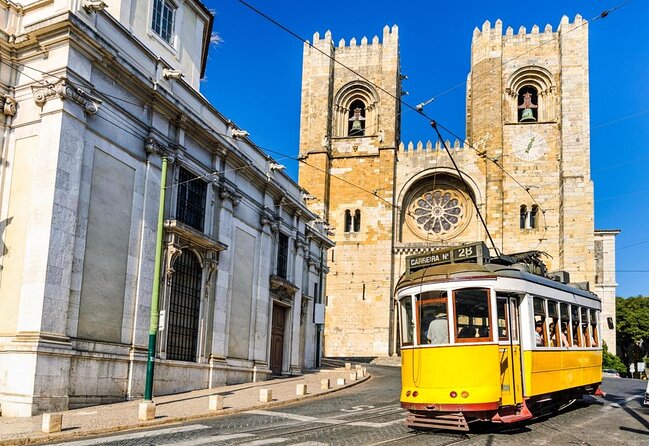
- 100% electric eco tuk-tuk: quieter, greener, and made for Lisbon’s narrow streets and steep corners.
- Private for your group only: no big coach crowding, and the guide can tailor the pace.
- Photo stops are built in: you’ll hit classic overlooks and landmarks designed for pictures.
- Rain and wind protection included: blankets and protective covers help you stay outside longer.
- Route varies by duration, but the plan is fixed: you’ll get a set sequence, adjusted only by closures or demonstrations.
Why Lisbon works so well from an electric tuk-tuk
Lisbon is a city of angles. Hills, terraces, and those tight turns mean a lot of the best viewpoints are hard to reach quickly on foot, and sometimes awkward on public transport. That’s where a private electric tuk-tuk shines: it’s small enough to slide into streets bigger vehicles can’t use, yet comfortable enough to keep you moving without constant steep climbing.
I like that this isn’t just a car ride with vague sightseeing. The tour is designed around named districts and specific viewpoints, so you get a true sense of how the city layers up from the river to the hills. You’re also not stuck with a silent ride; the guide’s job is to connect what you’re seeing—markets, churches, squares, and outlooks—to why Lisbon is shaped the way it is.
And it’s not just about comfort. Lisbon’s charm is in the details: the market by the water, the old bookstore, the monumental squares, then suddenly you’re looking down at rooftops and the Tagus. Doing that in a single morning or afternoon is a practical way to get oriented fast.
You can also read our reviews of more guided tours in Lisbon



Meeting Tv. do Carvalho and how the tour actually flows
Your tour starts and ends at the same place: Tv. do Carvalho 25, 1200-058 Lisboa. It’s convenient in the sense that you’re not juggling transfers, and the activity ends back at the meeting point, so your planning stays simple.
The big promise here is a queue-free start and a vehicle that’s reserved for your group. The tuk-tuk is booked based on how many vehicles your party needs, with a legal maximum of 4 passengers per tuk-tuk. If you’re traveling as a couple or small family, you’ll still feel like you’re in control of your time—no cattle-line boarding.
Two practical notes matter. First, the route is preset based on your chosen duration, and photo stops can’t be changed. Second, your itinerary may shift due to street closures or demonstrations. That doesn’t usually ruin the day—it just means the guide will follow the alternative passable route while staying within the plan.
Weather-wise, you’re not left to freeze or sweat it out. The tour runs in rain or heat, and you get blankets and protective covers to keep you comfortable while you pause for pictures. That’s especially useful when your route includes miradouros (lookouts) that can be breezy.
Cais do Sodré, Ribeira Market, Pink Street, and the Tagus edge
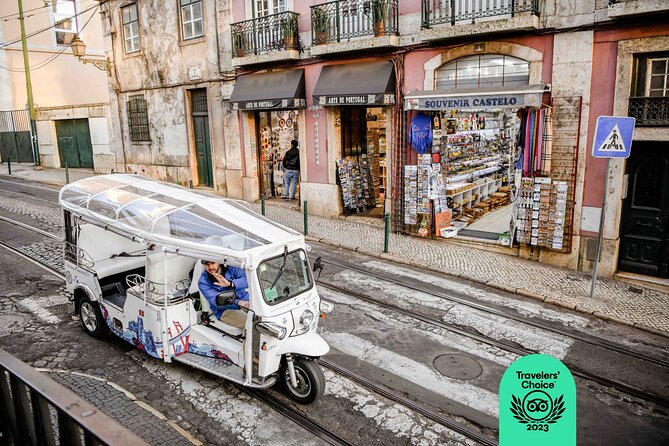
This is where Lisbon shows its two sides: daytime food energy and evening music culture. At Cais do Sodré, you’re on the riverside district that’s known for nightlife and restaurants. It’s also the gateway into the “lived-in Lisbon” feeling, not just postcard viewpoints.
From there, the tour moves into Ribeira Market, a 19th-century market by the water with a food court that acts like a hub. You’ll get to see how the city eats when it wants easy variety: eclectic stalls with international dishes and local specialties. Even if you don’t plan a full meal, this stop helps you understand Lisbon’s relationship with daily life—markets aren’t just attractions here.
Then there’s Pink Street, famous for bars and for hearing fado nearby. I like including this area because it gives context. Fado isn’t only a stage; it’s part of where people gather, hang out, and spend the night. Seeing the streets firsthand makes it easier to “place” the music later when you hear it again.
Finally, you get the Ribeira das Naus promenade along the Tagus. On a calmer day, this stretch is perfect for a breath of fresh air and a wide view. It’s also a nice reset before you start climbing back toward neighborhoods like Chiado and Alfama.
Chiado to Bairro Alto: cafés, the oldest bookstore, and fado streets
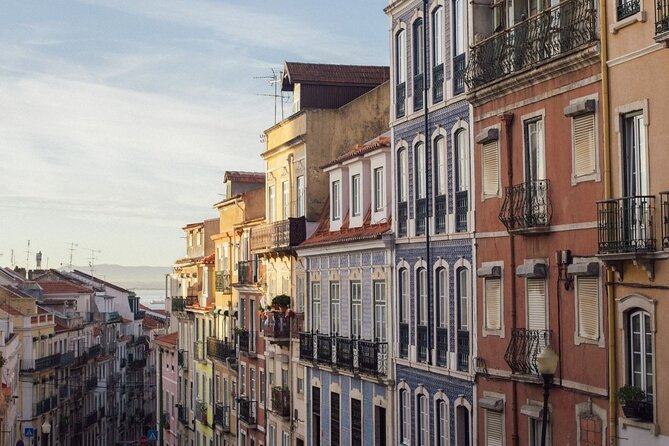
Chiado sits right between two famous worlds: Baixa and Bairro Alto. It’s a center for culture and shopping, with elegant architecture and squares where you can watch city life go by at a slower pace. If you like Lisbon for its café culture, this stop is a key ingredient.
A highlight here is Café A Brasileira, plus Livraria Bertrand, described as the world’s oldest operating bookstore. That stop matters because it’s not only a landmark—it’s a clue to how Lisbon values places that keep working over time. Nearby, you also get access to the theatrical side with São Carlos Theater, another reminder that the city’s arts scene isn’t confined to museums.
Then you head to Bairro Alto, perched on one of Lisbon’s seven hills. This is the neighborhood of narrow cobblestone lanes and nightlife mood. It’s known for bars, restaurants, boutique shops, and a cluster of fado music venues.
The best part of having Bairro Alto in your tour plan is timing flexibility. Even when the neighborhood is busy at night, you can still appreciate the street layout and the look of the buildings. And if you’re in Lisbon for only a short visit, Bairro Alto gives you instant context for why people call this city romantic, loud, and musical all at once.
Baixa’s earthquake rebuild and the big river squares
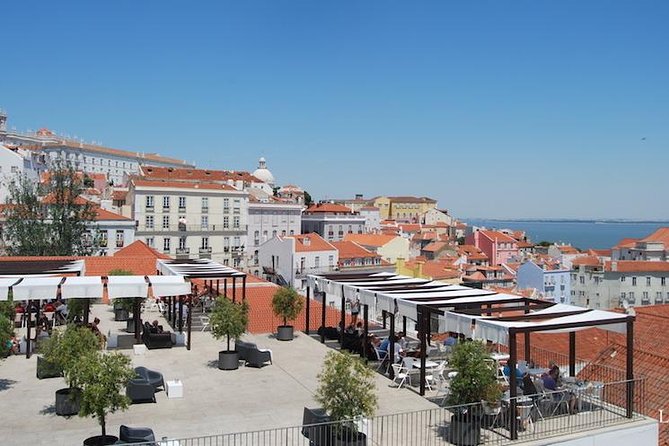
If you want to understand why Lisbon looks so organized in the center, Baixa is the place. It’s the downtown commercial and architectural heart, known for neoclassical buildings, wide boulevards, and elegant squares. The key story here is the rebuilding after the 1755 earthquake, when much of the older city was destroyed and the area was rebuilt into a grid.
I appreciate this kind of stop because it turns “Lisbon is pretty” into “Lisbon is planned.” You can actually feel the difference between districts that grew organically and the rebuilt zones that follow a careful layout.
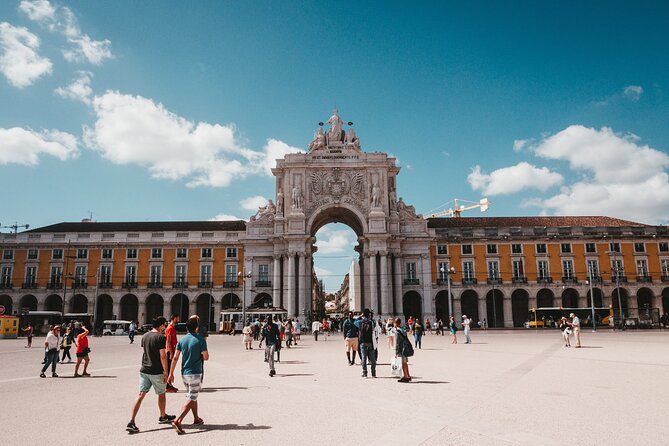
From Baixa, you get access to major highlights. Praça do Comércio is next to the Tagus and was once the site of the kings’ palace for about two centuries. Today it’s partly government departments, but the scale still hits hard: it’s one of Europe’s largest squares, about 36,000 m², bordered by 79 arches.
You’ll also hear about Rossio Square, a lively hub surrounded by cafés and shops, and Arco da Rua Augusta, the monumental arch leading toward the river. Another iconic element here is Santa Justa Lift, the famous wrought-iron elevator that helps explain why Lisbon is so vertical.
If you’re watching your time, Baixa is also smart. You get multiple landmarks in a concentrated area, so even a shorter tour version can feel like you saw the “core map” of Lisbon.
You can also read our reviews of more private tours in Lisbon





Príncipe Real: a leafy break between top sights
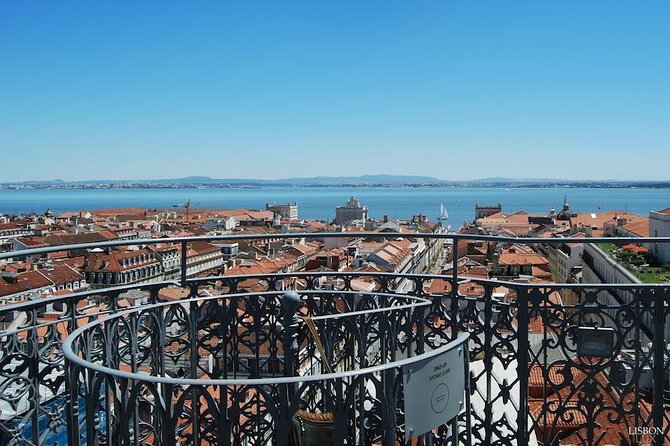
After steeper districts, Príncipe Real is your change of pace. It’s trendy and picturesque, with leafy squares and 19th-century architecture. This area sits just north of Baixa, and it has become popular with locals and expats for its relaxed vibe, boutique shopping, and outdoor café life.
The star is Jardim do Príncipe Real, a lush public garden surrounded by historic buildings. I like this stop because it gives your eyes somewhere to rest. After viewing church facades, arches, and city planning details, a garden feels like a reset button.
You’ll also see a mix of art spaces, galleries, and vintage stores. Even if you don’t shop, the point is understanding the neighborhood’s role in Lisbon: it’s not only for monuments. It’s for living.
Alfama’s Sé de Lisboa and Portas do Sol viewpoints
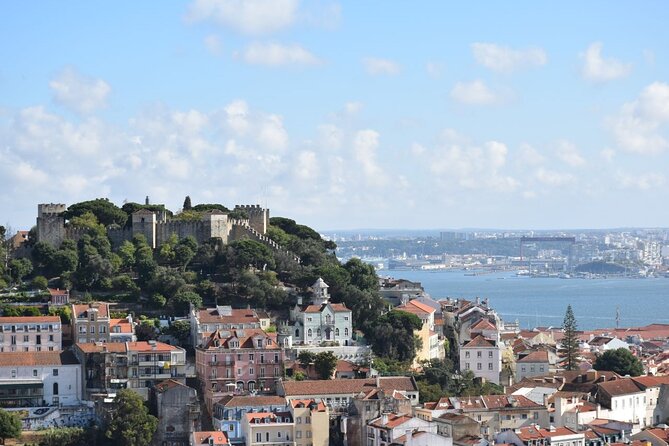
Then you go into the old core: Alfama and the surrounding hills. A major anchor is the Basilica of Saint Mary Major, often referred to as Sé de Lisboa, Lisbon’s metropolitan cathedral. Construction began in 1148, shortly after the conquest led by Afonso Enriques, and the church is considered the oldest in Lisbon.
This stop works because it doesn’t feel like a generic cathedral stop. Alfama is closely linked to fado, and many fado venues sit in and around this neighborhood. When you see Sé de Lisboa as part of the same hilltop world, the cultural connection makes more sense.
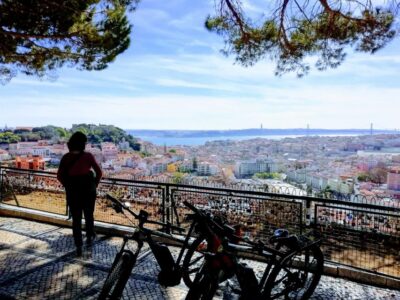
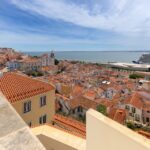
Next is Largo das Portas do Sol, one of the most recognizable scenic viewpoints in Alfama. The panoramic view is the whole point: you can see the Tagus River, the Baixa Pombalina, and the Castelo de São Jorge. This is the moment where your Lisbon map in your head clicks into place.
One consideration: viewpoints are often reached by steep streets or stairs. The tuk-tuk helps you get close and reduces the time you spend climbing, but you should still expect a short walk at stops where the best angles are.
Graça and Miradouro da Senhora do Monte: the higher the better
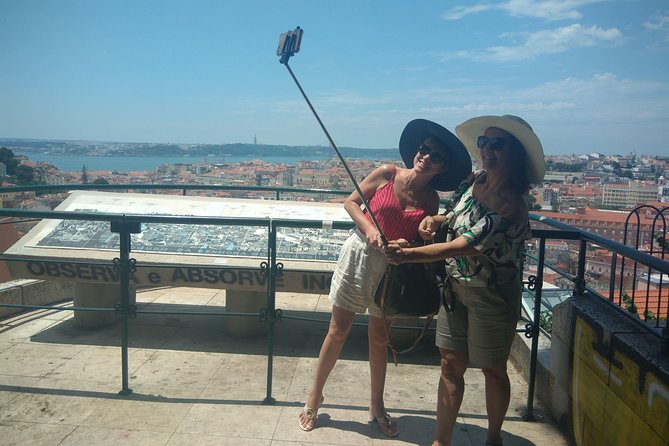
Graça is another hill neighborhood, with narrow cobbled streets and some of the city’s best lookouts. It’s known for landmarks like Graça Church and the National Pantheon, along with cafes and restaurants. People often like Graça because it feels more like everyday Lisbon—less about ticketing and more about streets you can hang out in.
Your standout viewpoint here is Miradouro da Senhora do Monte. This lookout is often the payoff for choosing a tuk-tuk tour over a bus: it’s a wide panoramic perspective over Lisbon and the Tagus River. The tour time at the viewpoint is short, but it’s long enough to get a few strong photos and understand how the city’s topography affects what you see.
In the same area cluster, you also run through stops connected to faith and old institutions. The Monastery of São Vicente de Fora sits on high ground at the intersection of Graça and Alfama, and it’s called “de fora” because it was outside the city walls at the time. Then there’s the National Pantheon of Portugal in the Church of Santa Engrácia.
One neat detail you get with these stops is how the city’s story isn’t only about kings and buildings—it’s also about how communities organized space over time.
Water, monuments, and one last Tagus-facing square
You also stop by Chafariz de El-Rei, identified as the first public ornamental fountain in Lisbon. It was built in the 13th century during the reigns of Afonso III and Denis I, using excellent groundwater in Alfama. This is the kind of stop that gives Lisbon texture. It’s small, but it helps you see how the city functioned before modern plumbing and how public spaces mattered.
Then you finish with one of Lisbon’s most iconic big-stage spaces: Praça do Comércio by the Tagus. Even though the square’s story includes palaces and government departments, what you feel first is the open space and the river air. It’s a good ending because it’s “wide and calm” compared with the tight streets you’ve been riding through.
If you’re traveling with older family members, this is also where the tuk-tuk helps. The route includes lots of short, guided pauses so you’re not stuck doing one long walking day on uneven terrain. The vehicles are described as suitable for seniors, and drivers help you get on.
Guides who turn streets into stories (and help you slow down)
What makes a private Lisbon tour work is the guide’s pacing. In this tour style, guides like Victor, Diogo, and Tiago show up in feedback for being energetic, friendly, and good at explaining how neighborhoods formed. Yuri is noted for tailoring the tour to the group’s vibe and for being patient with photo stops.
Other names that come up for service and comfort include Oliver for being attentive to an elderly mom with mobility difficulties, and Pedro (along with Diego and Lucas) for keeping the ride fun while sharing lots of history-linked context. If you care about photo timing, Sara and Mauro are mentioned for giving a solid overview with stops for pictures.
Here’s the practical takeaway for you: use the first minutes to tell your guide what you want most. If you want views, say so early. If you’d rather learn the “why” behind districts, ask for it right away. The tour structure is preset, but within that structure, guides can still manage the human side: pacing, questions, and which corners deserve your attention.
Value: getting the most Lisbon for your time and money
At $17.24 per person, the value is tied to how much you get in one go. You’re paying for a private vehicle, an expert local guide, and a route that hits big districts plus multiple viewpoints. You also get the “start fast” promise, meaning you’re not wasting time lining up for city sights.
This price point can be especially smart if you’re doing Lisbon in a short window. A 1-hour option gives you a quick orientation, while the longer 3- and 4-hour options add more stops and more time for photos. The tour is booked an average of 31 days in advance, which suggests many people treat it as a first-day or first-half-day orientation tool.
You’ll also get small extras that matter in real life: blankets, protective covers, and a guide who builds photo pauses into the route. Those aren’t “luxuries” so much as they protect your energy, which is usually the real limiting factor in Lisbon.
One caution on expectations: the route and photo stops are preset and can’t be modified. If your dream day is very free-form, you’ll feel more constrained here than on an open-ended walking tour.
Should you book the Eco Tuk Tuk private tour?
Yes—if you want Lisbon fast, and you like the idea of mixing neighborhoods, viewpoints, and landmark squares in a single ride. I’d especially recommend it if you’re juggling a limited schedule, want an efficient intro to Alfama, and prefer being guided rather than charting everything yourself.
Skip it or think twice if seat comfort is a top priority for you. Also consider whether you’re the type who wants total freedom to change photo stops—this tour uses a fixed sequence.
If you do book, plan your comfort first: wear layers for wind, keep your phone charged for the lookouts, and tell your guide what you care about in the first few minutes. With that, the tour is a practical way to see Lisbon’s main story beats—river, center squares, then those hilltop panoramas.
FAQ
How long is the Lisbon private eco tuk-tuk tour?
The tour runs for about 1 to 4 hours, depending on the option you choose. Your route is designed around that duration, with a preset sequence of stops for photos.
Is this a private tour or a shared group?
This is private. Only your group participates, and you have a private vehicle for your group only.
What vehicle do you use?
It’s a 100% electric tuk-tuk that’s described as sustainable. The tuk-tuks are booked privately, with a legal maximum of 4 passengers per tuk-tuk.
Where do we meet, and where does the tour end?
You meet at Tv. do Carvalho 25, 1200-058 Lisboa, Portugal. The tour ends back at the same meeting point.
Is pickup included from the hotel or the cruise port?
Hotel pickup is not included. For the 3- and 4-hour options, there is pickup available at the Lisbon Cruise Port (Jardim do Tabaco Quay), and you’ll be asked to choose between that and Time Out Market.
Are there age or weight limits?
Yes. The minimum age is 2 years (no babies allowed), and there is a minimum mandatory weight of 9 kg.
What’s the cancellation policy?
You can cancel up to 24 hours in advance for a full refund. If you cancel less than 24 hours before the start time, the amount paid is not refunded.