REVIEW · LISBON
Tour Évora and Alentejo in a private tour
Book on Viator →Operated by Kitzel Tours Portugal · Bookable on Viator
Évora hits different with one guide and a plan. This private day trip from Lisbon builds a smooth route through Alentejo’s highlights: Corticarte cork craft, the UNESCO Historic Center, and the big-ticket medieval monuments around Évora. With guides like João or Anastasiya, the day feels organized without feeling rushed.
I like the door-to-door pickup and the relaxed flow that lets you stop, look, and ask questions. I also love how the day starts at the cork factory, because you learn the story behind wine corks and far more than that. One thing to plan for: it’s a long day—there’s a solid drive each way from Lisbon—and a few key sites have entrance tickets not included.
In This Review
- Key things I’d plan around
- Lisbon to Évora: how a private day tour stays comfortable
- Corticarte cork factory: why cork matters beyond wine
- Entering Évora’s UNESCO walled center: where the city feels like a museum
- Água de Prata Aqueduct: Renaissance engineering with a long reach
- Chapel of Bones and São Francisco: Portugal’s dramatic contrast
- Chapel of Bones (Capela dos Ossos)
- Igreja de São Francisco
- Praça do Giraldo and the Convent of Graça: details your guide will catch
- Praça do Giraldo
- Church/Convent of Graça (Nossa Senhora da Graça)
- Temple of Diana, Évora Cathedral, and Diana’s Garden: the core monument loop
- Templo Romano de Évora (Temple of Diana)
- Cathedral of Évora (Se Catedral de Évora)
- Diana’s Garden
- Food and pacing: what you’ll get when lunch isn’t included
- Price and value for a 9-hour private day from Lisbon
- Who this tour suits best (and who might want a different plan)
- Should you book this Évora and Alentejo private tour?
- FAQ
- How long is the Évora and Alentejo private tour?
- What time does the tour start?
- Is pickup and drop-off included?
- Is the tour private?
- What’s included with the tour price?
- Are monument entrance fees included?
- Is lunch included?
- What language is the tour offered in?
- Can I cancel for free?
- How are tickets handled?
Key things I’d plan around
- Door-to-door pickup from your accommodation saves you time and stress
- Corticarte cork factory turns cork from a “thing you buy” into a real process you can picture
- UNESCO Historic Center gives you the right loop inside the walls of Évora
- Chapel of Bones + Cathedral/Temple area pack the most memorable architecture into one day
- Tickets aren’t fully included, so budget a bit for paid entrances
Lisbon to Évora: how a private day tour stays comfortable
A private tour matters here because Évora is worth attention, not just a photo stop. You start early (pickup begins around 8:30 am), and you’re brought in a private, air-conditioned vehicle with WiFi onboard. For many visitors, the drive is the hardest part of day trips—so having direct pickup and drop-off at hotel/apartment/Porto de Cruzeiros makes the day feel like it belongs to you.
Expect the schedule to feel full, but not chaotic. The guide keeps you moving between sites, yet you still get moments to linger in plazas, pause for views, and catch details you’d miss on your own. That’s one reason private tours score so high for this route.
Practical tip: wear comfortable shoes. Évora’s streets are narrow and the monument area includes some stairs and uneven stone, especially as you work your way toward the cathedral and temple zone.
You can also read our reviews of more private tours in Lisbon

Corticarte cork factory: why cork matters beyond wine
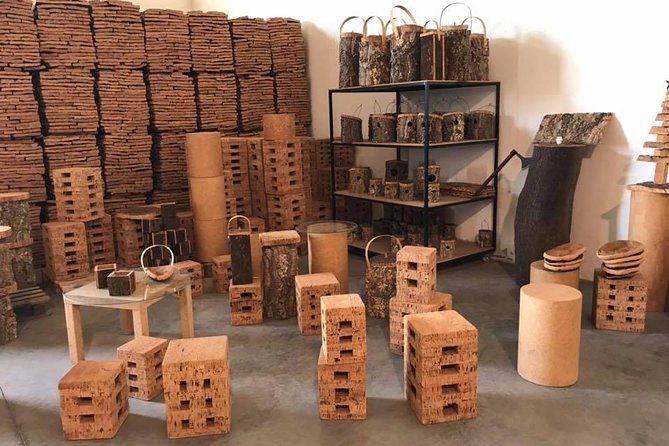
The day’s best “wow, I didn’t expect this” moment is often the cork factory stop: Corticarte – Arte em Cortica. This is not a vague demo. You’re walked through the cork oak story from the tree itself to how cork becomes finished products.
Here’s the kind of detail that makes the visit stick:
- Cork oak bark grows back over time, and the harvest cycle matters.
- In Portugal, cork production is huge—Portugal is responsible for about 55% of world cork production.
- Cork is valued because it’s resistant to heat, cold, and fire.
- Cork’s fame with wine comes from its ability to allow tiny amounts of oxygen to interact with wine over time, supporting proper aging.
Once you see the process, the product range makes more sense. You might picture cork only as wine stoppers, but cork also shows up in decorative wall and floor coverings, and even in sporting goods. The factory’s shop adds a fun angle too: you can browse cork items after learning how they’re made, so purchases feel more informed.
Time-wise, this stop runs about one hour and is listed with free admission, so it’s a high-value part of the day. If you’re the type who likes your history hands-on, this is the stop you’ll talk about later when you open a bottle back home.
Entering Évora’s UNESCO walled center: where the city feels like a museum
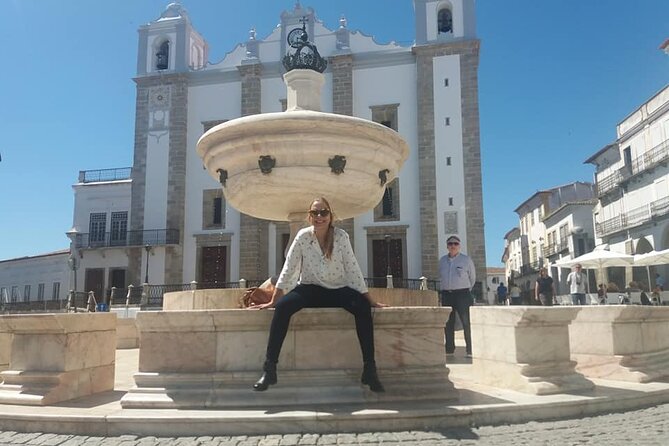
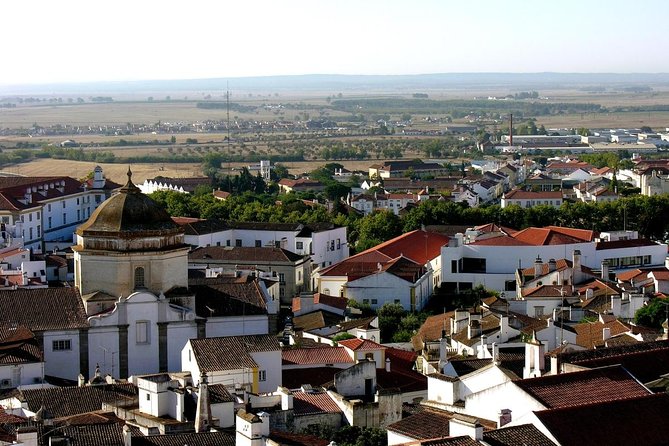
After the cork, you shift into Évora itself—specifically the Historic Center of Évora, inside the medieval walls and classed as a UNESCO World Heritage Site. The setting does half the work for you. You’re in an “in-wall” city of narrow streets and open patios, with layers from multiple civilizations.
You can expect your guide to point out how different cultures shaped what you see: Roman roots, then later influence from Celts, Arabs, Jews, and Christians. Évora’s big “glow-up” comes in the 15th century, when it became a royal residence—helping explain why the architecture mixes old foundations with major Portuguese-era monuments.
This segment is also a great way to get your bearings. You’re not just jumping between isolated stops; you’re moving through a compact area that makes the city’s layout click. The time here is about 45 minutes, with free entry listed for the historic center.
Quick planning note: some monuments have ticketed interiors, others are best understood from the street or courtyard. Ask your guide which parts you should prioritize for photos versus close inspection.
Água de Prata Aqueduct: Renaissance engineering with a long reach
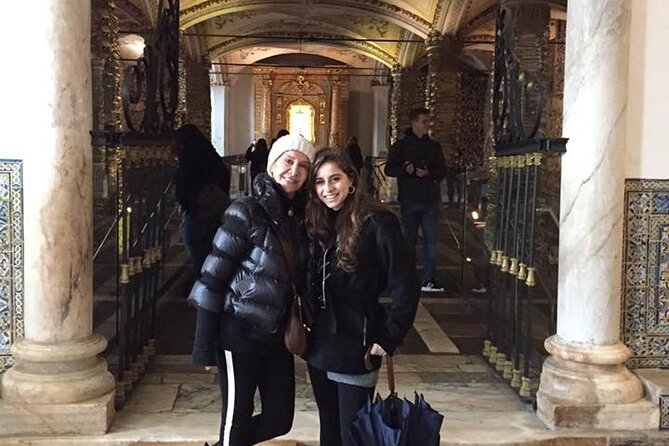
Next up is the Água de Prata Aqueduct, also known as Aqueduto da Água da Prata. This is one of those structures that looks simple until you learn what it was doing.
The aqueduct was inaugurated in 1537, built under King João III, and designed and built by royal architect Francisco de Arruda. It carried water from springs in the Graça do Divor area to Évora—an around-18 km route. Seeing it as a working city system, not just a landmark, changes how you read the stone and arches.
The value here is that it ties your sightseeing together. Once you notice how water infrastructure supported city life, the later monument stops feel less random. You’re thinking in systems: water, religion, defense, craft.
Chapel of Bones and São Francisco: Portugal’s dramatic contrast
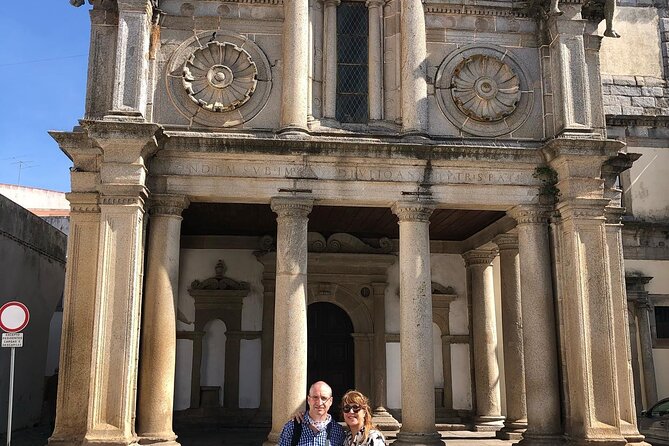
Évora really earns its nickname for atmosphere with two stops that sit on opposite ends of the emotional spectrum.



Chapel of Bones (Capela dos Ossos)
This one is not subtle. The Chapel of Bones has walls and pillars lined with human bones and skulls and is estimated to represent more than 5,000 monks. At the entrance, you’ll find a phrase aimed at reflection—life, death, and perspective.
If you’re sensitive to this kind of visual, go in knowing it’s designed to hit you fast and stay with you. Many people say it’s eerie, but also honest in its message. Even if you don’t love the subject matter, it’s a memorable artifact of how people in the past dealt with mortality.
Ticket note: admission is not included, so plan for a paid entry.
Igreja de São Francisco
Right after that darkness, you shift to beauty and scale at Igreja de São Francisco, a Gothic-Manueline church built between 1480 and 1510. The stone masters credited here are Martim Lourenço and Pero de Trilho, with royal painters including Francisco Henriques, Jorge Afonso, and Garcia Fernandes.
This church is tied to the era of Portuguese maritime expansion, and your guide will connect that to the symbols inside—like the cross of the Order of Christ and emblems associated with kings D. João II and D. Manuel I. The monumental nave and ogival vault help you understand why this style is so specific: it’s decorative, but it’s also about power and identity.
Admission is listed as free for this stop, and the time here is short (around 20 minutes), so treat it as a focused hit: look up, notice the symbols, then move on.
Praça do Giraldo and the Convent of Graça: details your guide will catch
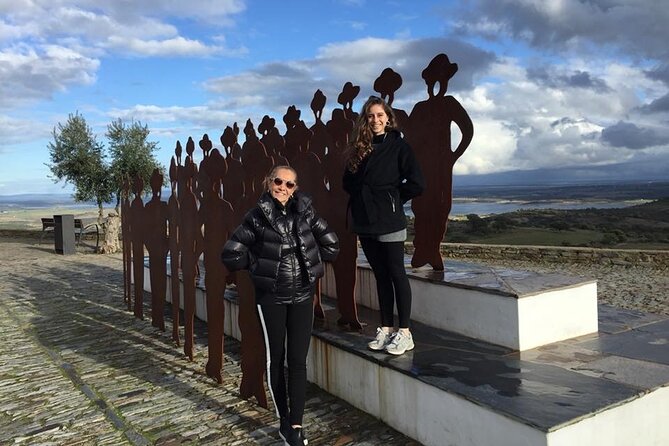
Two stops here are excellent examples of why the “guide component” is worth paying for. These places are full of meaning, but it’s easy to walk past meaning if you don’t know what to look for.
Praça do Giraldo
In Évora, roads lead to Praça do Giraldo. This square has been central since 1571/1573, and it ties into the story of Geraldo Geraldes, Sem Pavor, who conquered Évora from the Moors in 1167. In gratitude, D. Afonso Henriques made him mayor of the city and frontier of the Alentejo.
That’s the kind of local legend your guide turns into something you can remember. It’s not just a plaza—it’s a named checkpoint in the story of Portuguese expansion.
Church/Convent of Graça (Nossa Senhora da Graça)
Then you’ll see the Convent of Nossa Senhora da Graça, founded in 1511 and designed by Miguel de Arruda. Architecturally, it’s Renaissance, and the façade includes the famous Atlantean figures known locally as Meninos da Graça.
Time-wise, this is one of the quicker stops in the middle of your loop, so you’ll want to give the façade a good look in the moment. The “Meninos” details are exactly the sort of thing you might miss without a prompt.
Admission isn’t flagged as paid for this part in the provided info, but your exact in/out timing depends on your guide’s flow.
Temple of Diana, Évora Cathedral, and Diana’s Garden: the core monument loop
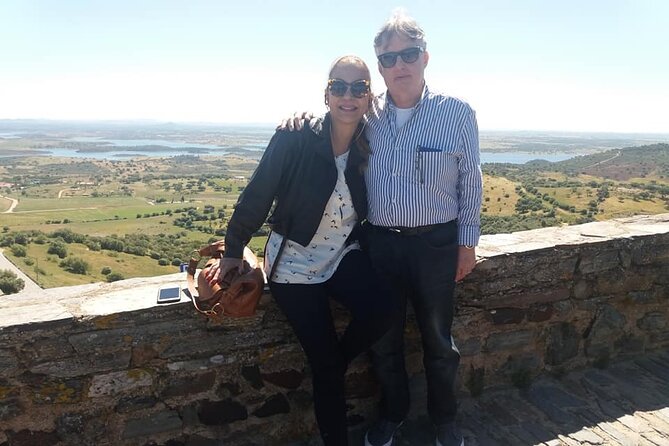
If there’s one area where Évora feels like it was built to be photographed, it’s this cluster: Temple of Diana, the Cathedral, and the Roman-era feel of the surrounding grounds.
Templo Romano de Évora (Temple of Diana)
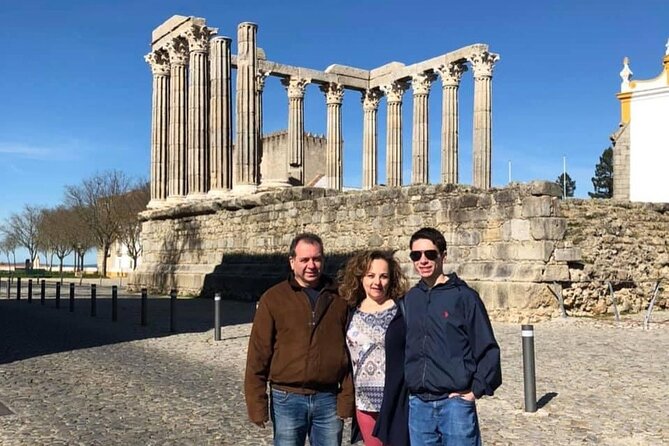
This Roman temple is adjacent to the cathedral area and is called Temple of Diana. What makes it special in this route is its relationship to the aqueduct. From nearby viewpoints, you can see the “Water of the Silver” aqueduct outside the city walls, and some arches remain visible closer in.
Admission is listed as free for the temple stop, and the time is short (around 15 minutes). Still, it’s a strong payoff because it anchors the city’s timeline: Roman foundations, Renaissance interventions, and medieval grandeur all within walking distance.
Cathedral of Évora (Se Catedral de Évora)
Then comes the cathedral, the big centerpiece.
Construction started in 1186, consecrated in 1204, and finished around 1250. It’s granite, and it shows the shift from Romanesque to Gothic. The cathedral façade features two medieval towers—south side as the bell tower that rings in city time—and portals with sculptures of 14th-century apostles by Mestre Pêro.
The dome is the wow factor outside, and your guide should help you understand the “why” behind the look. The information provided highlights a lantern tower element associated with the reign of D. Dinis, crowned by what’s described as a stone scales needle.
Ticket note: cathedral entry is not included, so plan to pay onsite if you want to go inside.
Diana’s Garden
You’ll likely end near Diana’s Garden, located in the cultural center in harmony with the Roman temple. It’s a calmer finish point—good for regrouping, sitting for a minute, and letting the day’s architecture settle in your head.
Food and pacing: what you’ll get when lunch isn’t included
Lunch isn’t included in the tour price. That’s not a deal-breaker, but it does affect how you handle the middle of the day.
The good news: because this is private, your guide can usually steer you to something that fits the time you have and the vibe you want—quick and local bites versus a sit-down meal. Some guides are known for arranging a traditional lunch, while others recommend a stop and give you choices.
My practical advice:
- If you have dietary needs, talk to your guide early on.
- Keep a little flexibility. If you’re enjoying the monument moments, you may not want a long sit-down meal.
- Bring a small amount of cash if you’re worried about payment systems in smaller spots.
Also, remember that a day like this already includes plenty of paid entries. Eating smart helps keep the overall cost feeling fair.
Price and value for a 9-hour private day from Lisbon
At $169.31 per person, this is not the cheapest way to get to Évora. But it’s also not pretending to be. You’re paying for:
- Round-trip transport in an air-conditioned vehicle from Lisbon
- Pickup and drop-off at your accommodation
- A private guide who accompanies you between monuments
- WiFi on board and insurance
- Key parts of the route that are free admission (including the historic center and several major sights)
The best value angle is time. Évora is far enough from Lisbon that a DIY trip becomes a planning headache—plus you’d still need to figure out the best order to avoid wasted stops. This tour removes that guesswork, and the cork factory adds a craft/industry layer you won’t get from a basic “cathedral and done” day.
Is it worth it? If you like structured sightseeing and you want someone to explain the symbols—Order of Christ emblems, the story behind Praça do Giraldo, and what the aqueduct means for city life—then yes, it usually feels like money well spent.
If you hate ticket lines and prefer wandering without guidance, you might decide to go on your own and pick only two monuments. But for most people, the private setup is the difference between seeing Évora and understanding Évora.
Who this tour suits best (and who might want a different plan)
This works especially well for:
- First-timers in Évora who want the “greatest hits” without feeling like a herd
- People who love architecture but also want context (not just dates on a plaque)
- Anyone curious about cork as an industry, not just a product
It may feel less ideal if:
- You’re hoping for a relaxed half-day. This is closer to a full commitment.
- You strongly dislike paid entrances. A few key sites are ticketed, and lunch is not included.
- You don’t want to spend much time in a vehicle. The Lisbon drive is real.
Should you book this Évora and Alentejo private tour?
If your goal is a smart, guided, full-day look at Évora—with the cork factory as the surprise anchor—then I’d book it. The top reasons are practical: pickup, private pacing, and a guide who can connect what you’re seeing (water systems, Roman-to-medieval layers, and craft) into one coherent story.
Before you decide, do two quick checks:
- Confirm you’re okay paying for a few onsite tickets (and that lunch is on you).
- Make sure you can handle a long day start from Lisbon.
If those fit, you’ll likely come away with the kind of memory that sticks: the contrast between the Chapel of Bones and the calm geometry of the Roman temple, plus the cork story that makes even a wine cork feel like it has a life behind it.
FAQ
How long is the Évora and Alentejo private tour?
It runs about 9 hours.
What time does the tour start?
Start time is 8:30 am, with pickup arranged from your accommodation.
Is pickup and drop-off included?
Yes. The tour includes pick up and drop off at your hotel, apartment, or Porto de Cruzeiros.
Is the tour private?
Yes. It’s described as a private tour/activity, meaning only your group participates.
What’s included with the tour price?
Included features are a private guide, air-conditioned vehicle, private transportation, insurance, and WiFi on board.
Are monument entrance fees included?
Not all of them. Some stops list free admission, but others do not. Also, museum/ticket costs are not included (listed as €10.00 per person for tickets for museums).
Is lunch included?
No. Lunch is not included.
What language is the tour offered in?
The tour is offered in English.
Can I cancel for free?
Yes. You can cancel for a full refund if you cancel at least 24 hours in advance.
How are tickets handled?
You receive a mobile ticket.