REVIEW · CRUISES & BOAT TOURS
Sunset and Night Cruise with Champagne
Book on Viator →Operated by BUBBLE Sea Events · Bookable on Viator
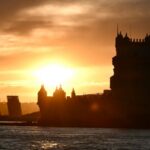
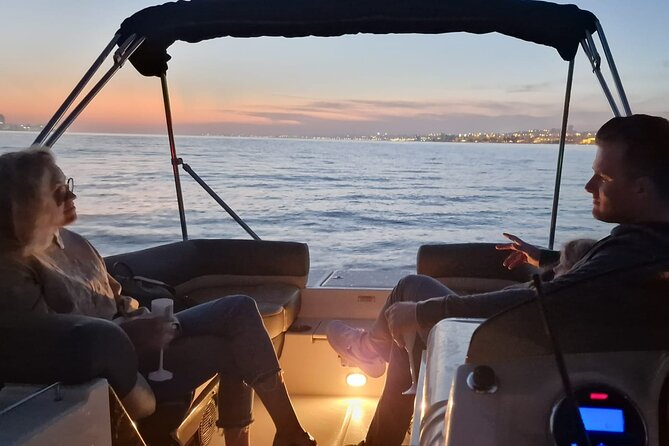
Sunset looks better from a small boat. On this Lisbon cruise, I love the sunset glow over the river and bridges, and I love that there’s Champagne waiting on board. The one thing to consider: the stops are short, so you’ll be snapping photos more than lingering for long views.
This ride starts at Marina Belém, beside the Padrão dos Descobrimentos, and it’s designed for seeing Lisbon from the water the way most visitors never do. You’ll cruise across the Tagus and make quick photo pauses at big sights on both banks, including the world-famous riverfront icons around Belém and the Almada landmarks opposite.
The boat keeps things calm, too. It caps at 12 travelers, and the vibe is comfortable and relaxed, with safety and comfort emphasized throughout (plus space for service animals).
In This Review
- Key highlights at a glance
- Why this sunset cruise feels like good value at $62.23
- Getting started: where you board near Belém
- The Almada sweep: bridges, cliffs, and riverfront “other Lisbon”
- Ponte 25 de Abril: the big connector view
- Santuario Nacional de Cristo Rei: the Rio connection
- Porto Brandão ruins: Lisbon’s working-history side
- Jardim do Rio / Ginjal: cliffs meet calm river walks
- Cacilhas: the neighborhood across from Lisbon
- Fragata D. Fernando II e Gloria: a real restored warship
- Barracuda submarine: yes, you can spot it from across
- Lisbon icons from the water: Praça do Comércio, castle, and Alfama’s pantheon
- Praça do Comércio (Terreiro do Paço): the earthquake-era turning point
- Castelo de São Jorge: the hill with layers
- Panteão Nacional (Santa Engrácia): a church turned national memorial
- Cais do Sodré and Santos: from rough ports to nightlife streets
- Belém finale: MAAT, the Discovery Monument, and Tower of Saint Vincent
- MAAT: art, architecture, technology along the water
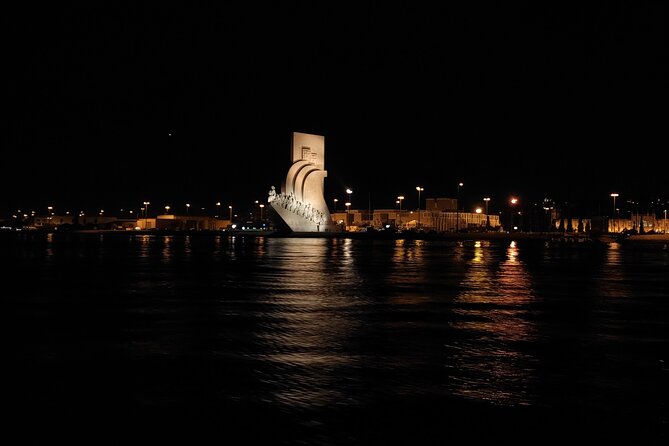
- Padrão dos Descobrimentos: celebrating Age of Discovery departures
- Torre de Belém: the Manueline gateway
- Fundación Champalimaud and the seaplane statue
- How to get the best photos in a short 2-hour window
- Should you book this sunset-and-Champagne cruise?
- FAQ
- How long is the Sunset and Night Cruise with Champagne?
- Where do I meet, and does the tour end at the same place?
- Is it a small group?
- What’s included on board?
- Is the cruise wheelchair-accessible and are service animals allowed?
- What happens if the weather is poor or I need to cancel?
Key highlights at a glance
- Small-group size (max 12) means easier deck time for photos and a calmer ride
- Champagne and water on board add a festive touch without turning it into a party bus
- Two-sided views of Lisbon, from Belém monuments to Almada’s cliff and waterfront spots
- Designed for quick photo stops so you can hit many landmarks in just about two hours
- Includes big-name icons like Ponte 25 de Abril, Cristo Rei, and Belém Tower from the river
- Mobile ticket keeps things simple on the day
Why this sunset cruise feels like good value at $62.23
At $62.23 per person for about two hours, the math only works if you’re getting more than “a boat moving through the dark.” This cruise earns its value by packing in high-recognition Lisbon sights with actual river views, not just occasional skyline glimpses.
First, you get the core reward: sunset from the Tagus. Lisbon’s highlights look different from the water. Belém Tower, the Discovery Monument, and the long sweep of riverfront buildings don’t compress the way they do in streets and viewpoints. From the deck, the river becomes your framing tool, and the light falls across bridges and facades in a way you can’t recreate from a sidewalk.
Second, the Champagne-and-water setup gives you a small upgrade that doesn’t require extra planning. It’s not just “bring your own drinks.” You can settle in, raise a glass, and stay focused on the views during the cruise time.
Now the realistic consideration: because the itinerary includes many monuments, you’re on a photo-and-contemplate rhythm, not a slow sightseeing marathon. Many stops are around 5 minutes when time is marked, and even the others are clearly “brief” photo stops. If you prefer deep museum time or long castle wandering, you’ll want to pair this with other daytime activities.
Bottom line: if you want a high-impact evening with lots of famous landmarks seen from the water—and you’re okay with short stops—this is solid value.
You can also read our reviews of more boat tours in Lisbon



Getting started: where you board near Belém
You’ll meet at Av. Brasília 1400-038, 1400-038 Lisboa, and the tour returns back to the meeting point. Start time matters here because sunset timing is everything for the “river glow” effect.
The departure spot is Marina Belém, right near the Padrão dos Descobrimentos. That’s a helpful detail: it means you’re already positioned in the Belém area where many of Lisbon’s big-hitter sights live. So even if you arrive a little early, you’re in the right neighborhood to orient yourself before you step aboard.
A couple of practical notes that make the experience smoother:
- Bring a light layer for the river. Even when the city feels warm, water can cool the air fast.
- Have your camera/phone ready before each stop. Stops are brief, so you don’t want to spend the window searching for settings.
- This is a mobile ticket experience, so keep your ticket accessible on your phone when you arrive.
- The operator lists service animals allowed and notes support for people with wheelchairs and reduced mobility, with the overall emphasis on safety and comfort.
If you’re traveling in a small group or solo, the max 12 travelers limit is also a win. You’re not stuck behind a crowd trying to see over shoulders.
The Almada sweep: bridges, cliffs, and riverfront “other Lisbon”
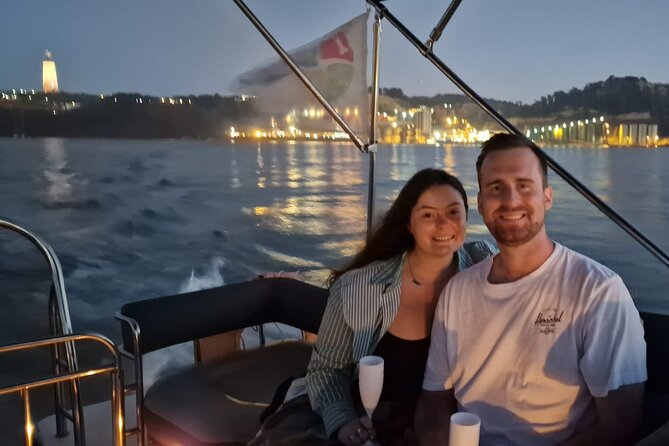
After leaving Belém, the cruise sets up one of the best reasons to do this at sunset: you get a different Lisbon across the water, with Almada’s riverfront landmarks in the mix.
Ponte 25 de Abril: the big connector view
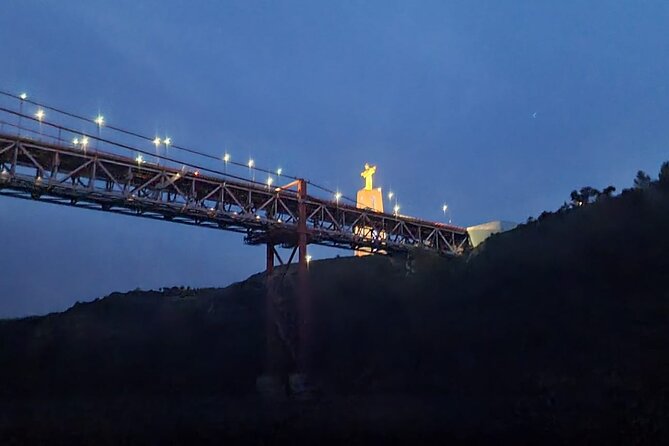
One of the earliest marquee moments is Ponte 25 de Abril. It’s a suspension bridge connecting Lisbon to Almada, and it stretches 2,277 meters. From the water, it reads like a moving line drawing—less like an “object” and more like part of the river scenery. If you’re a bridge person, this is a highlight worth aiming your camera toward on purpose.
Santuario Nacional de Cristo Rei: the Rio connection
Next comes Santuario Nacional de Cristo Rei in Almada. This is Lisbon’s famous “Christ figure” moment, inspired by Christ the Redeemer in Rio de Janeiro. The sanctuary project was inaugurated on May 17, 1959, and the giant statue was erected as a gesture of gratitude because Portuguese were spared direct destructive effects of World War II.
From the deck, you’ll see why the monument is positioned where it is: it’s built to loom over the city and the river, so it feels monumental even without a long hike up to it.
You can also read our reviews of more wine tours in Lisbon





Porto Brandão ruins: Lisbon’s working-history side
Then the cruise moves toward Porto Brandão, tied to the Portuguese fisheries company ruins area. The story here is about how Lisbon’s fishing industry expanded support infrastructure to the south bank—moving beyond the Santos pier area on the north bank to Almada’s waterfront. Even with a brief look, it’s a reminder that this river wasn’t just scenic; it was functional and industrial.
A drawback here: because the stop is short, you’ll be more “noticing context” than touring deep. Still, it adds variety, since not every river cruise gives you the working-side clues.
Jardim do Rio / Ginjal: cliffs meet calm river walks
At Ginjal, you’re in the zone between Almada’s cliffs and the Tagus. The area includes Jardim do Rio and the panoramic elevator at Boca do Vento, which connects visitors to the viewpoint. There’s also Fonte da Pipa, built by King João V in 1736—one of those details that makes the place feel anchored in centuries, not just modern promenade design.
Cacilhas: the neighborhood across from Lisbon
The itinerary includes Pontal de Cacilhas, and Cacilhas sits on Almada’s side facing Lisbon. It’s also historically tied to the former civil parish name. From the river, it often feels like a “quiet companion” to Lisbon’s busier waterfront—less iconic-baroque, more everyday river life.
Fragata D. Fernando II e Gloria: a real restored warship
At Fragata D. Fernando II e Gloria, you’re looking at a wooden-hulled frigate of the Portuguese Navy: a 50-gun ship launched in 1843, with a maiden voyage in 1845. Built at a shipyard in Daman, Portuguese India, it was Portugal’s last sailing warship built and also the last ship to undertake the Carreira da Índia (the India Run that connected Portugal with colonies in India).
It also has a dramatic modern-era story: it was almost destroyed by fire in 1963; burned wood-hull stayed beached for 29 years, then restoration decisions came in 1990. Even a short sighting makes the ship feel like a living time capsule rather than a “prop.”
Barracuda submarine: yes, you can spot it from across
Then there’s Barracuda submarine, a naval vessel served for 40 years and logged more than 52,000 hours. The fun detail: it’s visible from the other side of the river of Lisbon, so it plays like a scavenger hunt for history lovers.
Lisbon icons from the water: Praça do Comércio, castle, and Alfama’s pantheon
From Almada, the cruise brings you back toward central Lisbon viewpoints, and this is where the sky-glow really pays off. On the water, the skyline doesn’t feel like a wall—it feels like a sequence.
Praça do Comércio (Terreiro do Paço): the earthquake-era turning point
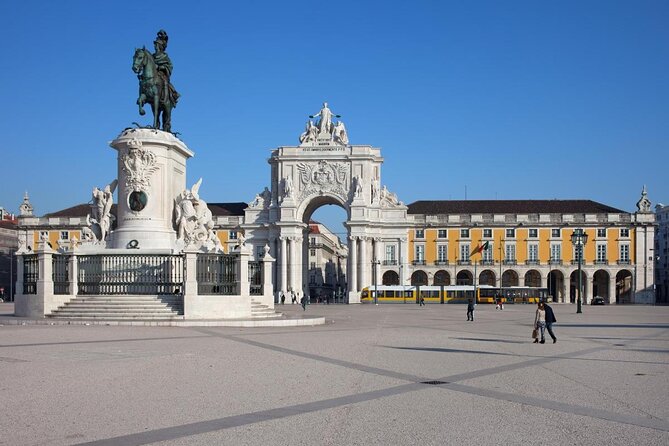
You’ll pass Praca do Comercio—still commonly known as Terreiro do Paço. It’s a large harbor-facing plaza and was once home to the Paço da Ribeira, before the 1755 Lisbon earthquake destroyed it. After that, the square was remodeled as part of rebuilding the Pombaline Downtown (Baixa), ordered under the Marquis of Pombal, who served as chief minister from 1750 to 1777.
From the river, this area reads like open space with gravity: you’ll see how the architecture lines up to the water, making it feel built for spectacle.
Castelo de São Jorge: the hill with layers
Castelo de Sao Jorge is next. The castle hill has been occupied since at least the 8th century BC, with fortifications from the 1st century BC—Phoenicians, Carthaginians, Romans, and Moors all left fingerprints here before Portuguese conquest in 1147.
Even in a quick pass, the takeaway is clear: this isn’t just a pretty castle; it’s a layered strategic hill. From the river, the fortress silhouette helps you understand why Lisbon history keeps gravitating upward.
Panteão Nacional (Santa Engrácia): a church turned national memorial
At Panteao Nacional, you’re looking at the Church of Santa Engrácia, a 17th-century monument converted into the National Pantheon. It’s where important Portuguese personalities are buried. This is one of those sights that benefits from seeing the building’s mass and dome shape in the open air over the river.
Cais do Sodré and Santos: from rough ports to nightlife streets
The itinerary includes Cais do Sodré and nearby Santos. This was historically rough and known as a red light area, but it’s since transformed into Lisbon’s nightlife zone with bistros, cafes, and studios. From the river, it’s more about understanding the waterfront evolution than catching nightlife energy—still, it’s a useful reality check that Lisbon changes fast.
Belém finale: MAAT, the Discovery Monument, and Tower of Saint Vincent
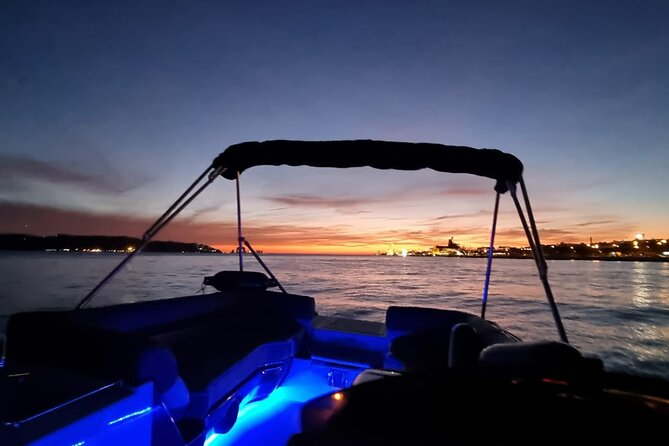
As the cruise moves deeper into Belém’s riverfront, the itinerary becomes more recognizable to first-time visitors—especially if you’ve been planning your Lisbon highlights around the Tagus.
MAAT: art, architecture, technology along the water
The cruise includes MAAT (Museu de Arte, Arquitetura e Tecnologia). This museum focuses on Art, Architecture, and Technology, and it’s designed by Amanda Levete Architects. The building sits on the Tagus (Rio Tejo) west of the city center and connects to the former Tejo Power Station, a prominent industrial architecture example from the first half of the 20th century.
There’s also a “science/energy” layer: the electricity museum’s past and present connections are integrated under the name Circuito Central Elétrica in MAAT’s broader space concept. Even if you’re not going inside during the cruise, this stop helps you place the modern Lisbon on the same river line as the historic monuments.
Padrão dos Descobrimentos: celebrating Age of Discovery departures
You’ll then get the Padrão dos Descobrimentos, the Monument of the Discoveries. It stands along the river where ships departed for exploration and trade with India and the Orient. It celebrates the 15th and 16th-century Age of Discovery—the Portuguese era when the Tagus became a launchpad in the public imagination.
The quick stop is enough to make the monument feel like a symbol, not just a photo background.
Torre de Belém: the Manueline gateway
Next is Torre de Belém (Tower of Saint Vincent), a 16th-century fortification. It served as a ceremonial gateway for explorers and as an embarkation/disembarkation point. The tower is famous for its Manueline style and its lioz limestone construction.
It’s also UNESCO-listed since 1983 alongside the Jerónimos Monastery, which makes it one of those “Lisbon must-see” monuments. From the river at sunset, it’s especially photogenic because the tower rises from the waterline without needing climb time.
Fundación Champalimaud and the seaplane statue
The itinerary also includes Largo da Fundação Champalimaud, a private biomedical research foundation created according to the will of António de Sommer Champalimaud in 2004. The mission listed is advanced biomedical research and clinical care excellence, focusing on translating discoveries into solutions that improve quality of life.
Then there’s the Estatua Gago Coutinho e Sacadura Cabral, a life-size reproduction tied to the Lusitânia seaplane used for the first South Atlantic crossing to Brazil in 1922. It was inaugurated on October 15, 1991. Even as a short viewing stop, it adds a different kind of Portuguese achievement story beyond exploration and architecture.
How to get the best photos in a short 2-hour window
Since this is built around quick stops, your goal is smart timing, not perfect camera work. Here’s how to make the most of the river time with what the itinerary provides.
First, prioritize the “big silhouettes” when the light softens: Ponte 25 de Abril, Cristo Rei, and the Belém Tower. These are structured shapes that hold up in sunset contrast, and you don’t need a long linger to get a strong shot.
Second, treat each stop like a mini photo sprint. Many listed stops have 5 minutes. That means you should pick one or two shots per stop: one wide river-facing frame and one tight “monument-to-skyline” angle. When you try for five different compositions in the same minute, you’ll rush and miss the moment.
Third, switch your mindset from sightseeing to perspective. The real value is that the cruise shows how Lisbon stacks along the water—Almada cliffs and docks on one side, Lisbon’s plazas, castle hill, and Belém’s monumental lineup on the other.
Finally, don’t ignore the calm moments between stops. That’s when the deck time is easiest and your Champagne-and-water break feels most natural.
Should you book this sunset-and-Champagne cruise?
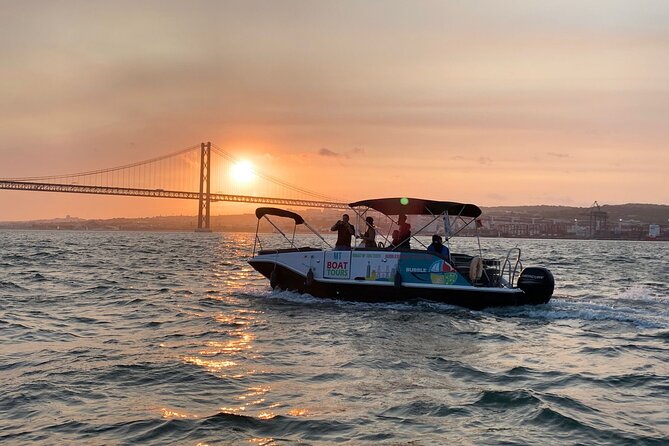
I’d book it if you want a high-impact Lisbon evening with big landmarks, seen from the river, without spending hours walking uphill or waiting in lines. The small group size (max 12) and the fact that you get Champagne plus water make it feel like more than a basic sightseeing cruise.
I’d skip or swap it for something else if you’re the type who needs long stops—like a full castle exploration, a museum visit, or a deep dive into maritime ruins. This one is built for many views quickly, not slow immersion.
If you’re balancing a busy Lisbon itinerary and you want one “easy win” that makes the Tagus feel central, this is a strong choice—especially for your first trip to Belém and central Lisbon.
FAQ
How long is the Sunset and Night Cruise with Champagne?
It runs for about 2 hours.
Where do I meet, and does the tour end at the same place?
You meet at Av. Brasília 1400-038, 1400-038 Lisboa, Portugal, and the activity ends back at the same meeting point.
Is it a small group?
Yes. The experience has a maximum of 12 travelers, which helps keep the ride comfortable.
What’s included on board?
You’ll have Champagne and water on board during the cruise.
Is the cruise wheelchair-accessible and are service animals allowed?
The tour notes that the vessel allows the ride of people in wheelchairs and with reduced mobility. Service animals are also allowed.
What happens if the weather is poor or I need to cancel?
The experience requires good weather. If it’s canceled due to poor weather, you’ll be offered a different date or receive a full refund. You can cancel up to 24 hours in advance for a full refund, and cancellations within 24 hours are not refunded.