REVIEW · LISBON
Lisbon See-it-All Private Tour
Book on Viator →Operated by SWINGO by Avenidas · Bookable on Viator
Lisbon gets compact fast. This private full-day route strings together iconic sights plus quick neighborhood time, with an English driver-guide and hotel pickup to keep things low-stress. The best part is how the day balances postcard stops in Belém with Lisbon’s lived-in hills in Alfama.
I particularly like two things: the hotel pickup/drop-off (you lose less time fighting transit), and the way the itinerary mixes major landmarks with scenic viewpoints like São Pedro de Alcântara. I also like that it’s customizable, so your guide can adjust the pacing to your group.
One drawback to keep in mind: you’ll be on the move for 8 to 10 hours, and you’ll need to plan for non-included entrances at Jerónimos Monastery and the National Coach Museum (unless you select options that cover that).
In This Review
- Key things that make this Lisbon tour work
- Price and value: what $179.41 really buys in a full day
- Start in Parque Eduardo VII: the wide-angle warm-up north of Avenida da Liberdade
- The aqueduct stop over Alcântara: grand engineering with a human reason
- Belém first: Torre de Belém and the mindset of Portugal’s Discoveries
- Jerónimos Monastery: Manueline architecture and the wealth behind it
- Padrão dos Descobrimentos: a 1960 monument that links back to Henry the Navigator
- Museu Nacional dos Coches: a coach museum that stretches three centuries
- Miradouro São Pedro de Alcântara: Lisbon’s wide view in a small time window
- Alfama on foot: Castle S. Jorge area, Santo Antônio, and Sé Cathedral
- National Pantheon: legends, Portuguese icons, and long construction timelines
- Parque das Nações: Expo’98’s legacy and modern Lisbon by the water
- The guide factor: why these tours succeed or fail
- Who this tour is best for (and who should consider other options)
- Quick planning tips so your day goes smoothly
- Should you book this Lisbon See-it-All Private Tour?
- FAQ
- Is this a private tour?
- How long is the Lisbon See-it-All private tour?
- What time does the tour start?
- Do you get hotel pickup and drop-off?
- What’s included in the tour price?
- Are entrance fees included?
- What language is the tour offered in?
Key things that make this Lisbon tour work
- Private, on-your-group pace with a driver-guide who can steer the day
- Belém to Alfama in one day, so you see both Portugal’s Discoveries era and old-city street life
- Free stops built in (like Torre de Belém area viewpoints) so you don’t pay for everything
- São Pedro de Alcântara viewpoint is the perfect mid-day reset with wide views
- Hotel pickup/drop-off saves you time, especially on a full itinerary
Price and value: what $179.41 really buys in a full day
At $179.41 per person for an 8 to 10 hour private tour, the value depends on what you’d otherwise cobble together on your own. Here, you’re paying for a few big “cost savers” beyond just transportation: a driver-guide, bottled water, free Wi‑Fi, and door-to-door pickup/drop-off. Those extras matter in Lisbon, where hopping between districts can eat up the day if you’re relying on multiple transit steps.
Also, the itinerary includes several stops with free admission tickets (for example Parque Eduardo VII, Torre de Belém, Padrão dos Descobrimentos, Miradouro São Pedro de Alcântara, and Parque das Nações). Meanwhile, the two heavier-ticket sites—Jeronimos Monastery and the Museu Nacional dos Coches—are explicitly not included. So the money you spend goes mostly to having someone manage the route and context for the day, while you handle those specific entrances separately.
If you’re the kind of traveler who likes to see a lot without turning every stop into a separate logistics project, this is the kind of pricing that makes sense.
You can also read our reviews of more private tours in Lisbon



Start in Parque Eduardo VII: the wide-angle warm-up north of Avenida da Liberdade
The day begins around 8:30 am, and you kick things off at Parque Eduardo VII. This park sits north of Avenida da Liberdade on top of the Pombal Marquis Square, and it’s Lisbon’s biggest park. It was originally called Liberty Park and renamed in 1903 in honor of King Edward VII’s visit, which gives the place a very specific story behind the lawns.
You’ll have about 25 minutes here, with the park laid out on roughly 25 acres and designed with long grass strips and parallel avenues. Even in a short visit, this stop is useful because it gives you a calm, elevated view of Lisbon’s layout before you head into the busier historic zones.
The aqueduct stop over Alcântara: grand engineering with a human reason
Next comes a stop that explains one of Lisbon’s key “how did the city survive?” questions: water. The structure rises above the Alcântara valley and ties back to King João V and his passion for big construction. The context matters—this aqueduct concept is presented as the opportunity to bring water to Lisbon, and the note that Alfama was one of the only areas with water helps you understand why this kind of project changed daily life.
You’re there for a brief 20–ish minute window, so think of it as an orientation stop. You’re not trying to “tour” it; you’re learning what it represents and getting a better sense of how Lisbon’s geography shaped the city.
Belém first: Torre de Belém and the mindset of Portugal’s Discoveries
Then you move into Belém, and Torre de Belém is the quick, iconic centerpiece. Commissioned by King Manuel I, the tower was built from 1515 to 1521 and served as a fortress in the middle of the Tagus. It also becomes a symbol for Portuguese expansion and acts as a starting point in the story of the Discoveries navigators.
You’ll get about 20 minutes here, and the admission ticket is listed as free. Even with the short time, the tower works because it’s both a building and a timeline in stone: fortress, navigators, expansion—Portugal’s maritime identity in one spot.
If you care about architecture and symbolism, this is a satisfying “blink and you’ll miss the meaning” stop.
Jerónimos Monastery: Manueline architecture and the wealth behind it
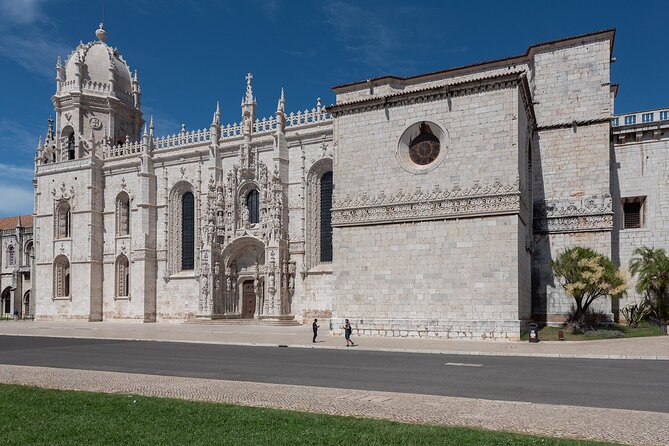
After the tower, the itinerary shifts to Jerónimos Monastery. This is where the Discoveries story turns into a monument to the wealth of that era. The monastery is described as the pinnacle of Manueline architecture, commissioned by King Manuel I around 1501 shortly after Vasco da Gama returned.
You’ll have around 45 minutes, and this is one of the paid entrances (marked as admission not included). This stop takes a little more mental space than the Belém exterior views because Manueline style is full of detail—so give yourself permission to slow down a touch in the time you have.
If your schedule is tight, focus on what the guide emphasizes. You’re not just looking at a pretty building; you’re reading a political and cultural statement that survived centuries.




Padrão dos Descobrimentos: a 1960 monument that links back to Henry the Navigator
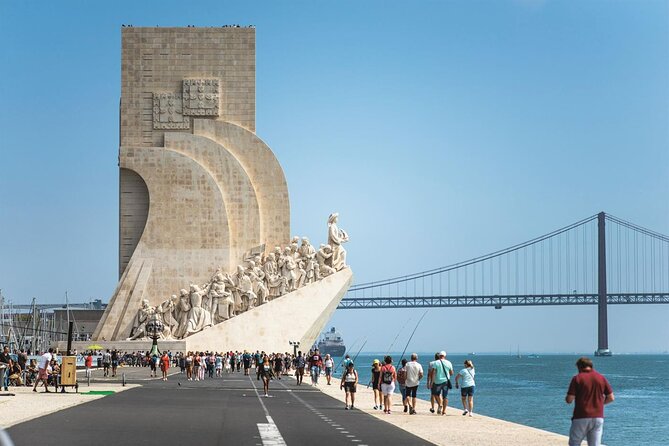
A short stop follows at the Padrão dos Descobrimentos. The monument sits high on the riverbank in Belém and was built in 1960 to mark the 500th anniversary of Henry the Navigator’s death. It’s a modern commemorative structure, but the idea is the same: Portugal’s expansion story, placed in a visible landmark on the waterfront.
Time here is around 15 minutes, and admission is listed as free. The practical value is that it gives you another layer of Belém’s “river story” without stealing your whole day.
Museu Nacional dos Coches: a coach museum that stretches three centuries
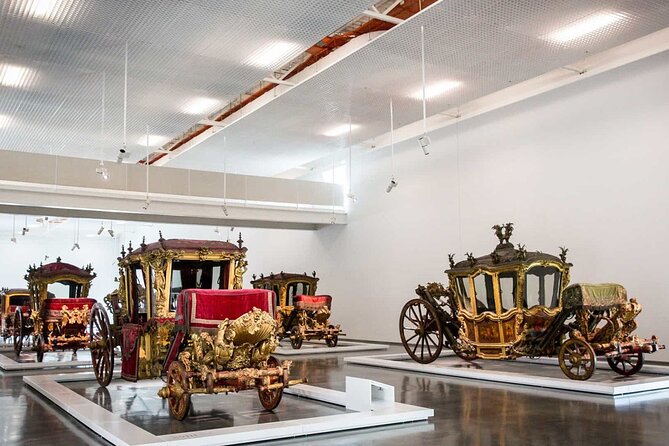
Next is the Museu Nacional dos Coches, with about 45 minutes on the clock. This is framed as one of Europe’s best collections, and the scale is the point: coaches made across Portugal, Italy, France, Austria, and Spain, spanning three centuries. The range is described from simpler designs to the most sophisticated.
Admission is not included, so plan for that cost separately. Still, it’s a strong stop because it’s not just about transportation—it’s about power, design, and what status looked like in different periods.
If you’re thinking, do I really want a museum after monasteries and monuments? This one is different because the visuals and craftsmanship do most of the talking.
Miradouro São Pedro de Alcântara: Lisbon’s wide view in a small time window
After Belém, you get a viewpoint reset at Miradouro São Pedro de Alcântara. This is one of Lisbon’s widest and most iconic viewpoints and it’s right next to the top of the Glória funicular. Time here is only about 15 minutes, and admission is free.
What you get in those 15 minutes is the real payoff: views across Avenida da Liberdade, Restauradores, and Baixa, plus the Castelo de São Jorge hill with its imposing walls and the photogenic crown of umbrella pines. You can also see the viewpoint of Igreja da Graça in detail.
This is the moment where Lisbon stops feeling like a list of stops and starts feeling like a city with layers. If you take one photo, take it here—you’ll understand the geography afterward.
Alfama on foot: Castle S. Jorge area, Santo Antônio, and Sé Cathedral
Now you shift into older Lisbon with a walking tour in Alfama. Alfama is described as fascinating any time of day, and it comes alive early in the evening when inhabitants take to the streets and the taverns start filling up. Even if your timing isn’t exactly evening-perfect, this is still the neighborhood where the city feels most human.
Your walk is about an hour and passes by Castle S. Jorge, Igreja de Santo António, and the Cathedral of Lisbon (Sé). Admission is not included, which usually means you’re walking the exterior areas and neighborhood streets rather than buying ticketed entry points.
This stop works well after viewpoints because you’re moving from seeing the city to walking through it. It’s also where you’ll likely feel the hill and stair reality of Lisbon—so wear shoes you can walk in comfortably, not ones that only look good.
National Pantheon: legends, Portuguese icons, and long construction timelines
After Alfama, there’s a stop at the National Pantheon, described as one of Lisbon’s symbols and Portugal’s as well. The final home of figures in Portuguese history is mentioned here, including Amália Rodrigues and Eusébio. That gives the building a personal, cultural weight beyond architecture.
The construction story is part of the fascination: it began in the 16th century, continued through the 17th, and was only completed in the second half of the 20th century. The description also notes a legend tied to the place, so your guide can add the story that makes the building feel less like a random stop and more like a chapter in Portugal’s public memory.
Time isn’t listed separately in the itinerary text you provided, but it’s clearly a meaningful cultural stop inside the day’s mix.
Parque das Nações: Expo’98’s legacy and modern Lisbon by the water
The last major district is Parque das Nações, the current name for the Expo ’98 site. It’s framed as a center for cultural activities now, with contemporary architecture, family attractions, and social spaces. This is how you end the day: Lisbon in a more modern, planned-out form after all the centuries-old texture you’ve already seen.
You’ll have about 50 minutes here, and admission is listed as free. This stop isn’t about buying tickets or rushing through; it’s about letting your brain catch up and giving you a different Lisbon mood to compare with Alfama.
It’s also a practical ending point because it feels easier to move around when you’re done with a long full-day route.
The guide factor: why these tours succeed or fail
The tour lives or dies on the driver-guide, and the praise in the material you provided points to a consistent theme: guides who love Lisbon and can explain what you’re seeing without making it feel like homework. Names like Ricardo, Rui, José, and Susanna show up in the feedback you shared, and the common thread is that guides are patient, flexible, and willing to go slightly beyond the planned rhythm when the group wants it.
You’ll also get value from their practical advice. One example mentioned is avoiding common ticketing missteps by understanding the right order to handle entrances, which can save you time when a line starts forming.
This is where private format shines: you can ask questions when something in the architecture, the neighborhood streets, or the monuments doesn’t make sense.
Who this tour is best for (and who should consider other options)
This Lisbon see-it-all private tour is a great fit if you want:
- A full-day overview that covers Belém, viewpoints, and Alfama
- Hotel pickup/drop-off to cut down transit stress
- A guide who can connect landmarks to Portugal’s broader stories
It’s less ideal if:
- You want lots of free time to roam on your own for hours
- You hate timed stops and short windows at each major site
- You’d rather spend the day on one neighborhood instead of many
Quick planning tips so your day goes smoothly
- Bring layers. Even within a single day, Lisbon can shift from breezy to warm.
- Decide in advance whether you want to handle paid entrances yourself or select options that help with skip-the-line convenience.
- Wear comfortable walking shoes for Alfama, where you’ll be on foot for about an hour.
Should you book this Lisbon See-it-All Private Tour?
I’d book it if your goal is maximum Lisbon in one go, with someone else handling the routing and context. The mix of Belém landmarks, a serious architecture stop at Jerónimos Monastery, a museum detour at the National Coach Museum, then viewpoint + neighborhood walking is exactly the kind of one-day structure that helps you understand Lisbon’s different “faces.”
I’d pause and double-check if you strongly prefer deep time in just one area, or if the non-included entrances would be a dealbreaker for your budget. Otherwise, this is the kind of private full-day tour that gives you a clean overview, then leaves you with a smarter list of what to revisit next.
FAQ
Is this a private tour?
Yes. It’s a private tour/activity, meaning only your group participates.
How long is the Lisbon See-it-All private tour?
It runs about 8 to 10 hours.
What time does the tour start?
The start time is 8:30 am.
Do you get hotel pickup and drop-off?
Yes. Pickup and drop-off are offered, and you enter your pickup address.
What’s included in the tour price?
The tour includes a private tour, hotel/port pickup and drop-off, a driver/guide, bottled water, and free Wi‑Fi.
Are entrance fees included?
No. Entrance fees are not included, and the info specifically notes entrance fees depend on whether you choose the SKIP THE LINE option.
What language is the tour offered in?
It’s offered in English.