
REVIEW · LISBON
Roman Lisbon Tour
Book on GetYourGuide →Operated by Lisbon Roots · Bookable on GetYourGuide
Lisbon hides Roman surprises in plain view. On this 3-hour Roman Lisbon Tour, you start at the big Portas do Sol viewpoint, then move into standout Roman remains you’d never expect to find inside a living modern capital, including the Roman theater. The whole walk is built to help you see the city as the Romans would: not just monuments, but how people lived, worked, and traded.
I like how the route jumps between major showpieces and smaller traces, so the Roman story feels complete. My second favorite part is the shift underground, where you can spot practical details like upper-class house areas and even garum-making spaces, turning fancy history into something concrete. One possible drawback: it is 3 hours on your feet with no meal included, so you’ll want comfortable shoes and a plan for water/snacks before you start.
In This Review
- Key highlights I’d center in your planning
- Starting at Portas do Sol: putting Roman Lisbon in context
- The Roman Theater: a rare capital-stage you can actually walk through
- Lisbon Cathedral cloister: Roman streets hiding in plain sight
- Baths and the Temple of Cibele: power shows up in daily spaces
- Casa dos Bicos and the Roman Wall: reading the city’s handwriting
- Going underground: houses, streets, and garum factories below Lisbon
- What you’re really paying for: value in a 3-hour Roman story
- Logistics that will make the tour smoother
- Who should book this Roman Lisbon Tour
- Should you book this Roman Lisbon Tour?
- FAQ
- How long is the Roman Lisbon Tour?
- How much does the tour cost?
- What language options are available for the live guide?
- What’s included in the price?
- What should I bring?
- Are meals or drinks included?
Key highlights I’d center in your planning
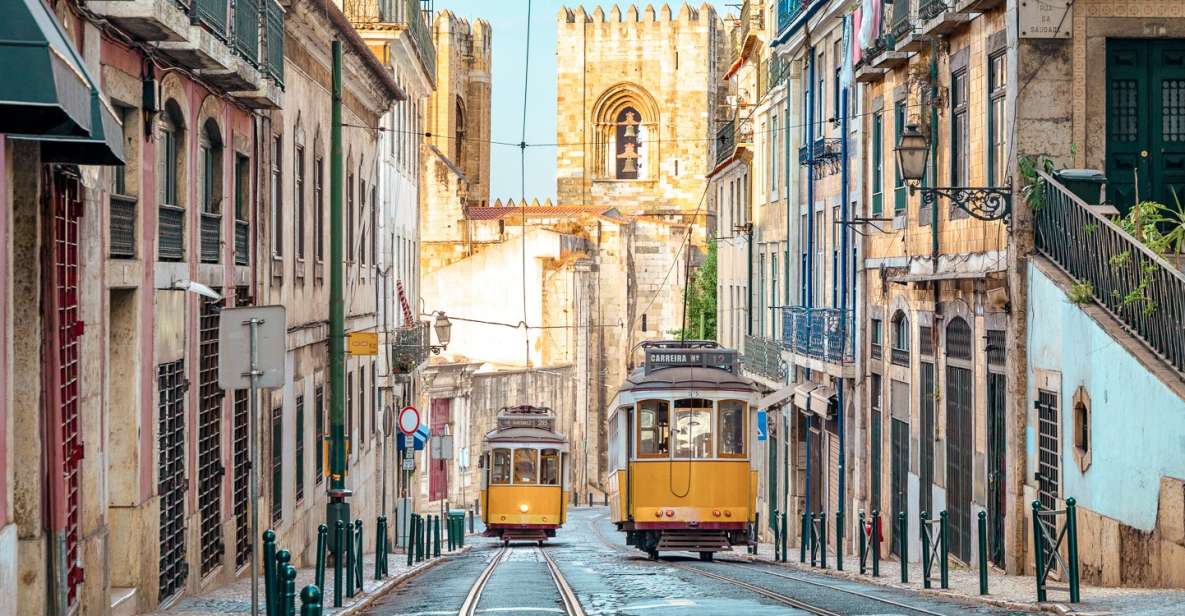
- Portas do Sol opening that sets the Roman-era geography in your head fast
- Roman Theater in a capital space you can’t easily replicate on your own
- Cathedral cloister Roman streets that make the layers of Lisbon easy to picture
- Roman baths and the Temple of Cibele tied to everyday life, not just gods and dates
- Casa dos Bicos + Roman Wall traces showing how archaeology lives inside real neighborhoods
- Underground structures where garum factories and house layouts make the empire feel real
Starting at Portas do Sol: putting Roman Lisbon in context

If you’ve ever visited Lisbon and felt a little lost, this tour fixes that. You begin next to the Arts Decorativas Portuguesas Museum area, then you head toward one of Lisbon’s best viewpoints: Portas do Sol. From up there, you get the kind of “now I get the city” perspective that makes everything that follows click.
I like the way this first stop frames the day. Instead of launching straight into ruins, the guide sets the Roman-era city picture first—where activity would have clustered and how Lisbon’s role as a trading place shaped what the Romans built. Even if you know a bit about Rome, this viewpoint helps you stop thinking of Lisbon as only medieval and start seeing it as an older trading engine.
The mood here is also practical. You can take photos early, you can orient your walking route, and you’re not stuck later trying to figure out what direction you came from. It’s a small move, but it changes how you experience the next hours.
You can also read our reviews of more tours and experiences in Lisbon.



The Roman Theater: a rare capital-stage you can actually walk through
One of the most satisfying moments is the Roman theater visit. The tour takes you to it as the day’s first major archaeological anchor, and the timing makes sense: you’ve just learned how Lisbon mattered in Roman times, so the theater lands with meaning.
The theater is special because it exists within the walls of a European capital—rare anywhere, and especially rare in a place that also functions as a modern city. I love ruins that feel “built for people,” and a theater does that. This isn’t just archaeology behind glass. It’s a space designed for crowds, performance, and public life.
A good guide also helps you avoid the common trap: staring at stone and calling it history. Here, you’re guided to understand the Romans lived inside systems—social life, entertainment, and civic culture—and a theater is one of the clearest ways to see that system at work.
Practical note: theaters can be sunny and open. If you’re visiting in hotter months, bring water and plan a hat. You’ll appreciate it later when you’re walking between sites.
Lisbon Cathedral cloister: Roman streets hiding in plain sight

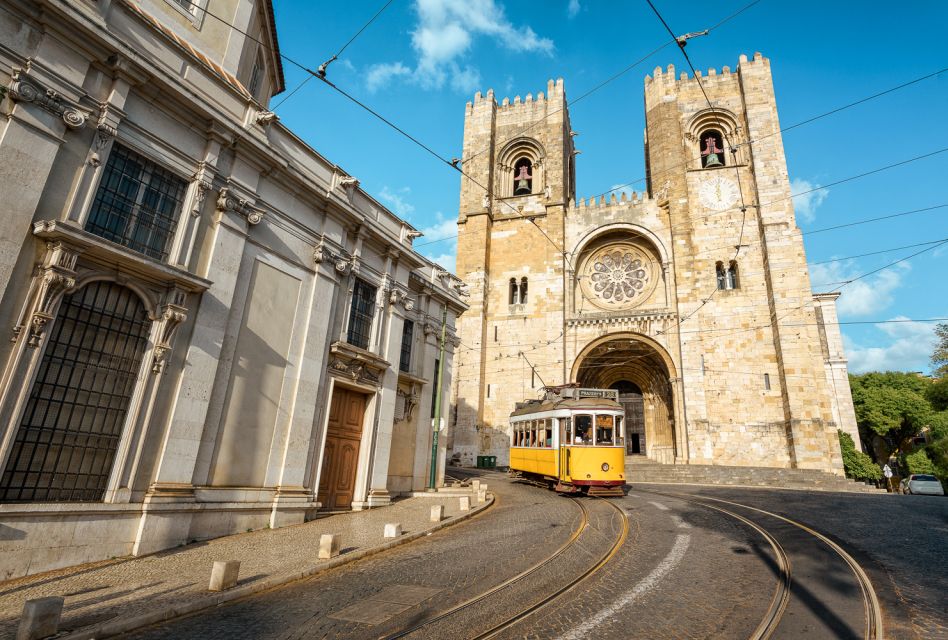
After the theater, you move into one of those “how is this here?” places: the eye-opening cloister of Lisbon Cathedral. In the cloister, you’ll find parts of Roman streets—actual traces integrated into the fabric of the area you’re standing in.
This stop is one of the tour’s best ideas because it teaches you how archaeology works in Lisbon. Many cities have ruins off to the side. Lisbon layers eras on top of each other, and you learn to look for fragments in the everyday. In this cloister space, you can literally connect the dots between a Christian landmark and Roman urban foundations.
I also think this is where the guide’s history background shows. The tour focuses on how Romans lived in Lisbon, not just what they built. Roman streets matter because they point to how people moved, traded, and reached homes and workplaces.
Even if you’re not a hardcore archaeology fan, the cathedral cloister helps you become one. You leave the stone spaces with a better sense of how a city physically evolves over centuries.
Baths and the Temple of Cibele: power shows up in daily spaces
Next you’ll pass through the Roman bath area and the Temple of Cibele. This part of the tour is key for understanding Roman power in Lisbon.
Temples and theaters can feel like “big, impressive” history. Baths do something different. Bath culture in the Roman world wasn’t only about cleanliness—it was about routine, social mixing, and status. Seeing the Roman bath remains makes you think about daily life rather than only big events.
Then comes the Temple of Cibele, which adds a second layer: religion and symbolism. Even if you’re not chasing specific names of deities, it helps to understand how Roman belief systems connected with governance and identity. Lisbon wasn’t just a distant outpost—it was an active place in the Roman Empire’s network.
I like that this segment doesn’t stay stuck in one category. You’re moving between everyday infrastructure (baths) and ceremonial meaning (temple). That mix is what makes the Roman story feel lived-in instead of museum-only.
One small consideration: this portion involves multiple sites close together, and you’ll want to keep moving. If you tend to linger at each stop, you may have to pace yourself to finish the underground portion with energy.
Casa dos Bicos and the Roman Wall: reading the city’s handwriting
At some point, the tour shifts from “stop by stop” landmarks to a broader archaeological scan through places like Casa dos Bicos. You’ll also see parts of the Roman wall and Roman factories.
Casa dos Bicos is one of those Lisbon addresses that signals you’re in the middle of real neighborhoods, not a fenced-off archaeology park. That matters. Seeing Roman traces here helps you understand how the past keeps getting built over—yet leaves enough evidence for careful observers and good explanations.
The Roman wall and factories bring you back to economics. Lisbon in the Roman era was one of the important trading places, and factories are where that trading becomes tangible: production, processing, and distribution. You start thinking less like a tourist collecting photos and more like a historian asking what the Romans needed to run a port-and-market city.
This is also where the guide’s ability to connect time periods makes a noticeable difference. Some guides can list facts. The stronger ones help you see how one era’s needs shape another era’s choices. In this tour, that “connect the dots” style is a big part of why people leave feeling satisfied rather than rushed.

Going underground: houses, streets, and garum factories below Lisbon
The final and most memorable stretch is the underground segment. You go beneath Lisbon into archaeological structures where you can discover upper-class house areas, streets, garum factories, swimming pools, and other artifacts.
This is the moment the tour earns its name. Above ground, Roman traces can feel scattered. Underground, the logic gets stronger. You start to understand how space functioned—where residents lived, where business activity happened, and how production could take place near the city’s functioning systems.
Garum is one of the most interesting details on the tour because it turns “Rome” from a generic empire into a specific set of trades. Garum was a food product made from processed fish, and seeing a factory setup related to that production makes the Roman economy feel immediate. It also helps you imagine the supply chain behind Lisbon’s reputation as a trading center.
The underground houses and swimming pools also make Roman life feel less distant. You’re not only hearing about elites—you’re being shown built spaces that suggest lifestyle and social structure.
One thing to plan for: underground areas often feel cooler or darker than the street. Bring a small light adjustment mindset. You’ll want to listen closely when the guide points out details, because visibility can be more limited than in open-air sites.
What you’re really paying for: value in a 3-hour Roman story
At $88 per person for a 3-hour tour, you’re paying for three main things: a history-educated guide, curated access, and entrance fees to key sites.
This isn’t a long day tour, so the pacing matters. The route is tight: viewpoint orientation, Roman theater, cathedral cloister, baths and Temple of Cibele, Casa dos Bicos with wall/factory traces, then the underground portion. When the structure is strong, 3 hours can feel like a full evening of discovery.
You’re also paying for guidance quality. The tour is run with live interpretation in Spanish, English, French, or Portuguese, and the guide is described as graduated in history. In the past, guides like Ingo, Paulo, and Sandra have been praised for being prepared, friendly, and able to connect Lisbon’s time layers. That matters because Roman Lisbon isn’t straightforward if you’re just reading it like text on a plaque.
Finally, entrances are included for the Roman Theater and cathedral cloister and other archaeological sites. That reduces the friction of trying to stitch these locations together yourself—especially when you want coherent explanations rather than a self-guided scavenger hunt.
Logistics that will make the tour smoother
Before you go, keep these practical items in mind:
- Meet next to the entrance of the Arts Decorativas Portuguesas Museum.
- Bring a passport or ID card.
- Wear comfortable shoes; you’ll be walking between multiple archaeological spaces.
- No alcohol or drugs are allowed.
Also, the tour doesn’t include a meal or drinks. Plan accordingly. You’ll feel better if you start hydrated and bring a small snack. It’s not about being picky—it’s about staying comfortable when the day includes open areas and then indoor/underground segments.
Group format is described as a private group. That often helps the guide pace things and answer questions without the constant pressure of big-group timing.
Who should book this Roman Lisbon Tour
I think this tour is a great fit if you want Roman Lisbon to feel real, not abstract.
Book it if:
- You love history but hate reading plaques that don’t connect to daily life.
- You want a structured route through major Roman sites plus smaller traces.
- You enjoy learning how one city overlays another—Lisbon’s layering style is a big part of the fun.
You might skip it if:
- You prefer totally independent wandering and don’t care about organized explanations.
- You want a food-focused tour or a long sit-down experience (this one doesn’t include meals).
Should you book this Roman Lisbon Tour?
I’d book it if you’re in Lisbon and want a fast, concentrated Roman experience that doesn’t stay trapped at a single monument. The combination of Portas do Sol orientation, the Roman theater, cathedral cloister streets, baths plus the Temple of Cibele, and especially the underground portion makes the tour feel like more than “a few stops.” It’s a story arc.
At $88 for a 3-hour guided experience with entrances included, it’s good value if you’ll actually use the guide’s explanations. If you like asking why things were built, how people lived, and what trading meant on the ground, this tour is an easy yes.
FAQ
How long is the Roman Lisbon Tour?
The tour lasts 3 hours.
How much does the tour cost?
It costs $88 per person.
What language options are available for the live guide?
The tour offers live guiding in Spanish, English, French, and Portuguese.
What’s included in the price?
The price includes a guided tour led by a history-educated guide and entrance to the Roman Theater, cathedral cloister, and other archaeological sites.
What should I bring?
Bring a passport or ID card and wear comfortable shoes.
Are meals or drinks included?
No. Meal or drinks are not included, so plan to have water and a snack before or after the tour.