REVIEW · COFFEE EXPERIENCES
Roast Specialty Coffee with Guided Tasting
Book on Viator →Operated by SoLo Brewing · Bookable on Viator
Coffee tastes different the moment you roast it. This Lisbon workshop at SoLo Brewing Coffee Lab turns that idea into a hands-on, guided session where you learn what roasting changes and how to taste it on purpose. You’ll love the step-by-step way the team connects green beans → roasted coffee → aroma and body, and you’ll also love that you leave with your own 200g bag plus tasting notes to keep experimenting after.
There’s one thing to consider: this is a focused class, not a long tasting crawl. If you’re looking for a big food-and-drink meal or lots of time roaming, you may feel a little short-changed by the 1-hour format.
Still, it’s a great setup for coffee lovers who want clarity fast. And if you’re a non-coffee drinker, it can be a surprisingly friendly way to start caring about what’s in your cup.
In This Review
- Key points at a glance
- Roasting specialty coffee in Lisbon: what’s the real value
- SoLo Brewing Coffee Lab: where the class starts
- The roasting lesson: green coffee to the roasted cup
- Guided cupping: learning aroma, flavor, and body
- Your take-home 200g bag (and tasting notes)
- Coffee and tea included: what you’ll actually drink
- Price and value: is $41.40 fair for a 1-hour roast class?
- Who this tour suits best (and who might not)
- Tips to get the most out of your cupping session
- Should you book the Roast Specialty Coffee with Guided Tasting?
- FAQ
- Where does the tour start?
- What time does it begin?
- How long is the roast and tasting session?
- Is it offered in English?
- What’s included in the price?
- Is lunch included?
- Is this a private experience?
- Can I cancel for a refund?
- My final take
Key points at a glance
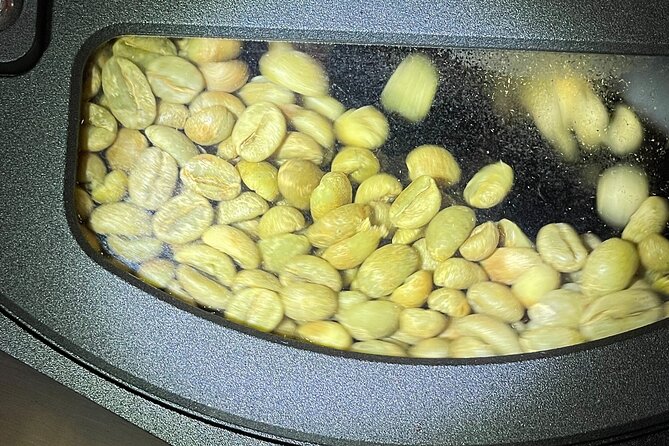
- You’ll roast and then taste right away so you can connect the process to the result
- Guided cupping helps you learn how to evaluate aroma, flavor, and body
- They explain what to look for in green and roasted coffee
- You get a take-home bag (200g) so your learning doesn’t stop when you leave
- Small-group, private experience means you can ask questions without being lost in the crowd
Roasting specialty coffee in Lisbon: what’s the real value
This isn’t just a coffee sampler. The value is the cause-and-effect. Roasting changes coffee in predictable ways: how it smells, how it tastes, and how the drink feels on your tongue. The workshop is built to make that lesson stick, because you’re not only listening. You’re tasting the coffee you just roasted and using a guided cupping method to judge the quality of the roast.
You’ll also get something practical: a mental checklist for coffee. Instead of vague impressions like good or bad, cupping teaches you what to pay attention to—aroma first, then flavors, then body. That turns you into a more confident buyer later, whether you’re shopping in Lisbon or packing coffee for home.
And yes, you’ll be drinking coffee (and/or tea) during the session, so it’s not a lecture with polite sips. The workshop is about tasting as the learning tool.
You can also read our reviews of more food & drink experiences in Lisbon


SoLo Brewing Coffee Lab: where the class starts
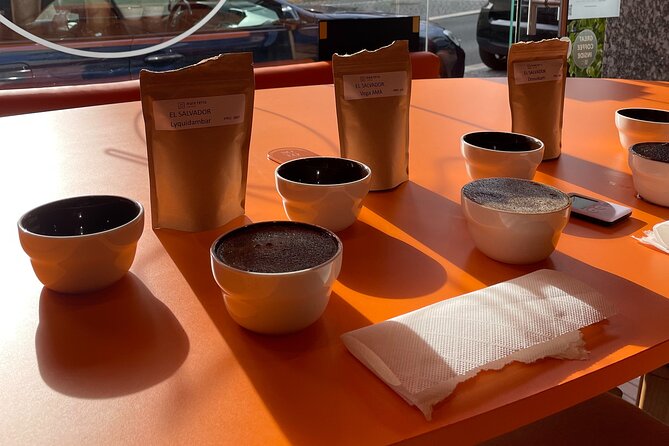
The session meets at SoLo Brewing Coffee Lab, R. Pinheiro Chagas 16B, 1050-172 Lisboa, and it starts at 9:00am. The location is convenient for transit, which matters in a city where you can lose time fast if you’re constantly recalculating routes. A mobile ticket is provided, which also helps you keep things simple.
Practically, you’re showing up to a working coffee lab environment, not a showroom. That makes the roasting part feel real. You can expect the team to explain the process in a way that a beginner can follow and that a coffee nerd can still enjoy.
The activity is offered in English, and it’s listed as a private tour/activity—meaning only your group participates. That “only us” detail can be a big deal for a workshop like this. It keeps the pace comfortable and makes questions easier to answer.
The roasting lesson: green coffee to the roasted cup
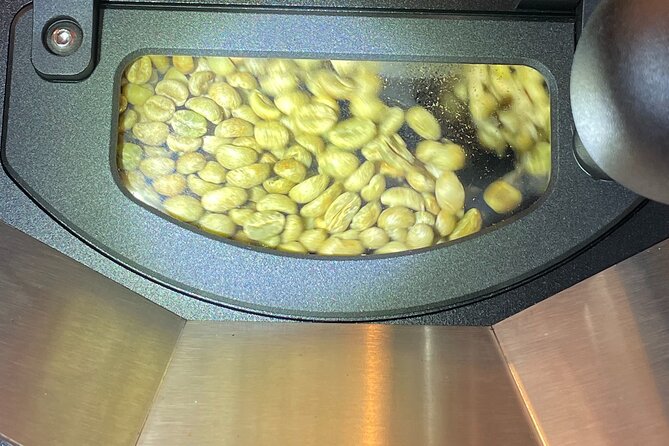
The heart of the experience is the roasting process, taught with a focus on what you’re looking for before and after roasting.
You’ll learn what to look for in green coffee (the raw beans) and how roasting turns those beans into the finished product you cup. Even if you’ve never bought a single bag of green coffee in your life, this part matters because it explains why two coffees can look similar in a bag but behave totally differently after roasting.
Here’s the “why it’s useful” angle for you:
- Green coffee gives you baseline cues. Roasting is not magic; it’s transformation.
- The roast level shapes flavor development. The same coffee can taste very different depending on how far it’s roasted.
- Aroma is a quality signal. The workshop trains you to notice that signal before you even get deep into flavor details.
During this portion, you’ll also get the sense that the staff doesn’t rush. Multiple past participants highlighted how much time the team took to teach the process and how encouraged they felt to ask questions. That matches what you want from a class at this price point. You’re paying for understanding, not just participation.
Guided cupping: learning aroma, flavor, and body
After the coffee is roasted, the workshop shifts into tasting mode. This is where the experience becomes memorable, because you’re not guessing. You’re using a guided method to assess the roast quality.
Cupping is a structured way to taste coffee and break it into parts. You’ll focus on:
- Aroma: what you smell and how it comes across
- Flavor: the main taste impressions and how they develop
- Body: the weight and texture you perceive in the cup
This is the “upgrade your palate” moment. If you’ve ever tasted coffee and thought, I like it or I don’t, cupping gives you a framework to explain why. And that means you’ll likely spot differences in roasts later, even when you’re standing in a cafe with a busy barista and a menu you can’t pronounce.
Also, if you’re worried that cupping will be intimidating, you don’t need advanced technique to participate. The workshop format is built for learning. Past guests noted that questions were encouraged, and that feedback made the tasting feel interactive instead of like a test.
And because you’re tasting freshly roasted coffee, the aromas tend to come through clearly. That freshness helps you connect what was done in the roast process to what you notice in the cup.
Your take-home 200g bag (and tasting notes)
You’ll leave with a 200g bag of roasted coffee and tasting notes. That take-home piece is more valuable than it sounds.
Why? Because roasting lessons don’t fully land until you taste again later, on your own terms. When you make coffee at home (or share it with a friend), you get a second chance to connect the tasting notes to real-world brewing.
It also helps you avoid the “cool class, gone tomorrow” problem. You’ll have an actual product to work with, not just memories and a photo.
If you’re the kind of traveler who likes souvenirs that you’ll use, this one fits. It’s not a magnet. It’s coffee you can measure and compare over time.
You can also read our reviews of more guided tours in Lisbon



Coffee and tea included: what you’ll actually drink
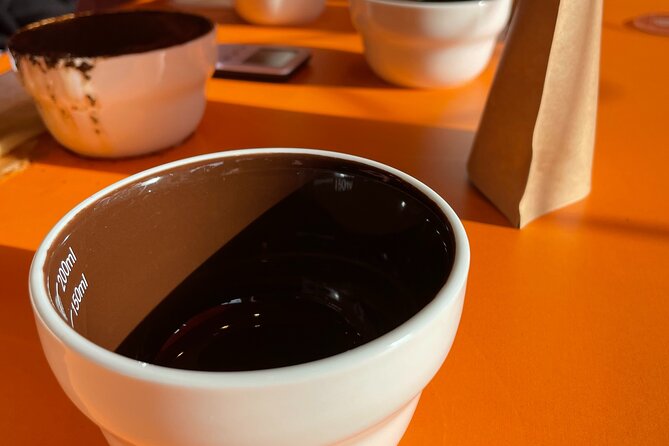
The session includes coffee and/or tea. The tea detail matters if you’re not sure you want to commit to a lot of coffee right away. Even within a coffee workshop, this kind of flexibility makes the experience more comfortable for mixed groups.
You’ll drink the roasted coffee specifically to assess quality through cupping. So you’re tasting as part of the learning flow, not just as a side perk.
Price and value: is $41.40 fair for a 1-hour roast class?
At $41.40 per person, you’re paying for a short, skill-focused workshop plus a take-home product. You’re also paying for the staff time and instruction that turns roasting from a vague concept into something you can evaluate.
Here’s the value logic I use:
- You’re getting more than samples. You’re getting roasted coffee you can take home.
- You’re learning a transferable skill: how to taste, judge aroma and body, and understand how roasting changes the cup.
- You’re in a private group, which usually means less waiting and more direct help.
If you’re already deep into coffee and you want a long masterclass, you might wish for more time. But for most people, especially those who want an efficient “start here” experience in Lisbon, it’s strong value. One hour is enough to learn the fundamentals without wasting your morning.
Who this tour suits best (and who might not)
This workshop is a great fit if you:
- Love coffee and want a clearer understanding of roasting
- Want an interactive activity that’s not just sightseeing
- Like learning by doing, especially with smell-and-taste activities
- Plan to buy coffee afterward and want better instincts in shops
It can also work well for non-coffee drinkers. One past participant said it was time well spent and that after the tasting, they were open to drinking coffee in the future. Even if you’re not a coffee person, the class structure makes it easier to understand the flavors rather than feeling stuck with a drink you don’t want.
Who might skip it?
- If your ideal experience is food-focused, this doesn’t include lunch and won’t replace a meal.
- If you want hours and hours of sampling across multiple places, this is a tight single-session format.
Tips to get the most out of your cupping session
You don’t need special equipment, but you can make your experience sharper with a few simple moves:
- Go in with curiosity, not pressure. If a flavor is hard to name, that’s normal. Use the guided prompts.
- Pay attention in the order they guide you—especially aroma first. It often sets up what you’ll taste next.
- Taste, then pause. Cupping rewards calm focus more than speed.
- Ask questions during the roast portion. That’s when the explanations connect most clearly to the final cup.
- Take your notes seriously. Your future self will thank you when you try the coffee at home.
Should you book the Roast Specialty Coffee with Guided Tasting?
If you want a hands-on, coffee-focused activity in Lisbon that teaches you something you can actually use, I’d book it. The strongest reasons are practical: you roast and taste the result, you get guided cupping structure, and you take home a 200g bag with tasting notes. It’s short, but it’s not shallow.
Skip it only if you need a longer outing, a meal included, or a purely sightseeing agenda. Otherwise, this is a smart use of a morning—especially if you’re the type who likes learning from experts without getting lost in jargon.
FAQ
Where does the tour start?
It starts at SoLo Brewing Coffee Lab, R. Pinheiro Chagas 16B, 1050-172 Lisboa, Portugal. The activity ends back at the meeting point.
What time does it begin?
The start time is 9:00am.
How long is the roast and tasting session?
It lasts about 1 hour.
Is it offered in English?
Yes, the workshop is offered in English.
What’s included in the price?
Coffee and/or tea are included. You’ll also receive freshly roasted coffee in a 200g bag.
Is lunch included?
No, lunch is not included.
Is this a private experience?
Yes. It’s listed as a private tour/activity, so only your group participates.
Can I cancel for a refund?
Free cancellation is available, with a full refund if you cancel at least 24 hours in advance of the start time.
My final take
Book this if you want to understand coffee roasting in a clear, practical way—and you’d like a bag of good roasted coffee to keep the lesson going at home. For $41.40, the combination of roast + guided cupping + take-home coffee is exactly the kind of value that makes a short tour feel worth your time in Lisbon.