REVIEW · HISTORICAL TOURS
Queer Lisbon – A Treasure Hunt in LGBT History
Book on Viator →Bookable on Viator
Lisbon hides queer stories in plain sight. This treasure hunt-style walk, led by Alex with a small-group cap, strings together LGBT history and Lisbon nightlife through a chain of specific street-level stops. You get a slow, friendly pace where you can ask questions, plus a take-home guide for what to do next.
I love how the tour ties each landmark to a human story, from the Monument to the victims of homophobia to the first drag bar in Lisbon. I also love that you leave with Alex’s LONG LIST PDF of LGBTQ Lisbon ideas and practical places to go, then finish at Late Birds Hotel for a drink with your new group. The main thing to plan for: it’s about 3 hours 30 minutes of walking in central areas, so comfy shoes matter.
In This Review
- Key highlights to look for
- Why this queer history walk beats standard Lisbon sightseeing
- Principe Real: where the hunt starts in gardens and monuments
- Health, fear, and survival: the HIV/AIDS checkpoint stop
- Clubs and dance venues: Construction, Trumps, and why they matter
- Cruising parks to lesbian institutions: from Botanical Garden to O Gato Verde
- Drag, bears, and women-run dance floors: the nightlife trail
- From courts to manifestos: how legal change took shape
- Scandal streets and church secrets: Josephine Baker, Pessoa, and Sao Roque
- Late Birds Hotel finale: pub quiz, prizes, and a pool option
- Price and value: what $60.34 buys you (and why it feels fair)
- Should you book Queer Lisbon?
- FAQ
- How long is the Queer Lisbon tour?
- What time does it start, and where do I meet the guide?
- How many people are in the group?
- Is the tour offered in English?
- Who can book, and what’s the legal drinking age?
- Is there a walking or fitness requirement?
- What’s included in the price besides the guided walk?
- Where does the tour end?
- Can I cancel for a refund?
Key highlights to look for
- Small-group energy (max 15) with time to ask questions and regroup when needed
- Story-first stops that connect past persecution to modern queer life, block by block
- Alex’s LONG LIST PDF as a real planning tool, not just a souvenir
- Nightlife you can picture clearly via long-standing venues and specific neighborhood addresses
- Ending at Late Birds Hotel with a social wrap-up (and pool option if it’s nice out)
Why this queer history walk beats standard Lisbon sightseeing
This experience works because it’s not trying to cover “all of Lisbon.” Instead, you follow a theme: queer Lisbon through places where people lived, resisted, partied, and built community. That focus makes the stories stick. It also means you’ll understand why today’s queer spots sit where they do, instead of treating them like random nightlife stops.
The pacing helps, too. It’s set up as a walk with frequent short stops, usually around minutes at each point, so you’re not stuck listening nonstop. Alex builds in pauses and checks in with the group, which matters in Lisbon when weather can change fast.
It also helps that the tour uses the modern city as your classroom. You’re moving through real neighborhoods like Principe Real, and you’re seeing how historic markers and club corners exist side by side. If you like learning while you move, this is your kind of sightseeing.
If you’re expecting a bus tour with big photo stops, you might find it more intimate—and more feet-on-the-ground—than you planned. But if you want Lisbon’s LGBTQ+ story in a way that feels readable and lived-in, the format fits perfectly.
You can also read our reviews of more historical tours in Lisbon


Principe Real: where the hunt starts in gardens and monuments
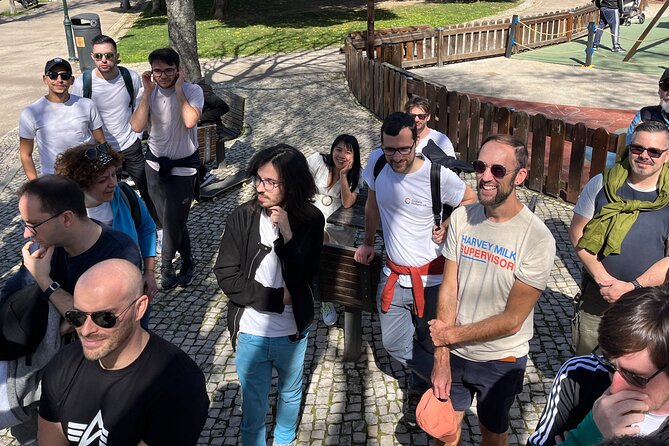
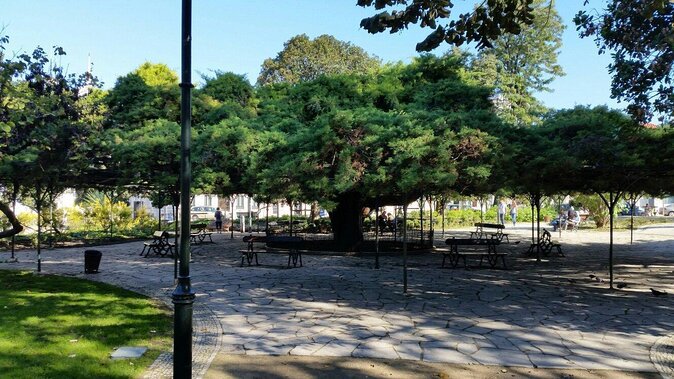
You begin at Principe Real, at the Principe Real Playground in Praça do Príncipe Real. This is a smart start because the area feels like Lisbon’s “layers in one glance”: pretty squares and gardens, but also the kind of place where history leaves traces.
Stop one sets the tone in Jardim do Principe Real. You get introductions right in the gardens, then you start threading together queer history through the surrounding streets. It’s a gentle way to orient yourself before the stories get heavier.
Stop two is Monument to the victims of homophobia in Jardim do Principe Real. This part is sober on purpose. The idea isn’t just to name suffering, but to acknowledge it and then point forward to what has changed. That balance—honest about the past, aware of progress—is a repeating pattern on the whole walk.
Then you step into Praca do Principe Real for Lisbon Pride. Alex connects local Pride energy with the larger idea of EuroPride, including Lisbon’s role as a starting point for Lisbon Pride and that EuroPride is planned for 2025. Even if you’re not traveling during Pride season, you’ll leave with a better sense of why Lisbon Pride feels rooted in the city, not imported.
Health, fear, and survival: the HIV/AIDS checkpoint stop
One of the most important stops is GAT Checkpoint LX. Here, the focus turns to managing the HIV pandemic and the real-world services that mattered during difficult years.
You’ll hear how Lisbon made progress in managing HIV/AIDS and you’ll get essential health service info targeted at queer men and women. That’s not a throwaway fact stop. It’s part of why this experience feels responsible instead of purely nostalgic—health care is part of history, too.
Even if you’re traveling casually, this is the kind of stop that gives you something usable. You’ll understand the difference between a city that has queer venues and a city that has systems that support queer people. Lisbon’s story isn’t only about nights out; it’s also about care, access, and survival.
Clubs and dance venues: Construction, Trumps, and why they matter
Lisbon nightlife has long-standing anchors, and the walk uses those anchors to tell you how community forms. Construction Lisbon Club is one of the key stops. You learn that this dance venue isn’t new—it’s been around long enough to accumulate stories, changes, and generations.
Next you move through areas where you can feel the rhythm of the city. Trumps comes later and it’s a big one: Lisbon’s largest queer nightclub, with two floors and two different vibes, since 1980. Hearing that timeline while standing in the immediate surroundings makes it easier to imagine how the scene evolved instead of treating it like a single moment.
And yes, you don’t have to be a nightclubbing person to get value here. The point is historical continuity. When a place lasts decades, you can infer something about who had the courage to keep showing up.
If you do like to party, you’ll also start spotting how to choose your kind of night. The walk primes you to think in terms of scenes, not just venues—what kind of energy each spot tends to bring.
Cruising parks to lesbian institutions: from Botanical Garden to O Gato Verde
Between the club stops, the tour uses quieter locations to describe private lives and coded spaces. The Botanical Garden of Lisbon stop focuses on stories from cruising in the 1950s parks—how men managed to dodge police and how “morals” were enforced in ways that shaped people’s behavior.
This section may feel more sensitive, but it’s handled as story and social context, not shock value. You’ll come away with a clearer understanding of why certain public spaces became charged, and why “where” mattered as much as “who.”
Then the walk shifts to lesbian history with R. de Gustavo de Matos Sequeira 42, tied to O Gato Verde (The Green Cat). This is described as Lisbon’s first lesbian bar and a real institution. The lesson here is simple but powerful: lesbian nightlife also needed gathering places, continuity, and room for identity.
When the walk pairs this with earlier Pride and monument stops, you see a bigger picture. Lisbon’s queer history isn’t only written through protests and courts. It’s also written through doors people were brave enough to open.




Drag, bears, and women-run dance floors: the nightlife trail
Some of the most fun parts of the walk are also among the most historically specific. Praça das Flores 7 is where you learn about Lisbon’s first drag bar. You hear how the 1974 revolution changed the air for drag—and how that enthusiasm didn’t last without pushback.
Then there’s Bar 106, where you can leave a message for friends. That small action adds a personal touch to a tour that’s otherwise about public history. It also helps the group bond as you’re literally doing something with the experience, not just hearing stories.
The walk continues into bear-centered spaces. Shelter Bar Lisboa is a stop for Where the Bears are (part 1). Later, Bar TR3S Lisboa covers Where the Bears are (part 2), including talk of Bear Pride, beach clubs, party nights, a sauna, and sports sponsorship. Again, you’re learning the culture, not just the address.
Finally, Purex adds another angle: a dance floor for everyone run by women, including talk of vagina jewellery. If you’re used to LGBTQ nightlife being described as one-size-fits-all, this stop helps you notice how queer communities fragment into tastes, aesthetics, and specific approaches to fun.
From courts to manifestos: how legal change took shape

Portugal’s LGBTQ+ rights didn’t appear by magic. You see that in the stop at the Constitutional Court, where you hear about legal challenges that led to constitutional protection for LGBTQ rights.
This part matters because it turns history from story-only into cause-and-effect. The tour helps you connect daily life to policy. When you understand the legal backbone, Lisbon’s modern queer scene feels less like a novelty and more like a hard-won shift.
Next comes R. Luz Soriano 44, tied to an early homosexual manifesto called Long Live Homosexuality. The stop describes early steps being suppressed, then eventual success. In other words: the pushback was real, but the ideas survived and kept evolving.
If you’re someone who likes “why” as much as “what,” these are standout stops. They give you a frame for the rest of the walk: persecution, activism, and eventual protection all show up repeatedly in different forms.
Scandal streets and church secrets: Josephine Baker, Pessoa, and Sao Roque
This walk gets wonderfully dramatic in the best way. It mixes political and personal stories, often with real addresses that make it feel like you’re walking through a living archive.
R. do Trombeta 10 focuses on the steamy story of the Two Fernandes scandal and the link to saunas. Then Maria Caxuxa highlights a woman who confounded conventions and dismissed nosey journalists in the 1940s. That stop keeps the focus on people who refused to shrink themselves to fit the rules.
Tv. da Espera 50 adds a 19th-century scandal: the Marquis of Valada naked in the arms of a common soldier, plus disgraced politicians, political blackmail, and eventual survival. It’s the kind of story that makes you realize how public life and private life have always collided in Lisbon.
At Teatro da Trindade, you get a story tied to bisexual jazz legend Josephine Baker. You’ll hear about her wartime Lisbon disguise and how she dodged secret police and spying. This stop also broadens the tour beyond Portuguese figures, showing Lisbon’s LGBTQ ties to wider European life.
Then R. da Misericórdia 125 deals with queer fiction, censorship, and compromised censors, including the idea of women in love but not with men. It’s a reminder that LGBTQ expression was often pressured into coded language.
The most intense stop is Igreja de Sao Roque. You get a window into Portuguese Inquisition-era queer history, with stories described as sex in church, lesbian nuns, a demonic penis, and a Trans love story surviving from the 16th, 17th, and 18th centuries. This is history told from fragments that endured, and it lands differently than club history. You come away with the sense that queer life has survived centuries of threat.
The last story in this stretch is Hospital St. Louis, tied to Fernando Pessoa. You’ll hear that Pessoa is recognized for his gay writing and is reclaimed today. Even if you don’t know his work, the stop gives you a sense of how art becomes part of cultural repair.
Late Birds Hotel finale: pub quiz, prizes, and a pool option
The walk ends at Late Birds Hotel, Lisbon’s largest gay hotel, at Tv. André Valente 25. The final stop is in the hotel’s lounge/bar/garden/pool area.
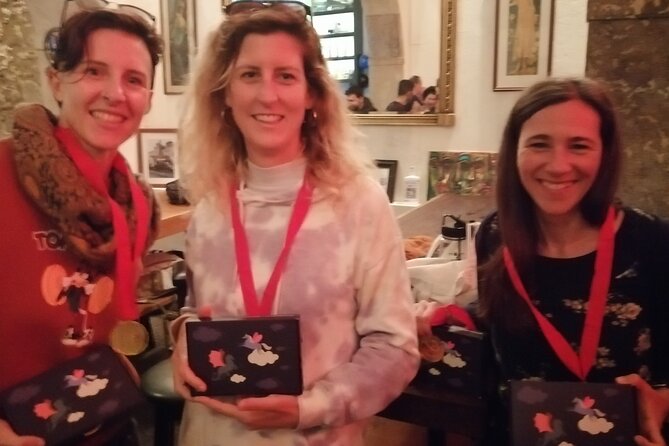
This is where the tour shifts from history lecture to social hang. There’s a pub-quiz format with prizes, and you can have a drink in the lounge/bar if you’re of legal drinking age. The tour even hints at bringing your swimming costume if weather looks good, which tells you the finish isn’t only indoors.
The practical value is big here. You’re likely to leave knowing the streets where venues are, but also leaving with names of places to try next based on how the group talked during the tour. The shared ending turns a walking experience into an actual meetup.
Price and value: what $60.34 buys you (and why it feels fair)
At $60.34 per person for about 3 hours 30 minutes, this isn’t a cheap “grab a photo and move on” add-on. But it is good value for what you actually get.
First, you’re getting a tight theme guided by Alex, plus lots of short stops that focus on LGBT history and everyday queer life. Second, the stops are described as admission ticket free, so you’re not paying entrance fees just to hear stories.
Third, the price includes a PDF copy of Alex’s LONG LIST, described as an updated guide to LGBTQ Lisbon normally valued at 15 euros. For me, that matters because the guide isn’t meant to be read once. It’s meant to help you plan what to do on your remaining days—bars, clubs, and free or low-cost ideas.
Finally, the small-group cap (maximum 15 travelers) is part of why it feels worth it. You’re not lost in a crowd, and you’re more likely to get answers when you ask something specific.
If you want a Lisbon bargain, you’ll find free ways to walk around and read plaques. But if you want the story connections made clear—and you want a plan for nightlife after—this is priced like an experience, not just a walk.
Should you book Queer Lisbon?
I’d book it if you want LGBT history in Lisbon that feels specific, street-level, and connected to the present. You’ll enjoy it most if you’re curious and you don’t mind walking through neighborhoods while you learn. Alex’s storytelling approach, the small-group feel, and the ending at Late Birds Hotel are the ingredients that make it more than a list of sites.
Skip it if you strongly prefer indoor museums only, or if you know you struggle with extended walking in outdoor weather. Also, if your goal is a single big club ticket night, this won’t replace that kind of plan. The tour is about stories and orientation, not guaranteed entry or a ticketed party.
If you’re traveling as a couple, solo, or with friends and you want a smarter way to understand what makes Lisbon queer today, this is one of the best ways to spend half a day.
FAQ
How long is the Queer Lisbon tour?
It runs for about 3 hours 30 minutes.
What time does it start, and where do I meet the guide?
It starts at 10:00 am. You meet at Principe Real Playground, Praça do Príncipe Real, 1250-184 Lisboa, Portugal.
How many people are in the group?
The tour has a maximum of 15 travelers.
Is the tour offered in English?
Yes, it’s offered in English.
Who can book, and what’s the legal drinking age?
You must be at least 16+ to book. The legal drinking age is 18+.
Is there a walking or fitness requirement?
It notes a moderate physical fitness level, and you should expect walking.
What’s included in the price besides the guided walk?
You get the guided queer history stories, Lisbon recommendations in a PDF (Alex’s LONG LIST), and you finish in the lounge/bar area at Late Birds Hotel.
Where does the tour end?
You end at Tv. André Valente 25, 1200-236 Lisboa, at Late Birds Hotel.
Can I cancel for a refund?
Yes. You can cancel for a full refund up to 24 hours in advance of the start time.