REVIEW · TUK TUK TOURS
Expert Plus Lisbon Tour with Local Guide in Private Eco Tuk Tuk
Book on Viator →Operated by Eco Tuk Tuk - Portugal · Bookable on Viator
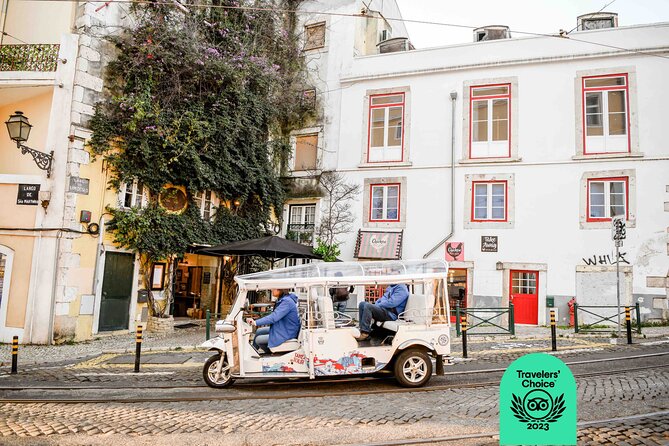
Lisbon, from a tuk tuk, feels effortless. This private 100% electric eco tuk tuk tour strings together major Belém sights and hilltop viewpoints with limited walking. I love that it saves you time with a Pastéis de Belém line-skip, and you still get a strong sense of Lisbon’s layout as your guide explains what you’re seeing.
Because your driver-guide is local, the story matters. I’ve seen guides like Sylvia, Vitor, Lionel, and Dimiz bring the city to life in clear English, with lots of practical tips and photo-stops along the way.
One heads-up: the route and photo stops are preset, and some big monuments (like Jerónimos and Belém Tower) don’t include entry tickets, so you’ll be mostly viewing them within the time given.
In This Review
- Key things to know before you ride
- The real win: limited walking on Lisbon hills
- Tagus River orientation and the 25th April Bridge photo stop
- Pastéis de Belém: the original custard tart, with a line-saver
- Jerónimos Monastery: Manueline architecture in a 100-year build
- Belém Tower Garden: fortress-meets-gateway energy
- Monument to the Discoveries: ships to India and the Orient
- The wave-front Museum of Art, Architecture and Technology stop
- Cais do Sodré, Ribeira Market, and Pink Street: where the city eats and listens
- Chiado landmarks: bookshop history and classic cafés
- Miradouros and Alfama viewpoints: Portas do Sol plus Senhora do Monte
- Graça, São Vicente de Fora, and the National Pantheon
- Chafariz de El-Rei and the old-water story
- Praça do Comércio and the post-1755 Lisbon plan
- Sé de Lisboa and the big cathedral dating back to 1148
- Bairro Alto: cobblestones, fado, and nightlife streets
- Price and value: what $17.24 gets you, and what it does not
- How guides shape the ride (and how to make it work for you)
- Should you book this Lisbon eco tuk tuk tour?
- FAQ
- What language is the tour offered in?
- How long is the tour?
- Is this tour private?
- Is the tuk tuk electric?
- Does the tour include entry tickets to Jerónimos Monastery or Belém Tower?
- Is there a line-skip for Pastéis de Belém?
- Where does the tour start?
- Where does the tour end?
- Do I get hotel pickup?
- What are the minimum age and weight requirements?
Key things to know before you ride
- Private, 100% electric tuk tuk for your group only, with up to 4 passengers per vehicle
- Skip the long line at Pastéis de Belém for the original custard tart
- Belém UNESCO highlights close together: Jerónimos Monastery and Belém Tower area
- Photo-first stops across the Tagus River, including the 25th April Bridge view
- Lots of neighborhoods without the hill grind: Baixa, Chiado, Alfama/Graça angles, and Bairro Alto
- Weather help included with blankets and protective covers against rain and wind
The real win: limited walking on Lisbon hills
Lisbon is gorgeous, and it’s also steep. This is why the electric eco tuk tuk setup feels smart: you cover ground without doing a full-day stair workout. The vehicle is 100% electric and the tour is private, so you’re not stuck in the shuffle with other groups.
I also like the extras that make the ride workable. You get blankets and protective covers if it’s rainy or windy, and the vehicles are designed to be friendly for seniors, with drivers who help you get on if needed.
The trade-off is simple: because the goal is to see many highlights fast (especially on 1–4 hour options), you’re not meant to linger for long museum-style visits.
You can also read our reviews of more guided tours in Lisbon



Tagus River orientation and the 25th April Bridge photo stop
Right away, you’re on a riverside theme. Expect time along the Tagus River with a view of the 25th April Bridge, inaugurated in 1966. You’ll hear the comparison to San Francisco’s Golden Gate Bridge because both are suspension bridges with a similar reddish-orange color.
This is a great “get your bearings fast” moment. You’ll start to understand how Lisbon’s hills roll down toward the water, and how Belém sits across the river zone. If you’re the type who likes a first visual anchor, this stop helps you place everything else you’ll see later.
You won’t be walking here for long. Think of it as a moving viewpoint and a quick photo window.
Pastéis de Belém: the original custard tart, with a line-saver
If you only want one food reason to book, this is it. Pastéis de Belém is the signature custard tart of Lisbon, and this stop is set up so you can skip the long line. The pastry shop has been cooking them since 1837, and the story ties them to the monks connected with the Hieronymites Monastery.
Time is tight—about 10 minutes for this stop—so plan like a snack run, not a full meal. You’ll want to buy your tart, grab your photos quickly, and get back to the tuk tuk so you don’t lose time for the sites that follow.
One practical tip: if you’re traveling with someone who needs food slower, ask your guide to adjust the pace during this short window.
Jerónimos Monastery: Manueline architecture in a 100-year build
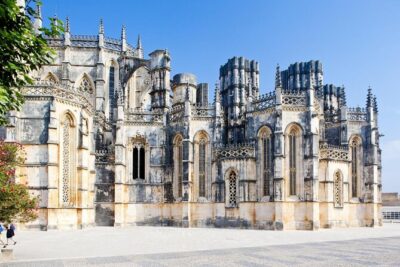
Next up is the star of Belém: the Jeronimos Monastery (Mosteiro dos Jeronimos). Expect the dramatic Manueline style, the kind of Portuguese late-medieval/early-Renaissance look with intricate stonework and nautical references—exactly the vibe you want in a city built on exploration.
The construction began in 1501 and took about 100 years to complete. It was later classified as a UNESCO World Heritage Site in 1983.
Here’s the balance to keep in mind: admission isn’t included. So within your scheduled stop (about 15 minutes), you’ll likely focus on the outside views and key photo angles unless you already planned to buy entry time on your own. It’s still worth it. Even at a glance, this place signals why Belém mattered to the Age of Discovery.
Belém Tower Garden: fortress-meets-gateway energy

From Jerónimos, you move toward the Belém Tower area. The Belém Tower Garden stop is built around another UNESCO-listed sight and the fortification that served as both defense and a ceremonial gateway to Lisbon.
Belém Tower is a 16th-century structure, and it makes a strong visual companion to the stories about Portuguese overseas voyages. If you like monuments that feel like they belong to the shoreline, this is one of Lisbon’s easiest “I get it now” stops.
Admission isn’t included here either, and your photo-time is brief (about 15 minutes). So treat it as close-looking and picture-taking, then move on with the guide’s context.
You can also read our reviews of more private tours in Lisbon





Monument to the Discoveries: ships to India and the Orient

Walk your eyes (not your legs) to the riverfront theme again with the Monument to the Discoveries. This one celebrates the Portuguese Age of Discovery—especially the era when ships departed to explore and trade with India and the Orient.
It was built between November 1958 and January 1960 to mark the fifth centennial anniversary of the death of Infante Henry the Navigator. That timing matters because it reminds you: these monuments are not just old stories. They’re also modern interpretations of national identity.
Your scheduled stop is short (around 10 minutes), but the guide narration is usually what makes it click. Listen for how the monument connects Lisbon’s harbor life to the broader map of Europe’s maritime push.
The wave-front Museum of Art, Architecture and Technology stop
You’ll also pass or pause at a museum-front view that’s described as looking like a wave of the Tagus River. The Museum of Art, Architecture and Technology opened in 2016 and connects visually with the nearby thermoelectric power station.
You won’t spend long here, but it’s a good “Belém isn’t only old monuments” checkpoint. It’s Lisbon saying: we built the future too, not just the past.
Cais do Sodré, Ribeira Market, and Pink Street: where the city eats and listens
As the route swings toward central areas, you’ll get a more everyday Lisbon feel. Cais do Sodré is known for nightlife and restaurants, but the key sightseeing stop is the riverside area around the 19th-century Ribeira Market.
Expect it to feel like a hub: a food-court setup with eclectic stalls and both international and Portuguese specialties. Then there’s Pink Street, where you’ll find bars and places associated with fado listening.
This part is a good moment to decide what you want later. Since the tour is compact, use these stops to mentally bookmark where you’d actually return for dinner or live music.
Chiado landmarks: bookshop history and classic cafés
Next comes Chiado, between Baixa and Bairro Alto. It’s known as a center for artists and intellectuals, with squares, cafés, art galleries, theaters, and shopping.
A few named landmarks you’ll hear about on this stop:
- Café A Brasileira
- Livraria Bertrand, described as the world’s oldest operating bookstore
- São Carlos Theater
If your time in Lisbon is short, Chiado helps you understand the city’s “daytime culture” side: elegant streets, historic institutions, and a walking-friendly vibe compared with some of the steepest hills.
Miradouros and Alfama viewpoints: Portas do Sol plus Senhora do Monte
Lisbon’s best photos usually come from viewpoints. You’ll hit a couple of them.
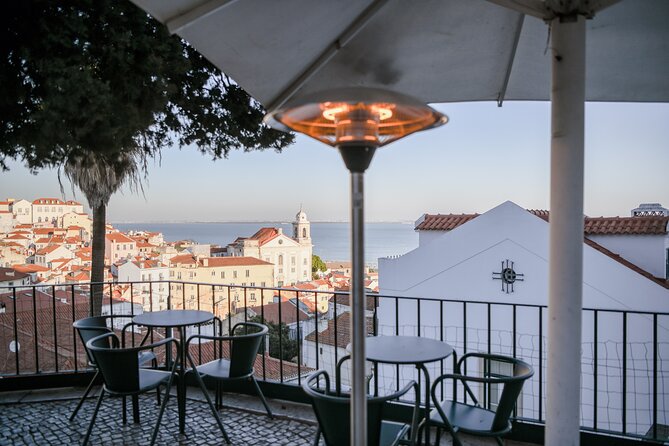
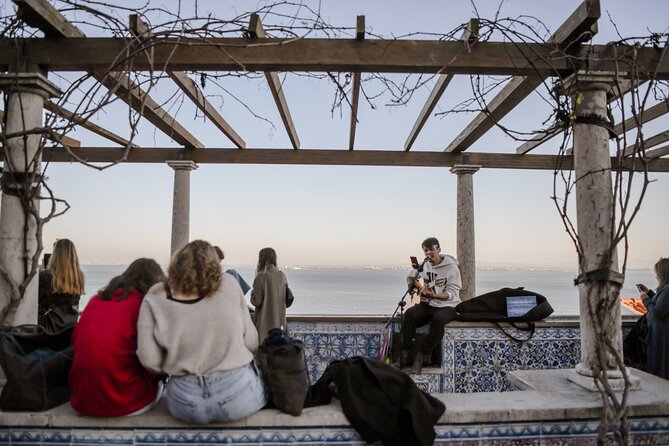
First, you’ll get the classic Largo das Portas do Sol angle in Alfama. It’s known for panoramic views across the Tagus River, Baixa Pombalina, and the Castelo de São Jorge area.
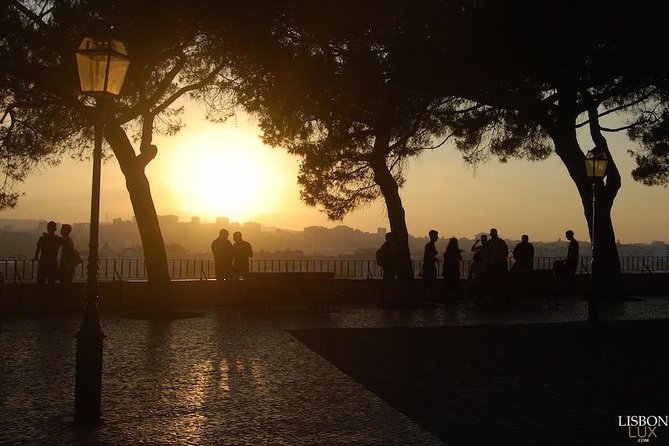
Then there’s Miradouro Nossa Senhora do Monte in the Graça neighborhood. This is one of Lisbon’s iconic viewpoints, with sweeping city-and-river views. The scheduled stop is about 10 minutes, so you’re not going to be able to do a long wander—just enough time for photos and a quick look around.
These stops are free (no entry ticket) and they matter because they stitch the whole tour together. After seeing Belém by the water, you’ll now see the city from above.
Graça, São Vicente de Fora, and the National Pantheon
After the viewpoints, the route leans into church-and-history Lisbon on the hilltops.
In Graça, you get a neighborhood feel that’s described as more traditional and less tourist-heavy, with narrow streets, community life, cafes, and lots of viewpoints. It’s also associated with landmarks like the Graça Church and the National Pantheon.
Then you’ll be near the Monastery of São Vicente de Fora, known as “de fora” because it was outside the old city walls and not under the jurisdiction of the Lisbon bishop at that time.
From there, the tour references the National Pantheon of Portugal (Panteão Nacional), located in the Church of Santa Engrácia. There was an earlier church on the site ordered in 1568 by Infanta Maria, daughter of King Manuel I.
Your time here is meant for quick stops and orientation, not long inside visits. Use it to learn what’s where, then if you want more, you’ll have a map in your head for planning a separate visit.
Chafariz de El-Rei and the old-water story
One small stop that adds flavor is the Chafariz de El-Rei. It’s the first public ornamental fountain in Lisbon, built in the 13th century during the reigns of Afonso III and Denis I.
It also ties back to practical history: it was possible thanks to good groundwater in Alfama. This kind of stop is why a guided ride feels better than just driving yourself. Even when you’re only stopping for a moment, you get the why behind the stone.
Praça do Comércio and the post-1755 Lisbon plan
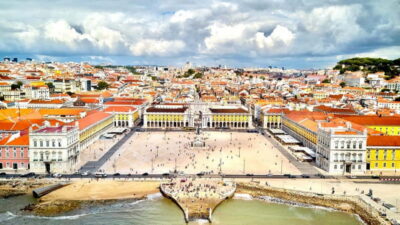
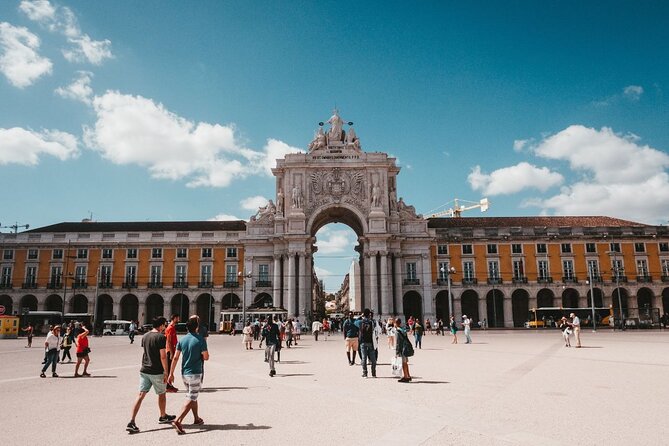
Back toward downtown, you’ll pass Praça do Comércio, still commonly called Terreiro do Paço. This huge riverside square is next to the Tagus and was the palace site of Portuguese kings for about two centuries before government buildings took over.
You’ll hear it described as one of the largest squares in Europe, about 36,000 m², with 79 arches. It’s a standout in scale and symmetry, and it’s a visual reset after the hilltop viewpoints.
This is also the area where you’ll appreciate Baixa’s story: rebuilt after the 1755 earthquake, laid out in a grid with neoclassical planning driven by the Marquis of Pombal. If you’re trying to understand Lisbon’s street layout without spending all day walking, this is exactly the right place to learn it.
Sé de Lisboa and the big cathedral dating back to 1148
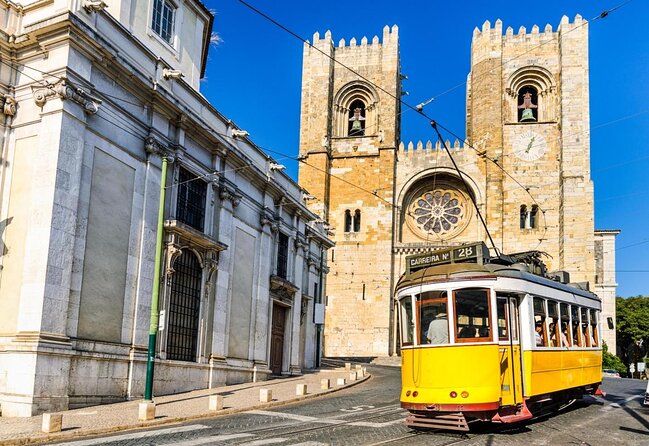
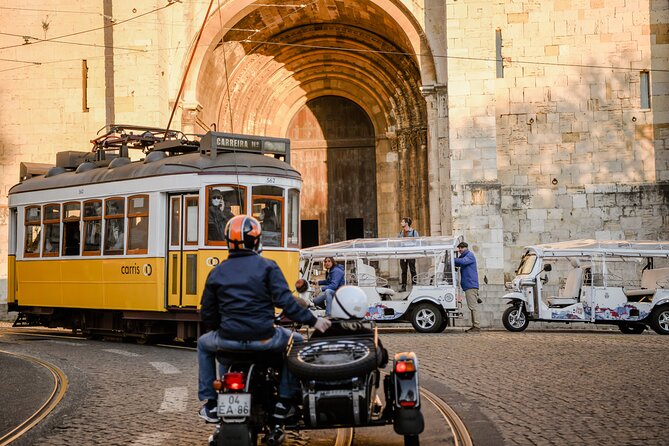
You’ll also stop near the Basilica of Saint Mary Major of Lisbon, or Sé de Lisboa, Lisbon’s metropolitan cathedral and the patriarchal seat.
Construction began in 1148, just a year after Afonso Enriques conquered Lisbon. It’s considered the oldest church in Lisbon.
This is another “listen and look” stop. Your guide’s narration will help you understand how old the city’s religious center really is, especially compared with the later Belém monuments.
Bairro Alto: cobblestones, fado, and nightlife streets
Finally, you’ll reach Bairro Alto, known for its nightlife, bohemian vibe, and cobblestone streets. It’s on one of Lisbon’s seven hills and is packed with bars, restaurants, boutique shops, and fado venues.
Your scheduled stop here is about 10 minutes. So it’s more of a quick orientation for where to return later than a deep neighborhood stroll. Still, it’s a fun contrast to Baixa’s grid: one feels planned; the other feels lived-in and winding.
Price and value: what $17.24 gets you, and what it does not
At about $17.24 per person, this tour can be strong value if you want maximum sight coverage with minimal walking. You’re paying for a private setup, an expert local driver-guide, an electric vehicle, and specific stops laid out to keep you moving efficiently.
You also get practical ride comfort: blankets for wind/rain, protective covers, and pre-selected photo stops. And the big money-saver is the Pastéis de Belém line-skip, plus the fact that many key sights are clustered in the areas you actually want to hit.
What you should budget for separately: entry tickets are not included for major monuments like Jeronimos Monastery and the Belém Tower area. So while the tour helps you see the sights and learn what’s important, you may still want to purchase entries if you care about going inside.
Also note: the duration is flexible (1–4 hours), but the route stays preset. If you want a long deep dive at one single monument, this is not that type of tour.
How guides shape the ride (and how to make it work for you)
The best moments on this tour tend to be guide-driven: clear English, good pacing, and strong storytelling.
From guide names seen in real bookings—Vitor, Lionel, Dimiz, Sylvia, Eliana, Ricardo, Ariana, Miguel, and Arthur—there’s a pattern: they’re described as friendly, prompt, and willing to handle practical questions. Some even take photos for you and keep an eye on bathroom stops, which matters more than you’d think on a short schedule.
One caution from a negative experience: if your guide focuses too much on stopping for views without explaining the scene, you may feel like you spent time parked instead of guided. Your best move is to start by telling your guide what you want most:
- views vs. inside visits
- Belém first vs. neighborhoods first
- photos at each stop vs. quick pass-through
Then ask for a pace that matches your interests while still keeping the core route on track.
Should you book this Lisbon eco tuk tuk tour?
Book it if:
- you want a private, electric way to see Belém and multiple central neighborhoods
- your walking tolerance is limited (hills are real here)
- you like the idea of a guide helping you connect monuments to stories fast
- you care most about seeing the highlights and getting oriented, not staying inside for hours
Skip it (or plan a different day) if:
- you want long, ticketed time inside Jerónimos or Belém Tower during the same outing
- you hate fixed schedules and want to change stops on the fly
- you’re expecting a fully customizable neighborhood tour
If your goal is a smart first pass through Lisbon with great photos, this is the kind of tour that can turn a time-crunched day into something memorable.
FAQ
What language is the tour offered in?
The tour is offered in English.
How long is the tour?
It runs for about 1 to 4 hours, depending on the option you choose.
Is this tour private?
Yes. It’s a private tour/activity, and only your group participates.
Is the tuk tuk electric?
Yes. The vehicle is 100% electric and sustainable.
Does the tour include entry tickets to Jerónimos Monastery or Belém Tower?
No. The Jerónimos Monastery admission is not included, and the Belém Tower area also lists admission as not included.
Is there a line-skip for Pastéis de Belém?
Yes. You skip the long line at Pastéis de Belém, and the stop includes an admission ticket listed as free.
Where does the tour start?
The meeting point is Tv. do Carvalho 25, 1200-058 Lisboa, Portugal.
Where does the tour end?
The activity ends back at the meeting point.
Do I get hotel pickup?
Hotel pickup is not included. For the 3- and 4-hour options, pickup is offered at the Lisbon Cruise Port (Jardim do Tabaco Quay), and you can choose between Time Out Market or the cruise port pickup point.
What are the minimum age and weight requirements?
The minimum age is two years old (no babies allowed). There is also a minimum mandatory weight of 9 kg.