REVIEW · HISTORICAL TOURS
Private Tour – African History in Lisbon
Book on Viator →Operated by Alfacinha LX · Bookable on Viator
Lisbon’s African story is everywhere once pointed. This private walk with Filipa Oliveira ties together slavery-era facts, neighborhood life, and what still shows up in Chafariz D’El Rei and other landmark streets. I love the way she frames Lisbon from the point of view of enslaved people, and I love the concrete, stop-by-stop details that make the city’s past feel real. One possible drawback: a small number of visitors said English clarity wasn’t always easy to follow, so if you need slow, very clear pacing, build that into your expectations.
You’ll cover about 2–3 hours on foot, from Lisbon’s Rossio area to Praça do Comércio. It’s a true private tour, so you can ask follow-up questions as you go instead of waiting for a group handler.
This isn’t a dry lecture. You’ll walk through Alfama & Mouraria and other layers of Lisbon where people and stories overlap—history, anthropology, and contemporary life in one shared city.
In This Review
- Key highlights worth planning around
- Why this Lisbon route matters: African history in everyday streets
- The walking story from Rossio to Praça do Comércio
- Stop 1: Lisbon introduction and the city’s slave-era economy
- Stop 2: Praça Dom Pedro IV and public memory in city squares
- Stop 3: Castelo, Alfama, and Mouraria—immigrant layers and the long view
- Stop 4: Chafariz D’El Rei and what a fountain can teach
- Stops 5 and 6: Praça do Comércio and Campo das Cebolas
- Filipa Oliveira’s guide style: empathy, pacing, and questions that land
- Price and timing: is $93.62 per person good value?
- Who should book this private African history walk?
- Should you book this Lisbon African history tour?
- FAQ
- How long is the Private Tour – African History in Lisbon?
- Where does the tour start and end?
- Is the tour private?
- What language is the tour offered in?
- Are there admission tickets included for the stops?
- Is free cancellation available?
Key highlights worth planning around
- A tour shaped by African heritage and Lisbon’s slave-trade economy, from the 16th century to today
- Filipa Oliveira’s empathetic storytelling, with the focus kept on lived experiences, not only dates
- On-the-ground evidence, like the fountain stop where water access is tied to slavery
- Neighborhood time in Alfama and Mouraria, not just a quick downtown drive-by
- Praca do Comercio and Campo das Cebolas, designed for thinking about commerce and arrival routes
- A comfortable walking format with breaks that can include coffee and Lisbon’s classic custard pastries
Why this Lisbon route matters: African history in everyday streets
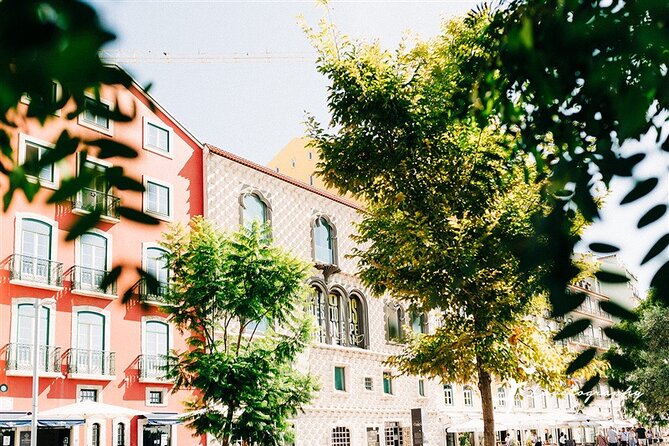
Lisbon is one of Europe’s great “attractions” cities, but it can also feel like the story was edited down to palaces and bright tiles. This tour gives you the parts that sit behind the prosperity: the labor systems, the forced movement of people, and the way those realities shaped the city’s economy and neighborhoods.
What I like most is that the tour doesn’t treat African influence as a side note. It connects the dots between Portuguese maritime power, Lisbon’s role in the Atlantic world, and the physical spaces where that history still echoes. You’re not just learning that slavery happened—you’re seeing how the city’s layout and institutions reflect that it did.
The other practical win is pacing. The route is built from shorter stops plus one longer neighborhood walk, so you get time to actually talk, ask, and look without feeling like you’re being rushed from photo spot to photo spot.
You can also read our reviews of more private tours in Lisbon

The walking story from Rossio to Praça do Comércio
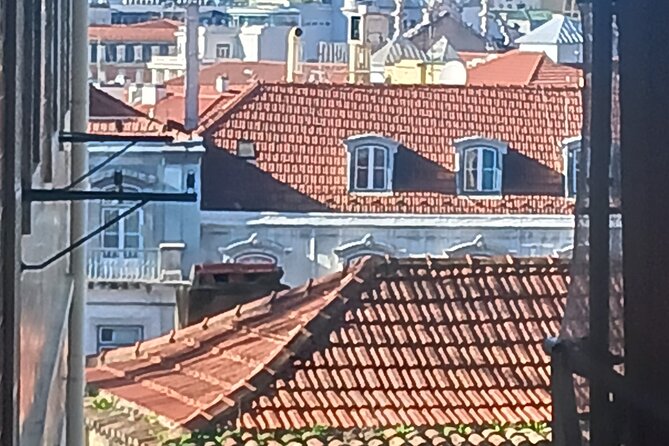
Your tour starts at Lisboa Rossio (R. 1º de Dezembro 125) and ends at Praça do Comércio. That start-to-finish arc matters because it lines up with Lisbon’s old commercial heart and the areas where power, trade, and everyday life overlapped.
You’re also getting a format that’s simple to use while you’re on the ground: a mobile ticket, English offered, and easy access to public transit near the route. If you prefer staying flexible while sightseeing, the private structure helps—your guide can slow down when a question lands or speed up when your feet need a breather.
Bring comfy shoes. Lisbon’s streets are rarely flat for long, and the charm comes with uneven stone and some uphill stretches, especially once you move toward the castle-side neighborhoods.
Stop 1: Lisbon introduction and the city’s slave-era economy
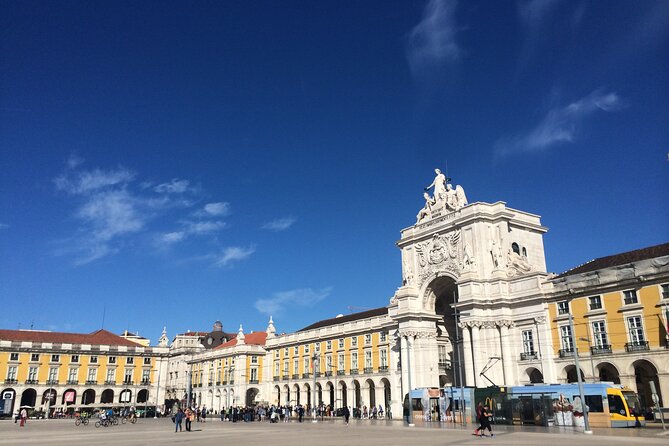
The first stop is an intro moment focused on Lisbon itself—how the importance of enslaved people in the city’s history and economy stayed “latent” yet present, from the 16th century to now. This sets expectations for the whole walk: you’ll see sites, but you’ll also keep the bigger system in mind.
In my view, this opening is the make-or-break part of a tour like this. If you start without context, the rest can turn into scattered facts. Here, you start with a framework that makes later stops feel connected rather than random.
This also helps you look at Lisbon with better timing. When you reach major squares and commercial zones later, you’ll be asking smarter questions—who benefited, where people were moved, and what stayed in place even when the city changed names and facades.
Stop 2: Praça Dom Pedro IV and public memory in city squares
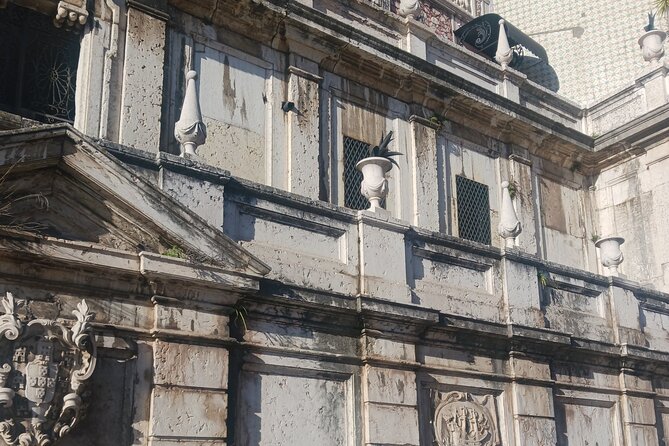
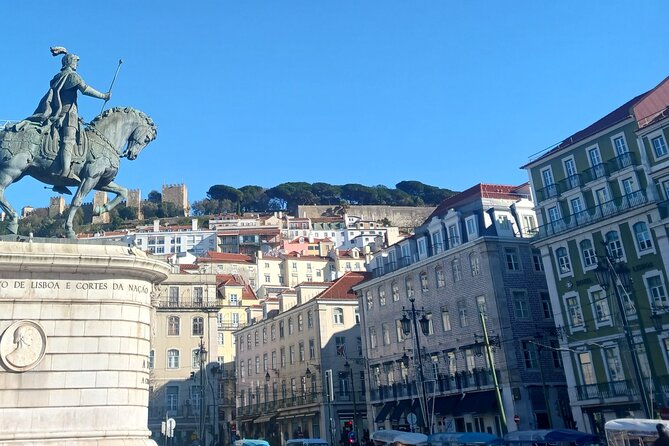
Next comes Praça Dom Pedro IV, a central public space where history connected to black Africans and enslaved people shows up through the city’s ongoing activities and meanings. A square like this often feels like a backdrop—something you pass through on the way to something else.
This is where your guide’s storytelling matters. Instead of letting the square stay generic, you connect it to how power, wealth, and visibility have long shaped who gets remembered and who doesn’t. Even in short time—this stop is brief—you’ll leave with new questions for the next corner.
If you like learning by looking, this stop gives you something to watch for: the difference between what a city celebrates on the surface and what it once relied on behind the scenes.
Stop 3: Castelo, Alfama, and Mouraria—immigrant layers and the long view
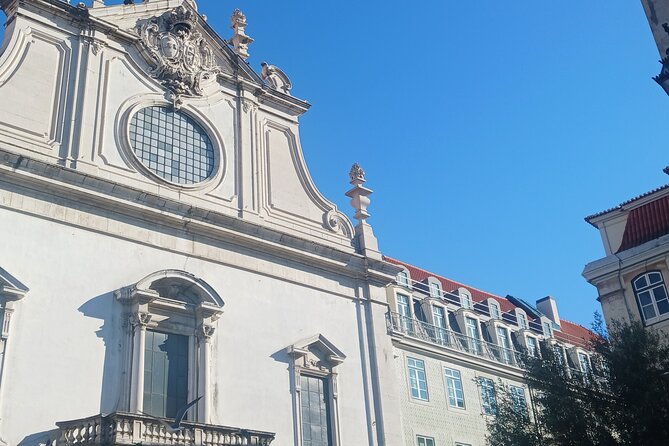
The longest segment is the walk through Castelo, Alfama & Mouraria—about an hour. This is where the tour shifts from headline history into the texture of Lisbon: typical neighborhoods where immigrant communities are part of the city’s ongoing identity and heritage.
You’ll likely notice how different the streets feel here compared with the commercial downtown areas. The route is made for slow observation—angles, stone, and the way the neighborhood holds multiple eras at once. One review highlighted that you may see ancient amphitheater ruins, which fits the broader idea: Lisbon doesn’t only carry modern life. It carries older layers too, including layers tied to who moved through and labored there.
The value for you is perspective. If you’ve ever visited Alfama and thought it was mostly atmosphere, this tour helps you read it as a space shaped by migration, power, and survival. It’s still a walk for enjoying the city—but with sharper eyes.
You can also read our reviews of more historical tours in Lisbon





Stop 4: Chafariz D’El Rei and what a fountain can teach
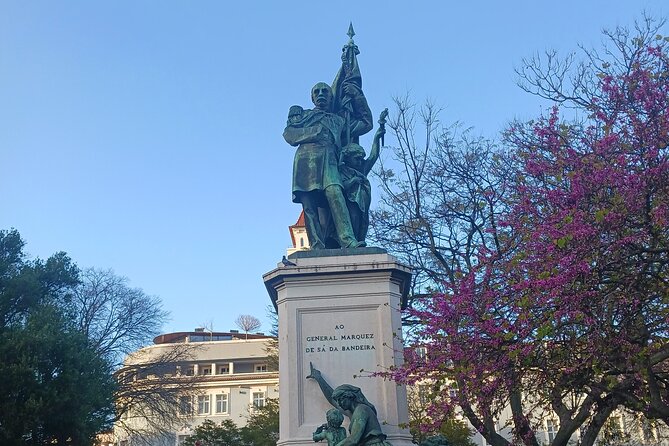
Then you get to Chafariz D’El Rei, an old fountain and one of the most striking “evidence stops” on the route. This is the place where enslaved people had their own tap to draw water.
That detail is small in words, big in meaning. Water access is not just infrastructure—it’s control. You come away understanding that inequality wasn’t only written in laws or ships’ records. It was built into daily life.
This stop is quick (around 10 minutes), but it sticks. It turns an abstract topic into something you can picture: separate taps, separate access, and a city that normalized difference through everyday systems.
If you’re the type who likes to learn with your senses—seeing, imagining, connecting—this is the moment when the tour feels most grounded.
Stops 5 and 6: Praça do Comércio and Campo das Cebolas
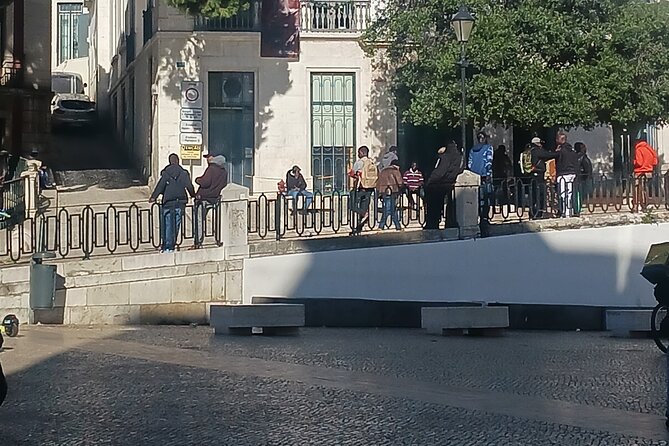
Next is Praça do Comércio, Lisbon’s main square, and a logical place to talk about commerce and city history. This is where the city’s relationship to the water and trade becomes hard to ignore. The symbolism is obvious, but the context is what makes it worth your time.
You’ll also hear connections between the square and the wider history of the city—again, keeping the enslaved people story central rather than buried. When you stand here, it’s easy to think of merchants and ships as faceless forces. The tour helps you put human experience behind those forces.
After that comes Campo das Cebolas, a commerce zone where slaves arrived from the colonies, particularly from Africa. This stop is designed for layered attention: architectural remains, different time periods overlapping, and plenty of material to talk about in the open air.
One practical note from the way guides run this kind of private route: you may find time for a break in the commercial area. Several people mentioned coffee and Lisbon’s classic custard pies (pastéis de nata). If you like a short reset during a walking tour, this is the kind of moment that makes sense to build in.
Filipa Oliveira’s guide style: empathy, pacing, and questions that land
Your guide on this experience is Filipa Oliveira, and the biggest theme in feedback is how she teaches with honesty and care. People praised her for being patient when schedules slip, and for placing information into perspective without turning it cold or clinical.
That matters because this topic can go two ways: either it becomes too polished and vague, or it becomes heavy and hard to process. The tone described here is balanced—serious, but delivered with gentleness. One visitor even noted that the storytelling can feel like it connects the dots rather than acting like a stack of unrelated facts.
If you want to get the most out of the tour, come ready with one or two questions. For example:
- How did Lisbon’s trade economy shape everyday neighborhood life?
- Where in the city do you see evidence of control and separation?
- What parts of Lisbon’s public memory feel incomplete?
Because it’s private, you’re not stuck with whatever the guide pre-planned. You can steer the conversation toward what you actually want to understand.
Price and timing: is $93.62 per person good value?
At $93.62 per person for 2–3 hours, you’re paying for a private guide plus a route that’s built around specific, not-everywhere sites tied to African heritage and slavery-era Lisbon. That price can feel steep if you were hoping for a quick overview.
But if you’re the kind of person who hates generic sightseeing, this is where the value shows up. You’re not just collecting a few landmark photos. You’re getting context and guided interpretation at multiple locations that would be easy to misread on your own.
One thing to factor: English can be a make-or-break detail. Most feedback was positive about communication, but a small number of people reported difficulties understanding. If that’s your concern, aim for clear expectations before you meet, and don’t hesitate to ask for slower explanations as you go.
Also, plan the rest of your day with walking in mind. This is a tour where you’ll be on your feet, and the route makes sense as either a morning start or an afternoon deepening session, not as a last-minute sprint.
Who should book this private African history walk?
This tour fits best if you:
- want Lisbon seen through African heritage and slavery-era context
- enjoy walking tours that mix neighborhoods, monuments, and everyday details
- like asking questions and getting answers that connect to bigger Portuguese history
- prefer a private pace instead of crowd timing
It may not be the best fit if you strongly require a very specific style of narration and language delivery. Even within private tours, communication quality can vary by day, and one experience report flagged that as a problem.
And if you’re sensitive about representation—who tells the story—be aware that one complaint mentioned the guide’s background as a concern. The guiding approach here is framed as education with empathy, but if your personal checklist includes the guide’s origin as a non-negotiable, consider that before booking.
Should you book this Lisbon African history tour?
I’d book it if you want Lisbon beyond postcards and you care about understanding how the city’s prosperity was tied to human suffering. The stop choices are practical and memorable—especially the fountain detail—and the private format makes it easier to have thoughtful conversations as you walk.
I’d hesitate only if you know you’re strict about language clarity and you’ve had trouble on tours when explanations weren’t crystal clear. In that case, ask directly about pacing and understanding when you book.
If you’re open to a serious, well-guided walking experience through central Lisbon and the castle-side neighborhoods, this is the kind of tour that leaves you looking at the city differently for the rest of your trip.
FAQ
How long is the Private Tour – African History in Lisbon?
The tour lasts about 2 to 3 hours.
Where does the tour start and end?
It starts at Lisboa Rossio (R. 1º de Dezembro 125, 1249-970 Lisboa) and ends at Praça do Comércio (1100-148 Lisbon).
Is the tour private?
Yes. It’s a private tour, meaning only your group participates.
What language is the tour offered in?
The tour is offered in English.
Are there admission tickets included for the stops?
The stops listed show admission tickets as free.
Is free cancellation available?
Yes. You can cancel up to 24 hours in advance for a full refund. If you cancel less than 24 hours before the start time, the amount paid is not refunded.