REVIEW · BELEM TOURS
Private guided tour to 7 Colinas and Belém in an electric Tuk Tuk with 4.5 hours.
Book on Viator →Operated by SPR Tours · Bookable on Viator
Lisbon’s hills feel built for a tuk tuk. This private 4.5-hour ride links major viewpoints and signature landmarks from Restauradores to Belém without turning the trip into a stair workout. I like that you get a tight sequence of famous elevators and lookout stops, plus real context from an English guide (the name Jorge comes up for a reason). One watch-out: it’s still Lisbon, so you’ll have short walks and uphill bits between photo stops.
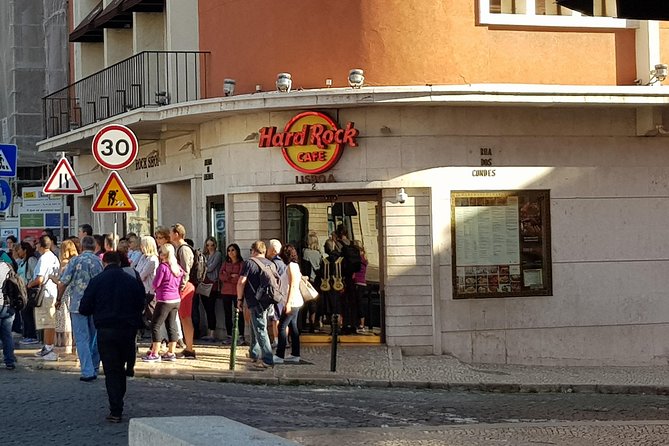
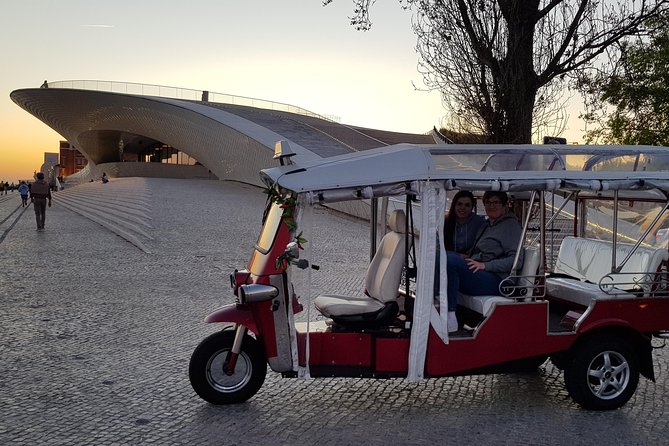
You’ll start at Hard Rock Cafe Lisbon and finish back there, with free pickup only if you’re already in the historic center. The vehicle is an electric tuk tuk, which helps you cover big distances at an easy pace while your guide keeps you pointed at what matters.
This is a good “best of” day when you want the essentials of Alfama/7 hills and Belém in one go, and you don’t want to plan a bunch of transport hops. You’re also getting a guided focus on what you’re seeing—right down to the April 25 Revolution monuments and the fado-flavored stops—without museum entry pushing the whole schedule off track.
In This Review
- Key takeaways before you go
- Restauradores and the electric tuk tuk rhythm that fits Lisbon
- Gloria Elevator, Rossio, and Santa Justa: iconic Lisbon without the fuss
- 7 hills viewpoints: Portas do Sol, Santa Luzia, and the tile-and-sky moments
- Alfama, Graça, and Senhora do Monte: the highest viewpoint payoff
- Santa Engrácia and the April 25 Revolution stops
- Eduardo VII Park, São Bento, and Tagus-side monuments
- Belém on a single day: Jerónimos, Belém Tower exterior, and Pastéis de Belém
- The value question: what your $295.45 is actually buying
- Who should book this private electric tuk tuk tour
- Should you book this Lisbon 7 hills and Belém tour?
- FAQ
- How long is the private tour?
- Where does the tour start and end?
- Is pickup included?
- What language is the tour in?
- Do I need to buy museum or monument tickets?
- Are food and drinks included?
- Is the tour private?
- What about the Pastéis de Belém stop?
- Does the tour require good weather?
- What is the cancellation policy?
Key takeaways before you go
- Electric tuk tuk for steep hills: less effort while still seeing the big viewpoints
- Multiple miradouros with frequent free photo breaks: Portas do Sol, Santa Luzia, Senhora do Monte, São Pedro de Alcântara, Eduardo VII
- Restauradores + Gloria Elevator: a classic Lisbon “start with the wow” moment
- Belém highlights in one run: Jerónimos Monastery stop plus Belém Tower exterior
- Pastéis de Belém handled by your guide: ordering is taken care of so you can focus on enjoying
- Private format: only your group, with an English-speaking guide and time for questions
Restauradores and the electric tuk tuk rhythm that fits Lisbon
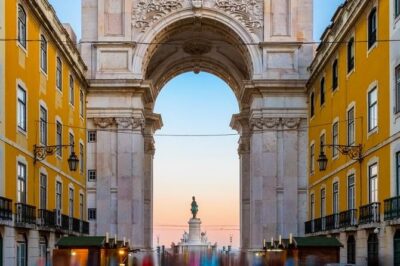
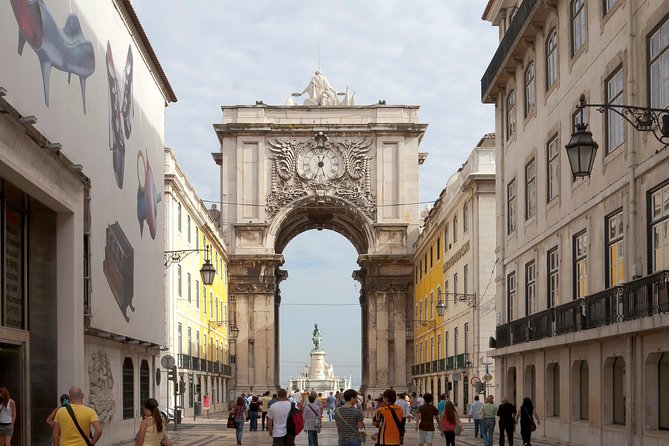
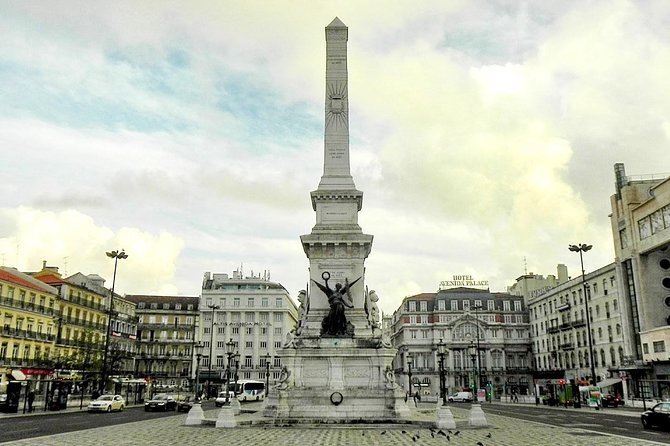
The day starts near Restauradores, where you get an immediate sense of Lisbon’s layers: the Obelisk of Independence (of Spain) and the nearby Elevador da Glória. From the jump, you’re not stuck in a single neighborhood. You’re moving across town in a way that matches how Lisbon is built—tight streets, strong slopes, and big views that pop out when you’re positioned just right.
Using an electric tuk tuk matters here. Lisbon’s best angles usually come with some physical effort—steps, short climbs, and uneven cobbles. In this tour style, the car handles most of the “getting there,” while you use your legs where it counts: arriving at the miradouros, standing in front of landmarks, and taking photos at the right moments.
You’re on a private timetable too. That means you can slow down when you spot something interesting (a tile wall, a view line, a statue detail) and you’re not squeezed into someone else’s pace. It’s also why this can feel more efficient than DIY hopping when you’re short on time.
And yes, it’s still a guided sightseeing day. Expect plenty of exterior looks and photo stops, plus a few short, low-pressure stops for viewpoints and quick monument moments.
You can also read our reviews of more guided tours in Lisbon
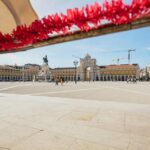

Gloria Elevator, Rossio, and Santa Justa: iconic Lisbon without the fuss
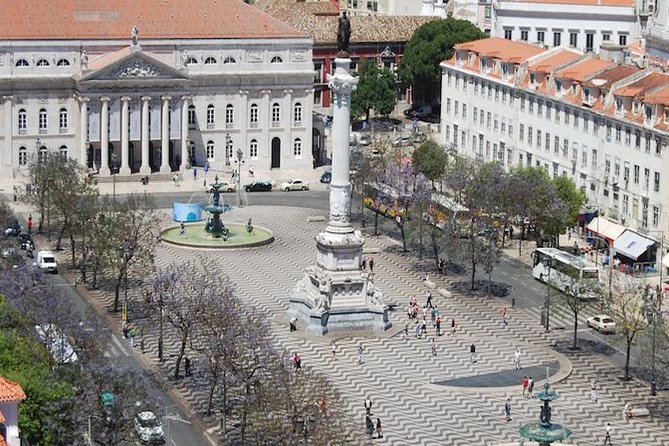
After the initial Restauradores area, the tour rolls through the city’s old-center spine—Rossio and the route of the classic landmarks that define the downtown “Lisbon postcard.” You’ll pass big-name anchors like Teatro D. Maria II and see the D. Pedro IV statue, which helps you connect the dots as your guide talks through Portuguese history and how the city grew.
Then comes the elevator factor. Elevators are not just convenient here; they’re part of Lisbon’s character and daily life. You’ll see the Gloria Elevator connection and the Santa Justa area, including the historic context around how different sections of the city used to be linked for people moving on foot between levels.
One of my favorite parts of this kind of route is how it trains your eye. Instead of seeing isolated buildings, you start noticing relationships: where streets drop, where the city opens up, and how many viewpoints are basically the “answer” to Lisbon’s hills.
Practical note: when you’re dealing with older centers, some spots are cobbled. Wear shoes you don’t mind for short walking segments, and keep your phone ready—because once you reach an open angle, the views tend to hit fast.
7 hills viewpoints: Portas do Sol, Santa Luzia, and the tile-and-sky moments
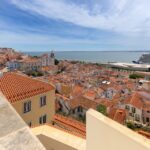
Lisbon’s miradouros are the payoff. This tour is built around them, and it’s smart: viewpoints are why you’re putting up with Lisbon’s hills in the first place. At Portas do Sol, you get one of those classic “every direction has a postcard” scenes. You can take in Alfama (often described as among Europe’s oldest neighborhoods) and the São Vicente area, and you’ll be standing where the city naturally spreads out.
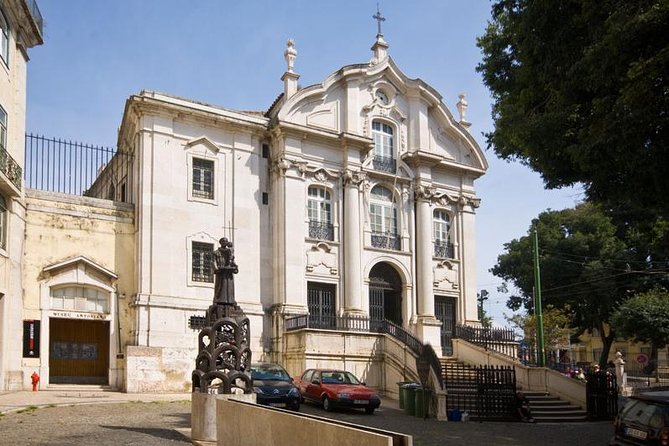
Then you’ll do Santa Luzia next, with another major view stop. Here the focus shifts slightly from skyline to detail. You’ll also get a look at the unique tile work tied to Santa Luzia Church—exactly the kind of thing that’s hard to appreciate when you’re rushing past on your own.
These stops are also a good place to pause and regroup. Even with an electric tuk tuk, your day includes moving between neighborhoods. Having built-in, short breaks at viewpoints makes the trip feel smoother. You’re not forcing yourself to “power through” the whole day.
If you want a simple strategy: use these miradouros to orient yourself. By the time you’re done with Portas do Sol and Santa Luzia, you’ll understand where Alfama sits, how the hill lines work, and why later viewpoints feel even higher.
Alfama, Graça, and Senhora do Monte: the highest viewpoint payoff
Next comes the “big climb energy” without making you do a giant climb. You pass through areas associated with fado culture and old Lisbon life—your guide points out the cues you’d otherwise miss. For example, there are references along the way to the face of famous fado singer Amália Rodrigues carved into pavement features, which is the sort of detail that makes a guided route feel personal instead of generic.
You’ll also reach Miradouro da Senhora do Monte, the highest point in the city on this circuit. This is the moment that usually makes the whole half-day feel worth it. When you’re up there, you can see why Lisbon gets mapped as seven hills, not because it’s a marketing trick, but because the city’s topography is so visually obvious.
You’ll also get photo stops and short stops around the Graça area and the churches in that higher belt of the city. The tour includes a quick window connected to Feira da Ladra, the flea market area that runs Tuesday and Saturday. Even if you’re not shopping that day, it’s useful context—because it explains the rhythm of these streets.
At this point in the tour, I recommend slowing your pace a little. Take a minute to compare what you see with earlier viewpoints. That’s when the city starts making sense fast.
Santa Engrácia and the April 25 Revolution stops
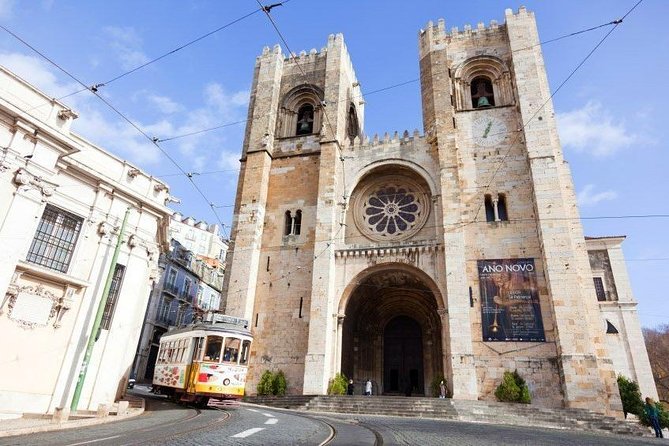
A key part of this route is the mix of view stops with history that lands in real places. One of the most direct examples is the Santa Engrácia area, where you stop for photos at the national pantheon. The guide highlights what you’re seeing—church context and how the site connects to Portugal’s story.
What makes this part feel different is the pairing of serious sites with fado and everyday Lisbon details. You’ll hear about fado through a museum stop, and you’ll also pass a drinking fountain linked to how different social classes fetched water. It’s small-scale social history, the kind that adds texture to a sightseeing day.
Then there’s the April 25 Revolution element, tied to the tour’s route of key Lisbon landmarks and monuments. This is not treated like a random “namedropping” checklist. It’s connected to the city’s real locations and what they meant, so you don’t just remember dates—you remember places.
You’ll also get a stop at Miradouro São Pedro de Alcântara, which brings you back to the view side of the experience. From there you can see the castle and the hills on the other side of the city, making it a great comparison point to the higher Senhora do Monte outlook.
You can also read our reviews of more private tours in Lisbon




Eduardo VII Park, São Bento, and Tagus-side monuments
After the hill circuit, the tour transitions toward broader city spaces and Tagus perspectives. You’ll stop at Parque Eduardo VII for another strong viewpoint moment and an exterior look at the monument connected to the 25th of April Revolution.
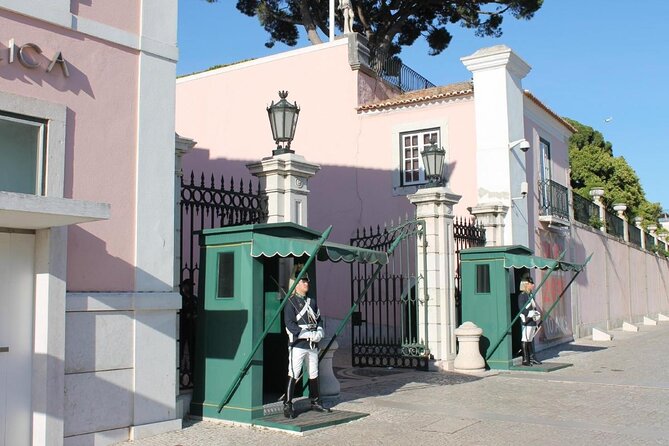
Then you move into the political heart of Lisbon with a São Bento photo stop. The guide points out that the Assembly of the Republic meets daily at the São Bento Palace. There’s also mention of the prime minister’s official residence behind the building, which helps you understand why this area feels formal compared with the older neighborhoods you’ve been walking through and looking down from.
Next comes a cultural bridge to Belém-side themes: Fundação Oriente is included as a stop you’ll pass through, and you’ll get the connection to Portuguese presence in Asia through the collections and permanent exhibition topics. Even if you don’t enter a museum, this sort of guided framing helps you make sense of why some buildings and institutions exist where they do.
From there, you’ll reach the Discoveries Monument area (Padrão dos Descobrimentos). It’s an exterior stop, but it’s packed with meaning tied to Portuguese exploration history. It also sets up Belém naturally, because Belém is where the “Portugal in the world” story is physically right on the waterfront.
Belém on a single day: Jerónimos, Belém Tower exterior, and Pastéis de Belém
Belém is where the tour turns from viewpoint-and-city to river-and-monument. You’ll be passing by big names along the Tagus: areas like Jerónimos Monastery, the Belém Tower zone, and several waterfront or museum districts (including MAAT and other institutional stops along the way).
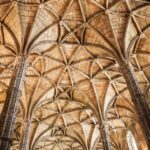
The Jerónimos Monastery stop is a clear highlight. It’s listed as a visit to one of Portugal’s most beautiful churches, and the tour includes it as a short stop. Importantly for planning, the admission ticket is noted as free on this stop, so you’re not paying extra for that specific moment.
Then comes the classic food finale: Pastéis de Belém. Your guide handles the ordering so you’re not stuck managing a line while trying to keep the tour schedule. The pastry tasting window is short, and admission is not included—so you should budget for the actual cost of pastries—but it’s one of those moments where the tour saves time in a very practical way.
After the pastry moment, you’ll continue past other Belém landmarks and institutions. The Belém Tower is included as an exterior visit, with background on how its defensive role changed over time and how parts of the structure were repurposed (dungeons mentioned as part of its later history). Even just viewing the exterior can be meaningful when your guide sets the historic context.
And yes, you’ll also see stops like LX Factory and the Cordoaria area as part of the Belém-to-city flow. These are more about atmosphere and key locations than about long museum time.
The value question: what your $295.45 is actually buying
At $295.45 per person for about 4.5 hours, this isn’t a budget excursion. What you’re paying for is coverage plus planning help.
Here’s what that looks like in real terms:
- You’re using an electric tuk tuk to connect neighborhoods that would be slower and more tiring by foot.
- You’re getting a trained guide to turn a list of places into a connected story—elevators, hills, fado touches, and revolution-related sites all get linked.
- Many viewpoint and photo stops are quick and low-cost (several are marked as free on the tour), so you can keep the day moving without constant ticket decisions.
- The Pastéis de Belém portion includes guide-led shopping, which saves energy and time at one of Lisbon’s most famous pastry moments.
What’s not included is also clear: food and drinks, and entrance tickets for museums/monuments if you choose to go inside beyond the tour’s photo/short-stop approach. So the value is strongest when you’re happy doing exterior looks and using your energy on viewpoints and guided interpretation.
Who should book this private electric tuk tuk tour
This tour fits well if you want:
- A guided way to see Lisbon’s 7 hills and Belém without building your own multi-transport day.
- A route that mixes views, landmarks, and context without turning the trip into a museum-only grind.
- A comfortable pace for a small group where you can ask questions and take photos without feeling rushed.
It may be less ideal if you:
- Want a heavy museum-entry schedule (entrance tickets aren’t included, and a lot of stops are described as photo or short breaks).
- Prefer long, slow wandering without a set order of sights.
- Are traveling in a heat-sensitive period and expect lots of time in full sun; even with car segments, viewpoints expose you.
Also, the electric tuk tuk and private format make it especially appealing for families who still want to cover a lot. One praised aspect tied to the guide Jorge is that the tour worked well even with very young kids (ages 7 and 2) while still hitting the best zones efficiently.
Should you book this Lisbon 7 hills and Belém tour?
If you have about half a day and want Lisbon’s headline hits in one guided loop, I’d book it. The route is built around the city’s real “why”: hills, viewpoints, iconic elevators, and Belém’s monuments—then it adds practical value by handling the Pastéis de Belém part.
Skip it only if you’re mainly hunting for museums you can spend hours inside, or if you’d rather do a fully self-guided, flexible day with no set sequence.
If you do decide to go, aim to book early. The tour is commonly reserved about 42 days ahead on average, and good weather matters because the experience is weather-dependent.
FAQ
How long is the private tour?
The tour lasts about 4 hours 30 minutes.
Where does the tour start and end?
It starts at Hard Rock Cafe Lisbon and ends back at the same meeting point.
Is pickup included?
Free pickup is available to match if your location is in Lisbon’s historic center. Pickup is not listed for locations outside the Old Town.
What language is the tour in?
The tour is offered in English.
Do I need to buy museum or monument tickets?
Entrance tickets to museums and monuments are not included. Some stops are listed as free for the time at that stop, but entries are not guaranteed.
Are food and drinks included?
No. Food and drinks are not included.
Is the tour private?
Yes. It’s a private tour/activity, and only your group participates.
What about the Pastéis de Belém stop?
Your guide will handle the shopping for Pastéis de Belém. Admission for that tasting is not included.
Does the tour require good weather?
Yes. The experience requires good weather. If it’s canceled due to poor weather, you’ll be offered a different date or a full refund.
What is the cancellation policy?
You can cancel for a full refund up to 24 hours in advance. If you cancel less than 24 hours before the start time, the amount paid is not refunded.