REVIEW · CRUISES & BOAT TOURS
Lisbon Sunset Sailing with Portuguese Wine and History
Book on Viator →Operated by Breeze Passion · Bookable on Viator
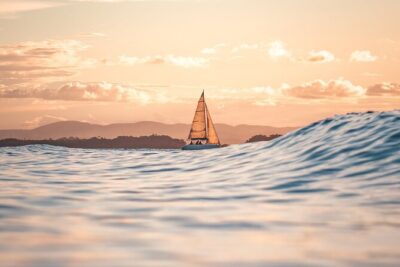
Sunset on the Tagus hits different. You get Vinho Verde on a sailboat plus a guided sweep past Lisbon and Almada’s icons. I love the mix of easy sailing time and big landmark views without the uphill walking. The one catch: it can get chilly out on open water, even when the city feels warm.
This runs about 2 hours and keeps the group small, max 14 on board. I also like that the pace stays relaxed—more looking, sipping, and learning than rushing from stop to stop.
If you’re short on time in Lisbon, this is a smart use of the late afternoon. If you hate wind or cold weather, bring a layer and plan to tuck into the provided blankets.
In This Review
- Key things that make this sunset sail worth your time
- Sunset Sailing on the Tagus: why this route feels smarter than walking
- Price and value: why $54.42 makes sense for a 2-hour sunset
- Meeting at Doca de Santo Amaro and how the timing works
- The included Portuguese wine hour: what you’ll actually get
- From 25th April Bridge to Cristo Rei: Lisbon from both sides of the Tagus
- Praça do Comércio and Arco da Rua Augusta: the riverfront after the 1755 earthquake
- St. George’s Castle and Alfama: medieval Lisbon without the stair workout
- Vasco da Gama Bridge to Time Out Market: modern Lisbon in the same frame
- Bairro Alto and Cais do Sodré: nightlife energy, seen from the river
- Belém by sail: Jerónimos, the Tower, and the maritime story in one view
- The Discoveries memorials: Hidroavião Lusitania and Padrão dos Descobrimentos
- Jerónimos Monastery and Belém Tower: UNESCO on the water level
- Small details that make the last stretch feel special
- What to wear and expect when the sun drops
- Who this Lisbon sunset sail is best for
- Should you book this sunset sailing tour?
- FAQ
- How long is the Lisbon Sunset Sailing tour?
- How much does it cost?
- Where do I meet for the tour?
- What’s included with the ticket?
- Is this a private tour?
- What language is the tour offered in?
- What major sights will I see?
- Does the tour provide hotel pickup or drop-off?
- Is the tour dependent on good weather?
Key things that make this sunset sail worth your time
- Small group sailing (max 14), so you can actually see, not just stand behind people
- Free Portuguese happy hour with Vinho Verde plus iced tea and bottled water
- Two guides on board (often Pedro and David in the experience style), with history you can follow
- The route tells a story, from the 25th April Bridge to Belem’s Age of Discovery sites
- From the water, Lisbon looks three-dimensional, especially around Alfama and the riverfront
Sunset Sailing on the Tagus: why this route feels smarter than walking
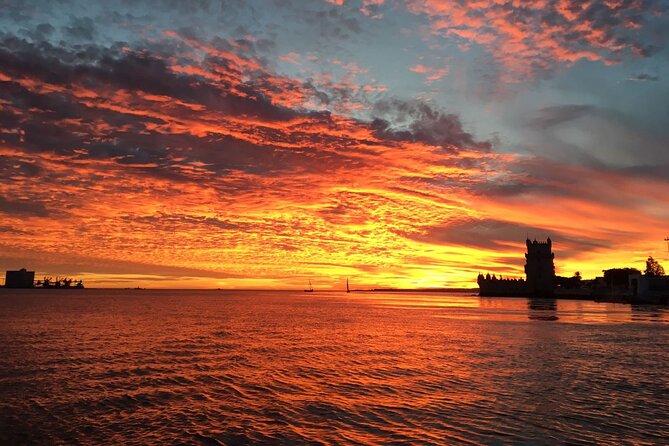
Lisbon is built on hills and riverside angles. From land, it can be hard to connect the dots. On this sail, the Tagus becomes your “map,” and the city’s layout makes instant sense.
You also get the best lighting at the right moment. Sunset from a boat softens the hard edges of stone monuments and makes the bridges look cinematic. It’s not just pretty; it helps you understand why Lisbon grew where it did—trade, defense, and travel all tied to this river.
And yes, the wine matters. This isn’t a dry lecture with one tiny sip. You’re there for an evening vibe, with Vinho Verde part of the experience from the start.
You can also read our reviews of more boat tours in Lisbon



Price and value: why $54.42 makes sense for a 2-hour sunset
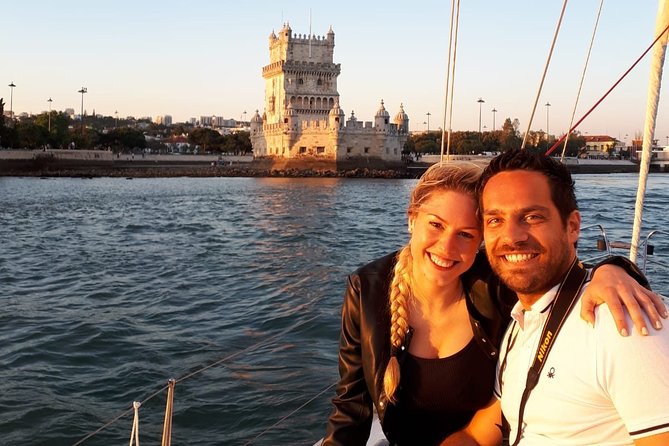
At $54.42 per person for about 2 hours, the value is in three places: time, size, and what’s included.
First, you’re buying a real chunk of evening. Two hours in Lisbon on a sailboat can replace multiple smaller plans—scouting viewpoints, then searching for a bar, then trying to fit dinner plans.
Second, the tour stays intentionally small: max 14 on board, and it’s a shared experience. That usually translates into less crowding and more personal interaction with the crew.
Third, the inclusions are practical: Vinho Verde, iced tea, bottled water, and blankets. If you’d otherwise pay for a drinks stop and a view slot, this folds a lot into one ticket.
Meeting at Doca de Santo Amaro and how the timing works
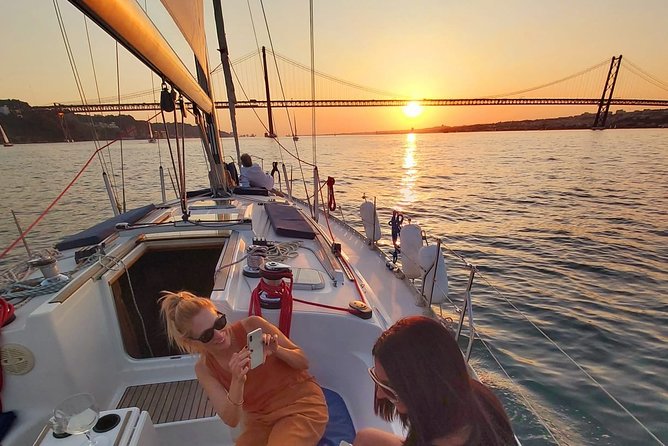
You meet at Doca de Santo Amaro (listed at 1300 Lisbon time) and return to the same point. Expect it to be easy to reach; the meeting spot is noted as near public transportation.
Because the ticket is valid only for the indicated session, treat the time on your confirmation as the real deal. Sailing tours can’t wait around the way a museum does.
Also, it’s smart to arrive a few minutes early. Even when everything runs smoothly, you’ll want time to get settled, pick a spot, and be ready as the sun starts sliding toward the horizon.
The included Portuguese wine hour: what you’ll actually get
This tour keeps it simple. You get:
- Vinho Verde (the included alcoholic drink)
- iced tea and bottled water
- blankets for cooler weather
- two crew/guides on board
That matters because it affects the vibe. You’re not paying extra every time you want a sip, and you can focus on the river and the stories instead.
In practical terms, I’d plan around the drinking being part of the mood, not a performance. The wine is there to toast the sunset. You’ll still want your phone ready for photos and your layers ready for wind.
From 25th April Bridge to Cristo Rei: Lisbon from both sides of the Tagus
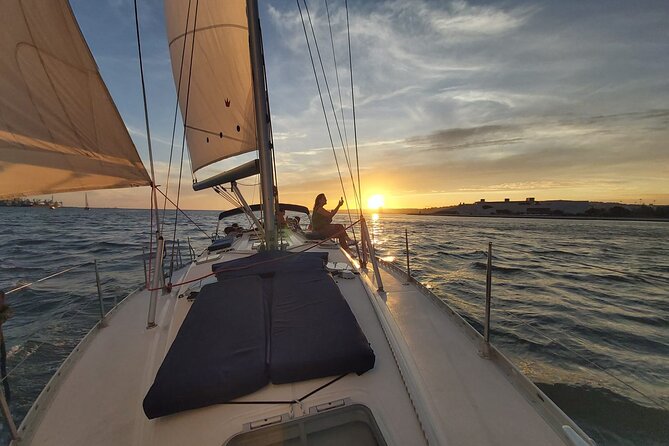
One of the best things about this sail is that it doesn’t treat the Tagus like a backdrop. It treats the river like a timeline.
You’ll pass by the 25th April Bridge, a suspension bridge over the Tagus that connects Lisbon and Almada. It was built in the 1960s and originally named the Salazar Bridge. Seeing it from the water helps you grasp scale fast—this is the kind of structure that defines how Lisbon moves.
Then you’ll angle toward Christ the King on the south bank. The monument was inspired by Rio’s Christ the Redeemer and has serious viewpoint energy over Lisbon. From a boat, you get the statue’s relationship to the city—how it watches over the river, not just over the skyline.
This section is where the sail becomes more than sightseeing. It’s when you understand the geography that shapes Lisbon’s neighborhoods.
You can also read our reviews of more historical tours in Lisbon




Praça do Comércio and Arco da Rua Augusta: the riverfront after the 1755 earthquake
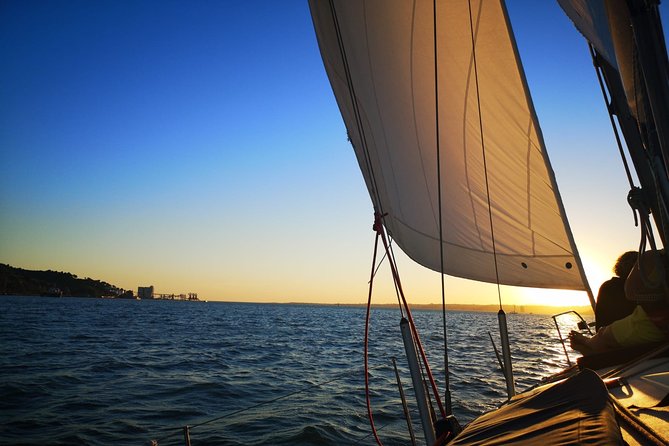
As the boat swings back toward central Lisbon, you’ll see the heart of the riverfront: Praça do Comércio (Terreiro do Paço). This grand square sits near the Tagus and is one of the largest in Europe.
You’ll also hear the story behind why it looks the way it does. The square’s earlier royal setting—the Ribeira Palace—was destroyed by the 1755 earthquake. Standing on the square would take you into museums and details. From the water, you get the big picture quickly: Lisbon rebuilt itself in public view.
Right at the entrance area you’ll spot Arco da Rua Augusta (Augusta Street Arch). Built in the 18th century, it’s decorated with sculptures and acts like a ceremonial marker into the commerce area.
From a practical standpoint, this is perfect if you don’t want to spend your evening walking hot pavement. You still get the landmarks, just with wind in your face instead of traffic at your feet.
St. George’s Castle and Alfama: medieval Lisbon without the stair workout
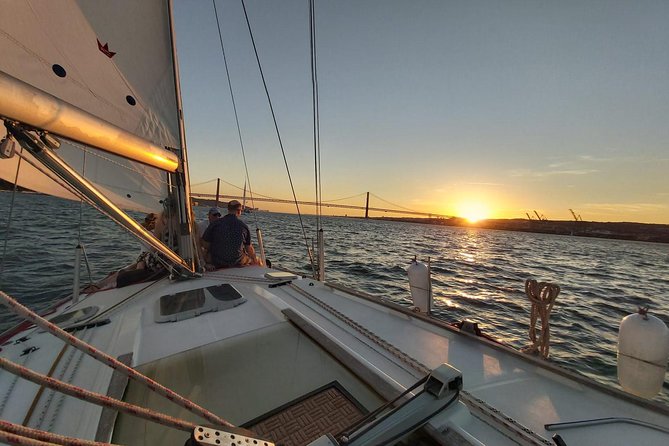
The route brings you past St. George’s Castle, a medieval castle perched over the city. It dates back to the 11th century and served as both royal palace and military fortress.
From the boat, the hill comes into view as something real, not a map symbol. You can see why this area matters: control, defense, and overlooking the river route.
Then comes Alfama, one of Lisbon’s oldest neighborhoods—winding streets, colorful houses, and a strong connection to traditional fado. Even if you don’t step into the narrow lanes during this sail, you’ll understand why Alfama is where it is.
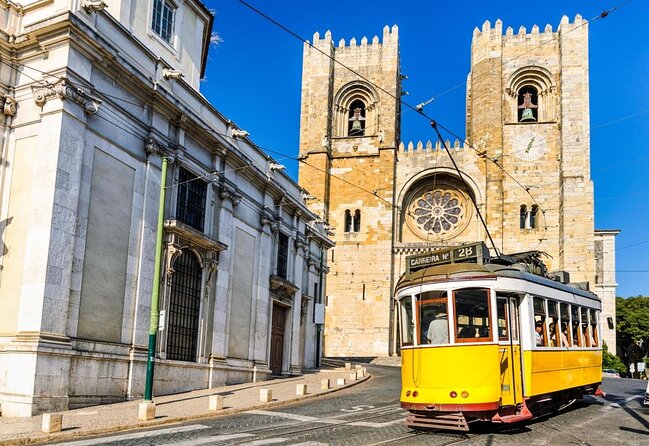
You’ll also see Sé de Lisboa (Lisbon Cathedral) in the Alfama area. Built in the 12th century, it mixes Romanesque, Gothic, and Baroque architecture. From the water, this cathedral reads like a layered timeline.
If you’re worried this will feel like a bunch of names, don’t. The boat viewpoint turns the architecture into a story you can track.
Vasco da Gama Bridge to Time Out Market: modern Lisbon in the same frame
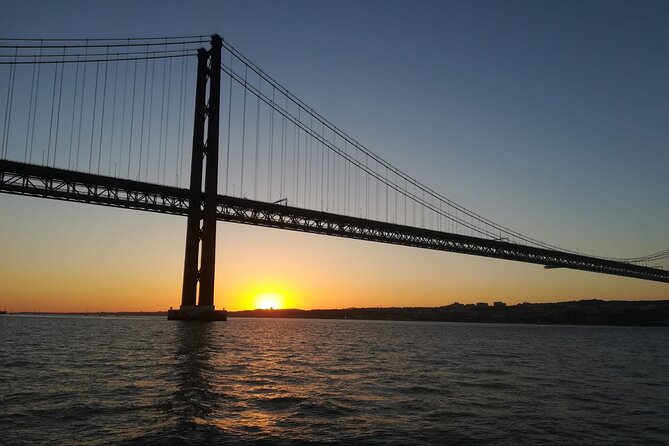
After the older core, the sail gives you a “future meets tradition” moment.
You’ll pass the Vasco da Gama Bridge, one of the longest in Europe. It opened in 1998 for the World Expo in Lisbon, and it quickly became a recognizable part of the skyline.
Then there’s Time Out Market Lisboa, a food hall in the Cais do Sodré area. It’s an update of the old Mercado da Ribeira concept, with chefs and food under one roof. Even if you don’t eat during the sail, seeing it in context helps you plan dinner later on your own.
You may also pass the National Pantheon, once a church and later converted into a national monument in the 20th century. It holds tombs of important Portuguese figures, including explorers, poets, and politicians. Again, from water you’re not going inside—you’re seeing Lisbon’s priorities mapped onto stone.
Bairro Alto and Cais do Sodré: nightlife energy, seen from the river
Lisbon’s evening mood has a couple of home bases. From the Tagus, you can catch the outlines of Bairro Alto and Cais do Sodré.
Bairro Alto is known as bohemian, with lively nightlife, street art, and traditional fado music. Cais do Sodré started as a busy port area, then shifted into a trendier zone with bars, restaurants, and street art.
This part is where I like the tour for timing. If you’ve never been to Lisbon, it helps you connect neighborhoods to what you’ll likely want after the sail—an evening drink, a fado night, or an easy late bite.
Belém by sail: Jerónimos, the Tower, and the maritime story in one view
Belém is where Lisbon’s global ambition shows up. From the boat, the riverfront sites line up like a curriculum.
You’ll see Belem Palace, the official residence of the President of Portugal, built in the 18th century and surrounded by gardens. Near it, the Pasteis de Belém Coffee House is the famed spot for pastéis de nata, a Portuguese dessert made famous here.
Then there’s the Electricity Museum, housed in a historic power station with interactive exhibits and workshops. It’s the kind of stop you’d miss if you’re only focused on monuments, and from the water it adds variety to the coastline story.
The route also brings you past the Ajuda Palace, official residence of the Portuguese royal family until the monarchy ended in 1910. Today it functions as a museum with decorative arts. Next to that, you may notice the Centro Cultural de Belém (CCB) area: a modern art museum linked to music, theater, and literature.
If you like Lisbon as a mix of old and new, this Belém segment keeps the balance.
The Discoveries memorials: Hidroavião Lusitania and Padrão dos Descobrimentos
Two standout pieces of Portugal’s exploration story appear along this stretch.
You’ll see the Hidroavião Lusitania Sacadura Cabral e Gago Coutinho monument in the Tagus near Lisbon. It commemorates the 1922 flight from Lisbon to Rio by two Portuguese aviators—an aviation chapter of exploration rather than ship travel.
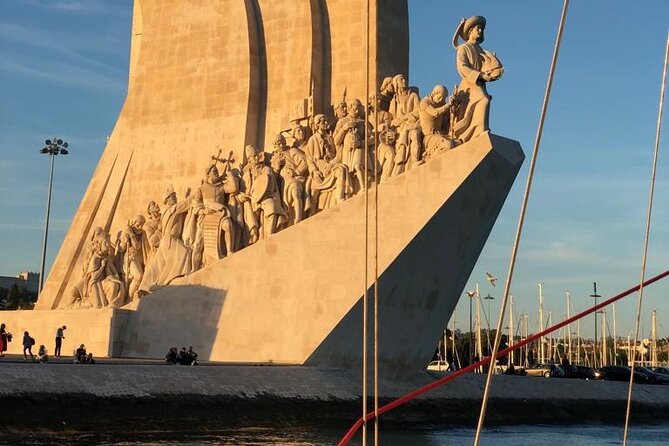
Then comes the Monument to the Discoveries (Padrão dos Descobrimentos). Built in 1960 to commemorate the Age of Discovery, it depicts famous Portuguese explorers and marks the spot where ships departed to explore the world.
This is also a moment where the water viewpoint helps you. You’re looking at Lisbon’s outbound energy from the same direction those journeys began.
Jerónimos Monastery and Belém Tower: UNESCO on the water level
These are the big hitters, and the sail gives you an impressive way to see them without hustling through crowds.
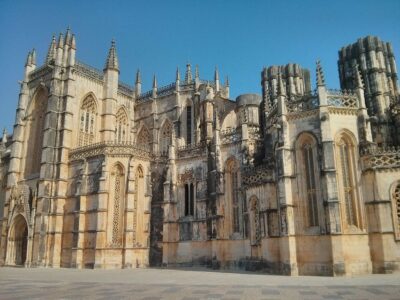
Jeronimos Monastery is a UNESCO World Heritage site and a masterpiece of Portuguese Gothic architecture. Built in the 16th century, it served as a monastery and a place of prayer for sailors departing on voyages of discovery.
Nearby, Belém Tower stands as an iconic symbol of Lisbon’s maritime heritage. Built in the 16th century, it served as a defense system and ceremonial gateway for ships arriving and departing.
From a boat, you’re at a different angle than most photos. The tower and monastery don’t just look tall; they look functional—built to face the river and the world beyond it.
Small details that make the last stretch feel special
As you near the far end of the route, you’ll also encounter other Belém-related points.
There’s the Champalimaud Research Center, a biomedical research facility established in 2004 and named after António Champalimaud. It’s modern, but it still belongs to the riverfront story of what Lisbon invests in.
And you’ll see Bugio, a small island in the Tagus with a lighthouse built in the 16th century. Its job was to help guide ships into the port of Lisbon. Even if you’re not a navigation-history person, the idea lands fast: this coastline wasn’t just scenery; it was survival and logistics.
What to wear and expect when the sun drops
A sunset sail can fool you. Lisbon can be comfortable on land, and then the wind on the water arrives like a switch.
The tour includes blankets, which helps. Still, I’d wear layers you can adjust: a light jacket plus something warm for later. Closed-toe shoes are a smart move for walking around the dock area before you get on board.
For photos, aim to take the first set early, then keep one hand free for the moment when the light turns. Sunset changes quickly, and you don’t want to miss the best color because you’re still fiddling.
Who this Lisbon sunset sail is best for
This tour fits a lot of styles of trips.
It’s great if you want:
- an easy evening plan with a clear story
- major landmarks without the walking grind
- a social, relaxed atmosphere with small-group sailing
It’s also a strong first-day activity. If you arrive tired, this kind of overview helps you understand where to focus later—Alfama for the medieval lanes, Belem for the maritime sites, and the central riverfront for the classic squares.
If you’re traveling with kids or with older family members, the format tends to work well since you stay on the boat for the main experience.
Should you book this sunset sailing tour?
If you want a sunset plan that mixes views, a real drink included, and history that connects to what you’re actually seeing, this is an excellent choice. The small group size (max 14) plus the included Vinho Verde and blankets make it feel like a thoughtful deal, not just a ticket to sit on water.
My main reason to pause is weather and cold. The tour requires good weather, and open water can feel chilly even in shoulder seasons. If you know you hate wind, consider a warmer month.
Otherwise, for most Lisbon itineraries, I’d say book it. It’s one of those rare evening activities where you get the skyline, the stories, and the relaxed pace in the same package.
FAQ
How long is the Lisbon Sunset Sailing tour?
The tour lasts about 2 hours.
How much does it cost?
It costs $54.42 per person.
Where do I meet for the tour?
The meeting point is Doca de Santo Amaro, 1300 Lisbon, Portugal. The tour ends back at the same meeting point.
What’s included with the ticket?
Included are Vinho Verde (alcoholic beverage), iced tea, bottled water, blankets, and 2 crew/guides.
Is this a private tour?
No. It’s a shared experience with a maximum of 14 travelers on board.
What language is the tour offered in?
The tour is offered in English.
What major sights will I see?
From the boat route, you’ll see landmarks such as 25th April Bridge, Christ the King, Praça do Comércio (Terreiro do Paço), Arco da Rua Augusta, St. George’s Castle, Alfama, Sé de Lisboa, Vasco da Gama Bridge, Time Out Market Lisboa, the National Pantheon, Belem Palace, Jerónimos Monastery, and Belém Tower, plus other Belém riverfront sights like the Monument to the Discoveries and Bugio.
Does the tour provide hotel pickup or drop-off?
No. Hotel pickup and drop-off are not included.
Is the tour dependent on good weather?
Yes. The experience requires good weather. If it’s canceled due to poor weather, you’ll be offered a different date or a full refund.