REVIEW · 2-HOUR EXPERIENCES
Lisbon Sailing Tour: 2-Hour Cultural Scenic Cruise with Wine
Book on Viator →Operated by RENT A BOAT · Bookable on Viator
Two hours on the Tagus feels like a reset button. This Lisbon sailing cruise pairs a traditional Portuguese wine welcome with up-close sightseeing along the river, from Jerónimos Monastery to Belém’s UNESCO icons. I especially like the small-group feel (up to 12), and the way the crew turns famous landmarks into an easy, story-driven route. One watch-out: you’re seeing most sights from the water, so it’s not a tour where you’ll go inside buildings.
I’d also plan around the fact that the boat is a shared experience with a set pace, so you’ll get great views fast, but you won’t have long, lingering moments on every stop. The upside is you’ll spend less time in lines and more time watching Lisbon slide by—bridge views, riverfront architecture, and that classic Tagus horizon.
In This Review
- Key highlights to know before you go
- Why sailing the Tagus beats a land-based Lisbon day
- Starting at Doca de Belém: the meeting point that keeps things easy
- What’s included (and what you’ll likely want anyway)
- Jerónimos Monastery and the Museum of Ancient Art: Lisbon’s “Discovery” DNA
- Belém Tower and the 25th of April Bridge: the postcard combo
- Ajuda palace and the Monument of Discoveries: symbolism from the shoreline
- Praça do Comércio and the Cristo Rei view: Lisbon framed by water
- MAAT and Cordoaria Nacional: modern Lisbon that fits the same route
- Time Out Market and Ponto Final: food culture from a scenic angle
- Onboard feel: small group sailing with a crew that talks
- Weather reality: sailing in all conditions, rescheduling if needed
- Price and value: what you’re really paying for at $48.37
- Who should book this Lisbon sailing tour (and who might not)
- Quick verdict: should you book?
- FAQ
- How long is the Lisbon sailing cruise?
- Where does the tour start?
- What’s included in the ticket price?
- Is this a private tour?
- What languages are offered?
- Can children join?
- Are pets allowed on board?
- What are the rules about food and drinks?
- What happens if the weather is bad?
Key highlights to know before you go
- Belém landmarks in one sweep: Jerónimos, Belém Tower, and the Discovery-era monuments from the river
- Welcome Portuguese wine plus non-alcohol options mentioned by guests (and 18+ rules for alcohol)
- Small-group sailing capped at 12 people, which keeps the vibe calm and personal
- Cultural stops built into the route: museums, palaces, and major squares you can spot from the water
- Modern Lisbon sightings too: MAAT and the National Rope Factory appear along the way
- Crew-led storytelling with entertaining, local guidance that keeps the 2 hours moving
Why sailing the Tagus beats a land-based Lisbon day
If you’re doing Lisbon for the first time, land days can feel like a checklist: walk, queue, read a plaque, repeat. A sailing cruise flips the order. You start with water-level views, then the landmarks make more sense because you see how Lisbon relates to the river.
I love that the route is built around Lisbon’s most recognizable waterfront—Belém, bridges, and squares—without requiring museum stamina. You’ll also get a simple form of “local context” from the skipper and crew as you pass key sites, which makes the trip feel like a guided overview rather than just pretty scenery.
The other big win is comfort. Even in a busy city, being out on the Tagus naturally cuts through the crowd stress. And when the wind cooperates, you get that rare travel feeling: relaxed, but still doing something.
You can also read our reviews of more boat tours in Lisbon



Starting at Doca de Belém: the meeting point that keeps things easy

You meet at Rent a Boat – Boat Tours and River Cruises, at Doca de Belem, Av. Brasília, 1400-038 Lisboa. This is a straightforward waterfront start area, close to public transportation, which matters if you’re not staying in the immediate center.
Because the tour ends back at the meeting point, you don’t need to figure out a complicated drop-off. For me, that’s a practical advantage: it makes it easier to pair this with other plans the same day—either before dinner or after a lighter morning of walking.
One practical detail: this is a shared tour. On a small boat, that usually means you’ll be able to hear the crew without shouting, but you should still expect some “everyone board at once” coordination.
What’s included (and what you’ll likely want anyway)
The price is $48.37 per person for a 2-hour sailing cruise with a skipper, plus Portuguese wine of choice. All taxes and fees are included, which helps you avoid the usual vacation math headache.
You’ll also get the wine right away as a traditional Portuguese welcome drink. Multiple guests describe the wine as refreshing, and it’s a big part of the casual, social mood onboard. If you don’t drink alcohol, you should still enjoy the cruise itself—the sightseeing is the headline—but keep the alcohol age rule in mind: alcohol beverages are 18+.
Food is the one area where you should set expectations correctly. Drinks and food are not included unless specified, and you cannot bring your own. The operator says they prefer to provide drinks for safety, and they won’t board anyone with an alcoholic appearance (and refunds won’t apply in that case).
That said, several guests note there are light snacks provided alongside the wine, and even juice boxes for kids. So while meals aren’t part of the deal, you probably won’t leave totally empty-handed.
Jerónimos Monastery and the Museum of Ancient Art: Lisbon’s “Discovery” DNA
Your route starts with Mosteiro dos Jerónimos (Jerónimos Monastery). Even if you never step inside, seeing it from the river gives you a better feeling for why this area mattered during Portugal’s Age of Discovery. From the water, the building reads less like a distant postcard and more like a centerpiece tied to maritime power.
Next comes Museu Nacional de Arte Antiga (Museum of Ancient Art). The museum is known for important public collections connected to Europe, Africa, and the Far East. From a cruise perspective, this stop works as a “culture bookmark”: you’re not stuck in gallery rooms, but you get the names and context that make the neighborhood feel more meaningful.
One drawback to keep in mind: because this is a sailing cruise, you’re not touring these sites inside. You’ll get sightlines and explanations, but the depth of an in-museum visit won’t happen in 2 hours.
Still, if you’re short on time—or you want to balance walking-heavy days—this pair is a smart way to connect Lisbon’s iconic architecture with the broader story of trade, travel, and art.
Belém Tower and the 25th of April Bridge: the postcard combo
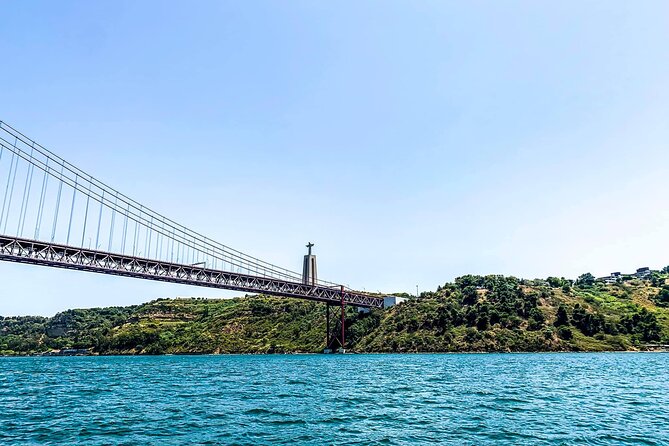
Two landmarks you’ll recognize fast are Torre de Belém (Belém Tower) and the Ponte 25 de Abril (25th of April Bridge). The tower is a UNESCO World Heritage site (inscribed in 1983), and it’s one of those places that feels instantly Lisbon—because ships, sea stories, and defensive architecture all meet in one structure.
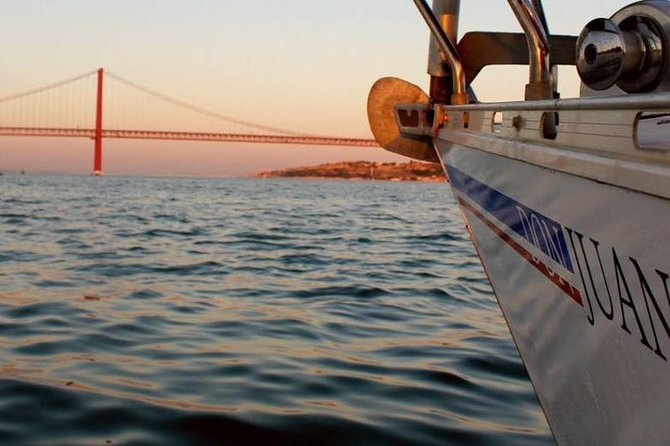
The bridge is the other anchor. From the Tagus, it’s not just a crossing; it becomes a visual marker for where Lisbon stretches and how the city faces the estuary. You’ll likely understand why locals talk about the river as a living “front door” to the city.
This is also where the sailing part really delivers. On land, these sights can be viewed in fragments. From the water, you’re moving, so the view changes every few minutes. That’s how the 2-hour time window feels worthwhile rather than rushed.
You can also read our reviews of more wine tours in Lisbon





Ajuda palace and the Monument of Discoveries: symbolism from the shoreline
As you continue, the route brings in Palácio Nacional da Ajuda (Kings Palace). The palace was converted into a museum after the establishment of the Republic, and it’s associated with collections like furniture, goldsmithing, silverware, and jewelry. Again, you’re not touring it on board, but from a river cruise you’re given a sense of why the area carries royal and maritime prestige.
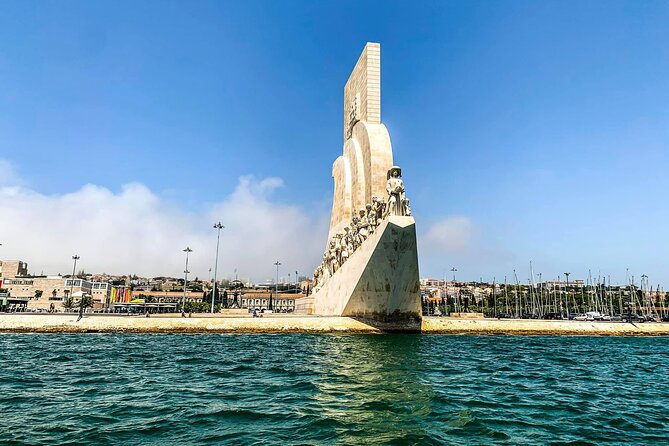
You’ll also see Padrão dos Descobrimentos (Monument of Discoveries), reconstructed in 1960 to mark 500 years since the death of Infante Dom Henrique (Henry the Navigator). The monument is essentially a public memory structure—Portuguese identity built into stone. From the water, it tends to read even more clearly because you understand what it’s pointing toward: the river, the coast, and the idea of outward journeys.
Potential consideration: if you’re the type of traveler who wants photos with “no moving background,” a boat isn’t for that. You’ll get great angles, but you’ll also get motion. If you’re sensitive to that, you might want to sit where you feel most stable and dress for wind.
Praça do Comércio and the Cristo Rei view: Lisbon framed by water
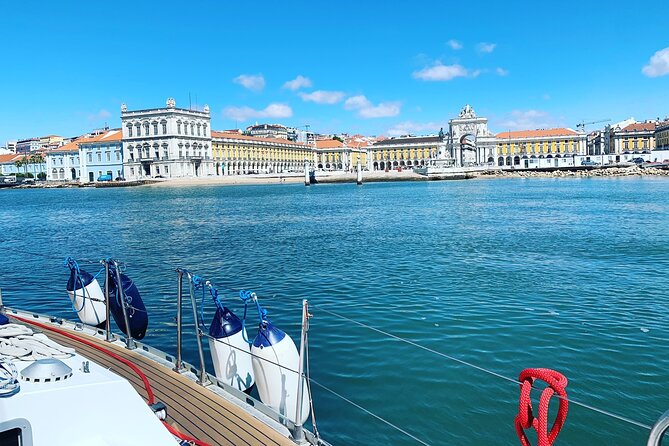
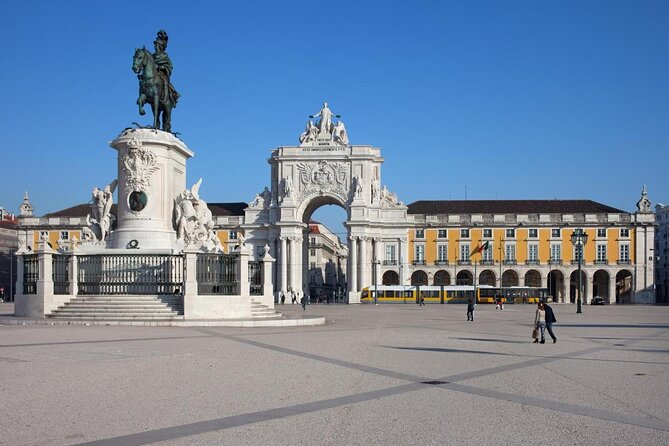
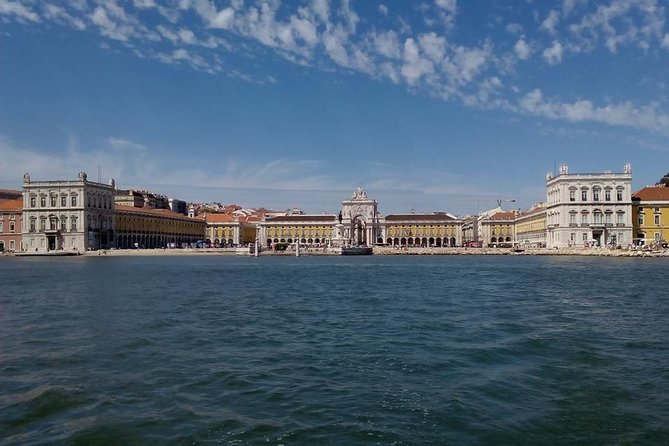
Next up is Praça do Comércio (Comercio Square). This square is famous for how it opens toward the Tagus estuary. From the boat, it’s easier to see the whole shape at once, because you’re not limited by street corners and buildings.
Then comes Cristo Rei (Christ the King). The sanctuary and religious monument dedicated to the Sacred Heart of Jesus makes a strong visual finish because it’s across the water. From the Tagus, you don’t just see a statue—you see the relationship between Lisbon’s waterfront and the broader landscape beyond.
This pairing is one of the best reasons to do the cruise at all: it gives you two different “Lisbon moods.” The commercial square side feels grounded in daily city life, while Cristo Rei adds a dramatic, contemplative layer that feels very Portuguese in tone.
MAAT and Cordoaria Nacional: modern Lisbon that fits the same route
Not every Lisbon cruise stays stuck in the past. You’ll also encounter MAAT: Museum of Art, Architecture and Technology. The museum is known not only for exhibits, but for its exterior architecture—something you can appreciate from a boat because the exterior is what catches your eye at speed.
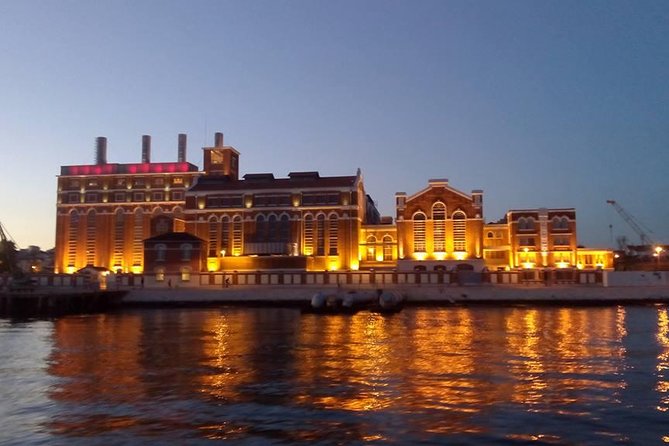
You’ll also pass Cordoaria Nacional (National Rope Factory), a former factory building tied to the Portuguese Navy, now used as a cultural space and exhibition center. This is a neat connection because it keeps the “maritime Lisbon” theme going, even when the architecture shifts from historic to modern.
If you’ve been leaning heavily into sightseeing on foot, this part of the route helps you rebalance. It reminds you that Lisbon isn’t frozen in Age of Discovery stories; it keeps reusing waterfront buildings and giving them new roles.
Time Out Market and Ponto Final: food culture from a scenic angle
You’ll hear about Time Out Market Lisbon, a place where you can find a wide range of restaurants and bars, and where local products get sold. From the river, you’re not going to “shop” or “eat” on the boat, but having the market name attached to the sightseeing helps you plan where to head next if you want a high-energy food stop after your cruise.
You’ll also see Restaurante Ponto Final (Ponto Final Restaurant) referenced as a typical Portuguese restaurant with panoramic views of the Tagus and Lisbon. Again, you’re not dining during the cruise, but the mention is useful: you’ll get a clear idea of where the view-focused restaurant culture lives along the waterfront.
Best way to use this: treat the cruise as the scenic appetizer. Then you choose a food plan that matches your night energy—market-style variety or a more sit-down view.
Onboard feel: small group sailing with a crew that talks
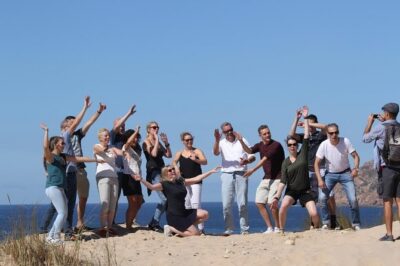
This sailing tour is capped at maximum 12 travelers per booking. That small group size is a huge part of why the overall experience tends to feel easy. On crowded walking tours, you spend time filtering people and fighting for sightlines. On a small boat, the spacing is better, and the crew can actually talk.
The skipper and crew are part of the experience, not just drivers. Guests describe hosts who are friendly, entertaining, and informative, with stories tied to what you’re seeing right then. In particular, names like John, João, José, Henrique, Marta, and Bruno show up repeatedly in customer notes, which tells me the human factor is consistent.
There are also family-friendly signals in the feedback: crews are attentive to young children, and in some departures, kids are given small moments to feel involved. That can make the trip feel less like a strict sightseeing exercise and more like a shared day out.
One practical note: you’re on a boat in the open air. If you’re prone to getting cold, bring layers. If you get seasick easily, plan accordingly—but because this is a short sailing cruise close to shore, many people find it manageable.
Weather reality: sailing in all conditions, rescheduling if needed
The operator states the cruise can operate in all weather conditions, and you’re advised to dress appropriately. That’s reassuring—so a light breeze or cloud cover shouldn’t automatically ruin your day.
Still, the experience requires good weather, and if it’s canceled due to poor weather, you’ll be offered a different date or a full refund. That’s the key point for planning: don’t assume a 2-hour window is guaranteed no matter what. Build flexibility if you can.
In practice, I recommend you wear something you can adjust—windproof layer on top, comfortable shoes, and a hat or sunglasses if the light hits hard. The Tagus can be gorgeous, and it’s also easy to underestimate how quickly the breeze cools you.
Price and value: what you’re really paying for at $48.37
At $48.37, you’re paying for three things that are hard to replicate on your own:
1) Boat time on the Tagus (which is the whole point),
2) Guided storytelling tied to real waterfront landmarks, and
3) a welcome Portuguese wine included in the ticket.
Because taxes and fees are included, you’re not likely to see surprise add-ons. And because the tour is 2 hours, it doesn’t compete with your entire day of sightseeing. It’s also good value if you’re traveling with people who like different styles—one person can focus on photos, another on history cues, and everyone still ends up with the same river experience.
The main thing you’re not getting for this price is museum entry. This is sightseeing from the water. If you want inside access to major sites, you’ll pair this with separate museum time.
Who should book this Lisbon sailing tour (and who might not)
This is a strong fit if you want:
- a relaxing break from Lisbon’s walking crowds,
- a “great views first” plan with cultural context,
- and a social onboard moment with Portuguese wine.
It’s also a decent family option because children must be accompanied by an adult, and crews have experience with young kids. Just remember the 18+ rule for alcohol beverages.
You might want to skip it if you’re planning a party vibe like a bachelor event. The operator lists it as not suitable for bachelor parties, so you’ll likely have a better time if you’re traveling for sightseeing and relaxation.
Finally, if you’re traveling with pets, note that pets aren’t allowed—only service animals are permitted.
Quick verdict: should you book?
If you’re aiming for Lisbon that feels calm, scenic, and guided without being exhausting, I’d book this. The river perspective turns landmarks like Belém Tower and Praça do Comércio into something you can actually understand in motion, and the included wine helps the whole experience feel like more than sightseeing.
Choose this cruise when you want a reliable 2-hour win: clear views, a crew that explains what you’re seeing, and an easy start and finish back at Belém. If that sounds like your kind of day, this Lisbon sailing tour is a very sensible pick.
FAQ
How long is the Lisbon sailing cruise?
It lasts about 2 hours.
Where does the tour start?
You start at Rent a Boat – Boat Tours and River Cruises, Doca de Belem, Av. Brasília, 1400-038 Lisboa, Portugal. The tour ends back at the meeting point.
What’s included in the ticket price?
The ticket includes taxes and fees, a Portuguese wine welcome (wine of choice), the skipper, and the sailing cruise.
Is this a private tour?
No. It’s a shared tour with up to 12 people per booking.
What languages are offered?
The tour is offered in English.
Can children join?
Yes, children must be accompanied by an adult.
Are pets allowed on board?
No pets are allowed. Service animals are allowed, and they count toward the boat capacity, so you need to inform the operator when reserving.
What are the rules about food and drinks?
You can’t bring your own drinks or food onboard. The operator says they prefer to provide drinks for safety, and customers with an alcoholic appearance will not be boarded.
What happens if the weather is bad?
The cruise operates in all weather conditions, but if it’s canceled due to poor weather, you’ll be offered a different date or a full refund.