REVIEW · CITY TOURS
Lisbon Private Tour – The best introduction to the city
Book on Viator →Operated by Hi Lisbon Walking Tours · Bookable on Viator
Lisbon feels confusing until someone draws the connections for you. This private walk is built for that moment, pairing Alfama and Mouraria with major landmarks so your first day starts to make sense fast. I like that it moves at a human pace while still hitting the must-see corners.
What I love most is the way the guide turns street-level sights into real context, so you don’t just look, you understand. People mention guides like Sarah, Clayver, and Keiber for being both thoughtful and flexible, and that quality matters when you’re trying to get your bearings in Lisbon’s hills and twists.
One thing to consider: it’s about 3 hours on foot, and it’s not a food tour. If you’re hungry, you’ll want to plan a snack or meal before or after, since food and drinks aren’t included.
In This Review
- Key points before you go
- Why this Lisbon start works so well
- Praça do Comércio and the big-square orientation you’ll appreciate later
- Nossa Senhora da Conceição Velha: one building, two eras of worship
- Casa dos Bicos and Saramago’s Lisbon: architecture with a modern hook
- Sé Cathedral and the idea of Lisbon as a patchwork
- Alfama: the neighborhood that still feels like old Lisbon
- Miradouros: Portas do Sol and Santa Luzia for instant city comprehension
- Calçada da Amalia: a cultural marker you can spot instantly
- Miradouro da Graça and the Sophia de Mello Breyner Andresen connection
- The Moorish-era landmark moment you can recognize on your own later
- Mouraria: walking into the fado birthplace area
- Praça da Figueira as the natural wrap-up
- Price and value: private tour math that makes sense
- What’s included, what isn’t, and how to plan your day
- Who this tour is best for
- Should you book this Lisbon private tour?
- FAQ
- FAQ
- How long is the Lisbon private tour?
- What group size is this tour for?
- Where does the tour start and end?
- What’s included in the price?
- Are food and drinks included?
- Is admission required for the stops?
- Is there free cancellation?
Key points before you go
- Private group up to 6: easier questions, more personal pacing
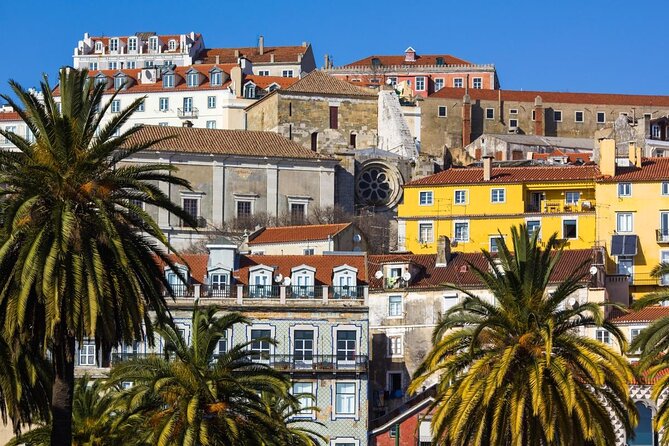
- Two neighborhoods, one clear story: Alfama and Mouraria connect through centuries
- Viewpoints on purpose: Miradouro stops help you read the city layout fast
- Major landmarks without ticket hassle: the listed sights have free admission tickets
- Real culture markers: fado references show up in Mouraria and in the Calçada da Amalia
- A clean start and finish: you begin at Praça do Comércio and end at Praça da Figueira
Why this Lisbon start works so well
The meeting point is Praça do Comércio, Lisbon’s big, formal square that makes a strong first impression. You’re not easing into the trip with some random back street. You’re starting with the city’s recognizable center, which is exactly what you want when you’re arriving and trying to build a mental map.
From there, the tour shifts into layered Lisbon, the kind you can actually see with your own eyes. You’ll move from landmark squares to old religious buildings to neighborhood lanes, and that flow is the point. A good intro tour should do two jobs: show you what’s important and teach you how to spot it again later on your own.
Also, the guide experience is a big part of the value here. This isn’t the kind of walk where you just follow a line on a map. You’re getting a professional guide, and the strongest praise points to a guide who can adjust and keep things engaging, not just recite facts while everyone trudges uphill.
You can also read our reviews of more city tours in Lisbon


Praça do Comércio and the big-square orientation you’ll appreciate later
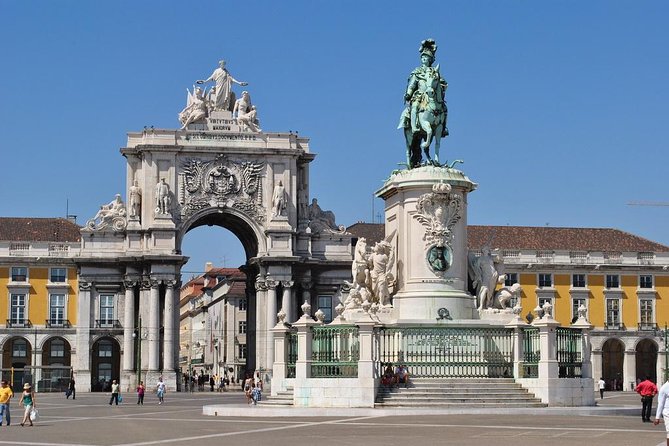
You start at Hi Lisbon Walking Tours in Praça do Comércio. Even if you think you know Lisbon already, this is still a smart first step because Praça do Comércio is a reference point you’ll likely pass again. It’s also a good place to settle in: it’s a broad open space where your guide can set the route and explain what you’ll see next.
This matters more than it sounds. Lisbon’s neighborhoods are close on a map but far in feel because of terrain, turns, and perspective. By the time you reach Alfama, you’ll understand what direction you’re going in and why. That’s how an intro tour saves you time later.
If you’re traveling with limited time on your first day, this start location is a win. You begin at a place that’s easy to recognize and get to with public transportation.
Nossa Senhora da Conceição Velha: one building, two eras of worship
One of the early stops is Igreja de Nossa Senhora da Conceicao Velha. The key detail here is what the site represents: it was built on the place of an old Synagogue back in the 16th century.
That kind of detail is why guided tours beat self-guided wandering on your first day. You’ll see churches and imagine they all came from one continuous story, but Lisbon’s past isn’t that tidy. This stop gives you a tangible example of how different faiths and communities have shaped the same city space over time.
You’ll also notice the stop is short, which helps keep the morning or early afternoon from dragging. It’s a quick moment with a strong takeaway.
Casa dos Bicos and Saramago’s Lisbon: architecture with a modern hook
Next comes Casa dos Bicos-Museu de Lisboa, an old palace built in the Manueline style by a former mayor of Lisbon. It’s also home to Jose Saramago’s Foundation, which gives the stop a modern connection without turning it into a lecture.
The Manueline style is one of those things you can’t fully appreciate from a distance. Up close, you get a feel for how ornate and specific Portuguese design can be. This is the kind of stop that works well on a private tour because you can pause when it matters and move on when it doesn’t.
It’s also a smart placement in the route. After a religious site that hints at earlier layers of Lisbon, you shift to architecture that shows Lisbon’s later confidence and artistic style.
Sé Cathedral and the idea of Lisbon as a patchwork
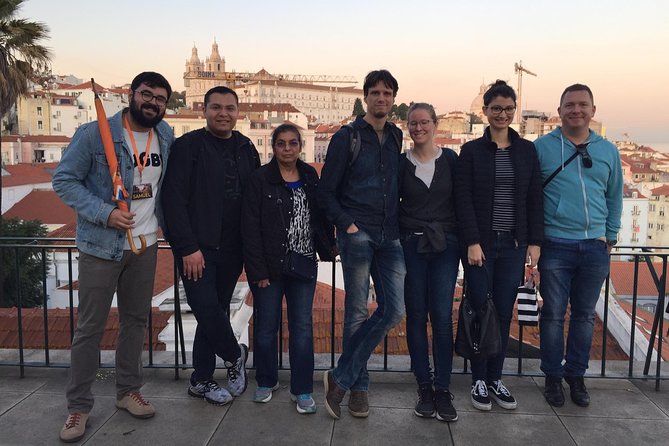
Lisbon Cathedral (Sé) is the oldest church in Lisbon, and the tour makes that fact meaningful. It was built on the place of an old Mosque, which is a powerful reminder that the city’s religious map has changed again and again.
If you like history but hate museum fatigue, this kind of stop is ideal. You’re not stuck indoors. You’re standing in the same type of space that has held different purposes across centuries. A professional guide helps you connect the dots without turning it into a long, dry timeline.
There’s also a brief stop for an old fountain built in the 14th century. Small, yes, but these are the details that make a neighborhood feel real. You’ll start noticing how often Lisbon’s long timeline shows up in ordinary street corners.
You can also read our reviews of more private tours in Lisbon





Alfama: the neighborhood that still feels like old Lisbon
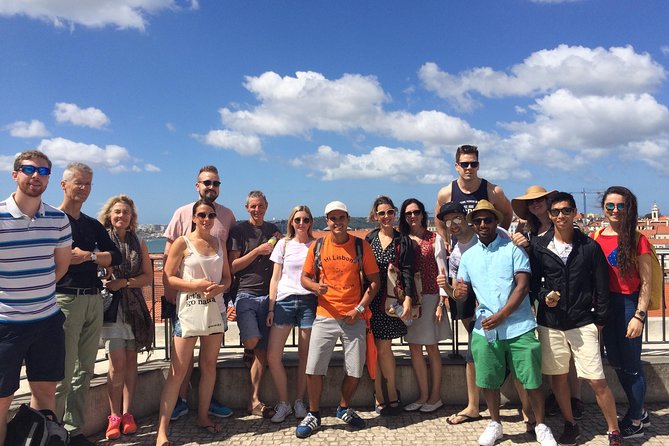
Then you enter Alfama, described as Lisbon’s oldest neighborhood. The route gives you around 30 minutes walking around the streets here, which is long enough to feel the neighborhood rather than just point at it from a distance.
Alfama is famous for its character, but what you want from a guided introduction is not just the vibe. You want to understand how streets, viewpoints, and landmarks connect. That’s where the next stops matter, since you’ll bounce between viewpoints that explain what you’re seeing below.
A private tour also helps here because you’re not negotiating with a big crowd. You can slow down when something catches your eye, or speed up when you’re focused on the route.
Miradouros: Portas do Sol and Santa Luzia for instant city comprehension
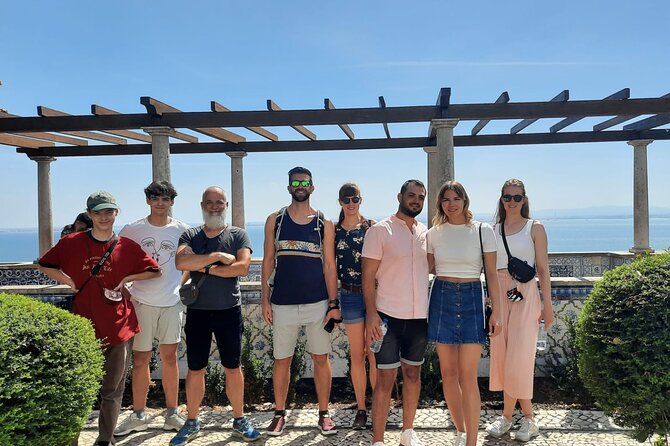
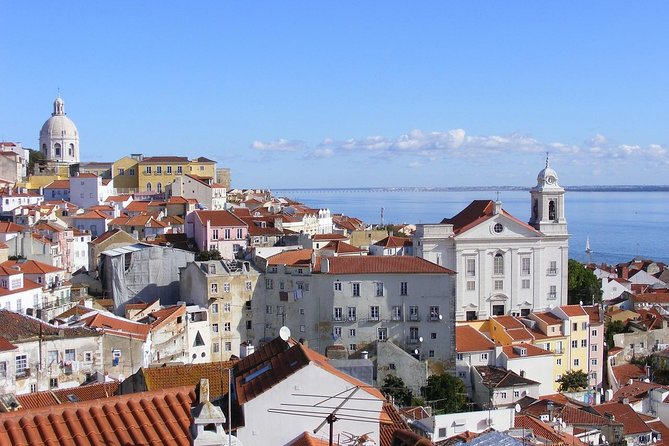
After Alfama, you hit Miradouro das Portas do Sol, one of Lisbon’s most beautiful viewpoints. You also stop at Miradouro de Santa Luzia, with its square and views around the back of Santa Luzia’s church.
These are short viewpoint breaks, around 10 minutes each, which is ideal. You get time to look, take photos, and let the view do its job. Then you move on before your legs get tired or your attention fades.
The reason miradouros belong on an introduction tour is simple: Lisbon is a city of perspectives. From below, streets look like they twist randomly. From above, the logic appears. Standing at Portas do Sol and Santa Luzia helps you read the city’s layout so later, when you explore on your own, you don’t feel lost in the hills.
Calçada da Amalia: a cultural marker you can spot instantly
One of the most memorable, low-effort stops is Calcada da Amalia. This is a famous work with Portuguese stones that features the face of Amalia Rodrigues, often described as the queen of fado.
Even if you’re not a hardcore fado fan, this kind of street art matters. It’s a quick way to learn what Lisbon values in its everyday visuals. And it’s also easy to love because it’s direct: you see it, you recognize it, and you move on with your eyes refreshed.
It’s also a nice break from heavier landmark stops. The walk keeps rolling, but the tone shifts into something lighter and more human.
Miradouro da Graça and the Sophia de Mello Breyner Andresen connection
Next is Miradouro da Graca (Sophia de Mello Breyner Andresen). Another viewpoint, another chance to understand the city from above. This stop is timed around 10 minutes, which means it’s enough to absorb the view without turning into an all-day “standing and staring” moment.
Why it matters: Graça sits in the story of Lisbon’s identity, and the name itself points to how the city honors different forms of culture. On a first visit, these details help you feel Lisbon as a living place, not just a list of attractions.
The Moorish-era landmark moment you can recognize on your own later
As you continue, there’s a stop for a landmark originally from the Moorish period, noted as one of Lisbon’s most famous. The route doesn’t slow down here for a long lecture, but it gives you that important anchor: Lisbon didn’t only become itself in Christian times.
Even without a long museum explanation, you’ll come away with the idea that Moorish influence is not a distant footnote. It’s part of how Lisbon’s spaces were formed. Later, when you see similar architectural cues, you’ll know what you’re looking at.
Mouraria: walking into the fado birthplace area
Then you shift into Mouraria. The tour includes a walk around the streets here, starting at Monumento Mouraria Berco do Fado, described as the fado cradle.
This is where the tour’s theme clicks. Lisbon isn’t only about buildings and views. It’s about sound and community identity too. Mouraria is tied to the Moors after the conquest of the city by Christians, which gives the area a strong cultural-geographic backstory.
You’ll spend about 30 minutes in Mouraria streets, which is enough to feel like you’re in a neighborhood rather than just passing through. And because it’s private and small-group (up to 6), you get a better chance to ask questions if anything feels confusing.
Praça da Figueira as the natural wrap-up
You end at Praça da Figueira, a recognizable central square. The value of ending in a major square is practical: after three hours, you want an easy place to reorient yourself and decide what to do next.
Since food and drinks aren’t included, this end spot is a good setup for your next move. You can grab a meal nearby or keep exploring at your own pace without needing to navigate your way back to a transit-friendly area.
Price and value: private tour math that makes sense
The tour costs $181.48 per group, up to 6 people, and it runs about 3 hours. The big value question is: what does that work out to per person?
- If you book as a full group of 6, it’s roughly $30 per person.
- If you book for 2 people, it’s roughly $91 per person.
That range is why private tours feel like a steal for small groups and like a splurge for solo travelers. If you’re traveling as two or a family of three, it still can be worth it, especially because you get a professional guide and a focused route through Alfama and Mouraria.
Also, this tour tends to be booked about 63 days in advance, which tells me it’s popular and can sell out during busy periods. If your schedule is set, I’d book sooner rather than later.
What’s included, what isn’t, and how to plan your day
Included: a professional guide. Tickets for the listed stops are shown as free, so you’re not stuck paying extra entry fees on the street.
Not included: food and drinks. So plan a meal break before the tour or after. If you’re doing this as your first half-day, I recommend eating earlier so you can stay focused while you walk.
You’ll also get a mobile ticket, and the tour is in English. It’s labeled as near public transportation, which makes it easier to fit into a bigger sightseeing plan.
Who this tour is best for
This is a great fit if you want an introduction that actually helps you navigate later. You’ll get key landmarks, viewpoints, and two neighborhoods that many visitors struggle to connect into one coherent picture.
It’s also a strong choice if you like asking questions. With a small private group, the guide can respond and adjust. That flexibility is part of what’s praised, including mentions of guides being knowledgeable and flexible about meeting needs.
If you hate walking and want a sit-down day, this may feel like too much. But if you can comfortably do about 3 hours on foot, you’ll likely enjoy the pace and variety.
Should you book this Lisbon private tour?
I think you should book it if your goal is a first-day setup: see the big squares, understand why Alfama and Mouraria matter, and leave with a city map that lives in your head.
Skip it (or pair it with a lighter plan) if you already feel confident navigating Lisbon and you don’t want a structured route. This tour shines when it gives you structure. If you want pure wandering with no guidance, you may prefer a different style of exploration.
FAQ
FAQ
How long is the Lisbon private tour?
It lasts about 3 hours.
What group size is this tour for?
It’s a private tour for your group only, up to 6 people.
Where does the tour start and end?
It starts at Praça do Comércio (1100-148, Portugal) and ends at Praça da Figueira (1100-241 Lisboa, Portugal).
What’s included in the price?
A professional guide is included.
Are food and drinks included?
No, food and drinks are not included.
Is admission required for the stops?
For the listed stops, admission tickets are free.
Is there free cancellation?
Yes. You can cancel up to 24 hours in advance for a full refund.