REVIEW · ALFAMA & OLD TOWN TOURS
Lisbon: Private City Tour in Alfama and Chiado with Tuk Tuk
Book on GetYourGuide →Operated by Syed Shamiul Alam · Bookable on GetYourGuide
Lisbon’s hills make everything an experience. This private 100% electric tuk tuk tour is a fast, friendly way to see big sights across Chiado and Alfama without spending your whole day climbing stairs. I like that you get guided context on neighborhoods and viewpoints, and you roll through the city in a vehicle built for Lisbon’s slopes. One fair warning: at this pace, some stops can feel short, so if you want long sits-down at churches, you may want to pair it with extra time afterward.
If you’re doing your first visit (or you’re pressed for time), this is a strong “get oriented” ride. You’ll pass iconic squares, dramatic lookouts, and dense old-street areas—then end back at Mercado da Ribeira with your legs mostly intact. The route is also customizable to your interests, and the guide can adjust when the city throws curveballs.
In This Review
- Key highlights worth planning around
- Why this tuk tuk tour fits Lisbon’s “up and down” reality
- Getting your bearings: Mercado da Ribeira and the Chiado start
- Praça do Comércio and Baixa: start with Lisbon’s big open spaces
- Chiado and Praça do Município: the “classic center” vibe
- Rossio and Santa Justa: iconic Lisbon views you don’t have to chase
- Sé de Lisboa (Lisbon Cathedral): a stop that changes your perspective
- Miradouro de Santa Luzia and Portas do Sol: Lisbon’s postcard viewpoints
- Teatro Romano and Miradouro da Graça: history plus a view
- Senhora do Monte and São Vicente de Fora: the uphill payoff
- Feira da Ladra and the Pantheon area: culture you can sense
- Alfama proper and Casa dos Bicos: the classic old-street feeling
- The guide is the difference: Sam/Sami-style service and flexibility
- Price and value: is $58 worth it?
- Who this tour is best for (and who should skip it)
- What to do before and after your tuk tuk loop
- Should you book this Lisbon Alfama and Chiado tuk tuk tour?
- FAQ
- How long is the tuk tuk tour?
- Where do we meet for the tour?
- Do I need to pay for entry tickets during the tour?
- Is food included?
- Is the tour private?
- What language is the live guide speaking?
- Is hotel pickup and drop-off included?
- Does the tour involve any walking?
- What if I need to cancel?
Key highlights worth planning around

- Electric tuk tuk on steep Lisbon streets: less walking, more views, and no fuss with hills
- Chiado + Alfama in one loop: two atmospheres, one easy afternoon plan
- Miradouro stops built for photos: Santa Luzia, Portas do Sol, Graça, Senhora do Monte
- Iconic landmarks without the grind: Lisbon Cathedral and nearby viewpoints on the same arc
- A guide who helps you slow down for pictures: Sam/Sami-style service shows up in the reviews
- Flexible routing if Lisbon gets busy: route changes happen, especially around events
Why this tuk tuk tour fits Lisbon’s “up and down” reality

Lisbon isn’t a flat city, and your plan shouldn’t pretend it is. The big win here is simple: you cover a lot of ground by tuk tuk, then use brief walking moments only where it matters most—at viewpoints and in key historic areas. That’s the sweet spot for a 1.5-hour tour.
The private format matters too. You’re not negotiating for position in a crowd or trying to hear your guide over somebody else’s questions. It’s a straightforward setup: you meet at Mercado da Ribeira/Time Out Market, hop in, and your guide steers the day.
The tour’s focus is very “Lisbon by district.” Instead of a checklist of random monuments, you’re moving through the city’s layers—Chiado’s central life and Alfama’s older, tighter streets—so you start to understand how the city is put together.
You can also read our reviews of more city tours in Lisbon


Getting your bearings: Mercado da Ribeira and the Chiado start
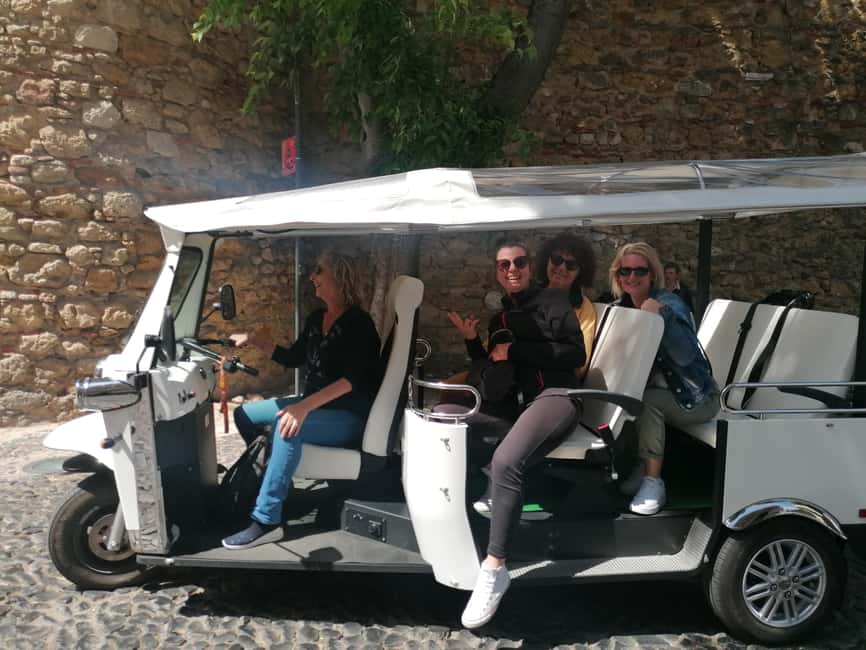
You’ll start at Mercado da Ribeira (Time Out Market), which is a smart meeting choice. It’s a recognizable hub, easy to navigate, and not stressful to find. If you’re getting there by foot or transit, you can arrive, regroup, and calm down before the tour starts.
Practical tip: the driver typically waits in front of Manteigaria Cafe at Time Out Market. That small detail saves you from wandering around with that look people make when they’re trying to find a meeting point.
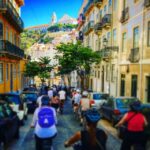
From there, you transition into Chiado and the central areas (think Baixa and Rossio). This is where the guide’s explanation really helps. You’re not just watching scenery go by—you’re learning why those streets and plazas matter, and what you’re seeing when you look down on the hills.
Praça do Comércio and Baixa: start with Lisbon’s big open spaces
The tour begins by touching the classic “arrival zone” of Lisbon. Praça do Comércio is one of those places you instinctively understand, even if you’re still new to the city. It’s broad, bright, and built for scale—exactly the kind of spot that makes you realize Lisbon’s waterfront-to-center layout.
Then you head into Baixa de Lisboa, where the city feels more structured: straight lines, grand facades, and streets designed for movement. You’ll get photo stops and short guided moments here. The trick is to treat these as orientation stops. Use them to figure out where you are relative to the river and the uphill old neighborhoods.
This part is also useful for the rest of the day. When you later reach Alfama, you’ll understand what you’re looking at—how the city tightens up as you climb.
Chiado and Praça do Município: the “classic center” vibe
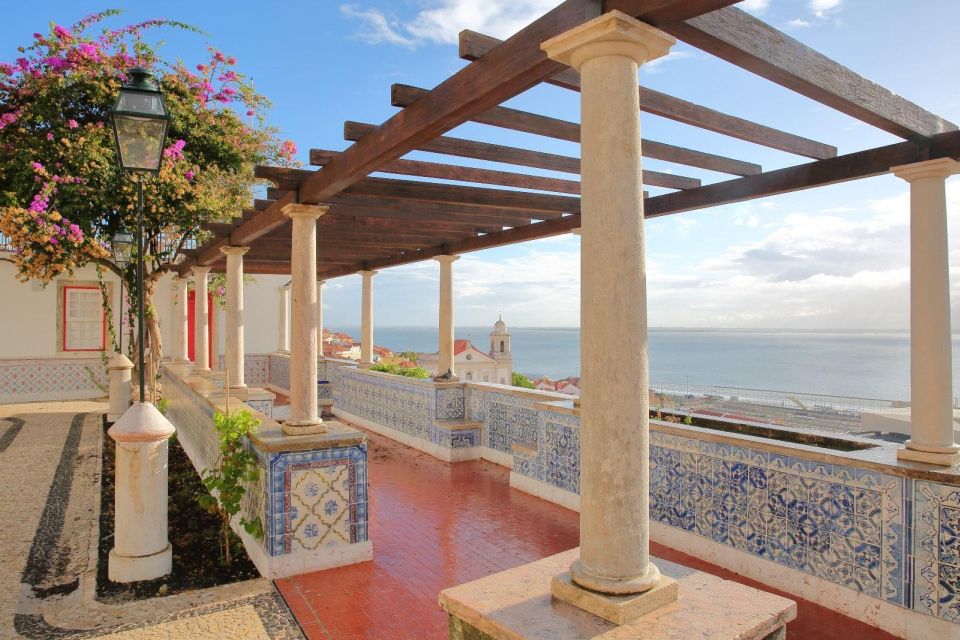
Chiado is one of Lisbon’s most recognizable central districts, and you’ll feel it right away. It’s the kind of neighborhood where you can sense daily life without it turning into a museum. The tour runs through key areas that are easy to connect with later on your own.
Praça do Município is a great stop for this. It’s a square that anchors the city in your mind. If you like to mentally map places, this is where it clicks.
Chiado also works as a transition neighborhood. You go from the open, structured feeling of Baixa into the older texture that rises toward Alfama. That’s the story arc of the tour, and it’s done well in 90 minutes of moving time.
Rossio and Santa Justa: iconic Lisbon views you don’t have to chase

You’ll pass by the Estação do Rossio, and you’ll also connect with the area around the Elevador de Santa Justa. Even if you don’t ride it, seeing it in context is helpful because it sits at the crossroads of Lisbon’s vertical story.
Then comes Igreja de Santo António and other central landmarks in the same general zone. These stops are brief, but that’s the nature of a short tour. If you want longer time inside churches, you can add that later—on this ride, the goal is to give you enough to recognize what you’ll want to revisit.
A good rule for tours like this: use the church stops to understand architecture and location, not to tick off every detail. You’ll get better value by pairing one or two longer “inside” visits with the tour’s outside viewpoints.
You can also read our reviews of more private tours in Lisbon





Sé de Lisboa (Lisbon Cathedral): a stop that changes your perspective

When the tour reaches Sé de Lisboa, Lisbon shifts from “scenic city” into “historic structure with weight.” It’s a photo stop plus guided context. The cathedral is a landmark that frames Lisbon’s older layers, and it helps you anticipate what Alfama will feel like.
If you’re the type who enjoys history only when it connects to what you can see, you’ll like this part. The guide’s job is to link architecture and place—why this building sits where it sits, and what it signals about the city’s past.
One note: since the tour is tightly timed, don’t count on a long linger. If that kind of stop is your priority, plan to return later when you can take your time.
Miradouro de Santa Luzia and Portas do Sol: Lisbon’s postcard viewpoints
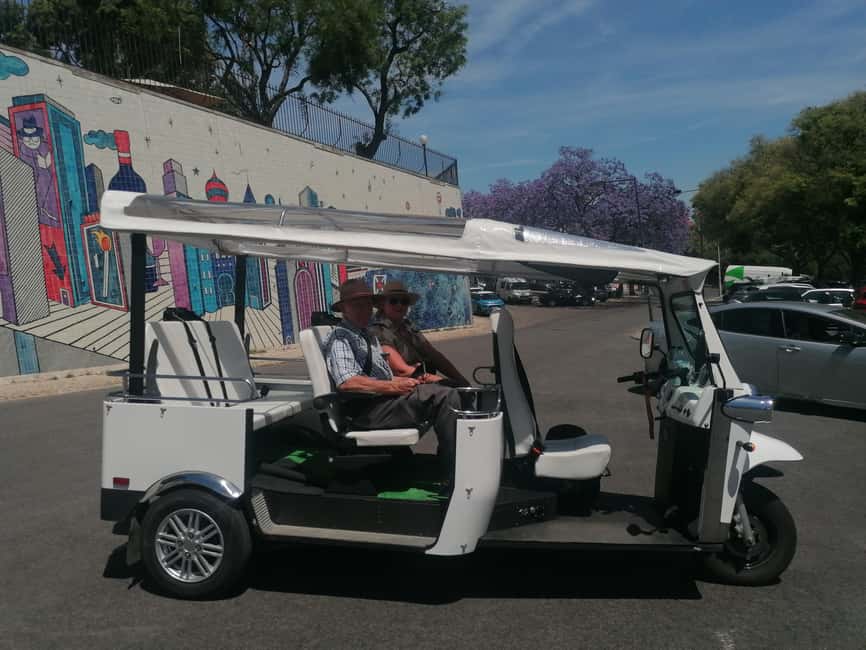
Now you’re at the heart of what makes Lisbon special: viewpoints. The tour includes Miradouro de Santa Luzia and Miradouro Portas do Sol. These are places where the city instantly looks different—because you’re no longer looking at Lisbon from street level. You’re looking down into it.
At these stops, you’ll do photo moments and walk a bit. Expect yourself to slow down. Even if you’re in a hurry, these spots naturally force you to stop and look, because the view does half the guiding for you.
Also, if you care about photos, you’re in good shape. One of the best themes in the reviews is how guides help with pictures—making sure you can get a shot without everyone else crowding your angle.
Teatro Romano and Miradouro da Graça: history plus a view
The tour touches Teatro Romano and continues toward Graça Historic District, with Miradouro da Graça in the same area. This is a great mix: you get a hint of older Lisbon right alongside the modern experience of looking outward.
It’s also a smart sequencing choice. You see a piece of the past, then you immediately understand the setting—because from these lookouts, the city’s layout becomes obvious.
One practical consideration: viewpoints mean uneven ground and some walking. You don’t need hiking boots, but you should wear shoes you trust. In Lisbon, “comfortable” matters more than fashionable.
Senhora do Monte and São Vicente de Fora: the uphill payoff
Next you reach Miradouro da Senhora do Monte, which is one of those places where the city feels spread out in a way you don’t get elsewhere. From here, Lisbon can look almost storybook—again, mostly because you’re higher and the city falls away below you.
Then the route includes São Vicente de Fora. This is your reminder that Alfama isn’t just scenery; it’s a living neighborhood with historic layers. The guided portion helps you interpret what you’re seeing, so it doesn’t stay a blur of pretty buildings.
This segment is often where the tour feels most worth it. You’re working your way toward the viewpoint payoff, and the ride time becomes part of the experience.
Feira da Ladra and the Pantheon area: culture you can sense
The tour includes the area connected with Feira da Ladra and the National Pantheon of Santa Engracia (photo stop). Even if you’re not there on a market day, the location tells you something. Lisbon’s old neighborhoods have their own rhythms, and markets are part of that.
The Pantheon stop is a good “pause point.” It’s not just a photo background; it’s a marker you’ll recognize later if you continue exploring on your own. The guided context helps connect it to the neighborhood fabric rather than treating it like a random monument.
Alfama proper and Casa dos Bicos: the classic old-street feeling
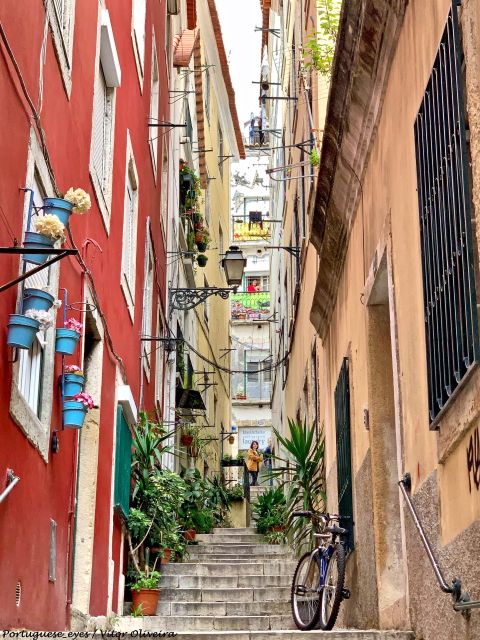
Then you reach Alfama—the reason many people prioritize this part of Lisbon. Alfama’s character comes from narrow streets, steep angles, and the way buildings stack up. Your tour experience here is designed to let you get that feeling without burning your entire schedule walking uphill.
You’ll also visit Casa dos Bicos. This is the kind of spot that’s quick but memorable because it has a distinct look that makes it easy to remember later. It’s one of those details that turns “I saw Alfama” into “I can picture it.”
The tour also loops back through Baixa de Lisboa near the end with scenic views along the way. That return ride is practical. It helps you connect the dots and gives you a last chance to grab photos from the moving vantage points.
The guide is the difference: Sam/Sami-style service and flexibility
The best part of this tour, judging from strong reviews, is the guide. Names like Sam and Sami show up in feedback as friendly and highly responsive. The consistent themes: good explanations, adaptability, and a service mindset around photos.
One review includes a real-life scenario: the route had to change because Lisbon was affected by a marathon. The guide adjusted and still managed to show great places, including areas in Belém, plus helped make time for a traditional sweet by helping you skip the queue by going with him. That’s exactly the kind of practical value you want in a city that can surprise you.
So yes, the sights matter. But in a short 1.5-hour private format, the guide’s ability to keep things flowing (and make it feel personal) is what turns it from “a ride” into a useful experience.
Price and value: is $58 worth it?
At $58 per person for 1.5 hours, this tour sits in the “reasonable for private + transportation” zone. You’re not paying just for the vehicle. You’re paying for three things that add real value in Lisbon:
First, hotel pickup and drop-off. That saves time and helps you avoid the hassle of coordinating your own transit over hills.
Second, you get a live English guide focused on history, culture, art, and architecture. For a short tour, that guidance is what helps you remember what you saw.
Third, it’s a private group with a tuk tuk ride. That combination reduces walking strain and makes it easier to see more without turning your trip into a marathon of your own.
Where the value can wobble: if you’re the kind of traveler who needs lots of time inside buildings or wants long stops at every viewpoint, this may feel a bit fast. The negative feedback about rushed stops is a fair reminder that you’re buying a tight, efficient loop.
If you want maximum satisfaction, use this as a “see it and understand it” tour, then go back later for the one or two places that truly grabbed you.
Who this tour is best for (and who should skip it)
This tuk tuk tour is a great fit if you want:
- Big Lisbon sights in limited time
- A comfortable way to handle steep hills
- A guide-led route through Chiado and Alfama
It may be a poor fit if:
- You need mobility-friendly access (it’s not suitable for people with mobility impairments)
- You’re traveling with children under 7
- You’re pregnant and concerned about the physical demands of walking segments
Also, if you hate being rushed, take the pacing seriously. This is not a slow “wander for hours” experience. It’s a guided loop with targeted stops.
What to do before and after your tuk tuk loop
Before you go, decide what you want most:
- viewpoints and photos, or
- churches and historic architecture, or
- neighborhood feel and street-level wandering
During the tour, treat the stops like chapters, not the whole book. When you hit a viewpoint—Santa Luzia, Portas do Sol, Graça, Senhora do Monte—take a moment to look, then keep moving.
After the tour, you’ll know where to return. If you loved the Alfama atmosphere, plan an extra walk around the old streets. If Chiado felt more like your vibe, spend more time in the central streets and plazas.
Should you book this Lisbon Alfama and Chiado tuk tuk tour?
Book it if you want a time-smart way to see Chiado + Alfama, enjoy major viewpoints, and get guided context without turning the day into a stair workout. The private format and the consistently helpful, photo-conscious service (including guide flexibility when plans change) make it a strong choice for first-timers and busy schedules.
Skip it if you’re the sort of traveler who needs long stops inside buildings, hates quick photo moments, or has mobility needs that make short walking segments a problem. In that case, you’d likely be happier with a slower walking tour or a plan that focuses on fewer stops.
If you’re in the sweet spot—limited time, curious mind, comfortable shoes—this is an easy yes.
FAQ
How long is the tuk tuk tour?
The tour lasts 1.5 hours.
Where do we meet for the tour?
You meet at Mercado da Ribeira/Time Out Market.
Do I need to pay for entry tickets during the tour?
Entry tickets are not included, so you’ll pay for anything that requires a ticket.
Is food included?
No, food and drinks are not included.
Is the tour private?
Yes, it’s a private group tour.
What language is the live guide speaking?
The live tour guide is available in English.
Is hotel pickup and drop-off included?
Yes, hotel pickup and drop-off are included.
Does the tour involve any walking?
Yes. Even though you ride in the tuk tuk, there are walking moments at certain stops like terraces and viewpoints.
What if I need to cancel?
Free cancellation is offered up to 24 hours in advance for a full refund.