REVIEW · ALFAMA & OLD TOWN TOURS
Lisbon Old town Tour
Book on Viator →Operated by Lisbon Walker · Bookable on Viator
Alfama is a maze you can learn. This Lisbon Old Town tour turns the oldest streets into a story, and I especially like the small-group feel (max 15) plus the guide who explains what you are seeing in plain English. You get real stops with architectural clues, earthquake survival details, and the kind of viewpoints that make the climb worth it, but do note the walk involves uneven, steep sections and you’ll want moderate stamina for old-street footing.
I also like how the route mixes big-name landmarks with quick hits that still matter, so you leave with a mental map of central Lisbon instead of just photos. Most stops are free to enter, so your money goes to the guide and the walk—not a stack of ticket lines. If you’re expecting a long museum day with indoor time, this is more of a street-level history lesson with only short breaks along the way.
In This Review
- Why Alfama Feels Different When a Guide Maps the Streets
- Key Stops That Turn a Walk Into a Real Neighborhood Story
- Starting at Praça do Comércio: How Lisbon’s Power Center Sets the Tone
- Nossa Senhora da Conceição Velha: Spotting Manueline Style Up Close
- Casa dos Bicos: Earthquake Survival That Makes History Feel Real
- Lisbon Cathedral: The Oldest Church Gives You an Anchor Point
- Igreja de São Miguel: Alfama’s Heart in Smaller-Scale Form
- Largo do Chafariz de Dentro: Where the Maze Starts to Make Sense
- Miradouro das Portas do Sol: The View That Closes the Loop
- Price and Value: What $29.96 Buys You in Lisbon
- The Guide Makes the Difference: English, Humor, and Practical Street Sense
- Timing, Weather, and Walking Comfort: What You Should Plan For
- Where It Starts and Ends: Easy Wayfinding Into Alfama
- Who Should Book This Lisbon Old Town Tour (and Who Might Skip It)
- Should You Book Lisbon Walker’s Lisbon Old Town Tour?
- FAQ
- How long is the Lisbon Old Town Tour?
- What time does the tour start?
- How much does the tour cost?
- Is the tour in English?
- How big is the group?
- Do I need to buy tickets for the stops?
- Where do I meet the guide?
- Where does the tour end?
- What if the weather is bad?
- What is the cancellation policy?
Why Alfama Feels Different When a Guide Maps the Streets
Lisbon’s Old Town has a specific challenge: the streets don’t behave like a grid. In Alfama, you turn a corner and the view changes, the architecture changes, and the story changes too. That’s where this tour shines. You are not just walking from one famous spot to another—you’re learning how the neighborhood’s layers fit together.
The tour is led by an art historian guide, and the best part is the way you connect small details (a church façade, a surviving building, a fountain square) to bigger events in Lisbon’s past. In the reviews, guides like José, Hugo, and Pedro come up as animated and family friendly, and people also mention practical touches like keeping the group in the shade and navigating safely through the tighter lanes.
Key point: this is a tour designed to help you understand Alfama fast, so you can enjoy the neighborhood again later at your own pace.
Key Stops That Turn a Walk Into a Real Neighborhood Story
- Praça do Comércio (Terreiro do Paço): The former center of power sets the stage before you head uphill.
- Nossa Senhora da Conceição Velha: Manueline-style architecture gives you a visual timeline of Lisbon’s artistic influences.
- Casa dos Bicos: A building that survived the 1755 earthquake becomes a tangible link to disaster-and-rebuild history.
- Lisbon Cathedral and Igreja de São Miguel: Two “anchors” that help you orient Alfama’s religious and neighborhood heart.
- Largo do Chafariz de Dentro: A meeting square where the maze feels less random.
- Miradouro das Portas do Sol: One of the best quick payoff viewpoints over the rooftops of Alfama.
You can also read our reviews of more tours and experiences in Lisbon.



Starting at Praça do Comércio: How Lisbon’s Power Center Sets the Tone
You begin at the edges of Lisbon’s grand waterfront square: Praca do Comercio, also known as Terreiro do Paço. Even if you’ve only seen photos of this area, standing there helps you feel how Lisbon once organized itself around authority and public life. It’s the kind of place where you can sense the city’s original “center,” then use that feeling to understand why Alfama looks and feels so different.
This opening stop matters because it gives you context. Alfama is older, more residential, and built for a different kind of life than the polished avenues near the water. After a short time here, you move into the older streets where the city’s story becomes less official and more human—stone, stairs, and everyday landmarks.
Practical note: the tour starts at 10:00 am, which is a smart time to beat some heat in warm months. It also sets you up to finish while you still have energy to explore nearby on your own.
Nossa Senhora da Conceição Velha: Spotting Manueline Style Up Close
Your next stop is Igreja de Nossa Senhora da Conceição Velha, a church with Manueline architecture. Manueline style is one of those Portuguese signatures—ornate stonework that feels dramatic without needing explanation if you know what to look for.
What I like about a stop like this is that it trains your eye. Instead of treating a church as a pretty building, you learn how design choices connect to the era that produced them. You also get a feel for how “art” in Lisbon isn’t locked inside museums. It’s part of the street scene.
This is also a good reality check stop. The tour is short at each location, so you won’t get lost in one place. You’ll move on with a clearer sense of what to notice the next time you see similar architecture in Portugal.
Casa dos Bicos: Earthquake Survival That Makes History Feel Real
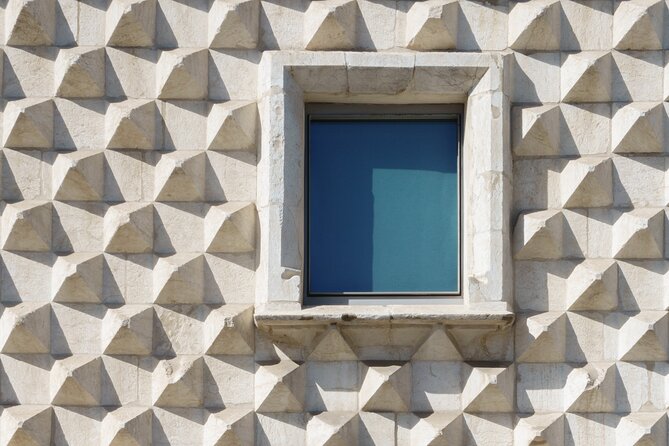
Then you walk to Casa dos Bicos, a building known for surviving the 1755 earthquake. That detail changes how you experience the building. You stop looking at it as decoration and start seeing it as resilience.
The earthquake is one of those historical moments that can stay abstract until you stand in front of a structure tied to it. A stop like this helps you grasp why Lisbon rebuilt so much of what you see today. It’s not just that the city changed—parts of the city lived through the moment and carried forward.
A quick tip for this section: take 30 seconds to study the façade before moving on. When the guide points out specific features, it becomes easier to “read” the building.
Lisbon Cathedral: The Oldest Church Gives You an Anchor Point
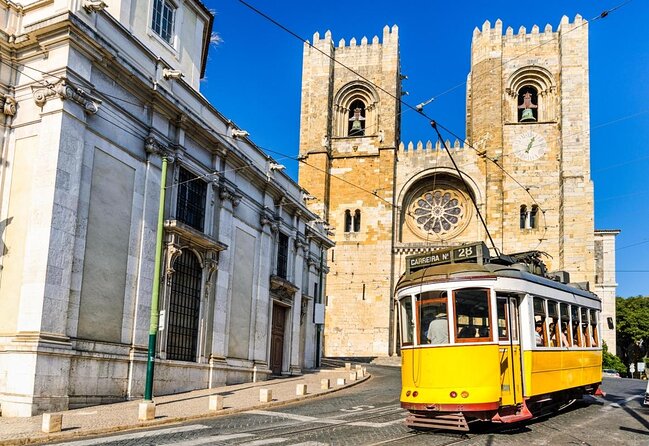
Next is Lisbon Cathedral (Sé de Lisboa), described as the oldest church in Lisbon. Even if you’ve seen the cathedral from a distance, being there on foot in the neighborhood is different. You can feel how a major religious site shaped the surrounding streets and daily rhythms.
This stop works as a navigational anchor. Alfama is full of corners, alleys, and stairways that can feel confusing. A landmark like the cathedral helps you “ground” your memory of the area. Later, when you’re wandering, you’ll find yourself using it as a mental reference point.
If you care about how Lisbon layers centuries on top of each other, this stop is a strong payoff. You’re not just looking at one period—you’re connecting a long timeline to a specific location.

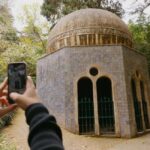
Igreja de São Miguel: Alfama’s Heart in Smaller-Scale Form
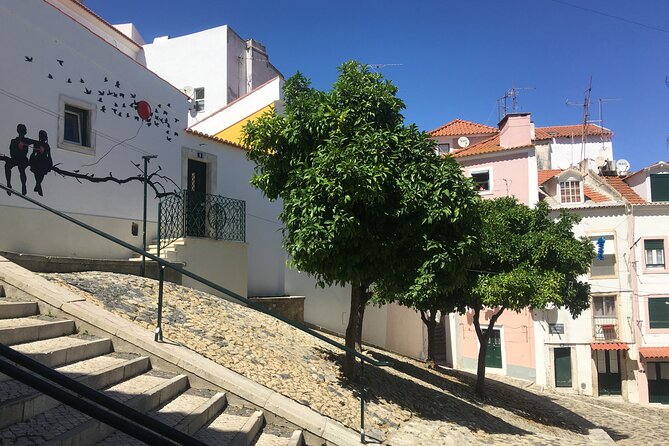
After the cathedral, you head to Igreja de São Miguel, called the heart of Alfama. I like this contrast: the cathedral is a big anchor, and São Miguel feels more intimate to the surrounding lanes.
This part of the tour helps you understand that neighborhood “centers” aren’t always giant plazas. Sometimes the heart of a place is a church you pass often, a sound you associate with the area, or a point where people naturally gather.
You also get more practice moving through Alfama’s rhythm. You’re learning where turns lead, how streets tighten, and how the neighborhood slowly reveals views rather than hiding them all at once.
Largo do Chafariz de Dentro: Where the Maze Starts to Make Sense
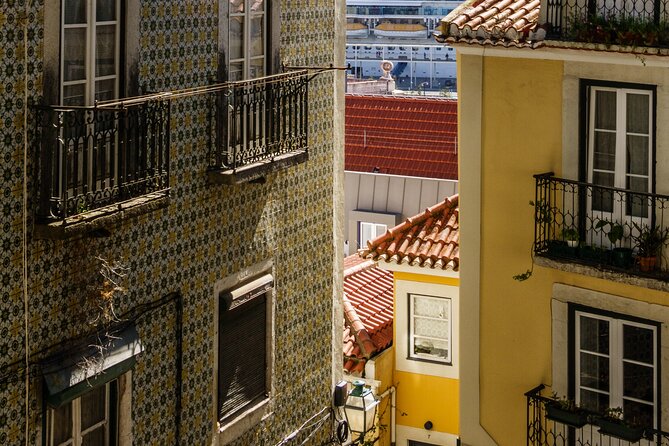
Then comes Largo do Chafariz de Dentro, described as the meeting point of Alfama. For a neighborhood that can feel like a street labyrinth, a square like this helps you breathe.
A fountain square is more than a photo stop. It’s a social piece of the neighborhood—a place that helps people orient themselves. When the guide explains why this spot matters, the maze becomes less random. Suddenly, you understand that the tight streets aren’t just inconvenient; they are part of how the neighborhood developed.
This is also where you can appreciate why the tour works best with a small group. With fewer people, you move more smoothly through narrow lanes and you’re more likely to hear the explanations instead of getting carried along.
Miradouro das Portas do Sol: The View That Closes the Loop
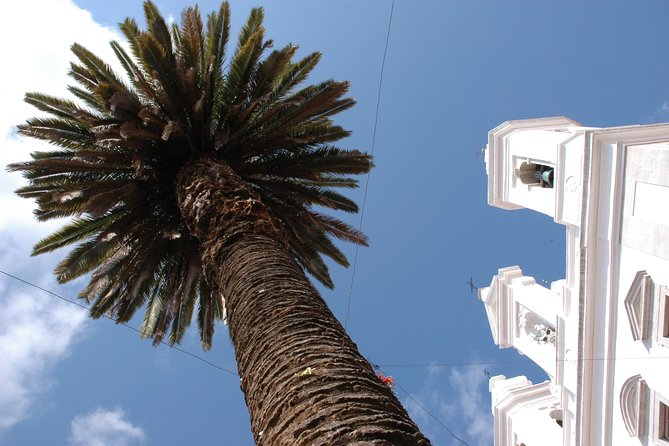
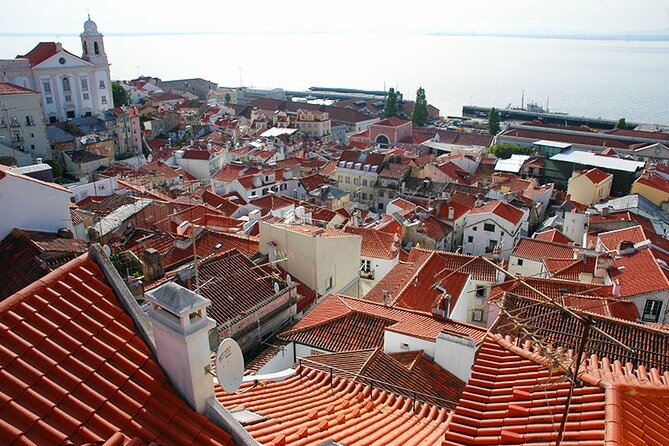
Finally, the tour ends at Largo Portas do Sol with a visit to Miradouro das Portas do Sol, one of the classic viewpoints over Alfama and Lisbon’s Old Town rooftops.
I love ending with a view because it’s the emotional payoff for everything you just learned. You look down and the streets you walked feel less chaotic. The neighborhoods become readable. The history you heard turns into shape and geography.
This viewpoint is also a nice way to plan your next hours. After you see the area from above, you can pick which lanes to revisit, which direction to head for lunch, and how to avoid that feeling of wandering with no plan.
If you’re sensitive to sun or heat, this is where you’ll want a bottle of water and a hat—views are great, but Portuguese light can be intense.
Price and Value: What $29.96 Buys You in Lisbon
At $29.96 per person for about 2 to 3 hours, this is priced like a walking lesson, not a full-day sightseeing package. The value comes from a few specific ingredients:
- Small group size (15 or fewer): You aren’t lost in a crowd.
- Professional art historian guide: You get interpretation, not just directions.
- Multiple major stops in a tight route: You leave with context across architecture, neighborhood layout, and key religious landmarks.
- Free-entry stops: The schedule lists several locations with admission ticket free, which means you’re paying for the guide and time, not stacking extra fees at each stop.
For me, the sweet spot is when you want to get your bearings fast and understand what you’re looking at. If you only have a day or two in Lisbon, this kind of guided orientation often saves you time later.
The Guide Makes the Difference: English, Humor, and Practical Street Sense
The tour is offered in English and is led by a professional art historian guide. From the reviews, guides named José, Hugo, and Pedro are praised for storytelling and keeping the tone friendly. People also highlight that guides adjust the experience for the group pace and watch out for the realities of street walking.
One repeated practical theme: keeping people safe and comfortable in the shade when possible. Alfama can roast you if you hit it at the wrong time. When a guide thinks about shade and pacing, it changes the whole experience from just walking to actually enjoying the walk.
So, if you care about more than checking boxes, go for the guide-driven approach. You’ll start to see why Lisbon’s buildings look the way they do, and you’ll be less likely to miss the details that make the neighborhood feel special.
Timing, Weather, and Walking Comfort: What You Should Plan For
This tour runs 2 to 3 hours and operates in all weather conditions, so you should dress for what Lisbon throws at you. That can mean sun, wind, or rain. Bring a light layer, and if rain is in the forecast, pack something quick-drying.
The tour also calls for moderate physical fitness. Alfama includes steep sections and uneven street surfaces. You do not need to be an athlete, but comfortable shoes are not optional. If you are traveling with knee issues, consider whether you can handle stairs and sloped streets for the better part of the morning.
Good to know: service animals are allowed, and children must be accompanied by an adult. If you’re bringing a family, this is one of those tours where having an adult manage the walking load makes a difference.
Where It Starts and Ends: Easy Wayfinding Into Alfama
The meeting point is Cervejaria Antártida Lisboa, near Praça do Comércio, at Rua C 20-23, 1100-038 Lisboa. The tour begins at 10:00 am.
You end at Largo Portas do Sol, Alfama, 1100-411 Lisboa, which is convenient if you want to keep exploring right after. Being dropped at a viewpoint area is useful because you’re already positioned where many people want to be—looking over the neighborhood and ready to navigate from an elevated reference point.
The tour is also listed as near public transportation, which helps if you want to build a full day around it rather than treating it as a standalone activity.
Who Should Book This Lisbon Old Town Tour (and Who Might Skip It)
This tour is a great fit if you want:
- A high-structure intro to Alfama without getting overwhelmed
- Architecture and neighborhood stories explained in English
- A small-group walk with quick stops at key landmarks
- A morning activity that ends with a viewpoint payoff
You might want a different option if:
- You dislike walking steep, uneven streets for a couple hours
- You prefer long indoor museum time
- You’re only interested in one or two specific sights and not the broader neighborhood story
If you’re in Lisbon for a short stay, this is a smart first-pass tour. If you’re staying longer, it’s also a good second-day tool because you’ll understand the area well enough to wander with confidence.
Should You Book Lisbon Walker’s Lisbon Old Town Tour?
I think this is a good booking when you want to understand Alfama quickly and enjoy it more later. For roughly $29.96 and a half-morning walk, you get an art historian guide, a small group, and a route that connects Praça do Comércio’s power center to Alfama’s church anchors and viewpoints.
My advice: wear sturdy shoes, bring water, and show up ready to walk. If you do that, you’ll leave with a mental map and a sense of why Lisbon’s oldest streets still feel alive today.
FAQ
How long is the Lisbon Old Town Tour?
It runs about 2 to 3 hours.
What time does the tour start?
The listed start time is 10:00 am.
How much does the tour cost?
The price is $29.96 per person.
Is the tour in English?
Yes, it is offered in English.
How big is the group?
The maximum group size is 15 travelers.
Do I need to buy tickets for the stops?
The stops listed show admission ticket free, so you typically won’t be paying separate entry fees for those particular locations.
Where do I meet the guide?
Meet at Cervejaria Antártida Lisboa, near Praça do Comércio (Terreiro do Paço), Rua C 20-23, 1100-038 Lisboa, Portugal.
Where does the tour end?
It ends at Largo Portas do Sol, Alfama, 1100-411 Lisboa, Portugal.
What if the weather is bad?
The tour operates in all weather conditions, so dress appropriately for the day.
What is the cancellation policy?
You can cancel for a full refund up to 24 hours before the experience’s start time.