
REVIEW · MUSEUMS
Lisbon: National Tile Museum Entry Ticket
Book on GetYourGuide →Operated by GetYourGuide Tours & Tickets GmbH · Bookable on GetYourGuide
Lisbon’s tiles have a whole story to tell. The National Tile Museum turns azulejos into a timeline you can walk, inside a historic convent with church spaces decorated in the same ceramic language. If you like art, craft, or simply good design that survived centuries, this is a satisfying stop.
I especially like how the museum lays out tile-making materials and techniques first, then guides you through styles in chronological order. I also love the setting: the tiles are not only in galleries, they’re on the church and chapel walls, so you see how azulejos functioned as decoration and as storytelling.
One thing to keep in mind: the museum is in enclosed historic spaces, and on hot days you may feel it. Plan your visit with comfortable clothes and some water, because you’ll be standing and looking closely.
In This Review
- Key highlights worth planning for
- Why the National Tile Museum feels different from a typical art stop
- Entering the convent: where your visit starts
- The exhibition route: tile-making basics first, then a time path
- The former cloister and convent architecture as part of the art
- Church, sacristy, choir, and the Chapel of Saint Anthony
- The tile styles: what you’ll actually notice as you walk
- A practical sense of time: plan for about 90 minutes
- Ticket value and the line question (what to expect)
- Café stop at the end: a simple way to make it feel like an outing
- Can you pair it with other Lisbon sights?
- Who this museum is best for (and who should consider skipping it)
- Should you book this National Tile Museum ticket?
- FAQ
- What is the Lisbon National Tile Museum ticket?
- Where do I enter the museum and show my ticket?
- How long is the ticket valid?
- How long should I plan to spend at the museum?
- What are the opening hours?
- What days is the museum closed?
- Is this a skip-the-line ticket?
- What should I bring with me?
- Is the museum wheelchair accessible?
- What is the cancellation policy?
Key highlights worth planning for
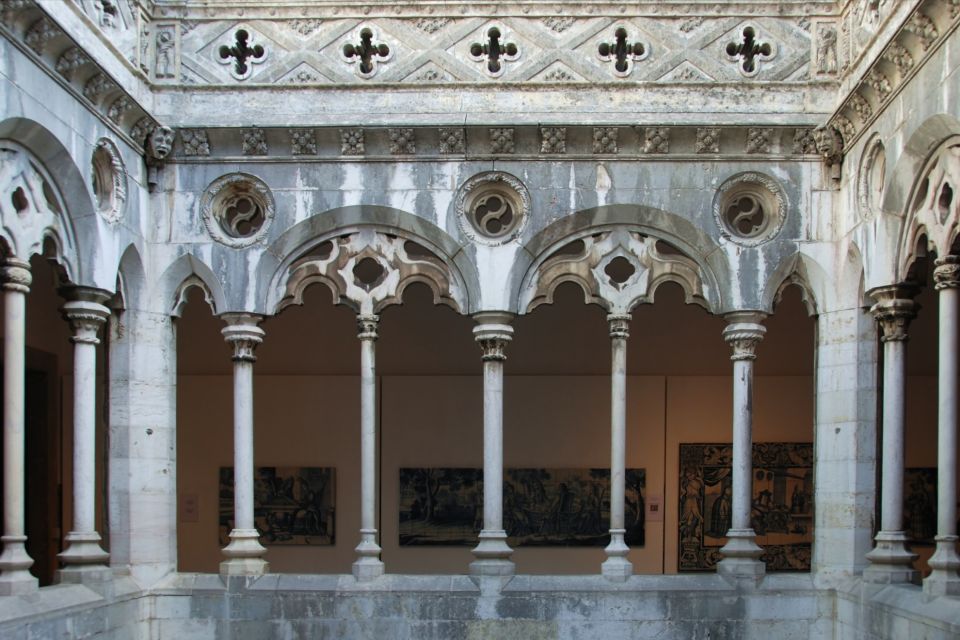
- Convent setting: The museum is inside the former Convent of Madre Deus, founded in 1509 by Queen D. Leonor
- Chronological route: After a quick intro to tile-making, the exhibition follows time periods
- More than tiles: You’ll also see ceramics, porcelain, and faience across the 17th to 21st centuries
- Church and chapel details: The church, sacristy, high choir, and Chapel of Saint Anthony are part of the experience
- Camera-friendly displays: Many large scenes reward slow looking
- On-site café time: A café at the end makes it easy to turn the visit into a relaxed half-day
Why the National Tile Museum feels different from a typical art stop
If you’ve seen one museum room, you’ve seen a thousand. Here, the art is built into the architecture. The National Tile Museum lives in the former Convent of Madre Deus, which was founded by Queen D. Leonor in 1509—so the tiles belong to the space, not just the walls.
This matters because Portuguese tiles weren’t only made to be pretty. They were made to decorate sacred spaces, mark identity, and tell scenes in a way that ordinary people could understand. That’s why the museum’s church and chapel elements feel so complete compared with a straight-up gallery layout.
Also, it’s a great value. At about $11 per person, you’re not paying for a small, one-room exhibit. You’re paying for an entire complex—former convent, cloister areas, and decorative interiors—focused on one of Portugal’s signature art forms.
You can also read our reviews of more tours and experiences in Lisbon



Entering the convent: where your visit starts
Your ticket gets you in at the main entrance, and you show your ticket when you arrive. From there, the museum’s route takes you through the convent’s transformation history and into the tile story.
The key idea: the museum isn’t just displaying old tiles. The building itself went through changes over time, including a 16th-century mannerist cloister and multiple church-related spaces. That gives you a sense of how art and architecture grew together in Portugal.
If you want quick navigation, plan to keep moving at a steady pace at first. Then slow down when you hit the big tile scenes. The museum is easier when you treat it like a walk through “chapters,” not a checklist.
The exhibition route: tile-making basics first, then a time path
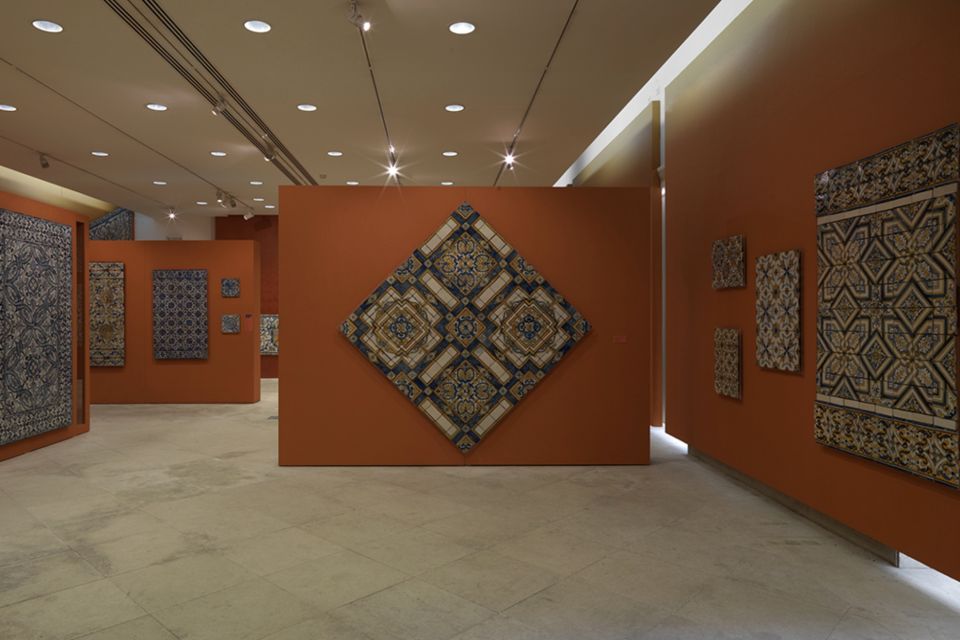
The permanent exhibition begins with a display of the materials and techniques used to manufacture tiles. That short starting section is a smart way to reset your eyes. Even if you don’t know the words, you’ll start noticing patterns in color, finish, and how images are constructed.
After that, the route follows a chronological order. You start with tiles connected to the second half of the 15th century and move forward toward later periods, ending with examples through the present day. This structure helps you connect what you’re seeing to when it was made—so the changing styles feel logical instead of random.
You’ll also find that this museum isn’t only about blue-and-white. Alongside tiles (azulejos), there are ceramics, porcelain, and faience from the 17th to the 21st centuries. That variety is useful if you sometimes get “tile fatigue” from one look. It refreshes your eyes while still staying on theme.
The former cloister and convent architecture as part of the art
One of the most enjoyable things here is how the building frames your attention. The museum includes the convent’s 16th-century mannerist cloister, and the layout naturally slows you down.
As you move through, look at how scenes and decorative surfaces interact with stone, wood, and ceiling shapes. Tiles tend to be flat and planned, but the convent spaces give you depth cues—so the whole environment starts to feel designed, not just decorated.
If you’re a photo person, don’t just chase individual panels. Try stepping back to capture angles where tiles meet arches or frames. That’s where the art starts to feel like a single system.
Church, sacristy, choir, and the Chapel of Saint Anthony
This is where the museum punches above its weight. The museum isn’t limited to walls covered in tiles; it includes major interior spaces decorated with remarkable sets of paintings and tiles.
Here’s what to look for as you go:
- The church: decorated with notable sets of paintings and tiles
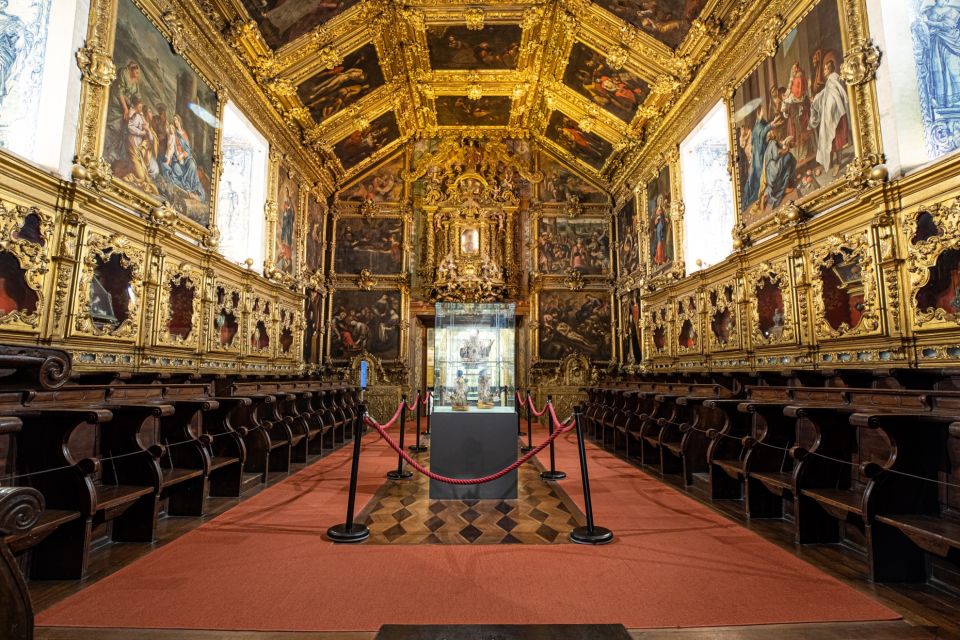
- The sacristy: includes a Brazilian wood display cabinet and carved wood frames with paintings
- The high choir: rich carved giltwood embellishments
- Chapel of Saint Anthony: 18th-century Baroque decoration and a significant number of canvases by painter André Gonçalves
Why this matters: tiles become easier to understand when they’re tied to a sacred setting. You’ll likely notice how imagery is arranged to work at different distances—because a church visitor wasn’t always close enough to read fine details.
Also, these spaces help explain why azulejos became so important in Portugal. They weren’t just craft objects; they became architecture, ornament, and public storytelling in one package.
You can also read our reviews of more museum experiences in Lisbon





The tile styles: what you’ll actually notice as you walk
Most people come thinking they’ll mostly see pretty designs. You will see plenty of that—but the real payoff is noticing how styles shift across time.
I like the way the museum gives you enough structure to compare. Instead of jumping from one favorite panel to another, the chronological order encourages you to ask: did the color palette change, did the composition style change, did the themes change?
A couple specific ideas to keep in your head while visiting:
- Look for differences in how figures and scenes are framed
- Watch how decorative styles evolve as you move forward in the timeline
- Pay attention to how tiles relate to paintings in the same spaces
If you’re interested in learning the “why,” you’ll probably appreciate the museum’s opening section on manufacturing techniques. Even a quick primer can make your later looking feel more informed.
A practical sense of time: plan for about 90 minutes
A typical visit lands around 1 hour 30 minutes, depending on how slowly you move and how much you pause for larger scenes. You can absolutely move faster, but the building and the church spaces deserve a slower pace.
The museum hours run Tuesday to Sunday, 10:00 am–1:00 pm and 2:00 pm–6:00 pm, with last entry at 5:30 pm. It’s closed on January 1, Easter Sunday, May 1, June 13, and December 25.
One more timing tip: the museum’s route is set up for a comfortable flow, so it helps to show up when you’re not rushed. If you’re trying to squeeze it between other stops, pick a block that leaves enough time to see the church and chapel areas without sprinting.
Ticket value and the line question (what to expect)
The ticket is priced at about $11 per person and is valid for 1 day (start times depend on availability). It includes entry to the National Tile Museum.
Important nuance: this is not advertised as a guaranteed skip-the-line ticket. That means you may still face some waiting, especially at busier times. That said, having your ticket arranged ahead of time can still make your arrival smoother than trying to solve everything on the spot.
My advice: if you care about saving time, arrive a little early for your time window rather than at the last minute. And if you’re traveling during peak midday hours, be ready to stand for a bit.
Café stop at the end: a simple way to make it feel like an outing
The museum experience doesn’t end when you walk out. There’s a café on site, and it’s a real part of the day for many visitors.
One practical move: if you’re hungry, grab a bite in the café before you settle into the final rooms, because lines there can build. And if you have a camera, the café and garden seating area can give you a good pause between interior spaces and final photos.
This is also a nice option if the day turns rainy or hot. The museum gives you indoors art and architecture, and the café helps you recharge without hunting for food nearby.
Can you pair it with other Lisbon sights?
Yes, and the location helps. The National Tile Museum is close to the Lisbon Aquarium, and you can reach it with a short Uber ride. If you’re building a themed day around “look at something famous, then keep moving,” this pairing works well.
A good way to plan the day:
- Put the museum at the time when you want indoor time
- Then use the later slot for something more flexible outdoors or along the waterfront
If you’re only in Lisbon for a short stop, this museum still works because it gives you a compact but varied experience: craft history, architecture, and multiple decorated interiors.
Who this museum is best for (and who should consider skipping it)
This is for you if you:
- Care about Portuguese art and craft
- Like museums where the setting is part of the story
- Enjoy slow looking at decorative details and design history
It’s also a strong choice if you’re traveling with at least one person who wants variety beyond standard painting galleries. The museum offers tiles, ceramics, and decorative church spaces in one visit.
You might hesitate if you mainly want action-packed sights or if you hate indoor walking in warm weather. The experience is close-range and detail-focused, so it’s best for visitors who enjoy that style of museum.
Should you book this National Tile Museum ticket?
Yes, I think it’s a smart booking for most visitors. For around $11, you get more than azulejos on flat walls—you get a historic convent complex where tiles meet church architecture, painting, and carved wood detail.
Book if you want a Lisbon experience that feels distinctly Portuguese, not just another generic museum stop. If you’re the type who likes craft and design history, this will likely be one of your stronger “I didn’t expect to love this” moments.
Just go in with realistic expectations: it’s not marketed as a guaranteed skip-the-line ticket, and the comfort factor depends on weather. If you plan your timing and take breaks, you’ll leave with a new way of seeing Portugal—one tile at a time.
FAQ
What is the Lisbon National Tile Museum ticket?
It’s an entry ticket to the National Tile Museum in Lisbon, focused on Portuguese tiles (azulejos) and the museum’s permanent exhibition.
Where do I enter the museum and show my ticket?
You enter the National Tile Museum at the main entrance and show your ticket on arrival.
How long is the ticket valid?
The ticket is valid for 1 day. Start times depend on availability.
How long should I plan to spend at the museum?
Plan about 1 hour 30 minutes for a typical visit, depending on how slowly you explore.
What are the opening hours?
Tuesday to Sunday: 10:00 am to 1:00 pm and 2:00 pm to 6:00 pm. Last entry is at 5:30 pm.
What days is the museum closed?
It’s closed on January 1, Easter Sunday, May 1, June 13, and December 25.
Is this a skip-the-line ticket?
No. This is not a skip-the-line entry ticket.
What should I bring with me?
Bring a passport or ID card, comfortable shoes and clothes, a camera, and water.
Is the museum wheelchair accessible?
Yes, it is wheelchair accessible.
What is the cancellation policy?
This activity is non-refundable.