REVIEW · TUK TUK TOURS
Lisbon Medieval Hills Private Tour on Tuk-Tuk
Book on Viator →Operated by Everyday Is Sunday™ · Bookable on Viator
Lisbon’s hills were made for a tuk-tuk. This private ride is built around serious viewpoints and short, guided stops, with live explanations as you hop between neighborhoods that big buses struggle to reach. I especially like how you get the best camera angles fast, then you’re back on the road instead of stuck waiting around.
I also love the stop at Miradouro da Senhora do Monte, the one place in the plan where public transport can’t drop you off. One thing to consider: the route packs in multiple viewpoints and monuments in a short window, so you’ll want to be ready for quick photo time and brisk walking at each stop.
In This Review
- Key things to know before you ride a Lisbon tuk-tuk
- Why a tuk-tuk makes sense for Lisbon’s medieval hills
- Starting at Praça da Figueira (and why that’s a smart choice)
- The route: St. Anthony to Sé Cathedral, then straight to the viewpoints
- Stop 1: Church of St. Anthony (a saint’s birthplace)
- The Romanesque monument stop (Sé Cathedral entrance is extra)
- Stop 2: Miradouro das Portas do Sol (view over oldest Lisbon)
- The Graça area reference (near Graça Convent)
- Miradouro da Senhora do Monte: the star stop that buses can’t reach
- Mosteiro de São Vicente de Fora: monastery, royal pantheon, and serious details
- Ladra flea market: one of Europe’s oldest, now a living street stop
- Panteão Nacional: dome, tombs, and a grand ending
- The guide matters: live explanations and the Dominic factor
- Price and value: what $144.49 buys you in real time
- What you’ll realistically do (and what you might miss)
- Who this private tuk-tuk tour suits best
- Quick practical tips so the day feels easy
- Should you book this Lisbon Medieval Hills tuk-tuk tour?
- FAQ
- How long is the Lisbon Medieval Hills private tour on a tuk-tuk?
- Where does the tour start and end?
- Do you offer pickup from my hotel or apartment?
- Is the tour private or shared?
- What language is the tour offered in?
- Are entrance fees included for all stops?
- What sites are included on the route?
- Can I get a full refund if I cancel?
Key things to know before you ride a Lisbon tuk-tuk
Private, door-to-door-style service: reception and drop off at your hotel/apartment are included.
Live English commentary: you’ll get on-board explanations from a local guide.
Views that don’t require endurance: you’re taken to classic lookout spots, including one tram-and-bus-free viewpoint area.
A history-and-street mix: religious sites, lookouts, a royal-pantheon monastery, a famous flea market, and the National Pantheon.
Some entrances cost extra: Lisbon Cathedral is not included, but many other stops are listed as free.
Why a tuk-tuk makes sense for Lisbon’s medieval hills
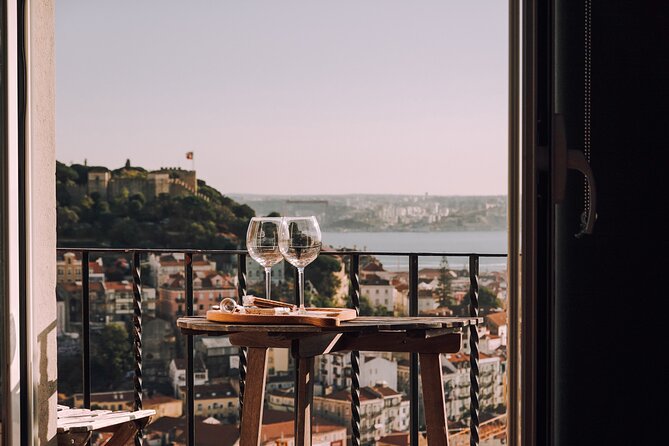
Lisbon is famous for hills, but most first-time visitors only understand that fact once they’re already sweating up a slope with a suitcase and a map that refuses to behave. A tuk-tuk changes the whole rhythm. Instead of treating the day as a long hike, you can treat it like a moving sightseeing playlist: ride, stop, learn, and ride again.
This tour is designed for that exact pattern. It runs about 50 minutes to 1 hour 10 minutes, and the schedule accounts for travel time, not just sitting at viewpoints. You’ll cover more ground than you could comfortably do on foot, without the stress of trying to park or navigate narrow streets.
You’re also in a private setup, meaning your guide can tailor the pace to your group instead of stopping for everyone in a large bus tour. That’s a real value if you want time to look closely at details, not just snap and go.
You can also read our reviews of more private tours in Lisbon



Starting at Praça da Figueira (and why that’s a smart choice)
The tour begins and ends at Praça da Figueira, right next to the Dom João I statue. That matters because it’s an easy, central landmark to find. You’ll know exactly where to be, even if your hotel is somewhere else in town.
If you choose pickup, your guide will contact you with details beforehand. That gives you a smoother start, especially if you’re carrying water, small bags, or you’re trying to avoid the first “where do we meet?” stress of a new day in Lisbon.
The route: St. Anthony to Sé Cathedral, then straight to the viewpoints

This is a “layers of Lisbon” route. You start with a key religious landmark, move to a major medieval monument, and then shift into viewpoint stops where the city finally opens up.
Stop 1: Church of St. Anthony (a saint’s birthplace)
You begin at the Church of St. Anthony, described as the place of birth of one of Catholicism’s most famous saints. The stop is short—about 10 minutes—and it’s listed with free admission. That makes it a good early anchor: you get a meaningful cultural moment without sacrificing the rest of the schedule.
What I like about starting here is the way it gives context to the city’s Catholic identity. Lisbon doesn’t treat faith as a separate topic. It’s tied to streets, buildings, and the way neighborhoods evolved.
The Romanesque monument stop (Sé Cathedral entrance is extra)
Right after St. Anthony, the plan includes a major Romanesque monument dating from around 1150. The details you’re given point to Lisbon Cathedral (Sé de Lisboa) as the likely site. Here’s the practical catch: entrance to Lisbon Cathedral is not included (adults listed at 5€, children 5–12 listed at 3€).
So you’ll want a little cash or a card ready for that single paid stop. The upside is that the rest of the key scenic moments on the route are listed as free.




Stop 2: Miradouro das Portas do Sol (view over oldest Lisbon)
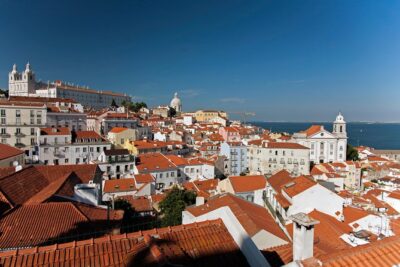
Next up is Miradouro das Portas do Sol, a viewpoint that looks over Lisbon’s oldest district. Your time here is about 15 minutes, and admission is listed as free.
This is where you start understanding why Lisbon built so many lookouts. The city rises in layers. You don’t “see Lisbon” all at once—you see Lisbon by angle. Portas do Sol is one of those classic angles that helps you connect the dots between what you’ve walked past and what you’re about to reach next.
The Graça area reference (near Graça Convent)
The route also mentions the area around Graça Convent, pointing to a neighborhood shaped from around the 13th century. You’re not given a long walk here, but it’s part of the story the guide brings to the ride: older Lisbon patterns paired with later industrial-era changes in the surrounding area.
Even a brief mention can help you read the city instead of just riding through it. It turns “pretty street” into “oh, that’s why this neighborhood looks like this.”
Miradouro da Senhora do Monte: the star stop that buses can’t reach
If you’re choosing one stop to prioritize in this kind of quick tour, this is it. Miradouro da Senhora do Monte is listed as the highlight, with about 15 minutes on site.
The big reason it feels special is exactly what you’re warned about in the plan: neither the bus nor the tram can arrive here. That means you’re not sharing the same kind of access that mass transit gives. It’s a viewpoint you reach because you’re willing to work for it a bit, and that effort often translates into a more focused, “this is the view” moment.
Your guide’s live explanations during the ride leading into this stop are usually what make it click. You don’t just stare; you understand what you’re seeing—river lines, hill blocks, and how the city’s geography forces its architecture to stack.
Mosteiro de São Vicente de Fora: monastery, royal pantheon, and serious details
After the big viewpoint moment, the tour continues to Mosteiro de São Vicente de Fora. This is described as a 17th-century monument with Mannerist architecture, and it’s also known as the house of the Bragança dynasty pantheon.
Your time here is brief—around 5 minutes—and admission is listed as free. Short stop, but high payoff if you like architecture and symbolism. Even a quick visit can help you spot how religious buildings in Lisbon also became political and dynastic spaces.
This stop also breaks the day’s pace. After looking outward at the city, you return to something that’s more about craftsmanship and meaning up close.
Ladra flea market: one of Europe’s oldest, now a living street stop

The next featured stop is the Ladra flea market. The description notes it’s among the oldest flea markets in Europe, originally referred to by the Moors as aleadhra, then evolving into Ladra over time.
This is the kind of detail that turns a stop into a small lesson. Markets aren’t just shopping here; they’re a living thread of how Lisbon traded goods and stories over centuries.
In a short tour, you won’t wander for long, but you can still get the feel of the area—how it moves, what kinds of stalls fill the space, and how the market fits into the neighborhood rather than feeling like a detached attraction.
Panteão Nacional: dome, tombs, and a grand ending

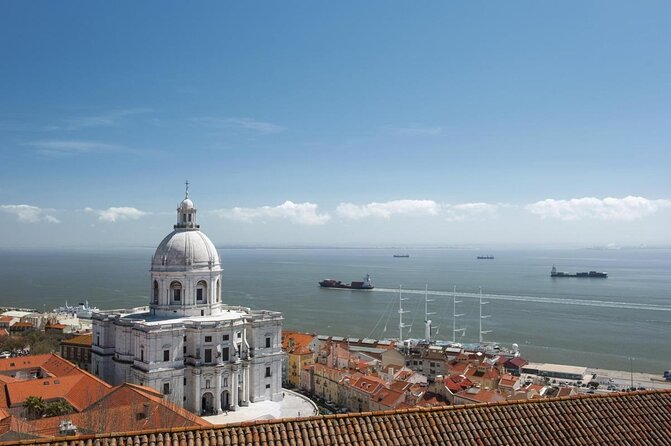
Your final major site is Panteão Nacional in Lisbon. It’s described as an imposing monument that used to be a baroque church, now serving as a place of homage to historical figures from Portugal. You’ll also get mention of the stunning dome and that it houses the tombs of notable personalities from Portuguese history.
Even if you don’t spend a lot of time inside, ending the tour with a building like this lands the day with a sense of scale. Lisbon’s medieval and religious stops bring depth, and the viewpoints show geography—but the National Pantheon gives you a larger national story to carry home.
The guide matters: live explanations and the Dominic factor
One of the most praised parts of this tour is the guide experience. Names that came up in feedback include Domingos and Dominic (with one variation spelling showing as Dominique). The common thread is delivery: friendly, energetic, and very focused on making Lisbon’s story make sense while you’re moving.
A few specific “this is why it works” elements show up repeatedly:
- Live explanations on board, so you learn while the city is still passing outside the window
- A fun, energetic presentation style, including singing mentioned in feedback
- Use of music and a short earthquake-themed framing at the start in at least one version of the tour approach, which helps set context for Lisbon’s rebuilding story
That matters because Lisbon’s history can feel like a blur when you’re just jumping from site to site. When your guide ties scenes together—faith, monarchy, marketplaces, then rebuilding—you end up with a mental map that sticks.
Price and value: what $144.49 buys you in real time
At $144.49 per person, this isn’t a budget street-level hop. But it can still be a solid value if you’re the kind of traveler who wants structure and story without spending the whole day commuting.
Here’s the value math that matters:
- You get a private tour (your group only), which often costs less per person than trying to coordinate a comparable experience with separate guides or self-guided rides plus paid entry tickets.
- Hotel reception and drop off are included, which saves time and reduces stress on Lisbon’s hill logistics.
- You get live English explanations instead of relying on a phone app and hoping you guessed the right building’s name.
- Many stops on the schedule are listed with free admission tickets, so your extra costs may stay limited—mostly the paid Lisbon Cathedral entrance.
Could it be pricey for a very short list of stops? Yes, if you’re only interested in viewpoints and you don’t care about the cultural and historical framing. But if you want a guided overview of multiple layers of Lisbon—religion, monarchy, marketplaces, and national memory—this price can feel justified quickly.
What you’ll realistically do (and what you might miss)
Because the tour time window is relatively tight, you should expect:
- Short stays at each site
- Photo-friendly timing, not long museum-style browsing
- A focus on high-impact stops, rather than deep exploration of one neighborhood
That’s the trade. If you love lingering—hours at one place, slow wandering through alleys—this format won’t feel like it gives you permission to slow down. But if you want the “best of the medieval hills” taste with guide-led context, it’s built for that.
Who this private tuk-tuk tour suits best
This is a strong fit for:
- First-timers who want to get bearings fast on Lisbon’s hills
- Travelers who prefer door-to-door convenience over figuring out the best local transport routes
- Groups who want a private experience and like learning in real time
- People who want key viewpoints without spending the day climbing from one tram stop to another
If you’re traveling with limited time and you still want more than a generic sightseeing loop, this tour’s structure is exactly what you’re paying for: movement + context + major lookouts in a compact window.
Quick practical tips so the day feels easy
- Bring water. Even with a vehicle, you’ll be outside for viewpoints and brief monument stops.
- Wear shoes that handle uneven streets and quick walking. Lisbon’s stone and slopes don’t care about your itinerary.
- If you plan to visit Lisbon Cathedral, consider having the entrance fee ready since it’s listed as not included.
Should you book this Lisbon Medieval Hills tuk-tuk tour?
If your goal is a guided, private “high-impact overview” of Lisbon’s hills—with the big viewpoints and a mix of religious and civic landmarks—then yes, it’s a smart booking. The combination of live explanations, central meeting point at Praça da Figueira, and the ability to reach a tram-and-bus-free viewpoint makes this tour feel more intentional than a random ride.
I’d skip it if you want slow travel, long museum time, or you already know Lisbon deeply and only need one specific attraction. But for most first-timers and time-crunched visitors, this is the kind of experience that gives you a clear mental map of the city without draining your energy.
FAQ
How long is the Lisbon Medieval Hills private tour on a tuk-tuk?
The tour runs about 50 minutes to 1 hour 10 minutes, and the total duration includes travel time.
Where does the tour start and end?
Both the start and end are at Praça da Figueira, 1100-241 Lisboa, next to the Dom João I statue.
Do you offer pickup from my hotel or apartment?
Yes. Pickup is offered, and reception and drop off at the hotel/apartment are included.
Is the tour private or shared?
It’s a private tour/activity. Only your group participates.
What language is the tour offered in?
The tour is offered in English with live explanations on board.
Are entrance fees included for all stops?
Many stops are listed with free admission tickets, but Lisbon Cathedral entrance is not included (adults 5€, children 5–12: 3€).
What sites are included on the route?
The route includes the Church of St. Anthony, a Romanesque monument (Lisbon Cathedral), viewpoints such as Miradouro das Portas do Sol and Miradouro da Senhora do Monte, Mosteiro de São Vicente de Fora, Ladra flea market, and Panteão Nacional.
Can I get a full refund if I cancel?
Yes. You can cancel up to 24 hours in advance for a full refund. If you cancel less than 24 hours before the start time, the amount paid is not refunded.