REVIEW · GUIDED
Lisbon Golden Age – Private Tour with Van and Local Guide
Book on Viator →Operated by Essência da Latitude Turismo Lda · Bookable on Viator
Golden Age Lisbon, told like a story. I love the private van setup, which keeps the day moving without you stuck in Lisbon traffic, and I love the guide-led narrative that links viewpoints to the big sea-and-power story of Portugal. You’ll also get a Pastel de Belém tasting that gives the history a very edible ending. One thing to consider: several key sights are viewed from outside, and the Jerónimos Monastery church is closed on Mondays, so what you’ll see can shift slightly depending on the day.
You’ll be walking on old streets—some uphill, some uneven. If you want the day to feel easy, plan for comfortable shoes and let your guide know if you need shorter stretches (the tour is designed to adapt).
In This Review
- Key highlights worth your time
- A Private Van + Local Guide for Lisbon’s Golden Age
- Miradouro de Santa Luzia: the view that sets the map in your head
- Igreja de Santiago: a 500-year-old espionage story in plain sight
- Castelo de São Jorge grounds: great views without the full inside visit
- Alfama’s narrow streets: Golden Age Lisbon in 30 minutes of walking
- Praça do Comércio to Bairro Alto: the port city mindset
- Madragoa and the African community: a different side of Lisbon’s story
- Capela de São Jerónimo: a quiet historical breather
- Jerónimos Monastery: Manueline style, UNESCO-level impact, and a timing catch
- Pastel de Belém tasting: the sweet stop you’ll remember later
- Belém Tower and the Monument to the Discoveries: finishing at the waterline
- What’s included, what’s not, and how to plan your spending
- Who this Lisbon Golden Age tour is best for
- Should you book this Lisbon Golden Age private tour?
- FAQ
- How long is the Lisbon Golden Age private tour?
- What does the tour include?
- Are entrance fees included?
- Is the Jerónimos Monastery church always open during the tour?
- Is this a private tour or a group tour?
- Where can pickup and drop-off happen?
- Can I cancel for a full refund?
Key highlights worth your time
- Private van, full-time guide: You get a local storyteller who sets the pace and context.
- Viewpoints first: Santa Luzia and São Jorge help you understand Lisbon’s layout fast.
- History with named stops: From Igreja de Santiago to Jerónimos, you’ll connect places to the Golden Age theme.
- Alfama and Bairro Alto on foot: Short walks that still feel like the real city.
- Belém finale: Torre de Belém and the Monument to the Discoveries close the circle with maritime Portugal.
- One sweet moment planned in: Pastel de Belém is built into the route, not an afterthought.
A Private Van + Local Guide for Lisbon’s Golden Age
This is a private tour in an air-conditioned mini van, guided the whole time. That matters in Lisbon, where you want to see a lot but still keep control of your day. In about four hours, you cover viewpoints, churches, a major fortress area, central squares, and Belém—without wasting time figuring out transit and parking.
The best part is the way the tour connects dots. You’re not just looking at pretty corners. You’re learning why they matter to Lisbon’s rise during the Age of Discoveries and what that meant for power, trade, and ideas. Guides Daniel and Diogo show up in the highest praise, and it’s consistent: they’re good at turning place-names into a clear story, so even if you’ve been to Lisbon before, it clicks differently.
You can also read our reviews of more guided tours in Lisbon

Miradouro de Santa Luzia: the view that sets the map in your head
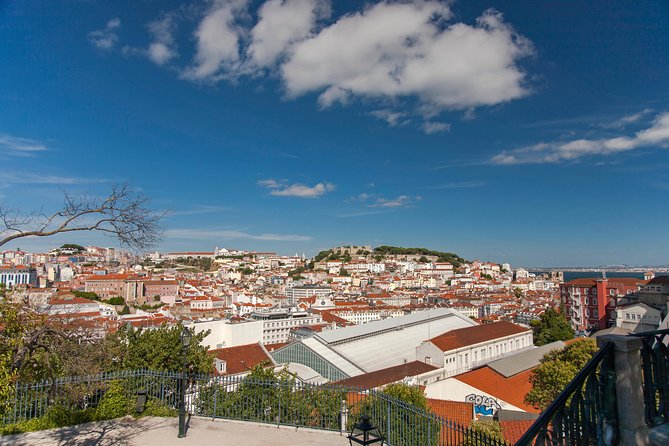
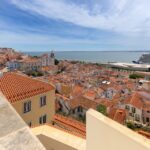
Most Lisbon days start with views. This one starts with the kind that gives you instant orientation: Miradouro de Santa Luzia. You’ll look out over the Tagus River, with Lisbon’s red rooftops below and the Atlantic stretching out beyond.
Why it’s worth it: Santa Luzia is where you start to understand the city’s geography—why hills matter, why the river matters, and why so many major moments link back to maritime routes. The stop is brief (about 20 minutes), so you get the payoff without spending half your tour on one photo spot.
Practical note: plan your photos, but also listen. A good guide will point out what you’re seeing and how it connects to the Golden Age theme.
Igreja de Santiago: a 500-year-old espionage story in plain sight
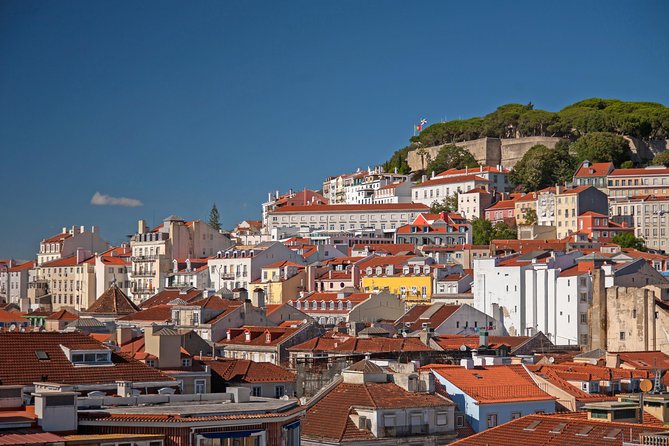
Next you head to Igreja de Santiago, where the tour frames the site around a five-hundred-year-old espionage case tied to a major event in the modern period. Even if you don’t know the details going in, this stop helps you understand that Lisbon’s history isn’t only ships and kings—it also involves secrets, power plays, and international stakes.
The visit is short (around 15 minutes) and admission is free. That makes it a great slot to keep the momentum, especially if you’d rather spend your energy on understanding than lining up for entrances.
Consideration: if you prefer purely architectural highlights, this stop is more story-driven than photo-driven.
Castelo de São Jorge grounds: great views without the full inside visit
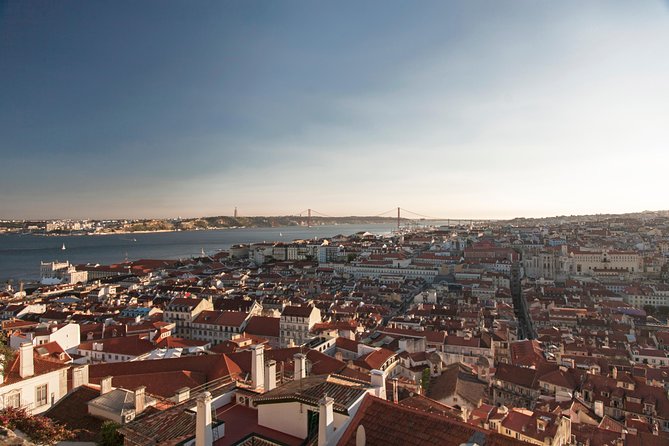
You’ll go up to Castelo de São Jorge, focusing on the citadel and belvedere area rather than a full interior visit. The time on-site is about 20 minutes, and entrance is listed as free for what’s included, with the note that the inside castle visit isn’t part of this stop.
This is a smart compromise. You still get the hilltop perspective—Lisbon “at a glance”—and you can picture why this hill mattered when Lisbon was becoming a world power. If you’ve ever tried to visit the castle during a busy season, you’ll appreciate that the tour keeps you moving and doesn’t depend on a long, unpredictable inside experience.
On a practical level, expect walking on uneven ground here. If your comfort level is limited, tell your guide early so they can pace the uphill portions.
Alfama’s narrow streets: Golden Age Lisbon in 30 minutes of walking
Then it’s time to slow down slightly in Alfama, the city’s oldest neighborhood. You’ll descend and stroll for about 30 minutes through narrow streets tied to the cultural and economic boom associated with Lisbon’s Golden Age.
Why this stop lands: Alfama is where the city’s layers show. You’re moving through streets shaped by centuries, and the tour uses that physical maze to explain how Lisbon transformed. It’s not a long “museum walk,” so it stays lively and readable.
Good to know: this is a neighborhood walk, so you’ll feel the stones underfoot and the gentle grind of hills. Bring comfortable shoes, and don’t plan to do heavy shopping right before or after.
You can also read our reviews of more private tours in Lisbon





Praça do Comércio to Bairro Alto: the port city mindset
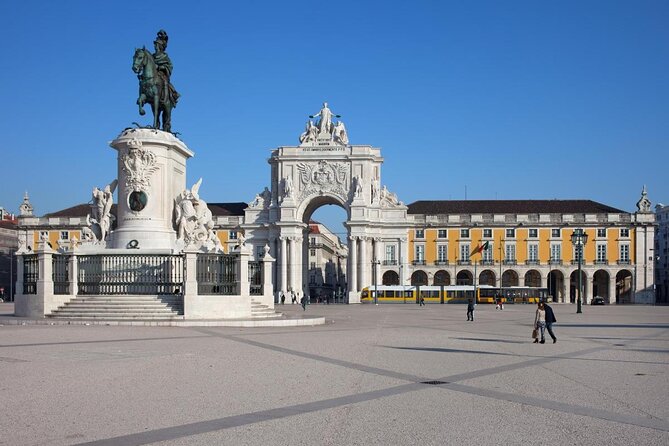
From Alfama you move toward central Lisbon and the riverfront mood: Praça do Comércio (Terreiro do Paço). You’ll spend about 15 minutes here, imagining the flow of goods arriving by sea and the grandeur of the royal palace that once stood in the area.
Then you head to Bairro Alto for another short stop (about 15 minutes). This is framed around maritime expansion and intellectual movements. The tour also points you toward a statue of an important figure who challenged 17th-century society and fought against slavery, linking that to Portugal’s first decree condemning slavery in 1761.
What I like about this pairing: it connects trade and ideas. One moment you’re in a grand square tied to port life. The next you’re looking at a neighborhood and a person representing changing moral and intellectual currents. It makes the Golden Age feel bigger than just exploration—it becomes about how societies argued themselves into (and out of) old systems.
Madragoa and the African community: a different side of Lisbon’s story
After Bairro Alto, you move toward Madragoa, described here as the first European neighborhood entirely inhabited by African people. The tour highlights traditions and cultural blending, using this stop to show that Lisbon’s Golden Age wasn’t only European narratives—it was shaped by people moving across the Atlantic and building communities in Lisbon.
This part is about 15 minutes. It’s short, but it gives the day balance. Without it, Lisbon history can feel like a single-track story. With it, you get a more human view of how global movements played out locally.
Note: since this segment is focused on meaning rather than long museum-style stops, listen for what your guide connects the neighborhood to.
Capela de São Jerónimo: a quiet historical breather
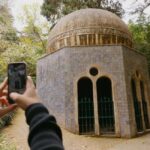
Between the big-name sights, there’s a more peaceful interlude at the Capela de São Jerónimo, roughly 10 minutes. The tour treats it as a charming chapel with historical significance and architectural appeal, tucked into a calmer setting.
This stop is valuable because it resets your brain. After hills and squares, you get a moment that feels more intimate and less “tour group in transit.” If you love architecture, this is one of the easiest places to appreciate small details without needing a long visit.
Jerónimos Monastery: Manueline style, UNESCO-level impact, and a timing catch
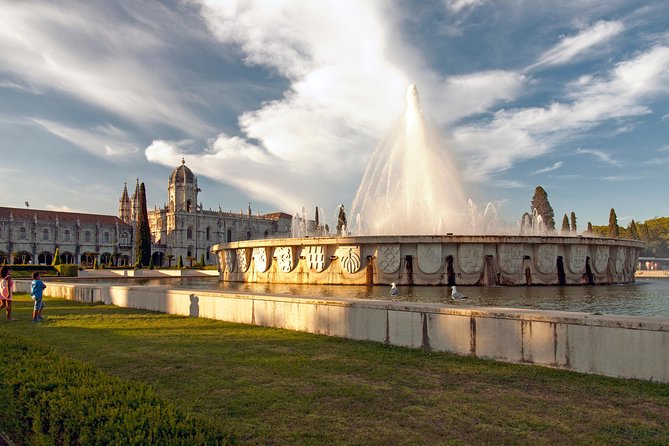
Next comes Jerónimos Monastery, a centerpiece for Lisbon’s Golden Age story. You’ll visit from the outside and also visit the church, with about 30 minutes total assigned. This is tied to Manueline architecture—often associated with sea voyages and the mysticism of the Fifth Empire—and it’s listed as a UNESCO World Heritage site.
Here’s the practical consideration: the Jerónimos Monastery Church is closed on Mondays. So if your tour date lands on a Monday, you may not get the same church experience. The exterior is still part of the plan, but it’s worth keeping that in mind when choosing your day.
Even with that caveat, Jerónimos is one of those places where the Golden Age idea becomes physical. The stonework and scale are hard to fake with photos alone. If you’re the type who likes history told through materials and design, this stop usually hits.
Pastel de Belém tasting: the sweet stop you’ll remember later
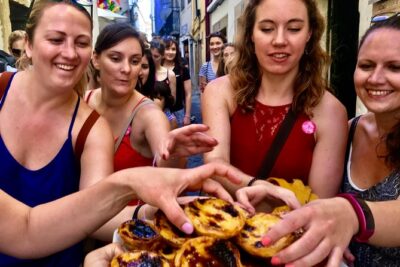
In Belém, the tour includes a Pastel de Belém tasting (about 20 minutes). This is the one food moment that feels perfectly matched to the theme: it’s a Lisbon ritual tied to the city’s identity.
Why I think this matters: you’re already learning about maritime Portugal and the cultural boom that followed. Having one local specialty built into the schedule means you don’t have to hunt for something good while you’re tired. And yes, the taste is the point—this is a stop meant to be enjoyed, not rushed.
If you’re food-sensitive, you’ll still want to be aware that the tour includes a specific pastry tasting and food/drinks beyond that aren’t listed as included.
Belém Tower and the Monument to the Discoveries: finishing at the waterline
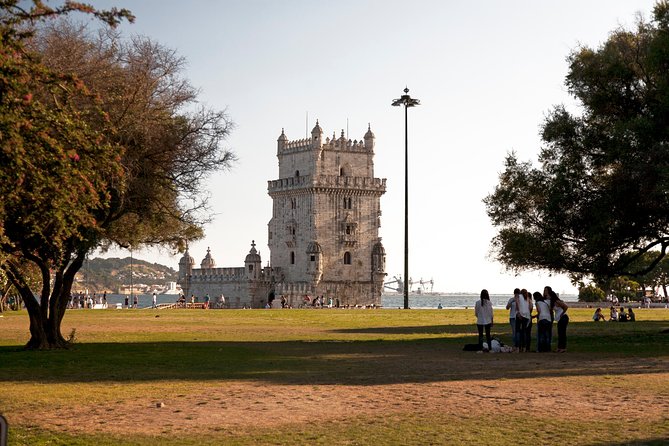
You finish near the Tagus with two famous maritime symbols, both viewed from outside as part of the timing.
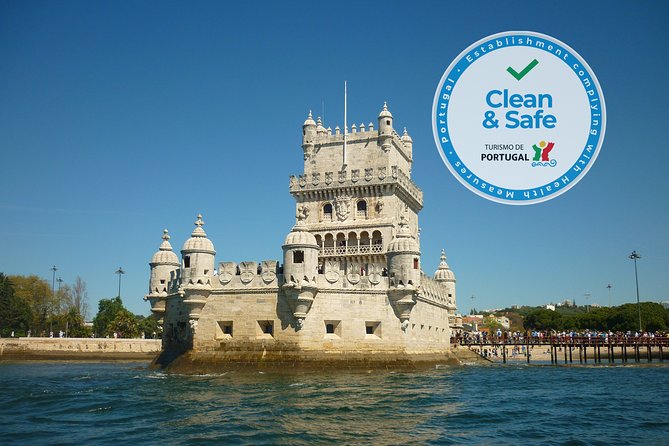
First is Torre de Belém, with about 15 minutes allocated. It’s treated as a symbol of Lisbon and Portuguese nationality, standing over the city’s maritime past.
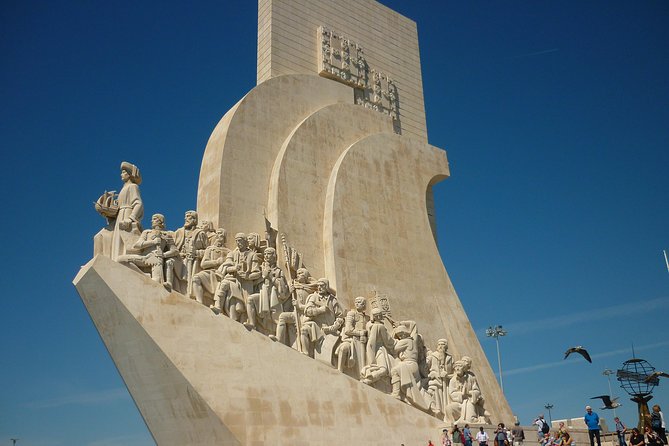
Then you move to Padrão dos Descobrimentos (Monument to the Discoveries) for another 15 minutes. The focus is on the explorers who launched from Lisbon and helped usher in the Golden Age. Together, these two stops close your story: from viewpoint orientation, to fortress power, to port life, to Belém’s final word.
If you love a clean narrative arc, this ending works. You leave with images of river, tower, and explorers—things you can keep replaying later when you walk around on your own.
What’s included, what’s not, and how to plan your spending
Here’s what this tour gives you, in a way that affects real value:
Included
- Private tour in an air-conditioned mini van
- Full-time driver/guide
- Fresh water
- Pastel de Belém tasting
- Pickup and drop-off from central Lisbon hotels, Lisbon Cruise Terminal, or Lisbon airport
- Mobile ticket (shown as part of the experience)
Not included
- Entrance fees
- Food and drinks (unless specified)
- Gratuities
How I think about value: you’re paying for private guiding time plus transportation plus a planned food experience. The trade-off is that you should expect some sights to involve no-entry viewing or timing-based access, and entrance fees aren’t covered. If you’re okay with that style—seeing the highlights and learning the story—this can feel very efficient for four hours.
One more logistics detail that matters: luggage transport is limited to 4 medium-sized suitcases, so pack smart if you’re traveling with more.
Who this Lisbon Golden Age tour is best for
This is a great fit if:
- You love history, especially sea-driven stories of power and change
- You want a personal guide rather than a large-group scramble
- You’d like an efficient “best-of” route in a short day
- You want both scenic viewpoints and explanation tied to Lisbon’s Golden Age
It’s also a good choice if you’ve been to Lisbon before and want the city to make more sense. The guide narrative is what people strongly respond to—Daniel and Diogo are repeatedly highlighted for making Lisbon’s history feel organized and interesting, not like disconnected trivia.
If you’re looking for long museum time or lots of interior access, you might feel shortchanged by the outdoor-focused segments and the church closure risk on Mondays. But if you want clarity and flow, this tour is built for that.
Should you book this Lisbon Golden Age private tour?
I’d book it if you want a four-hour, guide-led route that gives Lisbon’s Golden Age story in a practical order: viewpoints first, then the old neighborhoods, then central power spaces, then Belém’s maritime finale. The private van and full-time guide make it feel like your day, not a schedule you’re trapped in.
Skip it (or at least consider another option) if your top priority is spending lots of time inside major sites, or if the Jerónimos Monastery church timing would be a dealbreaker for your travel dates. For many people, though, this balance—story plus key stops plus Pastel de Belém—is the exact kind of Lisbon day that leaves you satisfied and oriented.
FAQ
How long is the Lisbon Golden Age private tour?
It’s listed as about 4 hours.
What does the tour include?
The tour includes a private air-conditioned mini van, a full-time driver/guide, fresh water, the Pastel de Belém tasting, and pickup and drop-off from central Lisbon hotels, the Lisbon Cruise Terminal, or Lisbon airport.
Are entrance fees included?
No. Entrance fees are not included.
Is the Jerónimos Monastery church always open during the tour?
No. The Jerónimos Monastery Church is closed on Mondays, so your visit there may differ depending on the day.
Is this a private tour or a group tour?
This is a private tour. Only your group participates.
Where can pickup and drop-off happen?
Pickup and drop-off are included for central Lisbon hotels, the Lisbon Cruise Terminal, or Lisbon airport. You’ll need to share your pickup location.
Can I cancel for a full refund?
Yes. You can cancel up to 24 hours in advance for a full refund. If you cancel less than 24 hours before the start time, the amount paid isn’t refunded.