REVIEW · FOOD & DRINK
Évora Private Tour – Cork Factory Visit & Wine Tasting Included
Book on Viator →Operated by Yellow Cab TT Tours, Unipessoal, Lda. · Bookable on Viator
A cork-to-wine day trip in the Alentejo. You get a private, customizable route from Lisbon that pairs cork factories in Azaruja with Alentejo wine tasting, then layers in UNESCO-listed Évora sights. One thing to plan for: not every entry is included, and there’s no lunch on the schedule, so budget for an extra meal and any paid monuments.
I also like the easy, private hotel pickup and drop-off. It saves you time and stress, and because it’s truly private, you can adjust the pacing and the order of stops to match your interests.
In This Review
- Key moments that make this tour worth your time
- Why this private Évora tour feels different from a typical day trip
- From Lisbon to the countryside: a 1966 bridge photo stop with a twist
- Azaruja cork factories: what cork really turns into
- Évora’s old town on foot: Giraldo Plaza and the Roman layer
- Iglesia de São Francisco: Gothic-Manueline details for people who notice carvings
- Chapel of Bones: the 45-minute stop that turns your stomach (in a good way)
- Sé de Évora Cathedral: Romanesque meets Gothic, built in stages
- The Tagus River bridge return: architecture that screams modern engineering
- Wine tasting at Herdade Das Servas: why this portion is the payoff
- Timing, pace, and what to do if you get hungry
- What you’ll like most (and who the tour suits best)
- Quick reality check on price and value
- Should you book this Évora cork and wine tour?
- FAQ
- How long is the Évora Private Tour with cork and wine?
- What activities are included?
- Do I get pickup and drop-off from Lisbon hotels or rentals?
- Is lunch included?
- Are admission tickets included for all stops?
- What language is the tour offered in?
- What if I need to cancel?
Key moments that make this tour worth your time
- Azaruja cork education: Learn how cork becomes products, not just how it’s harvested
- Évora on foot: Giraldo Plaza area plus the Roman-era storylines that shaped the town
- Chapel of Bones: A 45-minute stop that’s unsettling in the best way
- Sé de Évora views: Cathedral architecture that shows Romanesque-to-Gothic transition
- Herdade Das Servas tasting: Wine time paired with a winery visit, not a quick pour-and-go
Why this private Évora tour feels different from a typical day trip
This is the kind of outing that makes the long drive worth it. You’re going from Lisbon’s city rhythm into the cork-and-wine world of the Alentejo, and you’re doing it with a route that mixes production, architecture, and just enough time on the streets.
The price—$333.54 per person for about 8 hours—becomes easier to justify when you factor in the included wine tasting, the cork factory visit, and the two-way private transfers. You’re not paying extra for the main experiences, and you’re not spending your day trying to solve transport.
Also, because it’s private, you’re not stuck with a rigid group pace. If you want more time in Évora’s center for photos or a slower walk through the historic lanes, the tour can be adjusted. That flexibility matters when you’re visiting a town with narrow streets and sharp turns.
You can also read our reviews of more food & drink experiences in Lisbon



From Lisbon to the countryside: a 1966 bridge photo stop with a twist
Early in the day, you pause at a major Lisbon bridge that completed in 1966. It’s known for its design idea that shares the same project concept as the San Francisco–Oakland Bay Bridge, and it’s one of the most photographed monuments in the city.
This stop does two jobs at once. First, it gives you an easy orientation point before you leave Lisbon behind. Second, it sets expectations for the day: you’re not doing a fast stop-and-shop city circuit. You’re transitioning into a different Portugal—flatter farmland, fewer buildings, and bigger skies.
If you like road trips that feel like they have a storyline, you’ll enjoy this early “point on the map” moment.
Azaruja cork factories: what cork really turns into
Azaruja is where the day earns its title. Portugal is the world’s largest cork producer, and this stop focuses on what that actually means on the ground.
You’ll spend about 45 minutes learning cork as a material and watching it move through transformation factories. The idea isn’t just harvesting. You’ll get the full arc: sorting into different grades and how cork becomes a range of items—everything from industrial uses like engine gaskets to everyday products like clothing and furniture.
That “from bark to bottle” angle is the real win here. It turns cork from a souvenir you might recognize into something you understand. You also get a sense of why cork is considered sustainable: it’s a renewable, versatile material that can be transformed for many uses rather than becoming a one-purpose product.
This stop is listed with admission as free, so it’s a straightforward add-on without extra entry fees.
Practical note: cork factories can involve showrooms and sometimes industrial spaces. Wear comfortable shoes and keep your camera ready for details, especially if you enjoy materials and how things are made.
Évora’s old town on foot: Giraldo Plaza and the Roman layer
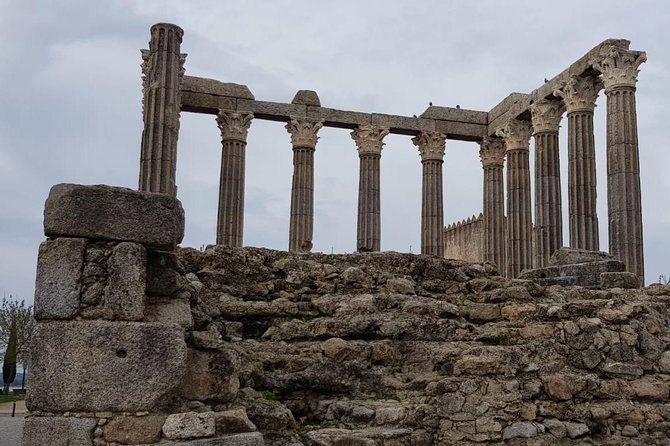
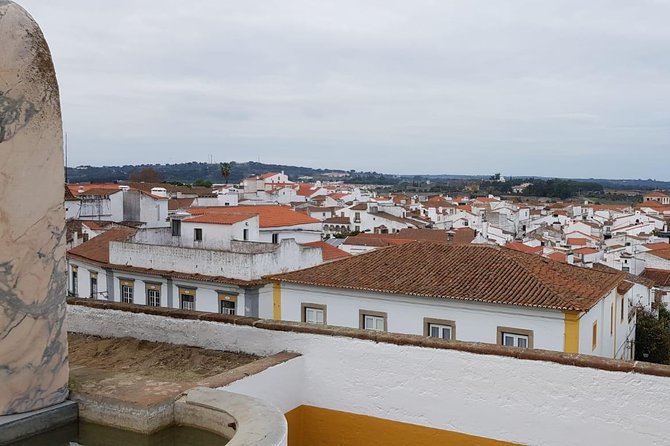
After Azaruja, you move into Évora and get around on foot with about 1 hour 30 minutes in the center. This is where the day becomes human-scale: narrow lanes, tight corners, and little pockets of stonework that you notice more when you’re walking slowly.
A key anchor is Giraldo Plaza, the main square area where the town’s energy shows up fast. You’ll also connect the visual experience to the deeper timeline. Évora has been tied to different eras of the Portuguese monarchy, and it carries a Roman-era footprint as well.
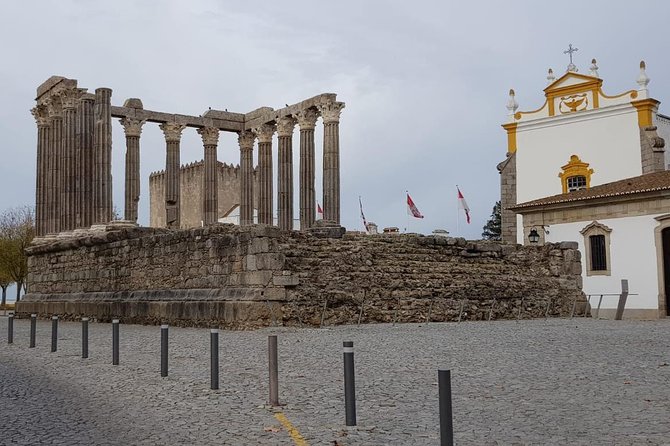
One specific story you’ll hear is about the Roman temple tradition: it’s believed to have been built around the first century A.D. in honor of Augustus, with veneration shaping how power was represented. It’s a good reminder that Évora wasn’t just a medieval stopover—it was a place with long political and cultural importance.
This Évora walk comes with free admission listed for the time in the center, so you can spend your money where it matters most: food and any paid monuments later.
From what this kind of day trip usually delivers, the Évora portion is where you’ll feel the value of “private” most. You can ask for a quick detour to a viewpoint or slow down for photos without worrying that the rest of the group is getting left behind.
Iglesia de São Francisco: Gothic-Manueline details for people who notice carvings
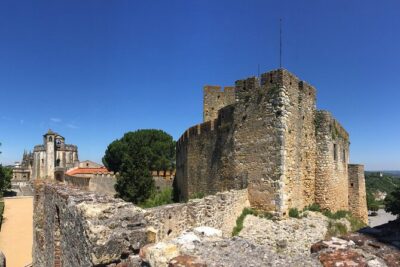
Next comes Igreja de São Francisco, a church with Gothic-Manueline architecture. The stop is shorter—about 15 minutes—but it’s chosen for a reason: it connects church art to Portugal’s maritime expansion era.
The church was built between 1480 and 1510, and its decoration includes work associated with royal painters such as Francisco Henriques, Jorge Afonso, and Garcia Fernandes. The architecture is also tied to symbols you’ll recognize as Portuguese power and exploration motifs, including the Order of Christ cross and emblems connected to founding kings like D. João II and D. Manuel I.
There’s also a tradition that Gil Vicente was buried there in 1536. Whether you treat that as literal or as part of how historic places build stories, it adds meaning to what you see.
This is a quick stop, so if you’re the type who enjoys walking into major churches and just standing there, you might want to use the time efficiently. Look up first at the vaulting and symbols, then work your way toward the nave details.
Admission is listed as free for this stop.
You can also read our reviews of more private tours in Lisbon



Chapel of Bones: the 45-minute stop that turns your stomach (in a good way)
If you want one stop that will stay with you, it’s the Chapel of Bones. It’s a sixteenth- and seventeenth-century structure built where a primitive dormitory once stood. The point was reflection on the brevity of life—bones from graves in the convent church and other city churches form the decoration.
The phrase above the porch is part of the experience: We bone that we are here, for your hope. Even if you don’t read Portuguese fluently, you’ll feel the message.
This isn’t included with admission in the provided info. So if you care about keeping the budget tight, plan for a paid ticket here.
Timing is listed as 45 minutes. That’s plenty to walk in, see the walls covered in bones, and sit with the mood. But it’s also enough that you don’t get trapped lingering too long. If you’re sensitive to mortality-themed art, go in with control: stand back a moment before getting close for photos.
Sé de Évora Cathedral: Romanesque meets Gothic, built in stages
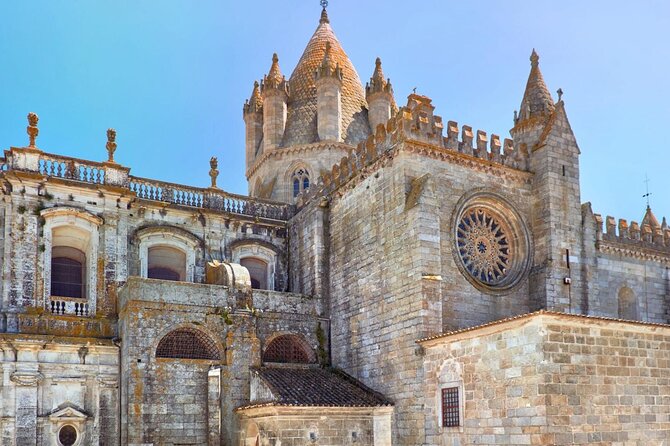
Next is the Cathedral of Évora, also called Sé de Évora. It began in 1186 and was consecrated in 1204, then completed around 1250. That timeline matters because it’s a monument of transition—Romanesque to Gothic.
What you’ll notice quickly is the architecture marked by three majestic ships (the main interior divisions). It’s the kind of stop that rewards even a short visit if you slow down and look at proportions rather than chasing every detail.
Admission is listed as not included, and the listed time is 15 minutes. So think of this as a “get your bearings and take it in” stop, not a long cathedral deep-dive.
Also, this is one of those places where light changes your impression fast. If you can, position yourself to see both the entrance area and interior structure before you move on.
The Tagus River bridge return: architecture that screams modern engineering
On the way back, you get another bridge stop across the Tagus river. This one opened to traffic in 1998, right before EXPO 98 in Lisbon. It’s described as the longest bridge in Europe, with more than 12 kilometers across the river estuary.
It’s a totally different vibe from the medieval streets of Évora. And that contrast is useful. After visiting older stonework and human-shaped history, the modern scale of a long crossing feels like your brain switching gears.
If you like photography, this can be a great moment—big lines, big space, and clean angles that make for quick, satisfying shots. If you’re not a photo person, just enjoy it as a scenic palate cleanser.
Wine tasting at Herdade Das Servas: why this portion is the payoff
The day doesn’t end on architecture. It ends with wine, and not in a rushed way.
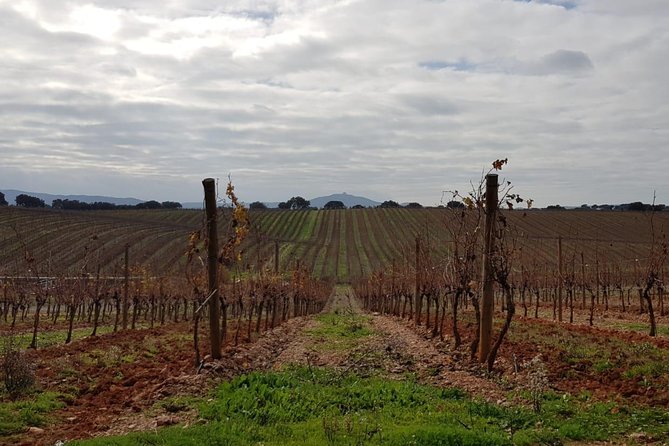
You’ll visit a winery estate and savor Alentejo wines, with wine tasting included. The winery stop is at Herdade Das Servas, a name that connects the experience to a specific place rather than a generic tasting room.
What makes this stop feel worth your time is that it’s paired with a winery visit. You learn about the production side—how wine is made and stored—before you taste. That sequence turns the tasting into something with context. Instead of guessing what you’re drinking, you start noticing how it’s handled.
This is where you’ll likely feel the emotional high point of the day. Cork learning can be fascinating, but wine is where you slow down and enjoy yourself. It’s also a good moment to ask questions and let the guide connect the dots between cork as a material and wine as a product that cork helps package and preserve.
Timing, pace, and what to do if you get hungry
This is an all-day commitment at roughly 8 hours. It’s doable for most people, but it does assume you’ll walk in historic streets and stand for church and chapel visits.
Two practical pointers:
- Wear shoes you can handle on uneven stone and narrow lanes.
- Accept that lunch isn’t included, so eat before you go or plan to purchase something during the free time window (if you want a sit-down meal). If you ignore this, the last half of the day can turn into a hangry mission.
Also, the chapel and cathedral have tickets listed as not included, so check that mentally as part of your total day cost.
What you’ll like most (and who the tour suits best)
This tour is especially good if you:
- Want a private day from Lisbon without the stress of renting a car
- Like structured learning tied to real places, like cork transformation factories
- Enjoy seeing a UNESCO-listed town on foot rather than only from a bus window
- Appreciate wine time that feels connected to production
It might be less ideal if you:
- Hate mortality-themed exhibits and would rather skip the Chapel of Bones
- Need long seated rest breaks during the day
- Want a built-in lunch with zero additional spending
Quick reality check on price and value
At $333.54 per person, this isn’t a cheap day trip. But you’re buying several things at once: private transfers, a cork factory visit, and wine tasting. That’s a lot of “included effort.”
Your extra budget items are mainly predictable: the Chapel of Bones and the cathedral admissions aren’t included, and lunch isn’t provided. If you’re the kind of traveler who already budgets for monument tickets and a proper meal, the pricing starts looking fair.
If you’re comparing to a basic tour, this one usually wins because it doesn’t feel like a blur. It gives you enough time at key stops to actually absorb them.
Should you book this Évora cork and wine tour?
Yes, if you want a day that mixes craft + countryside + a real Portuguese town. The cork stop and the winery tasting are the two anchors that keep the day from feeling like a checklist.
I’d say book it now if you can, because this kind of private day trip tends to get reserved. The tour is commonly booked about 38 days in advance, so planning ahead helps you lock in your date and get the exact pickup timing that works for your Lisbon stay.
Skip it only if you know you’ll be uncomfortable with the Chapel of Bones theme or you strongly prefer lunch and timed sightseeing that’s fully all-inclusive.
FAQ
How long is the Évora Private Tour with cork and wine?
The duration is listed as about 8 hours.
What activities are included?
The tour includes private transfers, a cork factory visit, and wine tasting with alcoholic beverages.
Do I get pickup and drop-off from Lisbon hotels or rentals?
Yes. Pickup is offered in Lisbon, and drop-off is included as part of the hotel pickup and drop-off feature.
Is lunch included?
No. Lunch is not included.
Are admission tickets included for all stops?
Not for all stops. Azaruja and the Évora center are listed with admission ticket free, while the Chapel of Bones and the Cathedral of Évora have admission ticket not included.
What language is the tour offered in?
It’s offered in English.
What if I need to cancel?
You can cancel for a full refund if you cancel at least 24 hours before the experience’s start time.