REVIEW · LISBON
Évora Private Tour – Cork Factory Visit Included
Book on Viator →Operated by Yellow Cab TT Tours, Unipessoal, Lda. · Bookable on Viator
Évora in one day feels like cheating. You get a private Alentejo escape with a cork factory visit, then a guided walk through Évora’s UNESCO-listed center—walled streets, big squares, and famous churches with serious architectural attitude. I love that the day is built around you and your guide’s pace, so you can slow down for photos or press forward if you like your sights fast. I also like that the tour mixes the major hits with the strange and specific details, like the Chapel of Bones and the Roman Temple everyone argues about. One consideration: two major interior stops (the Cathedral and the Chapel of Bones) have tickets not included, so you’ll want to budget a little extra on the day.
The ride out of Lisbon is part of the experience too. You’ll cross famous Tagus bridges on the way, and that gives you quick “wow” moments before you even hit Évora’s stones and shadows. If your goal is a relaxed private day with real context, this fits well. If you’re hoping for a mostly sit-down tour with minimal walking, you might find yourself moving more than you expect in the historic center.
In This Review
- Key highlights you’ll actually care about
- A Private Day Trip From Lisbon That Hits the Real Évora
- Cork Factory Near Évora: The Practical Start
- The Tagus Crossings: Quick Photo Stops With Big-Bridge Energy
- Entering Évora’s Historic Center Like You Know Where You’re Going
- Roman Temple: Diana’s Temple and the Power of One Landmark
- Igreja de São Francisco: Manueline-Gothic With Maritime Meaning
- Chapel of Bones: Stop, Stare, Then Laugh a Little at Mortality
- Sé de Évora Cathedral: The Romanesque-to-Gothic Transition
- Aqueduct, Public Garden, Fake Ruins, and D. Manuel Palace
- How the Route Pacing Works Over 8 Hours
- Guides and the Private Comfort Factor
- Price and Value: What $287.09 Gets You
- Who This Tour Suits Best
- Should You Book This Évora Private Tour?
- FAQ
- What’s the duration of the Évora private tour?
- Is pickup available?
- Is this tour private?
- Are entrance tickets included for the Chapel of Bones and the cathedral?
- What time does the tour operate?
- Can I cancel for free?
Key highlights you’ll actually care about
- Private group, not a crowd: only your group joins, so the guide can adjust timing.
- Cork factory visit included: a practical look at Portugal’s cork tradition right near Évora.
- UNESCO Évora center feel: walled streets, squares like Giraldo, and a strong guided route.
- Manueline-Gothic Church stop: Igreja de São Francisco has standout maritime symbols.
- Chapel of Bones: oddly memorable, and you’ll want to see why people pause there.
- Some entries free, some not: plan for extra tickets at the Cathedral and Chapel of Bones.
A Private Day Trip From Lisbon That Hits the Real Évora
This is an 8-hour private outing from Lisbon to Évora and nearby sights in the Alentejo region. The core idea is simple: you get a professional guide’s suggestions, but the schedule can flex to fit your pace and interests.
Évora isn’t just “nice old town.” The whole historic area is recognized as a UNESCO World Heritage Site and feels like an open-air museum. That matters because you’re not bouncing between isolated attractions—you’re walking through a place that still reads like a living historical center.
For value, I like how the day blends included experiences with free-entry segments. Some key stops list admission as free, while a couple of the big-ticket interior sites cost extra. That mix usually works well for independent travelers who don’t mind paying for the best interiors.
You can also read our reviews of more private tours in Lisbon

Cork Factory Near Évora: The Practical Start
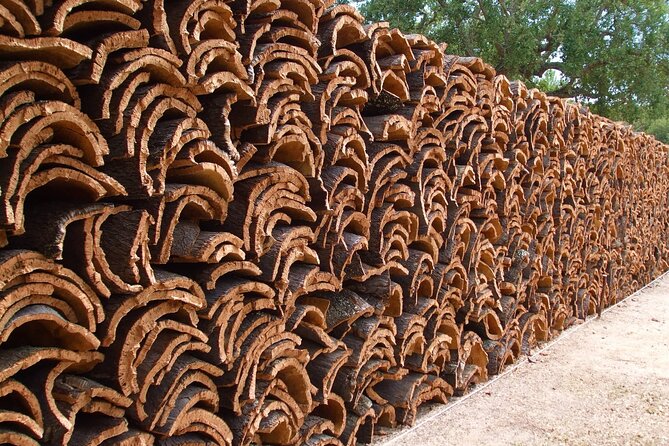
Before you spend time in the walled city, you stop at a familiar cork factory near the Évora village area. If you only associate cork with bottles and wine gifts, this kind of visit helps you connect the dots to Portugal’s materials and craft.
What I like here is the tone. It’s not just a lecture. You’re in a real industry setting, and that gives the day a grounding before you hit purely architectural stops. It also breaks up the transfer from Lisbon so the day doesn’t feel like one long rush.
Since the cork stop is included in the concept of the tour, it’s a good move for people who want more than churches and plazas. If you love food, wine, or Portuguese products, this is your early signal that the day has range.
The Tagus Crossings: Quick Photo Stops With Big-Bridge Energy
On the way from Lisbon, you pass the 25 de Abril Bridge area—finished in 1966, and famous for its similarity in project concept to the San Francisco–Oakland Bay Bridge. It’s one of Lisbon’s most photographed monuments, and you get a chance to see it as you head out.
Then later, on the return side, there’s another Tagus crossing: the Vasco da Gama Bridge. This one opened to traffic in 1998, right before the EXPO 98 period in Lisbon, and it’s described as the longest bridge in Europe, stretching more than 12 kilometers over the river estuary.
You won’t come to Évora for bridges alone, but these quick views help the day feel like a full route, not just a straight sprint. Also, if you like skyline shots, you’ll get a few moments where the light does nice things on the water.
Entering Évora’s Historic Center Like You Know Where You’re Going
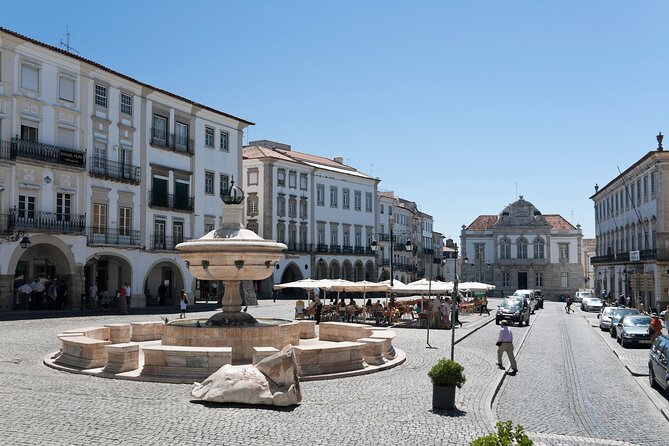
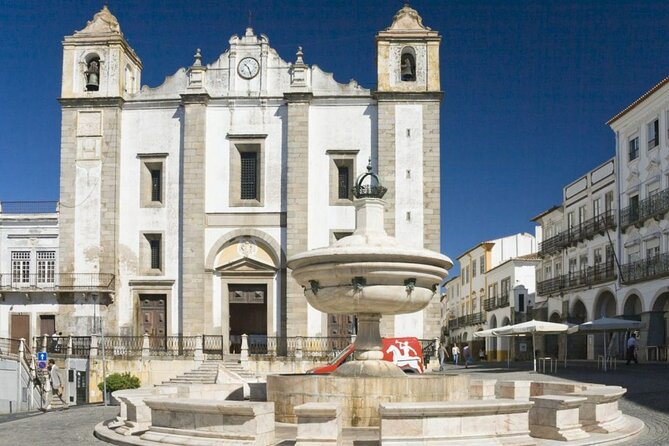
Once you reach Évora, your time is built around the historic center and the areas people actually want to linger in. You’ll walk through major public spaces like Giraldo Square and get time for a slow wander through narrow streets and alleys.
This is where a good guide changes everything. Évora’s center can feel easy to “tour,” but hard to truly understand on your own. With a guide, you know what to look for and why certain buildings matter, instead of just snapping photos and hoping you get it right later.
Admission at this stage is listed as free for the district walk segment, so you’re spending time, not money, while you get the lay of the land. That’s a smart use of your day—set your bearings first, then go for the standouts.
Roman Temple: Diana’s Temple and the Power of One Landmark
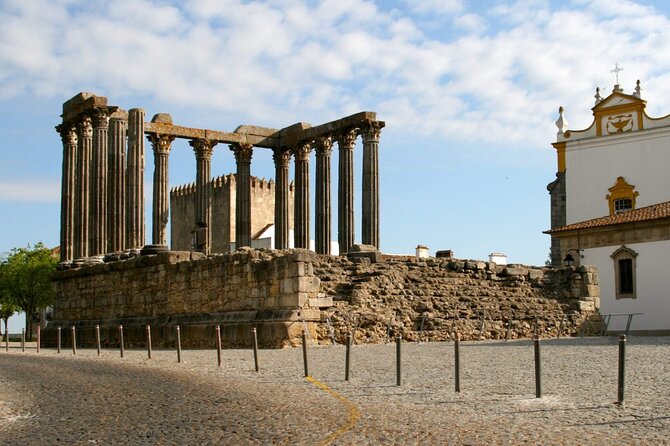
One of the early wow moments is the Roman Temple in the main public square. It’s often called Diana’s Temple, and it’s described as about 2,000 years old. You’ll also hear the context: it’s believed to date to around the first century A.D., linked to Augustus, who was venerated as a god during and after his rule.
Here’s why this stop is worth your time: it anchors the whole city. Évora didn’t become important just once. Roman influence, later Portuguese monarchy, and the city’s religious role all overlap in ways that can be hard to spot without someone pointing it out.
If you like “read the building, learn the story” travel, this is one of the best stops in the day. It’s concrete history you can still see, not just dates on a sign.

Igreja de São Francisco: Manueline-Gothic With Maritime Meaning
If Évora has a church stop you should not rush, it’s Igreja de São Francisco. This is Gothic-Manueline architecture, built between 1480 and 1510 by masters associated with Pedraria Martim Lourenço and Pero de Trilho. The decoration includes royal painters Francisco Henriques, Jorge Afonso, and Garcia Fernandes.
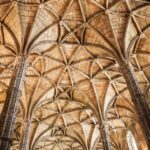
The most interesting part is how the symbolism connects to Portugal’s maritime expansion. You’ll notice design clues in the monumental nave vaulting, including the cross of the Order of Christ and the emblems of kings D. João II and D. Manuel I.
There’s also a tradition tied to the place: Gil Vicente is said to have been buried here in 1536. Whether you view that as history or legend, it adds texture. The church becomes more than a pretty interior—it becomes a window into national identity building.
Admission is listed as free for this stop, so you’re paying with time only. That makes it a high-return stop on a private day.
Chapel of Bones: Stop, Stare, Then Laugh a Little at Mortality
The Capela dos Ossos (Chapel of Bones) is the kind of place that makes your travel group go quiet. It’s built in the 16th and 17th centuries, at the site of a primitive dormitory of the friars. The concept is tied to Franciscan friars who wanted a more direct reflection on how brief human life is.
The key detail you can’t miss is the sheer material use: walls and parts of the vault are covered with thousands of human bones taken from graves in the convent church and other city churches and cemeteries. Over the porch, there’s the phrase: We bone that we are here, for your hope.
Two practical notes:
- The admission ticket is not included, so plan on extra cost for entry.
- This stop isn’t for everyone’s comfort level, even if you’re curious. If you prefer lighter stops, you can treat this as a “decide on the spot” moment when you see the line and your energy level.
I appreciate it because it’s oddly honest. Most religious sites try to be uplifting or grand. This one forces perspective.
Sé de Évora Cathedral: The Romanesque-to-Gothic Transition
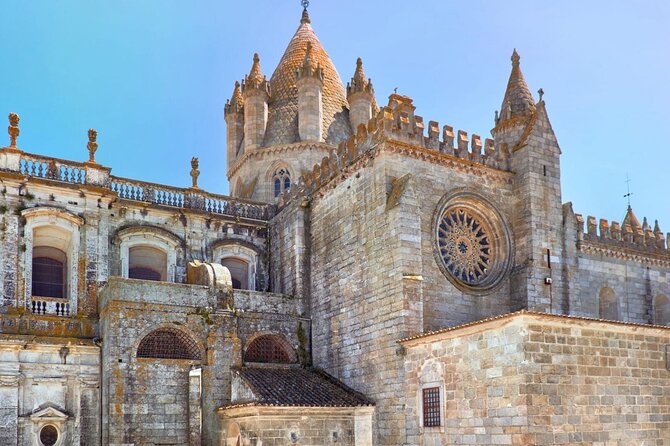
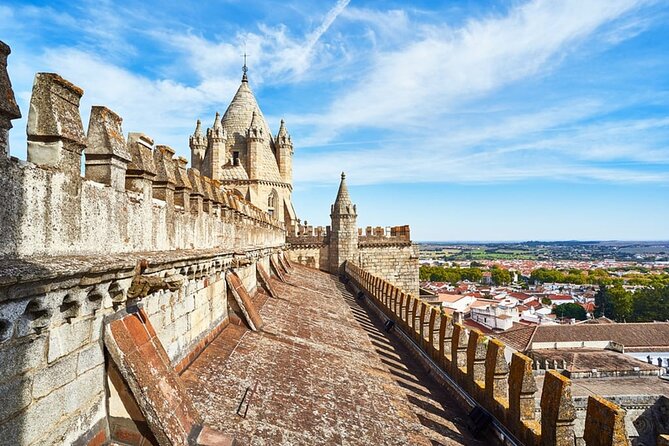
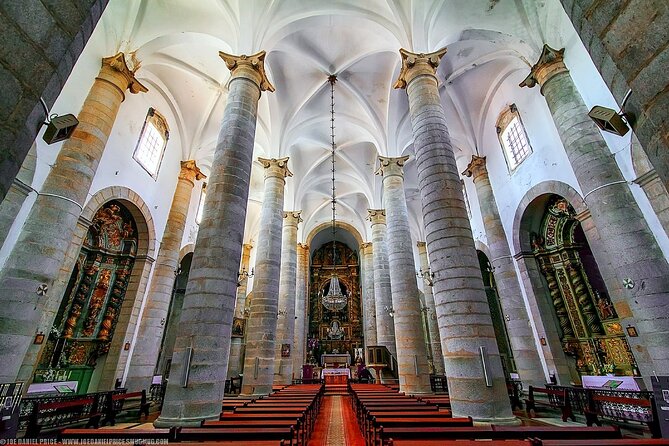
Next up is the Cathedral Basilica of Our Lady of the Assumption—often called Sé de Évora. Construction began in 1186, it was consecrated in 1204, and it was completed in 1250. The style marks a transition from Romanesque to Gothic.
The standout feature you’ll likely notice is the presence of three majestic ships, meaning three main sections/aisles. It’s not just architecture for architecture’s sake. It’s part of how Évora’s religious influence shaped the city.
This is another stop where the admission ticket is not included. If you’re trying to budget tightly, you might decide whether cathedral interiors are a must for you. If you love church interiors, though, it’s a worthwhile way to round out the day after visiting Igreja de São Francisco.
For many people, this is where the day clicks into place: you see how different eras in Portugal kept building, rebuilding, and signaling power through church design.
Aqueduct, Public Garden, Fake Ruins, and D. Manuel Palace
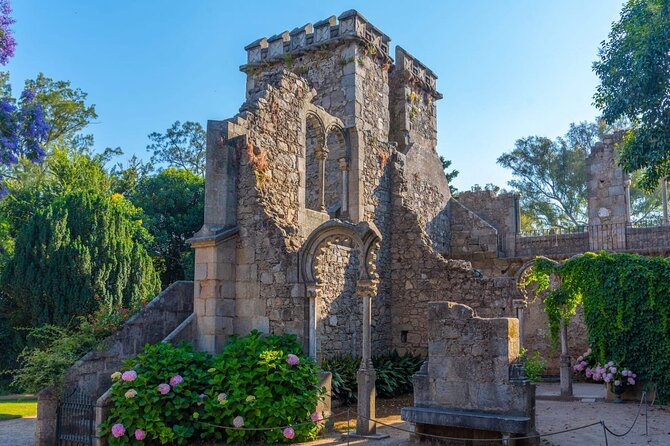
Beyond the headline church and cathedral stops, you’ll also see some of Évora’s signature “in-between” attractions. The tour includes time for the public garden and the so-called Fake Ruins. It also includes D. Manuel Palace and takes you along the Água de Prata Aqueduct toward the fields or to reach the city.
This is a smart group of extras because not every great part of Évora is inside a building. The aqueduct and surrounding approach show how the city interacts with its land outside the walls. And the Fake Ruins can be a fun contrast if you like playful touches in a historic setting.
The drawback here is simple: these are often the kind of stops where you’ll enjoy them more if you have some patience. If your style is all “big monument first,” this segment can feel like a breather. But I think that’s the point. It gives your brain time to absorb what you just saw.
How the Route Pacing Works Over 8 Hours
The day isn’t locked like a theme park. It’s described as private, and timings and stops can be adapted to your preferences or needs. That flexibility matters most in Évora, because walking through medieval streets can be slower than you expect—especially if you stop often for photos or want to sit for a snack.
There are time blocks attached to the main segments, like:
- Around 1 hour 20 minutes for the first Évora stop
- Around 1 hour 30 minutes for the Évora district walk segment
- Around 1 hour 30 minutes for Igreja de São Francisco
- Around 1 hour at the Chapel of Bones (with ticket not included)
- A shorter 25 minutes for the Cathedral exterior/interior time window
This helps you understand the tradeoff. You’re getting a lot, but you’re also not spending half a day inside one building. If that’s your style, you’ll be happy. If you’re a slow explorer who likes to linger, you’ll want to use the adaptation request early so the guide knows to give you breathing room.
Guides and the Private Comfort Factor
One of the most praised elements in this tour style is the guide experience. You’ll often see specific names like Paula and Francisco recognized for being friendly and personable, and Catarina highlighted for being funny, cult in the best sense (meaning sharp and well-versed), and very attentive. Another guide you may see mentioned is Maria Magdalena, also described with sympathy and patience.
I love this angle because a private tour with a great guide doesn’t just recite facts. It helps you place each stop in the city’s bigger story and keeps the pace comfortable in a day that could otherwise feel rushed.
Also, the tour uses a comfortable car in the “private day trip” format. That matters if you want the day to feel easy rather than exhausting, especially since Lisbon to Évora is a real drive.
Price and Value: What $287.09 Gets You
At $287.09 per person for about 8 hours, you’re paying for a private format plus included experiences. On paper, that can sound steep compared to group tours. In practice, it becomes good value if you care about flexibility, a comfortable car, and a guided route that makes UNESCO-listed Évora easier to understand.
Here’s the value math I see:
- Private means you’re not sharing the guide with strangers.
- Pickup is offered, and the schedule is managed end-to-end.
- The cork factory visit is included, which many similar day trips skip.
- Several segments list admission as free, like the Évora district walk and key church stop segments.
- Two major interiors have admission not included: Chapel of Bones and the Cathedral.
So you’re not paying for every line item up front, but you are paying for curated time in the places that need context. If you’d otherwise pay for a guide anyway, the private pricing starts to look less dramatic.
Who This Tour Suits Best
This is ideal for:
- People who want Évora without stress, especially if you don’t want to plan transportation.
- Travelers who like history but also enjoy the weird corners, like the bones chapel.
- Anyone who appreciates architecture and wants real explanations, not just names.
It might be less ideal if:
- You hate church interiors.
- You want a very slow, open-ended day with lots of free time to wander unguided.
- You dislike sites involving human remains. (You’ll see the Chapel of Bones listed clearly, with tickets not included.)
Still, even for cautious visitors, a private guide can help you decide whether to enter and how long to stay.
Should You Book This Évora Private Tour?
I’d book this if you want one strong day that mixes the big UNESCO hits with hands-on Portuguese culture through the cork factory stop. The private format plus flexible pacing is the real win, and the included route gives you a sensible amount of walking without turning the day into a marathon.
I wouldn’t book it if you’re only interested in one type of sight, like museums, and you hate churches or anything graphic-adjacent. But if you’re game for Roman layers, Manueline church symbolism, and that unforgettable Chapel of Bones moment, this tour offers good structure at a price that feels fair for a private day.
FAQ
What’s the duration of the Évora private tour?
It runs for about 8 hours.
Is pickup available?
Yes, pickup is offered, and the tour is also near public transportation.
Is this tour private?
Yes. It’s a private activity, and only your group participates.
Are entrance tickets included for the Chapel of Bones and the cathedral?
No. The Chapel of Bones and the Cathedral of Évora list admission tickets as not included.
What time does the tour operate?
It’s listed as operating Monday to Sunday from 8:30 AM to 5:00 PM.
Can I cancel for free?
Yes. Free cancellation is available up to 24 hours before the experience start time for a full refund.