REVIEW · FOOD & DRINK
Évora and Monsaraz with Regional Wine Tasting from Lisbon
Book on Viator →Operated by Cooltour Lisbon · Bookable on Viator
Stone, skulls, and wine in one long day. This small-group trip mixes big-history stops with long Alentejo views after you cross the Vasco da Gama Bridge from Lisbon.
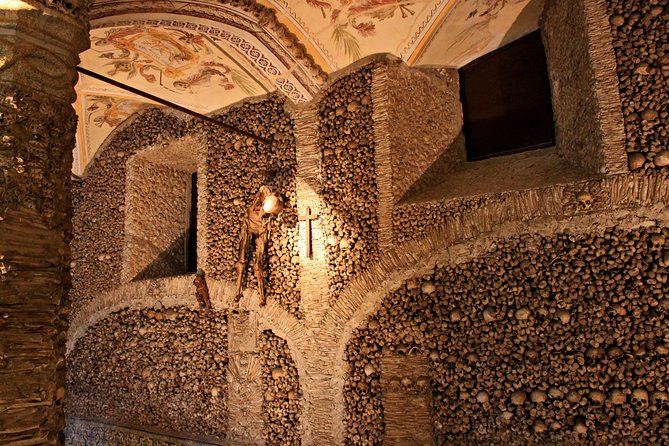
I really like the small-group size and the way the guide strings the story together, from cork and olive country to why Évora matters. And the day’s star is the Chapel of Bones in St Francis—an eerie, unforgettable 16th-century stop where the guide explains what you’re actually looking at.
One thing to consider: it’s an 8-hour day with steady walking and lots of sights, and the transport can vary depending on the group size. Also, lunch is on your own, so plan a little time and budget for that.
In This Review
- Key Highlights You’ll Care About
- Lisbon-to-Alentejo Morning: The Bridge Ride and the 90-Minute “Slow Look”
- Évora’s St Francis to Chapel of Bones: The Stop That Changes Your Brain Chemistry
- Roman Temple Remnants and Évora Cathedral: Learning to Read Stone
- Giraldo Square and Guided Walking: Where Évora Becomes a Place You Can Feel
- Almendres Cromlech: One of Europe’s Largest Stone Fields
- Reguengos de Monsaraz and Ervideira Wine Tasting: Turning Views Into Flavor
- Price and Logistics: What You’re Paying For (and What You’re Not)
- Should You Book This Évora and Monsaraz Day Trip?
Key Highlights You’ll Care About
- Small-group van experience with a cap of 8 (sometimes a larger vehicle at busy times)
- Chapel of Bones included with a guided visit and ticket
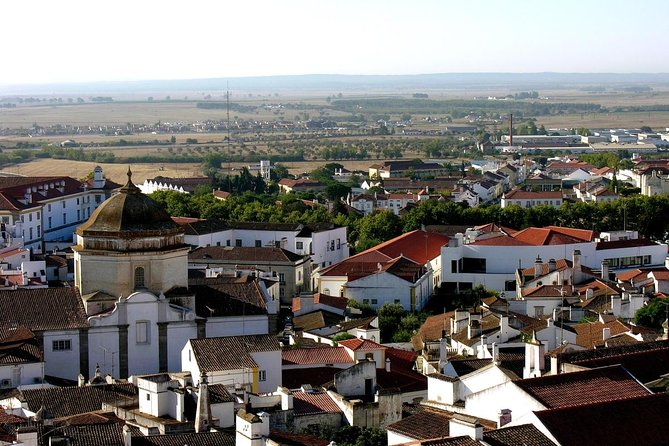
- Évora’s UNESCO-era buildings from Roman remnants to medieval cathedral streets
- Almendres Cromlech as one of Europe’s largest stone complexes, created about 7,000 years ago
- Monsaraz wine tasting at Ervideira Wine Shop, sampling reds, whites, and rosés
- Comfortable timing: plenty of photo time plus a break for lunch in Évora
Lisbon-to-Alentejo Morning: The Bridge Ride and the 90-Minute “Slow Look”
This tour starts early, at 8:00 am, meeting at Praça da Figueira. After you meet your guide, you head east and cross the Tagus via the Vasco da Gama Bridge—a dramatic start that instantly changes the mood from city bustle to open country.
Then comes a long stretch of scenic viewing across the Alentejo region—about 1.5 hours where you can actually look out the window. This is where the guide usually sets the stage: cork and olive trees, vineyards, and the kind of farming that shapes the landscape and the local food culture. It’s not a “race through the countryside” kind of morning; it’s more of a slow warm-up.
If you’re sensitive to long drives, pack water and plan for a day where you’ll be in and out of the vehicle a lot. The upside is that the ride itself is part of the experience, not dead time.
You can also read our reviews of more food & drink experiences in Lisbon



Évora’s St Francis to Chapel of Bones: The Stop That Changes Your Brain Chemistry
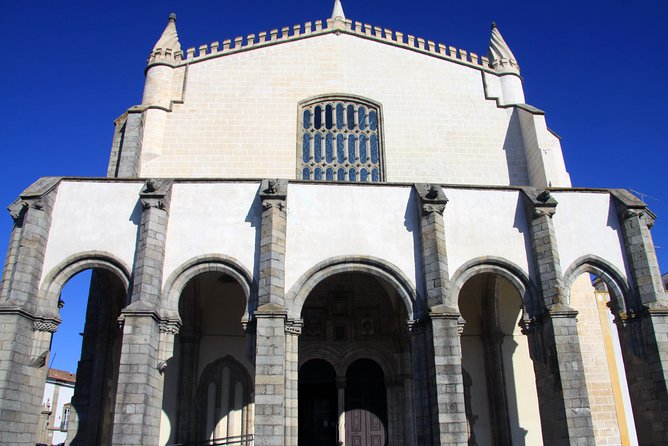
Once you arrive in Évora, the itinerary starts with one of Portugal’s most talked-about landmarks: the Chapel of Bones (Capela dos Ossos). You also visit St Francis, described as a well-preserved church in the Gothic-Manueline style, before stepping into the chapel area.
The Chapel of Bones is built in the 16th century by Franciscan monks. What you’ll see is a dense covering of human skulls and bones inside a small chapel, plus inscriptions that turn the room into a direct message about mortality and time. A guide’s presence matters here—left alone, it can feel like shock value. With guidance, you get the symbolism: it’s religious, it’s historical, and it’s meant to provoke reflection rather than just shock.
The time is about 30 minutes, and that’s enough to absorb the details, take photos, and listen without feeling rushed. If you go in expecting it to be “fun weird,” you might miss the point. If you go in expecting a visual lecture, you’ll get a lot out of it.
Roman Temple Remnants and Évora Cathedral: Learning to Read Stone
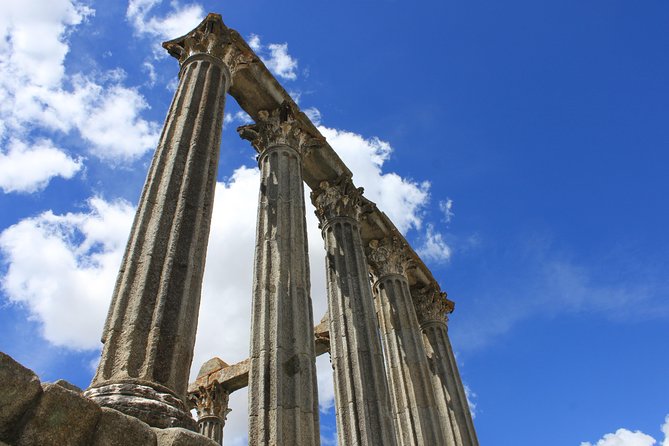
After the bone chapel, you move through Évora’s layered past. The tour includes a look at the Roman Temple remnants dating to the 1st century AD. This is a “see and understand” stop—Corinthian columns and stone foundations show you the scale of Roman architecture even when only fragments remain.
The guide typically explains the temple’s place in Évora’s Roman settlement and how Roman architecture still influences how the city feels today. You’ll also get photo time and the chance to walk nearby streets rather than just stand at the edge.
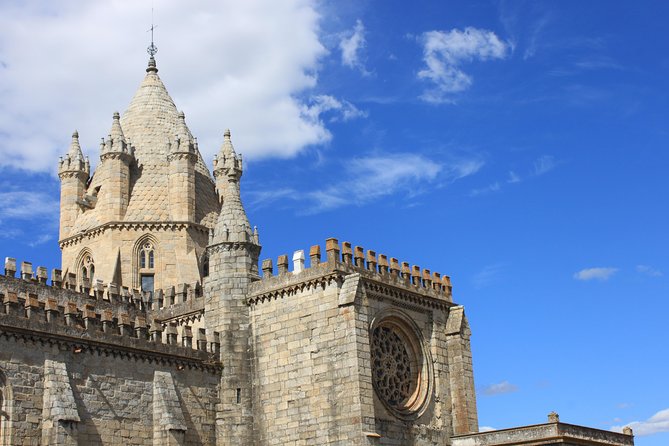
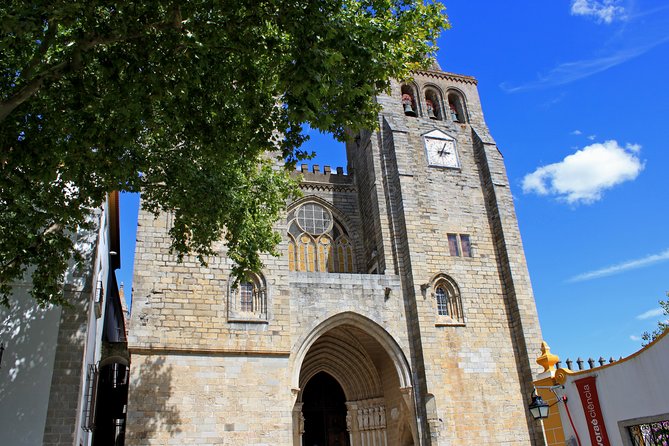
Next up: Sé de Évora, the cathedral constructed between the late 13th and early 14th centuries. It’s described as Romanesque and Gothic, with an imposing façade and major towers that dominate the skyline. Think of this stop as the visual opposite of the Chapel of Bones: instead of a tight interior packed with skulls, you get stone mass and skyline geometry.
One practical note: stops like these are mostly about outside viewing and short guided windows. If your priority is long, quiet interior time, plan to return later on your own.
Giraldo Square and Guided Walking: Where Évora Becomes a Place You Can Feel
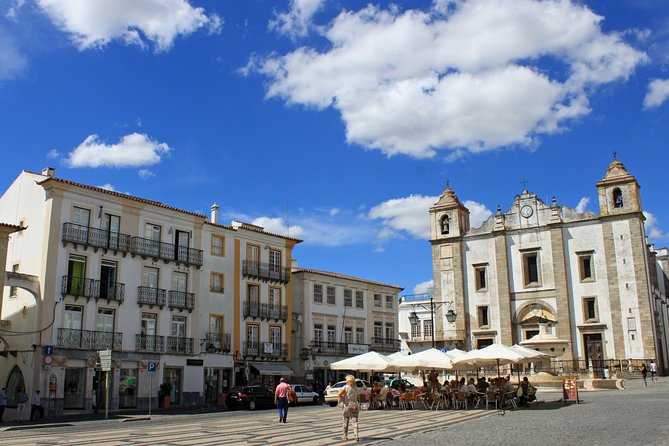
A big chunk of value here is the rhythm: guided walking through key sights, then free time. You’ll get to Praça do Giraldo, Évora’s main square, and the surrounding streets under Gothic arches.
This is where the day stops feeling like a history lecture and starts feeling like a real town. You can duck into souvenir shops, pause for photos, and simply watch daily life. If you want lunch, this is the moment: you choose where to eat, and you’re on your own for meals and drinks.
You’ll likely see plenty of Alentejo-style dishes on menus—plus pastries and local wine options. The smartest move is to scan menus when you arrive and choose something that fits your energy level. This tour keeps the pace brisk, so don’t gamble on a long wait if you’re tired.
Almendres Cromlech: One of Europe’s Largest Stone Fields
After your Évora time, you continue toward Almendres Cromlech, one of Europe’s largest stone complexes. Here, you see menhirs—large upright stone monoliths—dating to about 7,000 years ago.
This stop is powerful because it’s not about a single monument. It’s about scale. Even without extra interpretation, the sheer number and the upright stone positions make you feel how different this world was. The guide’s job is to help you look at the site as a whole and understand why it matters in European prehistory.
Practical tip: wear shoes that handle uneven ground and bring a layer if it’s windy. Stone sites can feel colder or harsher than you expect, and shade can be spotty.
You can also read our reviews of more wine tours in Lisbon






Reguengos de Monsaraz and Ervideira Wine Tasting: Turning Views Into Flavor
The second half of the day leans into Alentejo’s modern identity: wine. You make a stop in Reguengos de Monsaraz, described as a charming town with traditional architecture and local vineyards. Your guide provides context on town history, culture, and wine production—then you get time to walk around and take photos.
From there, the tasting is at Ervideira Wine Shop in Monsaraz. This is where you’ll sample reds, whites, and rosés with staff guiding you through what you’re tasting. The information focuses on local grape varieties, wine-making techniques, and wine traditions in Alentejo.
This is a good fit if you want guided tasting education without needing to book winery tours on your own. It’s also practical: you get the flavor of the region in a setting designed for visitors. If you’re the type who wants hands-on cellar work, set expectations: this is a shop tasting experience, not a full vineyard day.
And yes—Monsaraz is the kind of place where the views help you understand the wine. Rolling plains and open skies make the region’s relaxed pace make more sense.
Price and Logistics: What You’re Paying For (and What You’re Not)
At $132.75 per person for around 8 hours, you’re buying a packaged day that includes transport, a guide, and two ticketed/hosted experiences: the Chapel of Bones visit and the Alentejo tasting.
Here’s the value logic:
- You don’t have to plan route sequencing from Lisbon to Évora, then to Monsaraz/Alentejo, then back.
- The guide’s job is to make the short stops educational instead of random photo stops.
- Lunch is not included, so you’re not paying for a meal you might not like.
Transport is in an air-conditioned vehicle, and the group is capped at 8 travelers per vehicle. Still, the operator notes that at certain times the tour may use a larger vehicle. That matches real-world travel: busy departures can feel tighter than the ideal scenario, especially on older roads and in crowded pick-up patterns.
If you want a comfy, spacious ride and lots of slow interior time, this might feel like too much structure. If you want an efficient day that touches the biggest hits—without managing tickets and directions—this price starts looking fair.
Should You Book This Évora and Monsaraz Day Trip?
Book it if you want a single organized day that hits the main wow points: Évora’s Chapel of Bones, Roman-and-medieval stone sites, Almendres Cromlech, and an Alentejo wine tasting in Monsaraz. It’s also a strong choice if you like small-group dynamics and want a guide to explain what you’re seeing rather than guessing.
Skip it (or consider alternatives) if you prefer slower travel with long meal breaks and lots of free wandering. This is a sight-heavy day with guided stops, photo time, and one lunch break. Also, if you care a lot about bus comfort, remember group sizes can shift and vehicle comfort varies.
If your Lisbon days need one well-built Alentejo storyline—skulls, stones, and wine—this is a solid way to do it.