REVIEW · AUDIO TOURS
Audio Guide City Walk Lisbon for Cruise Guests
Book on GetYourGuide →Operated by OYO Travel GmbH · Bookable on GetYourGuide
Lisbon, without the sprint. This self-guided city walk for cruise guests lets you roam the old town at your pace, with audio that follows along using GPS. You start and finish right at the cruise terminal, so you are not wasting the day getting organized or meeting anyone.
I like that you get a tight 2 to 3 hour route through Lisbon’s big must-sees: the views from Portas do Sol, the fortress climb to Castelo de São Jorge, and the classic downtown streets around Rua Augusta and Praça do Comércio. The other win is control: you can play the audio by selecting stops, or let it run automatically while you walk, with time for photos, shopping, and a bar break.
One thing to consider: this is a walking route with real uphill stretches and stairs. If hills tire you quickly, plan on slower pacing and more pauses.
In This Review
- Key Highlights Worth Knowing
- Lisbon Old Town at Your Tempo: How the GPS Audio Walk Works
- Santa Engrácia and São Vicente de Fora: Hilltop Portugal Meets the Pantheon
- Portas do Sol Viewpoint and Castelo de São Jorge Fort Walls
- Cathedral Sé Patriacal and Roman Theatre Ruins in Alfama
- Baixa’s Azulejos, Elevador de Santa Justa, and Rua Augusta’s Arch
- Praça do Comércio and the Fado Museum Back to the Cruise Terminal
- Price, Value, and What You Still Need to Pay For
- Practical Tips so Your Phone Guide Doesn’t Turn Into a Phone Problem
- Who This Lisbon Audio Walk Fits Best (and Who Should Skip It)
- Should You Book the Audio Guide City Walk Lisbon for a Cruise Day?
- FAQ
- How long does the Lisbon audio city walk take?
- Where does this self-guided walk start and end for cruise passengers?
- What languages are included in the audio guide?
- Is the $11 price per person or per device?
- Are transportation and entrance fees included?
- Is it wheelchair accessible?
- Can I cancel and get a refund?
Key Highlights Worth Knowing

- GPS-guided audio that helps you stay on route without feeling lost
- Cruise-terminal start and end, so you lose less time to logistics
- A compact 2–3 hour itinerary covering viewpoints, tiles (azulejos), and downtown landmarks
- Audio control via map/list or autoplay, depending on how you like to travel
- Major Lisbon landmarks in one loop, from Igreja de Santa Engrácia to Praça do Comércio
- No group pressure, since it’s self-guided and you set the rhythm
Lisbon Old Town at Your Tempo: How the GPS Audio Walk Works
This isn’t a bus tour or a stop-and-go group situation. It is a self-guided walking day built around an audio guide app in English and German. The idea is simple: you follow the route through historic quarters, and the narration helps you understand what you are looking at as you go.
What makes it feel smooth is the GPS setup. The audio files can be picked via a map or a list, so you can jump to the next section without hunting around. If you like a more automatic flow, you can use autoplay linked with GPS. Either way, you can pause for photos, duck into a shop, or sit down for coffee without feeling like you are falling behind a schedule.
A practical detail that matters on a cruise day: the tour is designed to begin and end at your cruise terminal, since most ships dock there. That means you can do the whole walk as one loop instead of building extra time for transportation or wandering off-course.
Finally, the guide is valid long after your cruise. The activity runs for 365 days, and the audio guide itself is valid indefinitely after purchase. So if your ship timing changes, you can still use it later, as long as you have your smartphone ready.
You can also read our reviews of more walking tours in Lisbon


Santa Engrácia and São Vicente de Fora: Hilltop Portugal Meets the Pantheon
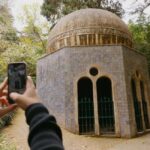
You begin by heading up to Igreja de Santa Engrácia, Portugal’s National Pantheon. Even if you only take in the exterior, it is a strong first “why Lisbon matters” stop because it signals how the city honors national identity through monumental architecture.
From there, you pass the monastery of Igreja São Vicente de Fora. This is the kind of Lisbon stop where you can start noticing the layered influences that made the city such a sponge for ideas over centuries. You are not just moving from one photo spot to the next—you are reading Lisbon like a story, one religious complex and one viewpoint at a time.
Why this section works well on a walking day: the early climb gets your “Lisbon legs” warmed up. Also, it sets context for the neighborhoods that follow. Later, when you reach viewpoints and fortifications, it will feel less random. You will understand where the city is high, where it defends itself, and where it gathers people.
The only drawback here is also the point. The walk begins with uphill effort. If you are arriving off a ship and you know you get tired quickly after long travel days, wear supportive shoes and treat this first stretch like a warm-up, not a sprint.
Portas do Sol Viewpoint and Castelo de São Jorge Fort Walls
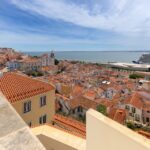
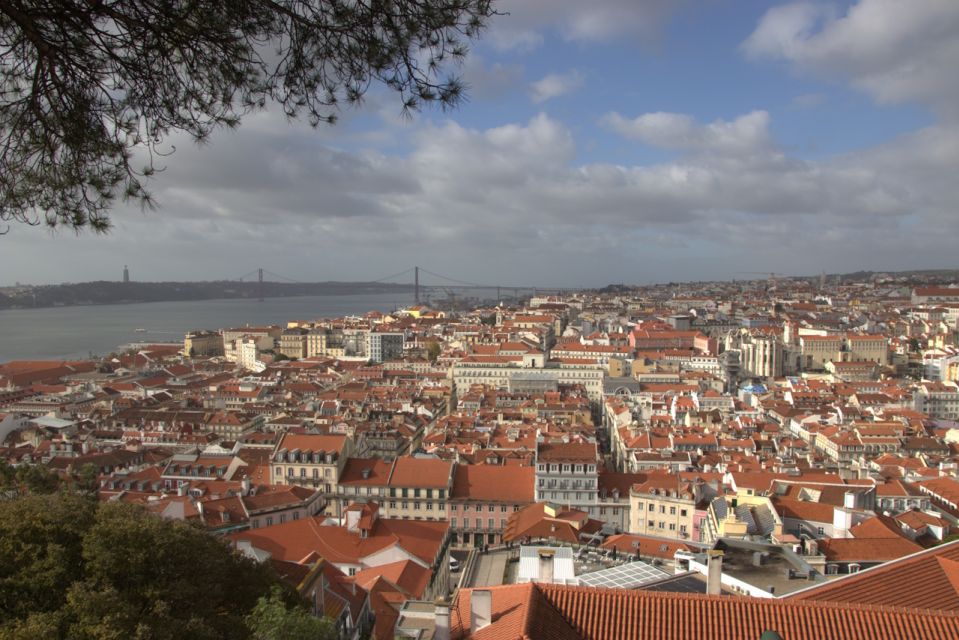
Portas do Sol is next, a viewpoint where the reward is the view over the old town and toward the river Tejo. This is the moment when the audio guidance starts to feel extra worth it, because you can connect the names to the shapes of streets, rooftops, and hills.
Then you walk further up to Castelo de São Jorge, the fortress that dominates Lisbon’s skyline. You get that classic “city from above” perspective that makes Lisbon feel both dramatic and human-scale at the same time. The fortress walls and vantage points also help you understand why Lisbon developed the way it did—high ground is power, and this city has always known it.
This is also where the pacing choice becomes important. Since this is self-guided, you can spend longer here if you want, or you can keep moving if you prefer not to linger on terraces. Either way, this is one of the stops where having your phone charged really matters, because you will probably want to keep the audio running for the context while you look around.
One more heads-up: if you do not enjoy steep climbs, you can still do this route, but your experience will be slower. Build in time for rest. The guide is designed for your rhythm, not for a group that has to stay together.
Cathedral Sé Patriacal and Roman Theatre Ruins in Alfama
Next comes the Cathedral Sé Patriacal. This is a major landmark in the historic core, and it is a good counterpoint to the hilltop fortress energy. Cathedrals change the mood fast. You go from panoramic defense to something more grounded and sacred.
On the way here, you also see ruins of an ancient Roman theatre. That’s a key Lisbon detail because it reinforces what makes the city feel layered: Lisbon’s past is not only medieval or modern. It stretches back much further, and the city carries those earlier traces into the present.
Why I think this section is valuable for you: it gives your brain a “timeline anchor.” When you hit later areas like Baixa and the tiled streets, you can better appreciate how Lisbon reinvented itself after earthquakes and other turning points. You are not just walking by objects; you are connecting architecture to time.
The possible drawback is simple: this part of Lisbon can mean uneven walking surfaces and lots of attention to where your feet land. With a phone in hand and audio playing, it is easy to get distracted. I would keep a steady pace and stop briefly when the terrain turns tricky—your view is worth the extra second.
Baixa’s Azulejos, Elevador de Santa Justa, and Rua Augusta’s Arch
After the fortress and cathedral area, the route goes down to Baixa, Lisbon’s downtown district. This is where the city becomes visually busy in the best way: many facades are covered with typical Portuguese tiles called azulejos. They do more than decorate. They turn building walls into story panels, often with patterns that feel both traditional and unmistakably Lisbon.
One highlight here is the historical elevator Elevador de Santa Justa. Even if you only appreciate it from outside, it is one of those Lisbon icons that tells you the city is always solving vertical problems with style. If you do want to go up inside at some point, just remember entrance fees are not included in this audio guide.
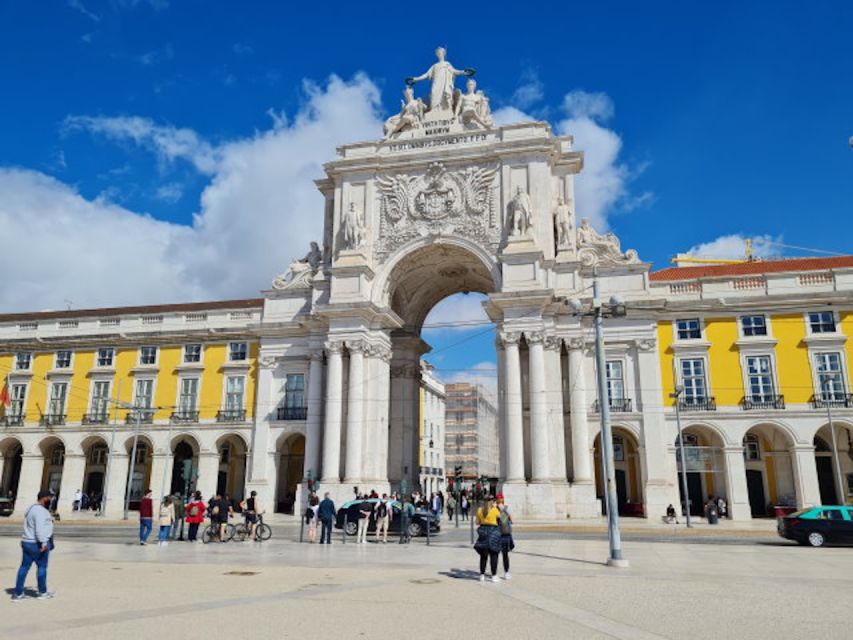
Then you reach the boulevard Rua Augusta. You walk through the triumphal arch and continue toward Praça do Comércio. Rua Augusta is the classic “downtown Lisbon” corridor, where you can feel how the city pulls people into the center.
This section is ideal if you like the “wander, then choose” travel style. You have time for photos, shopping, and a rest. The audio guide supports that, because you are not stuck with a rigid group rhythm.
One practical consideration: you are switching from steep-to-flat, and that can fool your body into moving faster than you should. If your cruise is on a tight schedule, keep an eye on your overall time and do not let shopping steal too much of your last hour.
You can also read our reviews of more boat tours in Lisbon






Praça do Comércio and the Fado Museum Back to the Cruise Terminal
Praça do Comércio is a big finish. This is the central square where the palace of the king of Portugal was situated before the earthquake of 1755 destroyed the city. The audio helps you look at the square with context, not just as an open postcard space.
As you move back toward the cruise terminal, you pass more historical buildings and also the Fado museum. Fado is Lisbon’s signature sound, and even if you do not step inside museums, having it appear on your route gives your day a cultural through-line. It keeps the walk from becoming only architecture and views.
This “return” leg is also where your planning matters most. Since you will eventually end at the cruise terminal, you can use this time to decide how hard you want to go on souvenirs and coffee. If you stop for a full meal, you can still keep up as long as you pace yourself earlier. The route is built for 2 to 3 hours of walking, so build your breaks into that time.
And because the tour starts and ends at your terminal, you do not have to invent transportation at the end of a long day. That alone can make the experience feel calmer.
Price, Value, and What You Still Need to Pay For
At $11 per person, the headline price looks easy. But here is the value twist: the price is per smartphone, not per person. That can be a great deal if you are traveling solo or one couple sharing one phone. If you are a family of four and each person needs their own audio, you may want to think about whether you want multiple devices or whether you are comfortable sharing.
Also, this guide is low-cost compared with typical cruise excursions, because you are paying for information, not transportation. Transportation is not included, and entrance fees are not included. In practical terms, your day cost stays predictable: you cover the audio guide, then you choose whether to pay for any specific entry tickets you care about.
So does the $11 value hold up? For me, it makes sense because:
- You cover a wide swath of Lisbon’s old-town identity in about 2 to 3 hours
- You control your pauses for photos, shopping, and rests
- You can repeat it later since the guide is valid indefinitely after purchase
The biggest “cost” is your own stamina, not your wallet. If you are a confident walker and you like self-paced wandering, this feels like one of those smart, affordable ways to get real Lisbon without paying for a full guided day.
Practical Tips so Your Phone Guide Doesn’t Turn Into a Phone Problem
You do not need much gear, but you do need one critical thing: a charged smartphone. Since everything runs through the app, low battery can ruin your flow fast. I would also bring a small power bank if you know your phone drains quickly in the sun with GPS running.
After booking, you receive an email with a link to download the Aoyo Audioguides app and a voucher code for the guide. You may have to wait a little: it can take up to 5 minutes to receive the voucher code. If you are doing this on a cruise day, do not leave it until the last minute.
Once you have the voucher, it is valid indefinitely after purchase. Redeemed vouchers are non-refundable, so make sure you are ready before you redeem. Also, the guide is self-guided, meaning there is no guide waiting on a street corner to solve your phone troubles.
How to make the audio work for you:
- Use autoplay if you like the narration to carry you between stops
- Use the map/list mode if you want to skip ahead or linger
- Take short photo stops instead of long detours, since the route is designed as a loop
If you do those things, you will feel like you have a knowledgeable local in your pocket, without the pressure of a group schedule.
Who This Lisbon Audio Walk Fits Best (and Who Should Skip It)
This fits best if you want a cruise-day walk that feels flexible. You like architecture and city views, you enjoy azulejos, and you want to hit the big names—Santa Engrácia, Portas do Sol, Castelo de São Jorge, Baixa, Elevador de Santa Justa, Rua Augusta, and Praça do Comércio—without waiting for a guide or a bus.
It is also ideal if you travel at your own pace. The route gives room for rest, shopping, and photos. And because it starts and ends at the cruise terminal, it reduces the usual risk of timing stress.
Here is the important caution: it is listed as wheelchair accessible, but it is also marked as not suitable for people with mobility impairments. That contradiction likely comes down to the reality of hills and walking surfaces on this kind of old-town loop. If you need mobility support, I would be extra careful and double-check whether you can handle steep stretches.
If you are not steady on slopes or you need frequent assistance, you may be happier with a different format where transportation can shorten the walking.
Should You Book the Audio Guide City Walk Lisbon for a Cruise Day?
I would book it if you want an affordable, self-paced way to experience Lisbon’s old-town highlights in one loop, starting and ending at your cruise terminal. The GPS audio, the English and German options, and the control over autoplay or manual selection are exactly what make this kind of tour work on a day with limited time.
Skip it if you know you will struggle with steep climbs and lots of walking, or if you want a fully escorted experience with entrances included. Since entrance fees and transport are not part of the package, you are also taking ownership of your choices.
FAQ
How long does the Lisbon audio city walk take?
The walking route is designed as a 2 to 3 hour tour through the most interesting parts of Lisbon’s old town.
Where does this self-guided walk start and end for cruise passengers?
It starts and ends directly at the cruise terminal, since most cruise ships dock there.
What languages are included in the audio guide?
The audio guide app includes audio in English and German.
Is the $11 price per person or per device?
The price is for the audio guide per smartphone. The voucher code is valid for one smartphone.
Are transportation and entrance fees included?
No. Transportation and entrance fees are not included.
Is it wheelchair accessible?
It is listed as wheelchair accessible, but it is also marked as not suitable for people with mobility impairments. If you have mobility concerns, you should evaluate the route’s walking and hills carefully.
Can I cancel and get a refund?
Yes. You can cancel up to 24 hours in advance for a full refund.