REVIEW · ALFAMA & OLD TOWN TOURS
Alfama tour
Book on Viator →Operated by Via explorer · Bookable on Viator
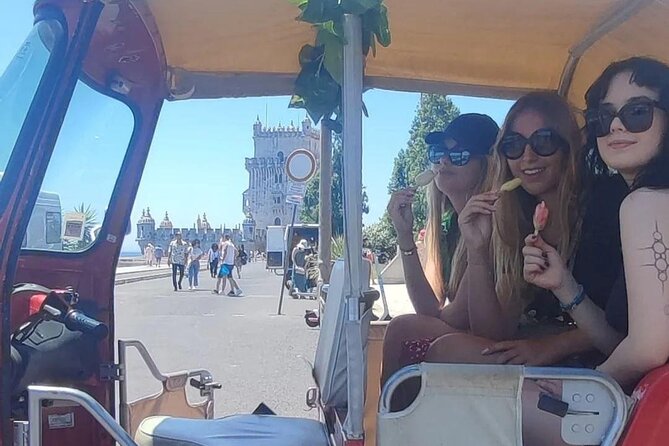
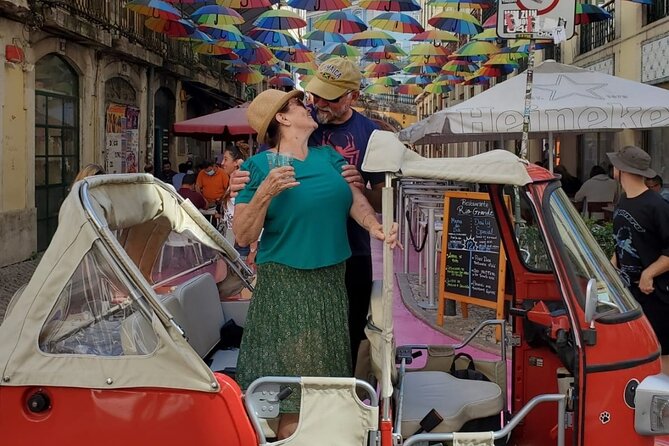
Alfama looks different at every turn. This 1.5-hour tuktuk tour strings together the big Lisbon viewpoints and key monuments, so you get the camera-worthy views without spending all day hiking. I especially like the tuktuk format and the way the route funnels you toward the best miradouros fast.
Two things I really like: you start with Lisbon Cathedral, then you move from viewpoint to viewpoint with short, focused stops that feel doable even if you’re visiting with limited time. I also like that the tour builds in admission tickets at most stops, plus a brief walk through the Museu do Fado where you can add a small taste of Lisbon culture (including a ginjinha test).
One consideration: the whole loop is about 90 minutes, so each stop is roughly 10 minutes. If you want long, slow photo sessions or you prefer to linger inside every place, you may wish you had more time—or bring a little extra momentum so you don’t miss the shot.
In This Review
- Key things to know before you ride
- Why the tuktuk route fits Alfama’s hills so well
- Praça da Figueira start: a simple 9:00 am plan
- Stop 1: Lisbon Cathedral’s Romanesque start date
- Stop 2: Miradouro de Santa Luzia and the Tagus views
- Stop 3: Miradouro das Portas do Sol balcony-style views
- Stop 4: Miradouro da Graça and Sophia de Mello Breyner Andresen
- Stop 5: Miradouro da Senhora do Monte’s highest-point perspective
- Stop 6: Mosteiro de São Vicente de Fora’s 16th-century setting
- Stop 7: National Pantheon (ticket not included) and what it represents
- Stop 8: Museu do Fado plus ginjinha test in Alfama alleys
- Price and value: what you’re paying for at $55.85 per person
- What to expect from the guide and the storytelling style
- Best for: first-time Lisbon visitors and time-crunched Alfama explorers
- Timing, weather, and small practical tips
- Should you book this Alfama tuktuk tour?
- FAQ
- How long is the Alfama tour?
- Is pickup offered, and where does the tour start?
- What ticket format do I need?
- Are admission tickets included?
- Is the tour private?
- What’s the cancellation policy?
Key things to know before you ride
- Tuktuk transport for steep streets: it’s built for Lisbon’s hills, so you’re not fighting every climb on foot
- Fast viewpoint circuit: multiple miradouros in a short window, with time to look, snap, and move
- Most admissions are included: you get tickets at several major stops, but not at the National Pantheon
- Cathedral + viewpoints + fado stop: a mix that gives you both architecture and neighborhood feel
- Private in the practical sense: only your group participates
- Good weather matters: the tour requires decent weather for the best viewpoint experience
Why the tuktuk route fits Alfama’s hills so well

Alfama is famous for its winding lanes and steep grades. That’s charming when you’re meandering, but it’s tiring when you want to hit specific places before dinner. The biggest value of this tour is that it uses a compact tuktuk style ride to keep you moving while you’re still getting real streets and real stops—not just a drive-by.
You also get a built-in rhythm. The route isn’t random. It’s designed like a viewpoint circuit, which means you’re usually traveling from one famous overlook to the next. For me, that matters because Lisbon’s best views aren’t spread evenly around the city. They’re clustered on certain hills and terraces, and you can burn a lot of time just repositioning yourself.
Finally, the ride keeps the mood light. The tour is described as friendly, fun, and story-filled, and the guide names that come up—like Otoni and Marlon—are tied to that same vibe: gentle, helpful, and with humor. That’s not a small detail. When you’re standing in a windy viewpoint queue of tourists, it helps if your guide makes the place feel personal, not like a checklist.
You can also read our reviews of more tours and experiences in Lisbon.

Praça da Figueira start: a simple 9:00 am plan
The tour starts at Praça da Figueira (1100-241 Lisboa) and ends back at the same meeting point. That round-trip detail is practical. You don’t have to solve your own return logistics after you’ve spent your energy walking viewpoints and stepping into historic sites.
Timing is tight, too. Expect about 1 hour 30 minutes total, with about 10 minutes at each of the main stops. The pacing is perfect for a first pass through Alfama—especially if you’re also doing other parts of Lisbon that same day. It’s less ideal if you’re the type who likes to “arrive and disappear” for an hour inside a museum or church.
Because it’s a mobile-ticket setup and the tour offers pickup, you’ll want to keep your phone ready and your meeting spot easy to find. Lisbon days are often a mix of sun, shade, and sudden breezes on viewpoints. Dress like you might be standing still for a bit, not like you’re jogging between landmarks.
Stop 1: Lisbon Cathedral’s Romanesque start date

Your first major stop is Lisbon Cathedral (Sé de Lisboa). This isn’t just a pretty building photo-op. The details given for the cathedral are a big part of why it works as a starting point: construction began in 1147 and was completed in the early decades of the 13th century. That timeline helps you orient your visit. You’re not just entering a church—you’re stepping into a place with deep medieval roots.
You also get entry included, and the tour positions this as visiting inside the oldest church in Lisbon. That matters for value and for flow. Many viewpoint tours never include an interior stop because it adds time. Here, the tour makes the cathedral early, when you still have energy for a quick interior look.
A practical tip: cathedral interiors can mean lower light and cooler temperatures. If you rely on your phone camera, give yourself a moment to adjust settings and focus before you rush to the best angles.
Stop 2: Miradouro de Santa Luzia and the Tagus views

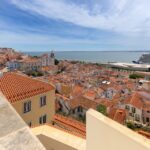
After the cathedral, you pivot toward the water and the city spread at Miradouro de Santa Luzia. You get about 10 minutes, and the key payoff is described clearly: a wide view over Alfama and the Tagus River.
This stop is ideal for two kinds of travelers. If you love skyline photos, you’ll use this viewpoint to set your “map” in your head—Alfama in the foreground, river stretching beyond. If you’re more into street-level wandering, you’ll still like it because it gives you the perspective to understand where your future walks will go.
One consideration: viewpoints can get crowded and windy. If you’re chasing one perfect photo, don’t overthink it. Use your time window smart. Look first, then take pictures once you see where the light hits your favorite rooftops.
Stop 3: Miradouro das Portas do Sol balcony-style views

Next up is Miradouro das Portas do Sol, described as a balcony-like space. The highlight here is the way the view blends Lisbon’s eastern city part with the Tagus River.
This viewpoint pairs nicely with Santa Luzia. If you’re doing the loop in order, you’re seeing different angles of the same urban story. That makes it easier to understand Alfama’s layout: where the river sits, how hills stack, and how neighborhoods layer on top of each other.
Also, this stop is typically where your photo results start getting better. You’re no longer learning the city; you’re now photographing it. Use the 10-minute rhythm to your advantage: quick scan, short photos, then move on before you feel rushed.

Stop 4: Miradouro da Graça and Sophia de Mello Breyner Andresen
The tour then climbs into Largo da Graça, hitting Miradouro da Graça. It’s specifically named with Sophia de Mello Breyner Andresen, which is a nice clue that this viewpoint is part of Lisbon’s cultural naming habit—not just a random overlook.
The payoff you’re promised: views of the city plus São Jorge Castle. The castle is one of those landmarks that makes every photo feel instantly Lisbon. It also helps you track your position as you move through Alfama.
Drawback to keep in mind: as you go higher, the wind often shows up. If you’re holding your camera or phone steady, wear something with a secure grip (and maybe keep your hair tamed if you have it tied up). The time is short, so you want to be comfortable enough to focus on the view, not your gear.
Stop 5: Miradouro da Senhora do Monte’s highest-point perspective

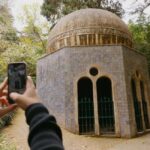
Then comes Miradouro da Senhora do Monte, set in the churchyard of a small hermitage. It’s remodeled twice in the 20th century, but the real reason to visit is the view from the highest point in Bairro da Graça.
The tour description says you’ll get panoramic views, especially over Mouraria and Castelo de São Jorge. This is where the tour earns its “view circuit” reputation. If you’ve ever walked Alfama and felt like the streets all look similar, this stop clarifies everything. You can see how Mouraria and the castle area relate to Alfama’s maze.
If you’re traveling with someone who dislikes stairs, this kind of stop is often a sweet compromise. You still see the city from above, but you don’t need to brute-force the hill on foot for long stretches.
Stop 6: Mosteiro de São Vicente de Fora’s 16th-century setting
After the viewpoints, you move into quieter stone at Mosteiro de São Vicente de Fora. You’re told it dates back to a church begun in 1582, tied to the medieval surroundings of Lisbon in the 16th century.
This stop is useful because it changes the pace. Up to now, you’ve been looking out. Here, you return to architecture and a sense of time. Even if you’re not a hardcore history fan, interior stops help you avoid turning your day into only photos. You’re reminded that these viewpoints exist because the city was built over older layers.
One practical thought: monasteries and churches can involve slower walking and simple etiquette rules. Keep your timing flexible. You’ve got about 10 minutes, so aim for a quick scan of key areas rather than trying to “cover” everything.
Stop 7: National Pantheon (ticket not included) and what it represents
Your seventh stop is Panteão Nacional—and this is the one place where admission is explicitly not included. So if you’re budgeting carefully, plan for a possible extra ticket cost here.
The description explains the purpose clearly: it’s meant to honor and preserve the memory of Portuguese citizens who distinguished themselves through public positions, military service, and cultural or artistic creation, as well as defense of values like human dignity and freedom.
This makes the stop more than a quick photo. Even with limited time, it’s a chance to connect Lisbon landmarks with national identity. If you’re skipping it, you still get a viewpoint pause and a chance to refocus. But if you want the full experience, be ready for the extra ticket.
Stop 8: Museu do Fado plus ginjinha test in Alfama alleys
The final stop blends a short museum moment with neighborhood wandering. Museu do Fado is described as a museum dedicated to the universe of fado and guitar, opened on September 25, 1998. You’ll also take a brief walk inside Alfama, discover alleys, local restaurants, and traditional shops.
Then comes a fun extra: a ginjinha test (cherry liqueur). That’s a small move, but it’s good travel value. It’s not a full tasting tour, and it doesn’t pretend to be. It’s just a quick taste that marks the end of the sightseeing loop with something Lisbon-flavored you can remember.
One gentle caution: if you don’t like sweet liqueurs, you might want to ask your guide about alternatives before you accept a taste. The tour description frames it as a test, but you still control what you choose to sample.
Price and value: what you’re paying for at $55.85 per person
At $55.85 per person for about 1 hour 30 minutes, the question isn’t just cost—it’s what you get packed into that short window. Here’s what makes it feel like value:
- Transport that’s suited to steep streets (tuktuk)
- A route that covers major viewpoints and monument stops in a tight time box
- Admission tickets included at multiple stops (Cathedral, Santa Luzia, Portas do Sol, Graça, Senhora do Monte, Mosteiro de São Vicente de Fora, and Museu do Fado portions)
- A small cultural add-on at the end (ginjinha test and the fado museum stop)
The only notable “maybe extra” item is the National Pantheon, since its ticket isn’t included. Because the tour spells that out, it’s easy to budget.
Compared with piecing together viewpoints alone, the advantage is time. You don’t need to plan the order of overlooks or worry about how to get from one hill to the next. If you’re visiting Lisbon for a few days, time is your real currency.
What to expect from the guide and the storytelling style
The tour is guided and described as personalized, with lots of friendliness and stories during the route. The guide names that show up—Otoni and Marlon—come with a consistent theme in the feedback: gentle, helpful, and funny.
That matters because it changes what a “viewpoint stop” feels like. A viewpoint is still a viewpoint, but a guide can give you context while you stand there. You’re not just looking at a city—you’re understanding why it’s arranged that way and what you’re seeing from specific spots.
If you want to get the most out of your 10-minute stops, treat your guide like your shortcut. Ask one simple question like what viewpoint angle matters most for photos, or which streets you should recognize later when you wander on your own.
Best for: first-time Lisbon visitors and time-crunched Alfama explorers
This tour fits best when you want a fast, guided taste of Alfama and Lisbon’s key viewpoint culture. It’s also a good option if you want to cover a lot without committing to a long, exhausting walk between steep areas.
You’ll likely enjoy it if:
- you’re visiting Lisbon for the first time and want orientation
- you like photography but don’t want to spend hours on transit or searching for viewpoints
- you’d rather ride in a small vehicle than plan a self-guided route
If you’re the kind of traveler who loves long museum hours, deep church time, and very slow photo sessions, you might find the stop durations a bit short. In that case, use this tour for the “big picture,” then return later on your own for longer visits.
Timing, weather, and small practical tips
The tour requires good weather. That’s not just comfort—it’s a visibility issue. Alfama viewpoints depend on clear skies and reduced haze. If it’s foggy or rainy, you’ll want to be prepared for adjustments.
Since the tour is outside for many segments, bring practical basics:
- comfortable shoes for short walks and uneven stone
- a light layer for windier viewpoints
- your phone charged, since the route is photo-friendly
Also, since the schedule starts at 9:00 am, you’ll often get better light and less peak crowd pressure at early viewpoints. That can make your 10-minute photo time feel less frantic.
Should you book this Alfama tuktuk tour?
If your goal is to get a strong first impression of Alfama with minimal hassle, I think this is a smart book. The combination of tuktuk transport, a tight route of major miradouros, and included admissions at most stops makes it efficient value—especially if you don’t want to stitch the day together on your own.
I’d skip it or at least set expectations differently if you want long stays inside buildings or you’re traveling when weather is iffy, since the tour depends on good conditions. And remember the National Pantheon ticket isn’t included, so check your budget if that stop matters to you.
Overall: for the price, time, and mix of viewpoints plus cultural stops, this is the kind of tour that helps you feel like you really learned the neighborhood layout in a short day.
FAQ
How long is the Alfama tour?
It’s about 1 hour 30 minutes.
Is pickup offered, and where does the tour start?
Pickup is offered, and the tour starts at Praça da Figueira, 1100-241 Lisboa, Portugal.
What ticket format do I need?
The tour uses a mobile ticket.
Are admission tickets included?
Admission tickets are included for several stops, but Panteão Nacional does not include an admission ticket.
Is the tour private?
Yes. It’s listed as private, meaning only your group participates.
What’s the cancellation policy?
You can cancel for a full refund up to 24 hours before the experience’s start time. The tour also requires good weather, and if it’s canceled due to poor weather, you’ll be offered a different date or a full refund.