REVIEW · LISBON
A Journey Through Lisbon – Classic Tour
Book on Viator →Operated by DELIGHTED TOURS · Bookable on Viator
Lisbon in one long, guided sweep. What makes this Classic Tour work is the mix of hotel pickup plus onboard comfort, and the fact that you also get a Pastry of Belém brunch tasting instead of just photo stops. I also like how it pairs major sights with smaller, story-driven stops so you get the why behind what you’re seeing.
You’ll go with a guide who knows how to explain places in plain language, and the names Luis, Bruno, and Felipe show up in the feedback as guides who were especially engaging and history-focused. One drawback to plan around: it’s a full day (about 7 to 8 hours), and a few key attractions have entrance fees that are not included.
In This Review
- Key things I’d bet on
- Hotel Pickup, Private Vehicle, and the Comfort Factor in Lisbon
- Senhora do Monte: Getting Lisbon’s Geography in 30 Minutes
- São Vicente de Fora and the National Pantheon: Churches That Explain Lisbon
- Alfama Walk: Old Fishing Streets and Fado’s 1820s Origins
- Praca do Comercio and Rossio: Lisbon’s Rebuilt Center
- Arco do Triunfo and Church of Saint Dominic: Views Plus a Darker Past
- Belém First: Torre de Belém’s Explorer-Era Role
- Mosteiro dos Jerónimos: Manueline Architecture and the Discoveries Link
- Bairro Alto and Padrão dos Descobrimentos: City Life and Overseas Expansion
- Cristo Rei Finish: A Viewpoint That Feels Like Closing the Book
- Price and Value: Is $118.95 a Good Deal for This Much Lisbon?
- Who Will Enjoy This Day the Most
- Should You Book This Classic Tour?
- FAQ
- How long is the Lisbon Classic Tour?
- What is the meeting time and where do I start?
- Is this tour private or group-based?
- What language is the tour offered in?
- What’s included for food?
- Is there Wi-Fi during the tour?
- Do I need to buy tickets for the main sights?
- Is Cristo Rei included, and do I pay for it?
- What should I wear or bring?
- What happens if the weather is bad?
- Is confirmation provided when I book?
Key things I’d bet on
- A true start-of-day view from Miradouro da Senhora do Monte to set the whole city in your head fast
- Belém pastry brunch tasting included, so food isn’t an add-on you have to hunt for
- Private vehicle with Wi-Fi that keeps transit painless between hilltop viewpoints and riverside monuments
- Iconic Lisbon plus more local-feeling corners, like an Alfama walk tied to Fado’s origin story
- An ending with payoff at Cristo Rei, timed for a big city-and-river view
Hotel Pickup, Private Vehicle, and the Comfort Factor in Lisbon
Starting at 8:30am with pickup at your hotel is a big deal in Lisbon. The city can feel like a staircase, so having a private vehicle (air-conditioned, with Wi-Fi and bottled water) means you spend your energy looking, not figuring out bus routes and stairs.
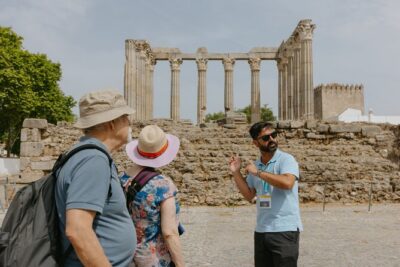
This is a private setup, meaning it’s only your group. That matters because your guide can slow down when you want photos, ask extra questions, or re-shape the day around what you care about most—rather than rushing to keep a large group together.
You can also read our reviews of more tours and experiences in Lisbon.



Senhora do Monte: Getting Lisbon’s Geography in 30 Minutes
Your first stop is Miradouro da Senhora do Monte, and it’s a smart move. Before you spend hours in neighborhoods and historic centers, you get a top-down sense of where the hills, streets, and viewpoints connect.
That “big picture” view pays off later. When you’re walking around Alfama or crossing through the central squares, you’ll already understand why Lisbon feels like it’s layered—up and down, hill to ocean, and back again.
Tip: bring a layer. Viewpoints can be cooler, and you’ll likely stand around long enough to feel it.
São Vicente de Fora and the National Pantheon: Churches That Explain Lisbon

Next up is São Vicente de Fora, one of Lisbon’s must-visits churches. You get one of the city’s most important churches, and the tour notes that the artworks inside are unique—so it’s not just a quick exterior glance.
Then comes the National Pantheon, tied to the older church of Santa Engrácia site. This building has a story with big architectural names behind it: founded in the second half of the 1500s, fully rebuilt at the end of the 1600s by architect João Antunes.
What I like here is that you’re not only seeing a famous stop—you’re learning what you’re standing in. The info given focuses on the modern dome covering a majestic nave with polychrome marble decoration typical of Portuguese Baroque architecture. The view angle is also a plus since it overlooks Lisbon’s historic centre and the Tagus, tying the city’s spiritual monument to its river identity.
One practical note: the tour info doesn’t list entry status here the way it does for some other sites, so if you care about planning exact costs, double-check on the day.
Alfama Walk: Old Fishing Streets and Fado’s 1820s Origins
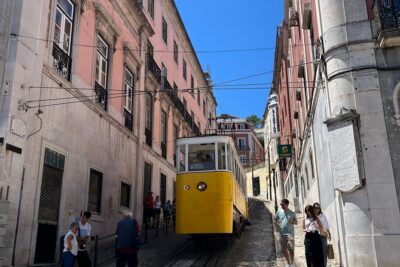
Alfama is where Lisbon starts to feel personal. This is a quick walking tour through one of the city’s most famous neighborhoods, described as a gentle, humble fishing suburb tucked between the hill and the ocean at the foot of São Jorge Castle.
The tour frames Alfama through a cultural hook: Fado was created in the 1820s. If you don’t know Fado yet, this is a good time to learn the basics—melancholic Portuguese music often tied to the sea.
I like that the walk is short, because Alfama’s hills are not subtle. You get the atmosphere without turning it into a leg-burning hike.
Praca do Comercio and Rossio: Lisbon’s Rebuilt Center

From the river-facing energy of Praca do Comercio (Terreiro do Paco), you move into Lisbon’s reconstructed core. Praca do Comercio is iconic for a reason: it’s grand, open, and clearly designed to impress, not hide.
Then the tour goes to Praca Dom Pedro IV, better known as Rossio. It’s described as part of the Pombaline downtown, and the story here is that Rossio has been a main square since the Middle Ages. That gives you a sense of continuity even when buildings have changed.
If you like your sightseeing with context, these central squares are a win. They show how Lisbon’s identity is both historic and reorganized—especially after the 1755 disaster.

Arco do Triunfo and Church of Saint Dominic: Views Plus a Darker Past
The Arco do Triunfo is along Rua Augusta, a pedestrian street that tends to be lively. Here’s the payoff: you can go up to the top for a view over Baixa and toward the river.
The tour also connects the arch to Lisbon’s rebirth after the earthquake, fire, and tsunami of 1755. So you’re not only looking at a monument—you’re seeing a symbol built from tragedy into a promise of renewal.
Next is the Church of Saint Dominic between Rossio and Praça da Figueira. The tour highlights the combination of beauty and a sinister past. I won’t pretend the day turns scary, but it’s an interesting contrast: you’re seeing ornate religious architecture in a city that has always had serious chapters.
Practical tip: the viewpoint at the arch has limited time on the schedule, so wear shoes that let you move quickly up and down.
Belém First: Torre de Belém’s Explorer-Era Role
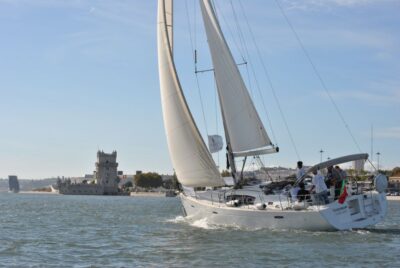
Belém is the part of the day that feels like a river-history movie set. The first major stop is Torre de Belem, described as a 16th-century UNESCO-listed World Heritage Site.
What I find useful in the way the tour frames it is the job the tower had. It wasn’t just decorative. It was part of Lisbon’s defense system and also served as a start and end point for Portuguese explorers—so it connects the city’s power to its maritime reach.
If you care about photos, this is one of those moments where you’ll want to pause and look back at the river and then look at the architecture again. The tower reads differently depending on your angle.
Note: the tour info lists entrance here as not included, so keep that in mind when you budget.
Mosteiro dos Jerónimos: Manueline Architecture and the Discoveries Link
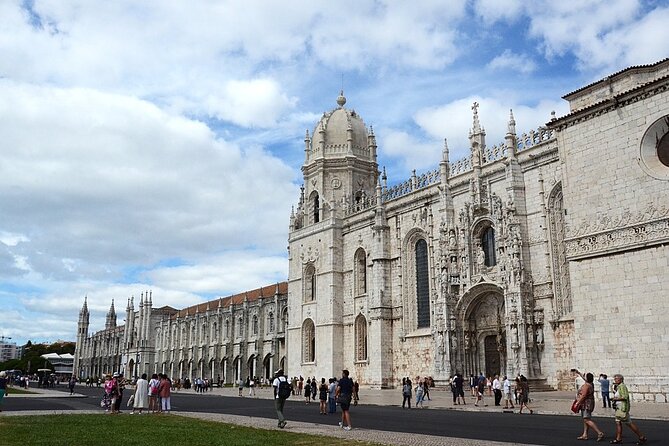
Then you get the big one: Mosteiro dos Jerónimos. The description focuses on Manueline architecture, called an apogee of the style, and places the monastery right on the banks of the Tagus.
The tour also gives you the origin story, which is where this stop gets more meaningful. Before the monastery existed, the site held a small hermitage dedicated to Santa Maria, built by Infante D. Henrique in 1452. Later, King Manuel I planned a large monastery in the early 1500s, supported through Holy See approval, and it was donated to the Order of the Friars of St. Jerome.
What you get from that background is a better sense of why the monastery looks the way it does and why it’s tied to the Discoveries era. This stop isn’t just about being old; it’s about being central to Portuguese identity at the time.
Entrance is listed as not included in the tour info, so plan for that cost. Also, build in enough time to just sit for a minute and watch how the space feels once you’re inside—this place works best when you slow down.
Bairro Alto and Padrão dos Descobrimentos: City Life and Overseas Expansion
Bairro Alto is next, and it’s more than a name. The tour frames it as a district that grew due to social and economic transformation in Lisbon in the second half of the 15th century, tied to commercialization and a population expansion that pushed construction within the medieval walled city.
That context helps you understand why Bairro Alto feels like it has its own personality. Even if your time here is brief, you’ll recognize the district as a product of Lisbon evolving, not just Lisbon preserving.
Then you move to Padrao dos Descobrimentos, with a stylized caravel and Henry the Navigator in the prow. The ramps represent key figures connected to Portuguese overseas expansion, with 32 characters portrayed with symbols tied to different roles—navigators, cartographers, warriors, colonizers, missionaries, chroniclers, and artists.
This stop is the kind of monument that works better when you’re told what the figures represent. Otherwise it can look like modern sculpture details and you miss the idea. Here, you’re meant to connect it to the broader story of Portuguese exploration—again tying back to Belém.
Entrance is listed as not included, so factor that in.
Cristo Rei Finish: A Viewpoint That Feels Like Closing the Book
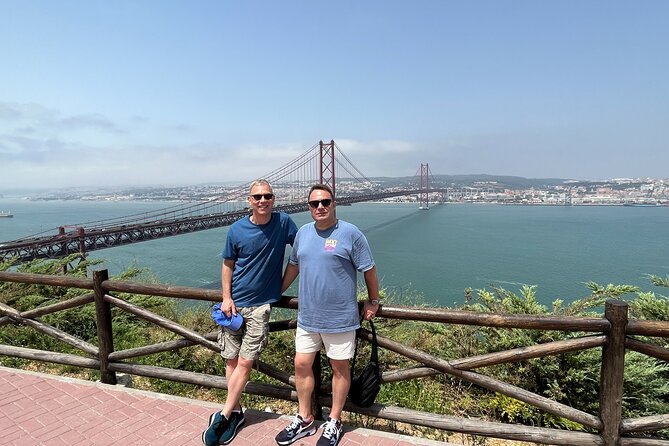
The day closes with a special extra: Santuario Nacional de Cristo Rei. The tour notes something important for planning—this sanctuary is not in the Lisbon district, but it’s about 20 minutes away, which is why it works as a final “big view” finish.
The story behind the monument is tied to 1934, when the Cardinal Patriarch of Lisbon, Manuel Gonçalves Cerejeira, visited Brazil and was inspired by Christ the Redeemer in Corcovado. That’s the seed of the idea to build something similar in front of Lisbon.
What I like about ending here is the emotional shape of the day. You start with geography, move through Lisbon’s historic layers, and finish with a wide view that helps you remember the city as a whole rather than a list of sites.
Admission here is listed as free in the tour info, which is a nice bonus at the end.
Price and Value: Is $118.95 a Good Deal for This Much Lisbon?
At $118.95 per person, you’re paying for more than entry tickets. The price includes transport in an air-conditioned private vehicle with Wi-Fi, bottled water, and a guided day structured around major Lisbon areas plus Belém.
It also includes the brunch tasting of the famous Pastry of Belém. That’s one of the most practical value items on the schedule: you get a local-food moment without needing to pick a bakery, negotiate crowds, or guess whether you’re ordering the classic version.
The tour also includes tour guiding throughout, and the feedback highlights guides like Luis, Bruno, and Felipe as strong on history, friendliness, and pointing out less-obvious details. A good guide can turn famous monuments into places with a mental map attached.
Where you need to think: not all paid sights are included. The top access at Arco do Triunfo, plus Torre de Belém, Mosteiro dos Jerónimos, and Padrao dos Descobrimentos are listed as admission not included. If you’re the type who hates surprise costs, budget for those upfront.
Who it fits best:
- First-timers who want a well-paced overview without planning every connection
- People who prefer a guide explaining stories instead of just reading plaques
- Couples or friends who want private attention and don’t want to spend the day commuting
Who might feel less happy:
- If you want a very relaxed day with lots of free time to wander alone, the schedule is packed.
- If you strongly dislike walking (even short segments like Alfama), you may want a different format with more vehicle time.
Who Will Enjoy This Day the Most
If you like Lisbon for its mix of views, architecture, and Portugal’s larger story, this tour fits well. You’ll get classic center squares, a Belém monument sequence, and a closing viewpoint at Cristo Rei—so the day has a narrative arc.
If you’re traveling with older family members or anyone with limited mobility, you should look closely at comfort needs because there are walking segments and you’ll be on your feet at multiple viewpoints and churches. The tour uses a private vehicle to reduce transit hassle, but it doesn’t eliminate the city’s uphill feel.
Should You Book This Classic Tour?
I’d book it if you want a high-return day in Lisbon that doesn’t force you to juggle tickets, timing, and directions. The combination of hotel pickup, comfortable transport, and a guide who can explain everything from Fado origins in Alfama to Manueline architecture at Jerónimos makes this a strong value for a first visit.
I would skip or swap if you’re only interested in one area (like Belém only) or you hate schedules that assume you’ll move between several sites in a single day. And if entrance costs are a major concern, budget for the sights listed as not included.
FAQ
How long is the Lisbon Classic Tour?
It runs for about 7 to 8 hours.
What is the meeting time and where do I start?
The start time is 8:30am, and pickup is offered from your hotel.
Is this tour private or group-based?
It’s private. Only your group participates.
What language is the tour offered in?
It’s offered in English.
What’s included for food?
You get a brunch tasting of the famous Pastry of Belém.
Is there Wi-Fi during the tour?
Yes, Wi-Fi is available onboard the vehicle.
Do I need to buy tickets for the main sights?
Some stops are listed as free, while others are listed as admission not included, such as going up the Arco do Triunfo top, Torre de Belém, Mosteiro dos Jerónimos, and Padrao dos Descobrimentos.
Is Cristo Rei included, and do I pay for it?
Cristo Rei is included as a special extra, and admission is listed as free.
What should I wear or bring?
Wear comfortable walking shoes. You’ll do a mix of walking and viewpoint time across the day.
What happens if the weather is bad?
This experience requires good weather. If it’s canceled due to poor weather, you’ll be offered a different date or a full refund.
Is confirmation provided when I book?
Confirmation is received at the time of booking.