
REVIEW · TUK TUK TOURS
4h/half-day Lisbon Tuk Tuk Tour with a local
Book on Viator →Operated by Battuta Experiences · Bookable on Viator
You can see a lot of Lisbon fast—without rushing. This private 4-hour tuk-tuk tour gives you a citywide overview, from downtown squares to major viewpoints and major Belém sights, with a local guide calling out what matters as you go.
I like that the route is built around photo-worthy stops you can actually pause for, like Miradouro das Portas do Sol and Miradouro da Senhora do Monte (both viewpoint entries listed as free). I also like the mix of “big picture” landmarks and lived-in neighborhoods, including Alfama and a quick culture/food stop at Time Out Market.
One thing to watch: it’s a half-day format, so a couple of paid interiors (like Belém Tower and the Padrão dos Descobrimentos) may only get outside views if timing is tight.
Key things I’d mark on your mental map
- Local-guided, private tuk-tuk time that keeps logistics simple and stops flexible for photos
- Hilltop viewpoints built in: Portas do Sol and Senhora do Monte are quick, scenic, and free
- Alfama culture included: Fado Museum area + the chance to try ginjinha
- Belém highlights without a full-day commitment: Jerónimos Monastery plus famous pastéis nearby
- Food option that’s easy to do well: Time Out Market Lisboa for snacks or a sit-down break
- Paid sights are optional: Belém Tower and Padrão may not be entered every time
In This Review
- Why a Lisbon Tuk-Tuk Half Day Works So Well
- Price and What $126 Covers (and What It Doesn’t)
- Start at Praça dos Restauradores, Then Roll Into Rossio
- Miradouro Time: Portas do Sol and Senhora do Monte
- Miradouro das Portas do Sol
- Miradouro da Senhora do Monte
- Feira da Ladra, the National Pantheon, and the Fado Museum Area
- Feira da Ladra
- National Pantheon (Church of Santa Engrácia)
- Fado Museum (Alfama)
- Alfama Time: Old Streets, Typical Neighborhood Feel, and Ginjinha
- Ribeira de Lisboa and Praça Luís de Camões: The River’s Story
- Chiado, Bairro Alto, and the Garden Viewpoints You Can Actually Walk
- Bairro Alto
- Jardim do Príncipe Real
- Miradouro São Pedro de Alcântara
- Jardim da Estrela (Jardim Guerra Junqueiro)
- Chiado highlights
- Cais do Sodré and Time Out Market Lisboa for a Real Food Pause
- LXFactory and the National Coach Museum: Modern Lisbon with Old Craft
- Belém: Jerónimos, Pastéis de Belém, and Icon Views at Tower and Padrão
- Pastéis de Belém (not included, but very easy to add)
- Monastery of Santa Maria de Belém (Jerónimos Monastery)
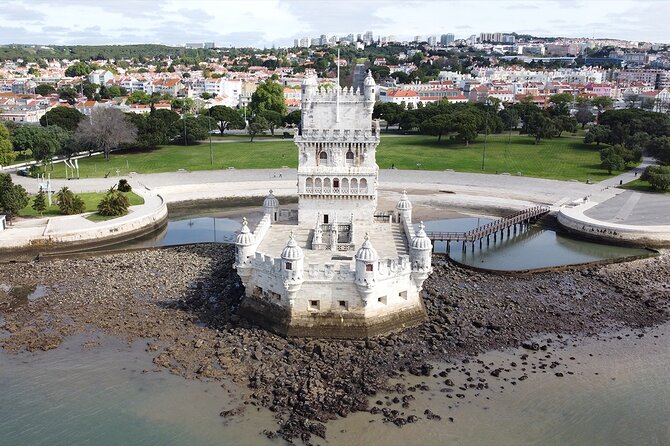
- Torre de Belém (entry may not fit)
- Padrão dos Descobrimentos (entry may not fit)
- Guides and the Real Secret: Friendly Local Explanations
- Who Should Book This Tour (and Who Might Skip It)
- The Quick Decision: Book It?
- FAQ
- How long is the Lisbon tuk-tuk tour?
- Is the tour private?
- Where does the tour start and end?
- Is pickup included?
- Do I need tickets for the viewpoint stops?
- Are snacks included?
- Do I have to pay for Pastéis de Belém, Belém Tower, or Padrão dos Descobrimentos?
- What if the weather is bad?
- Is cancellation free?
Why a Lisbon Tuk-Tuk Half Day Works So Well
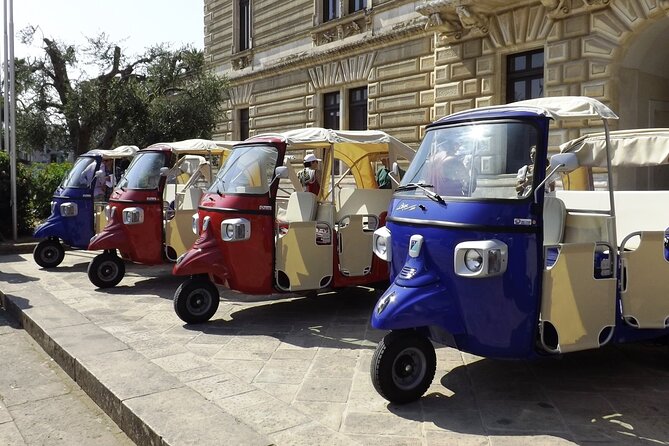
Lisbon is famous for two things that can fight each other: gorgeous views and steep hills. A tuk-tuk tour is a practical way to get the views without turning your day into a footrace. You get mobility up and around the city’s key areas, plus a guide who can help you connect what you see—squares, churches, neighborhoods, and riverfront—into one story.
I also like that this is private, not a “herded group” situation. That matters in Lisbon, where getting a good angle on a viewpoint or stopping for a photo can take longer than you think. With a small group, your guide can adjust on the fly (within the overall time window).
And because this tour focuses on “global overview,” it’s great as an early move. It helps you decide what you want to return to later—especially in Alfama and Belém, where Lisbon’s vibe changes block by block.
Price and What $126 Covers (and What It Doesn’t)
At $126 for about 4 hours, you’re paying mainly for two things: private tuk-tuk transportation and a local guide who can get you to the right places efficiently. That’s the best value use of your time in Lisbon—short trips between viewpoints and neighborhoods—so you’re not spending your half-day transferring between buses and trams.
Not included, based on the details provided:
- Snacks
- Pastéis de Belém (sold individually and by box)
- Belém Tower entry fee (listed as €6, and entry may not fit)
- Padrão dos Descobrimentos entry fee (listed as €10, and entry may not fit)
That last point is important. This is not a “sit in every museum” day. It’s more about getting you there, showing you what’s worth your attention, and then giving you the choice to go inside later if you want.
You can still have a great day without extra tickets, because the key viewpoints are listed as free, and several stops are primarily photo + walking segments.
You can also read our reviews of more tours and experiences in Lisbon

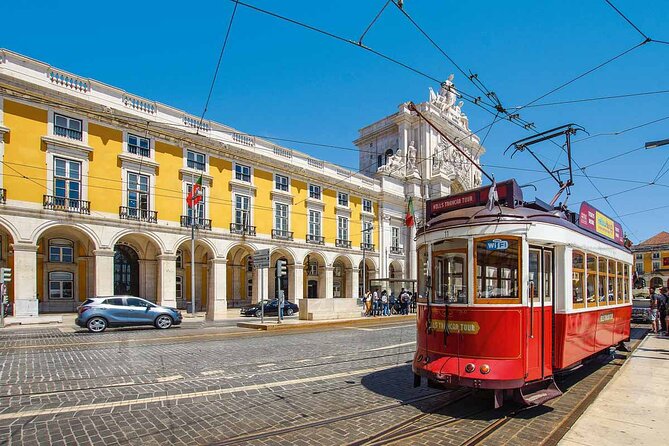
Start at Praça dos Restauradores, Then Roll Into Rossio
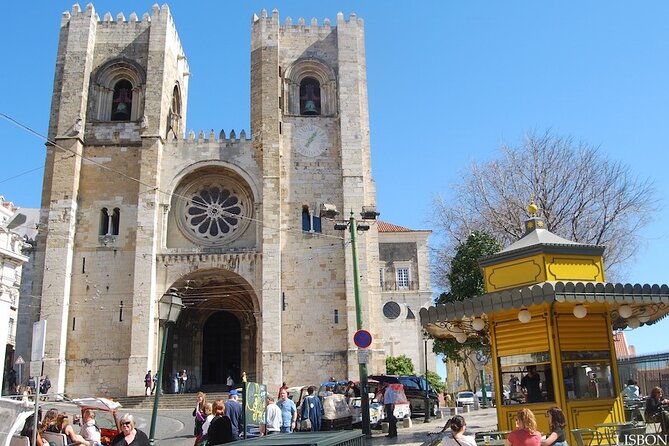
The tour starts at Praça dos Restauradores (number 24), which is already a strong “Lisbon intro” spot. From there, you move into the downtown rhythm and learn what the city uses its public spaces to remember.
The first landmark stop is the Monument to the Restauradores—a tall obelisk (listed at about 30 meters) commemorating Portugal’s liberation from Spanish rule on December 1, 1640. This is one of those Lisbon details you’d miss if you were just walking by. Having it pointed out helps you understand why Lisbon’s squares feel like outdoor pages from a history book.
Next up is Praça de D. Pedro IV, better known as Rossio (old spelling: Rocio). This is described as one of downtown’s nerve centers. Even if you don’t linger long, it’s a good reminder that Lisbon’s “great viewpoint city” image rests on everyday central neighborhoods and civic squares too.
You also pass the historic religious/cathedral area tied to the Patriarchate of Lisbon and the cathedral parish seat. In Lisbon, church districts often sit right next to busy urban life, so this kind of stop helps you see the layers.
Miradouro Time: Portas do Sol and Senhora do Monte
Now for the part most people come for: views. This tour builds in two viewpoint stops that are quick and easy to love.
Miradouro das Portas do Sol
This viewpoint is described as veranda-like, and the big payoff is the view over eastern Lisbon plus the Tagus River. You’ll usually feel this right away—Lisbon looks like rooftops and stone stacked into a city carved into hills. That’s the moment the route makes sense: you’re seeing why the city’s neighborhoods are placed where they are.
Miradouro da Senhora do Monte
Next is Miradouro da Senhora do Monte, placed in front of the Chapel of Nossa Senhora do Monte. It’s even more panoramic in the way it’s described:
- to the south: São Jorge Castle area, downtown, and the Tagus estuary
- to the west: from Bairro Alto toward Monsanto
- to the north: the valley around Avenida Almirante Reis
Both viewpoint entries are listed as free, and the stops are short (around 10–15 minutes). That’s ideal for a half-day tour because you don’t lose the rest of your day to “one more photo.”




Feira da Ladra, the National Pantheon, and the Fado Museum Area
After you’ve got your bearings from the viewpoints, you go into Lisbon’s older rhythm.
Feira da Ladra
You’ll pass the Feira da Ladra, Lisbon’s well-known flea market. Even if you’re not there on market days, this is still a meaningful Lisbon clue: older neighborhoods here trade objects, crafts, and daily life in the same spaces.
National Pantheon (Church of Santa Engrácia)
The tour includes the National Pantheon, installed in the Church of Santa Engrácia. The detail you’re given is that it was created by decree in 1836. It’s the kind of fact that makes a building feel connected to Portuguese identity instead of just a stop on the map.
Fado Museum (Alfama)
Then you reach the Fado Museum, located in Alfama and described as devoted to the world of fado and guitar. Even if you don’t go inside, knowing where it sits helps you understand what Alfama means culturally: music isn’t “a performance in a theater” here—it’s part of the district’s reputation.
Alfama Time: Old Streets, Typical Neighborhood Feel, and Ginjinha
The tour’s Alfama section is where Lisbon stops feeling like a list of landmarks and starts feeling like a lived-in city.
Alfama is described as the city’s oldest and one of its most typical neighborhoods. That phrasing matters. Alfama isn’t just old—it’s recognizable. Think of it as the part of Lisbon where the city identity sticks to the streets and stair-stepped blocks.
There’s also a built-in food/drink moment: ginjinha. You’re invited to try Lisbon’s famous cherry liqueur here. In practice, this is one of the best ways to enjoy a short neighborhood stop. It takes minutes, it connects you to a local habit, and it doesn’t require committing to a sit-down meal.
As you move through Alfama, you also stop near:
- Casa dos Bicos, a historic building now linked to the Museum of Lisbon and the José Saramago Foundation
- and the nearby idea of Lisbon’s river-based history, which comes next.
Ribeira de Lisboa and Praça Luís de Camões: The River’s Story
A big theme in Lisbon is how the city keeps rebuilding after disasters—especially where the river and shipping used to drive everything. This tour includes Ribeira de Lisboa, described as an old quarter destroyed by the 1755 earthquake and seaquake. You’re told it once housed the country’s main shipyards and tercenas (medieval shipyards), later known as Ribeiras das Naus.
That context is useful because it changes how you look at the riverfront. You’re not just seeing scenery; you’re seeing evidence of Lisbon’s long recovery and reshaping.
Then you reach Praça Luís de Camões, with trees and stone benches, and—importantly—Portuguese pavement with geometric designs tied to the sea, mermaids, and caravels. This is a great “rest your legs for a minute” stop, and the detail makes it feel playful, not just historic.
Chiado, Bairro Alto, and the Garden Viewpoints You Can Actually Walk
Lisbon’s city center can feel like it shifts moods quickly, and this tour mirrors that.
Bairro Alto
Bairro Alto is described as bohemian and alternative in feel. You don’t stay forever, but you get enough to remember that Lisbon has nightlife and creative energy, not just monuments.
Jardim do Príncipe Real
You also pass Jardim do Príncipe Real, a garden built in the mid-19th century with a romantic layout. This works well in a tuk-tuk route because gardens are relaxing breaks from stone streets—especially if you’ve already done viewpoints.
Miradouro São Pedro de Alcântara
Then you reach Miradouro São Pedro de Alcântara via Jardim de São Pedro de Alcântara, built in 1864 on two terraces. Viewpoints here feel more “garden terrace” than “big open lookout,” which gives you a different perspective on the city.
Jardim da Estrela (Jardim Guerra Junqueiro)
You also include Jardim da Estrela (later renamed Jardim Guerra Junqueiro), described as styled like English gardens with romantic inspiration. It’s another slow-down moment. Lisbon works best when you mix intensity (big sights) with quiet (gardens).
Chiado highlights
You’ll pass Largo do Chiado and Armazéns do Chiado, plus the Teatro Nacional de São Carlos, Lisbon’s main opera house (as stated). These spots help you understand Chiado as a cultural spine, not just a shopping area.
Cais do Sodré and Time Out Market Lisboa for a Real Food Pause
Near the river, you reach Cais do Sodré, described as a lively nightlife and gastronomy destination. It’s the kind of area where you can grab something fast or linger if the day is going well.
The tour includes a stop at Time Out Market Lisboa (in Mercado da Ribeira). This is one of the easiest places on earth to make the right choice: you can browse, snack, or eat without committing to one long meal. The entry is listed as free, but food is, of course, on your own.
If you like practical value, this is the kind of stop that makes a half-day tour feel complete. After hills, squares, and churches, you get an option to reset and actually fuel up.
LXFactory and the National Coach Museum: Modern Lisbon with Old Craft
The tour doesn’t only treat Lisbon as “old city.” You also get LXFactory, described as a commercial and artistic space in Alcântara, created from a former industrial area and renovated in 2008 with industrial inspiration.
Then there’s the National Coach Museum, noted for having an important collection of royal coaches and carriages from the 16th to the 19th centuries. This is a nice change of pace if you’re museum-friendly but don’t want to spend your whole day in one building. Even if you only get a quick exterior feel, it’s a reminder that Lisbon’s culture includes craft and court history, not just churches.
Belém: Jerónimos, Pastéis de Belém, and Icon Views at Tower and Padrão
The late part of the tour is all about Belém—Lisbon’s historic riverfront zone tied to exploration-era pride.
Pastéis de Belém (not included, but very easy to add)
You’re stopped for Pastéis de Belém, described as starting in 1837 using a recipe said to come from the Jerónimos Monastery tradition, reborn daily with artisanal processes. The tour lists pastry prices:
- €1.30 each
- €7.80 for a box of 6
It also notes the pastry count mentioned as 24 in the provided info, but practically you’ll just buy what you want.
This is one of those “yes, it costs a little” moments that still feels worth it. It’s not just dessert; it’s a specific Lisbon institution, tied to a specific place.
Monastery of Santa Maria de Belém (Jerónimos Monastery)
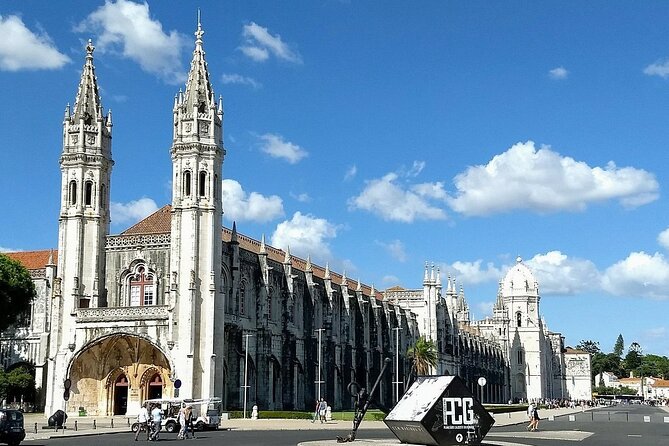
Next is the Monastery of Santa Maria de Belém, also known as Mosteiro dos Jerónimos. It’s described as built at the end of the 15th century by King Manuel I and entrusted to the Order of São Jerónimo. This is the kind of stop where even outside views can give you enough to feel the scale and craftsmanship.
Torre de Belém (entry may not fit)
The route includes Torre de Belém (formerly Torre de São Vicente). Entrance is listed as €6, but it’s also stated that not every tour has enough time to go inside—often it’s pictures and a short walk around. That’s totally fine as long as you treat it as a viewpoint/photo moment, not a museum commitment.
Padrão dos Descobrimentos (entry may not fit)
Finally, you get the Padrão dos Descobrimentos. Entry is listed as €10, and again the note says not every tour has enough time to allow entry—often it’s pictures and a quick walk.
These two stops are best understood as “you’re here, you should see it.” If you want interiors, you’ll likely want a separate visit later.
Guides and the Real Secret: Friendly Local Explanations
One of the most praised parts of this experience is the guide. The local staff names that show up include Joana, Mariana, Fernando, and Diogo—and the consistent thread is clear communication, patience with photos, and explanations that make Lisbon feel like a coherent city rather than separate postcards.
That’s exactly what you want from a half-day tour: someone who can translate what you’re looking at. Lisbon’s details can be subtle—why a square matters, what a neighborhood name implies, how river history shaped street patterns. With the right guide, you notice those things instead of just snapping pictures.
Who Should Book This Tour (and Who Might Skip It)
This tour is a great fit if:
- you want a fast but thoughtful overview of Lisbon in a single morning/afternoon
- you like viewpoints, neighborhoods, and key monuments more than long museum marathons
- you want private transport in a city of hills
- you care about learning what you’re seeing, not just getting driven around
You might want to skip or adjust your expectations if:
- you’re the type who wants every major site entered (some paid interiors may be limited by time)
- you’re only interested in Belém and want a dedicated Belém-only day
It’s also a strong “first or second day in Lisbon” option. After this, you’ll know what you want to repeat.
The Quick Decision: Book It?
I think you should book this if you want an efficient, friendly way to connect Lisbon’s key districts—downtown squares, hilltop views, Alfama culture, and Belém icons—within a tight half-day window. The best value here is the private tuk-tuk mobility plus a local guide who helps you understand the city.
If you’re hungry for deep museum time, plan a separate day for that. But if you want to get your bearings fast and still come away with a stack of meaningful memories, this is an easy yes.
FAQ
How long is the Lisbon tuk-tuk tour?
It’s about 4 hours total, and the duration includes transportation.
Is the tour private?
Yes. It’s a private tour/activity, so only your group participates.
Where does the tour start and end?
It starts at Praça dos Restauradores 24, 1250-187 Lisboa, Portugal and ends back at the meeting point.
Is pickup included?
Pickup is listed as offered.
Do I need tickets for the viewpoint stops?
The two viewpoints called out—Miradouro das Portas do Sol and Miradouro da Senhora do Monte—are listed as free for admission. Some other attractions have separate entry fees.
Are snacks included?
No. Snacks are not included.
Do I have to pay for Pastéis de Belém, Belém Tower, or Padrão dos Descobrimentos?
Yes. Pastéis de Belém are not included (prices are listed), and Belém Tower and Padrão dos Descobrimentos have separate entrance fees that may not fit into every tour’s timing.
What if the weather is bad?
The experience requires good weather. If it’s canceled due to poor weather, you’ll be offered a different date or a full refund.
Is cancellation free?
Cancellation is free up to 24 hours in advance for a full refund. Within 24 hours, you don’t get a refund.