REVIEW · CASCAIS
Walk Tour in Historical Cascais
Book on Viator →Operated by Pipefly · Bookable on Viator
Cascais history walks fast when guided right. This two-hour stroll strings together old fort-town lanes and coastal viewpoints into one easy route you can actually remember. I like that the walk starts with the town’s own landmarks (hello, the town hall square with statues of Dom Pedro and Dom Luis) and builds step-by-step toward the water. I also like how the route gives you clear context for why Cascais looks the way it does, ending with the dramatic stop at Boca do Inferno. The one thing to plan for: the leg toward Boca do Inferno can feel like a longer pull than you expect, especially if you’re trying to keep the walk short.
Meet at Cascais Visitor Center (Praça 5 de Outubro) and plan on around 2 hours total. This is a small group—max 20 on the tour description, and the activity details note max 15—so you can ask questions. The pace fits a moderate physical fitness level, and you’ll be outside most of the time. Choose a morning or afternoon slot, keep an eye on weather (good weather is required), and you’ll be set for a very local-feeling Cascais loop.
In This Review
- Key Highlights You’ll Care About
- Getting Oriented at Cascais Visitor Center
- Price and What You’re Actually Paying For
- The Town Hall Square Start: Dom Pedro and Dom Luis
- Baía de Cascais Views and the Old House by the Water
- Old Fortified-Town Wall and the Narrow, Typical Roads
- Citadel Stop: Why This Place Was Built Like This
- Marina de Cascais: A Different Side of Town
- Santa Marta Lighthouse and House of Santa Maria (Outside Views)
- Boca do Inferno: The Stop That Needs the Right Pace
- Park Walk and Ending Back at the Start
- How the Tour Feels: Easy Yet Not “No Effort”
- Morning vs Afternoon: Choosing Your Slot
- Who Should Book This Walk Tour in Historical Cascais?
- Should You Book It?
- FAQ
- How long is the Walk Tour in Historical Cascais?
- Where does the tour start?
- Is the tour offered in English?
- How big is the group?
- What fitness level is required?
- What is the cancellation policy?
Key Highlights You’ll Care About
- Small-group format that keeps the walk personal (max 15–20)
- Meet at the Cascais Visitor Center so you start with orientation, not confusion
- Town hall square with statues of Dom Pedro and Dom Luis as your anchor point
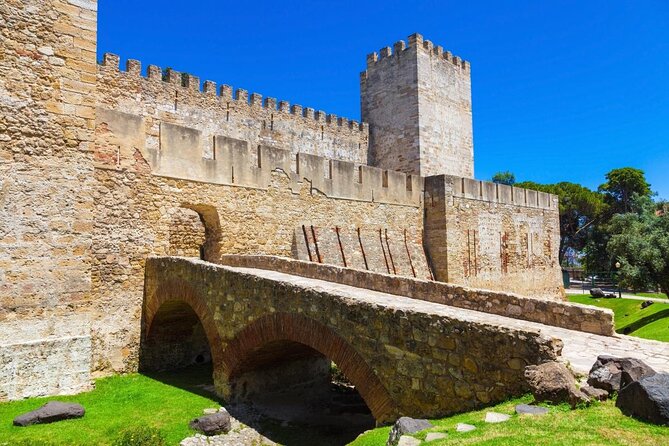
- Citadel + old fortified-town walls to help you read Cascais in context
- Marina de Cascais and bay viewpoints to balance the streets with the water
- Boca do Inferno + park walk to close with a famous Cascais moment
Getting Oriented at Cascais Visitor Center
Before you hit streets, you get a quick reset: you meet at Cascais Visitor Center on Praça 5 de Outubro (2750-320). That matters more than it sounds. A good start point helps you feel like you’re following a plan, not wandering, and it keeps time tight for a tour that runs about two hours.
This tour is in English, and you’ll usually get a guide who brings the story into everyday details as you walk. In particular, Pedro has been praised for being detailed and engaging, and he’s also the kind of guide who offers practical restaurant ideas afterward. Even if your guide isn’t Pedro, expect that same helpful, give-you-context style.
Also, because this is outdoors and weather-dependent, I’d treat this as a “daylight and decent conditions” activity. If the weather goes sideways, the tour can be moved or refunded, so you’re not stuck with a cancelled plan.
You can also read our reviews of more walking tours in Cascais


Price and What You’re Actually Paying For
At $30.10 per person, you’re not paying for an all-day museum marathon. You’re paying for two things that are hard to replicate alone:
1) A route that hits multiple “must see” areas in Cascais without you doing map math.
2) A guided thread that connects the sights—town, bay, fortified-town walls, citadel—so the town starts making sense.
For two hours, that’s solid value, especially because the group is capped and the tour uses a mobile ticket. You show up, walk, learn, and get back where you started. If you’re spending only a short time in Cascais (or you’re trying to avoid spending your whole day just getting from point A to point B), this price-to-time ratio is exactly the kind of deal you want.
The Town Hall Square Start: Dom Pedro and Dom Luis
The walk begins in a public, center-of-town setting: the town hall and the square in front, where you’ll see statues of Dom Pedro and Dom Luis. This first stop works because it gives you a reference point. Once you understand where the civic heart is, the rest of the route feels like it’s unfolding outward.
Look around and notice how the square anchors the area. Then, as you move, the guide’s explanation helps you connect that civic center to what you’ll see later—walls, the citadel, and the old streets that once served a fortified town mindset.
If you’re the kind of person who likes to feel grounded quickly in a new place, this opening is a win.
Baía de Cascais Views and the Old House by the Water
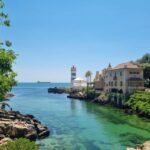
Next comes a shift in mood: you’ll see Baía de Cascais and learn about the old house around the bay. This is one of those “small details, big payoff” moves. Coastal towns can blur together unless you get a sense of the bay’s role—where the town turns to the water and why parts of the town developed around that edge.
This part is also a nice pacing change. After you start with the square, you’re not stuck only with streets. You get a water view, you get context, and you keep building a mental map.
One practical note: bay areas can have wind, so I’d dress for it. Even on a sunny day, coastal breezes can make a short walk feel longer.
Old Fortified-Town Wall and the Narrow, Typical Roads
After the bay, you head back toward the town’s older layers: the wall of the old fortified town and the narrow, typical roads of Cascais.
This is where the tour starts doing its real job. On your own, you might walk these streets and just think, “Cute lanes.” With a guide, you’re more likely to notice how the streets relate to the town’s defensive shape and how the fort-town character carries through day to day.
The “narrow and typical” roads part is also your reminder about footwear. This isn’t a long hike, but you’re moving on streets that can be uneven or tight. Comfortable shoes pay off fast here.
You can also read our reviews of more historical tours in Cascais

Citadel Stop: Why This Place Was Built Like This
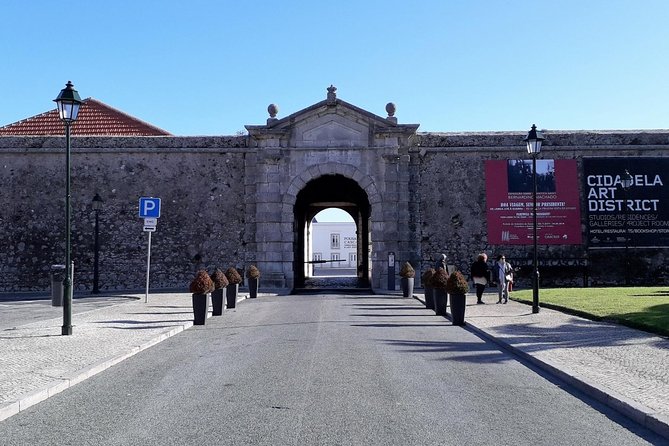
Then you visit the citadel, with the guide explaining its history. This is one of the most valuable stops on the loop, because it translates what you see in the streets into a bigger story: the fortified town logic, the strategic thinking, and why Cascais looks like it does in its older core.
The citadel stop also helps you for later sightseeing. When you’ve had this context, the rest of the route reads as planned development rather than random scenery.
If you’re short on time, this is the stop I’d prioritize in your head—even if the day’s pace starts to feel quick. It’s the kind of explanation that sticks, and it makes the rest of the tour more than just photos.
Marina de Cascais: A Different Side of Town
From the fort feeling, you shift again to the Marina de Cascais. This helps balance the walk. You’ve been dealing with older stone, walls, and narrow roads; now you get a modern waterfront vibe.
Even if you’re not a sailor, marina areas are good for orientation because they show where the town’s flow has gone over time. It’s a simple contrast that makes Cascais feel layered rather than stuck in one era.
This is also the point where you’ll likely start seeing what you personally enjoy most: the coastal edge, the historical core, or the mix.
Santa Marta Lighthouse and House of Santa Maria (Outside Views)
Next, you’ll see the Santa Marta lighthouse and the House of Santa Maria from outside. This is an “on the way” style stop—no long detours promised—so don’t expect a deep, interior-style visit unless your schedule includes extra time.
Still, outside views are often perfect for people who prefer walking and orientation over extended stops. You get landmarks, you keep the route moving, and you build your own mental list of what you might want to revisit later on your own time.
If you like taking photos, this is one of the easier moments to grab them without losing the tour’s momentum.
Boca do Inferno: The Stop That Needs the Right Pace
Then comes Boca do Inferno. This is the part that can swing the experience depending on your expectations and energy level.
On the positive side, it’s a real Cascais headline stop, and it gives the walk a dramatic finish-feel. On the practical side, there’s a consideration: the walk to Boca do Inferno can feel like a long stretch for what you see, especially if you’re expecting instant wow at every step.
So here’s how I’d handle it: go in ready to enjoy the view as a moment, not a whole event that replaces the walk itself. If you’re planning to keep a steady pace, you’ll likely enjoy it more. If you tend to get tired easily, consider treating this stop as the one where you take it slow and stay present.
Park Walk and Ending Back at the Start
After Boca do Inferno, you’ll visit from outside and then walk through the park. The ending here works because it’s a decompression section. You’re not jumping from one major attraction to another; you’re transitioning to an easier walking pace and letting the route settle into memory.
Finally, the activity ends back at the meeting point. That’s useful for your day planning. You don’t have to figure out logistics at the end; you just pick up your own plans from where you started.
How the Tour Feels: Easy Yet Not “No Effort”
The tour is described for a moderate physical fitness level, and the pace is generally easy. Still, it’s a walk tour. Two hours on foot adds up, especially when you include coastal areas and older streets.
The best approach is simple:
- Wear shoes you’re happy to walk in for a full 2 hours.
- Pace yourself so Boca do Inferno doesn’t feel like a surprise endurance test.
- Bring something for the weather, because the tour requires good conditions.
This is also why I like the small-group size. With a group capped at 15–20, you’re less likely to feel lost or rushed.
Morning vs Afternoon: Choosing Your Slot
You can choose a morning or afternoon tour. I don’t think either time is automatically better, but you can match the tour to your travel rhythm.
- If you like starting early and saving the afternoon for a long meal or beach time, pick morning.
- If you prefer a late start and a slower day, pick afternoon.
What matters most is that you’ll be outdoors on a walking route, so choose the time when you’re most likely to have good weather and a calm start.
Who Should Book This Walk Tour in Historical Cascais?
This tour fits best if you want:
- A short, guided introduction to Cascais in about two hours
- A route that includes both history-related stops and waterfront views
- A group experience where you can ask questions (small group size)
It’s also ideal for first-time visitors who don’t want to overplan. You get town square orientation, bay context, fortified-town streets, citadel history, marina atmosphere, lighthouse/house views, and Boca do Inferno—without needing to build a route yourself.
If you’re the type who loves planning-free exploring, this is a good match. If you strongly dislike longer walks to a single viewpoint, you might want to go in with realistic expectations for Boca do Inferno and plan your own pace.
Should You Book It?
Yes, I’d book it—especially if Cascais is one of your main stops and you want a guided route that helps you understand what you’re seeing. The value is strong for the time: a small-group walk in English, hitting major areas without turning your day into a logistics puzzle.
Book it if:
- You want a clear, guided loop around Cascais
- You like history explained in the streets, not in a classroom
- You want practical help from a guide (the style praised by Pedro is detailed and engaging, with restaurant suggestions being a bonus)
Skip or think twice if:
- You want a short “hit-and-go” experience with minimal walking
- You’re only interested in Boca do Inferno itself and not the journey through town to get there
If you can handle a steady two-hour walk and you like making sense of a place while you see it, this is a very sensible way to experience historical Cascais.
FAQ
How long is the Walk Tour in Historical Cascais?
It runs for about 2 hours.
Where does the tour start?
You meet at the Cascais Visitor Center at Praça 5 de Outubro, 2750-320 Cascais, Portugal.
Is the tour offered in English?
Yes, the tour is offered in English.
How big is the group?
The tour is listed as a group of max 20, and the activity details also note a maximum of 15 travelers.
What fitness level is required?
You should have a moderate physical fitness level.
What is the cancellation policy?
Free cancellation is available. You can cancel up to 24 hours in advance for a full refund. The tour also requires good weather, and if it’s canceled due to poor weather, you’ll be offered a different date or a full refund.